Grammatic
买 mǎi + 东西 dōnɡ xi < buy + sth.
……多少钱 + number + measure word?duō shǎo qián <… how much money?: is used to inquire a price while shopping
……块钱 kuài qián < ….this much money
多少钱一斤?Gōng duōshǎo qián yī jīn? < how much money is 500g?
Sth. 8 块钱一斤. Sth 8 Kuài qián yī jīn. < sth costs 8 yuan
Tone change of 一 Yī: The numeral 一 is pronounced as Yī when its stands by itself. 一 is pronounced as yì when it precedes a first-tone, second-tone or third-tone syllable. It is yí when it precedes a fourth-tone syllable < yìqǐ, yì tiān, yì nián but yí cì
Number system:
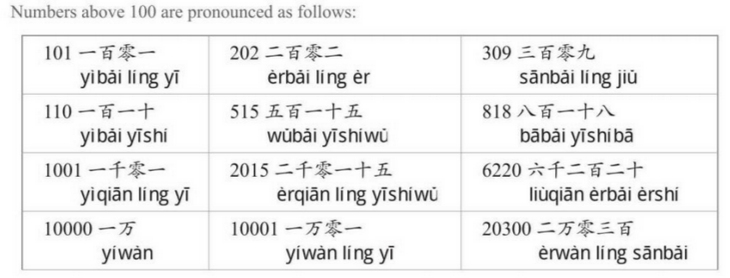
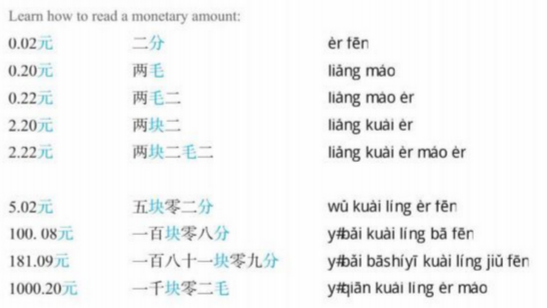
how to read a monetary amount:
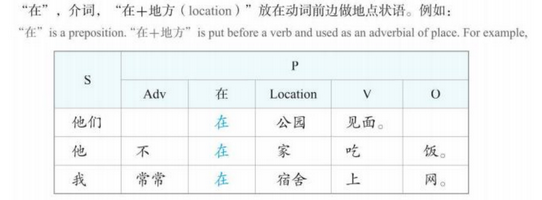
在+地方 zài +dì fānɡ < in + a place < Sb + 在 + 地方 + verb + object
这是 Num.+mesure word+n. < 这是一瓶牛奶
A:你喜欢喝什么?
B:我喜欢喝水。< asenda question word with what you wanna answer
A和B; A、B和C; A、B、C和D; A、B、C、D 和E
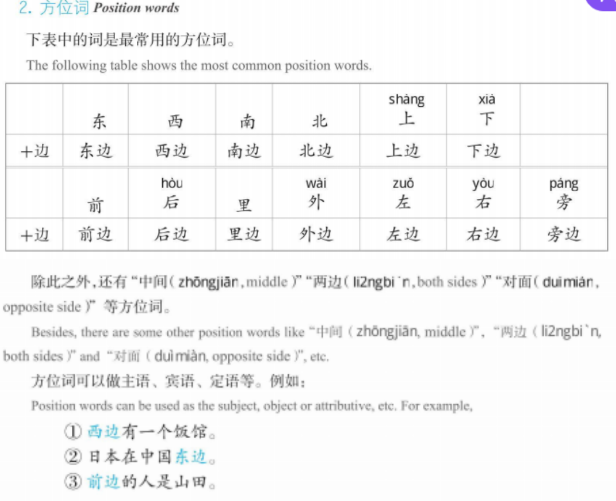
B 在 A 的 + location/position (somewhere是什么地方?): 教学楼东边是运动场。 or A(的)+location 是B (......在哪儿?): 运动场在教学楼东边。(A->B)
Position words:
楼 logic: 我们在几楼?我们在二楼。/ Viru一共有几楼?< asking about which floor you are in/at / asking about how many floors does viru have
S. + 不/都/也 + 在 somewhere + (做什么) < 他 在图书馆 看书。
太 adj. 了 < too…
S 跟 + sb 一起 V. O/ 跟+人 做什么 (with +sb. V.O.): 我跟朋友一起去超市. < can also use 和 instead of 跟
sentence + 吧; 吧 used at the end of the sentence to indicate a suggestion: 你学习汉语吧
(somewhere)......有......(sth): 商场里边 有 (一个)卫生间。(There is a toilet in the mall)
A的location words有......(there be): 教学楼的左边有一个书店。
noun predicate:
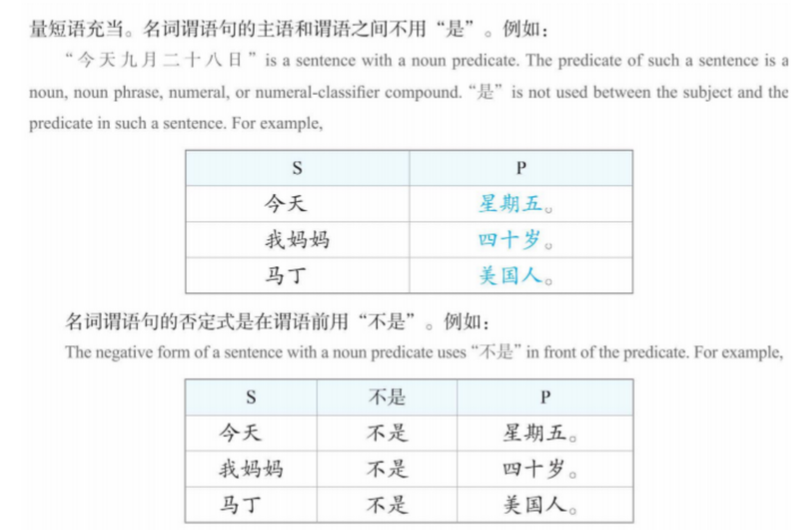
……年……月……日(号): 1799年4月23号 < in chinese, we say time from bigger unit to smaller
saying age: 我今年18岁。
time+以后: 一个月以后 after one month but 我以后想做一个老师 I want to be a teacher in the future
S (when) do sth. 你 什么时候 去学校?: 她的爸爸妈妈 什么时候 去上海?
- 他们 下个月 去上海。
S+ {时间 }+ V +O: 你 哪一年 在西班牙 工作?
S { 什么时候 } (跟谁)(在/去+地方) V O.
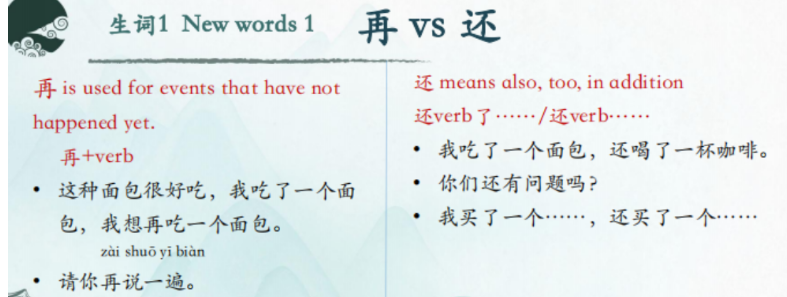
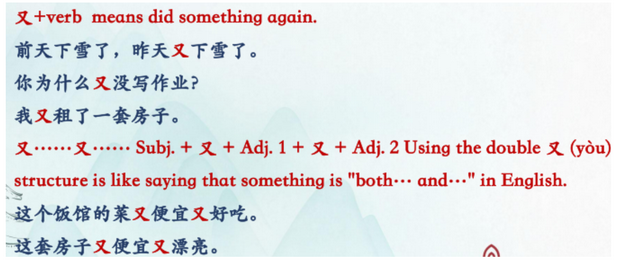
再 vs 还:
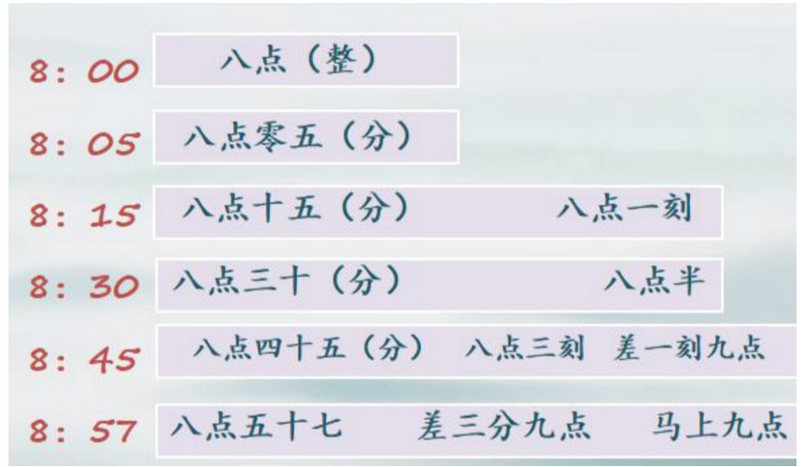
clock system:
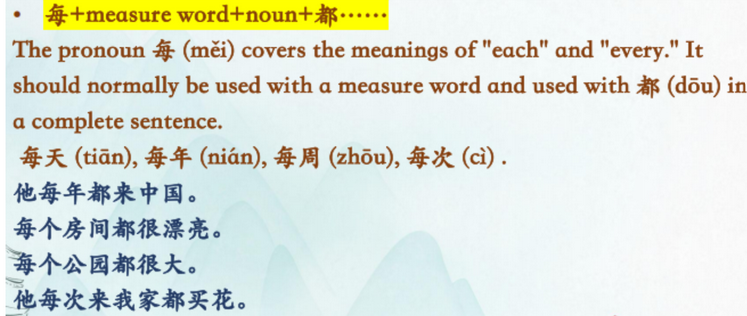
每天 měi tiān: sb 每天time ...... 我每天早上7:30 起床。
每measure word +noun都......: 我们班每个人都会说汉语。
几点: is commonly used to ask about the time - 现在几点? 你几点上课? 电影几点开始?
开始: sb time 开始 verb… - 电影几点开始? 我 10 点开始上汉语课
S+先+do sth. : 你先走!
sb 先 verb....., 然后 verb......: 我先运动,然后(再)吃早饭。 First I do sports, then I eat breakfast (again) < indicates the sequence of action: 我中午两点吃午饭,然后学汉语。我早上洗澡、吃早饭、喝咖啡,然后学习 汉语。[……然后(……,then ,……)]
A 和 B + time+ location + 见面
我们 ... 把 < let’s do sth
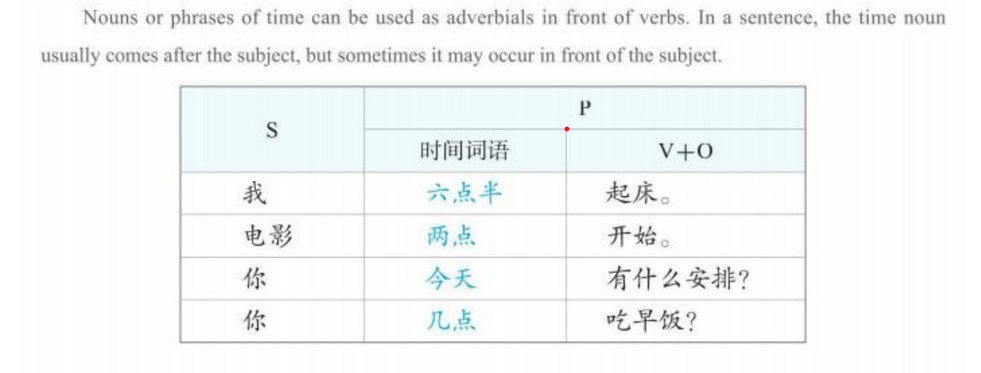
nouns or phrases as adverbs:
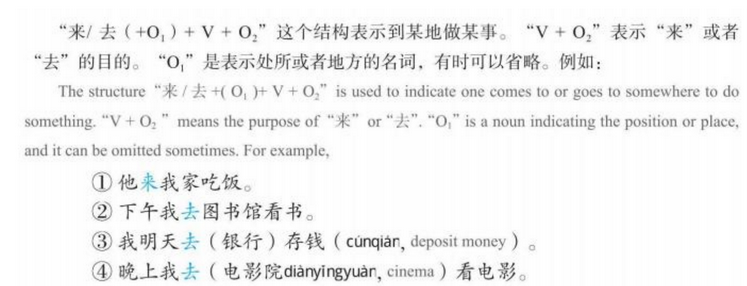
来/去 structure:
subject + verb + object: 我叫tom < sub+叫+name
initials, finals, tones:
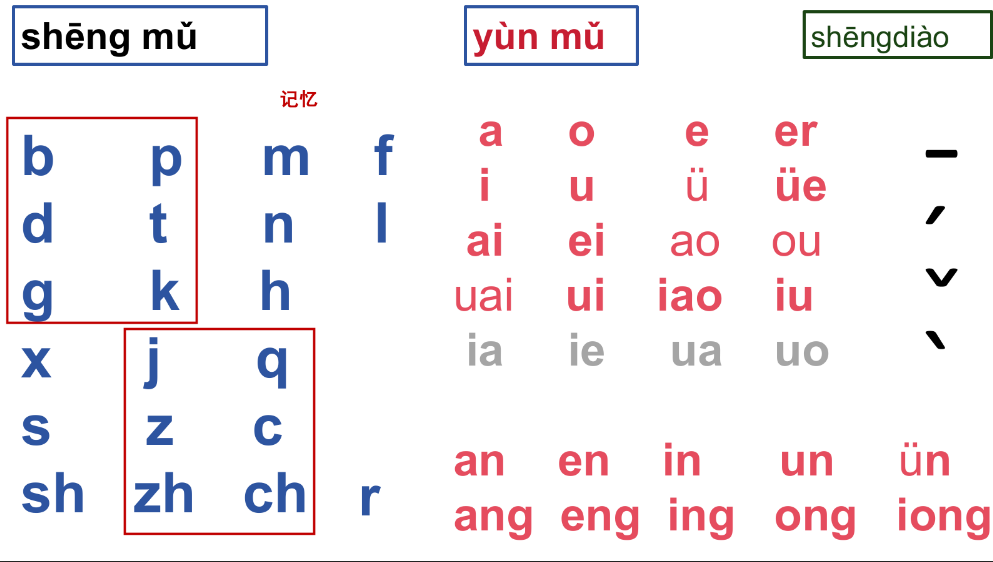
tones:
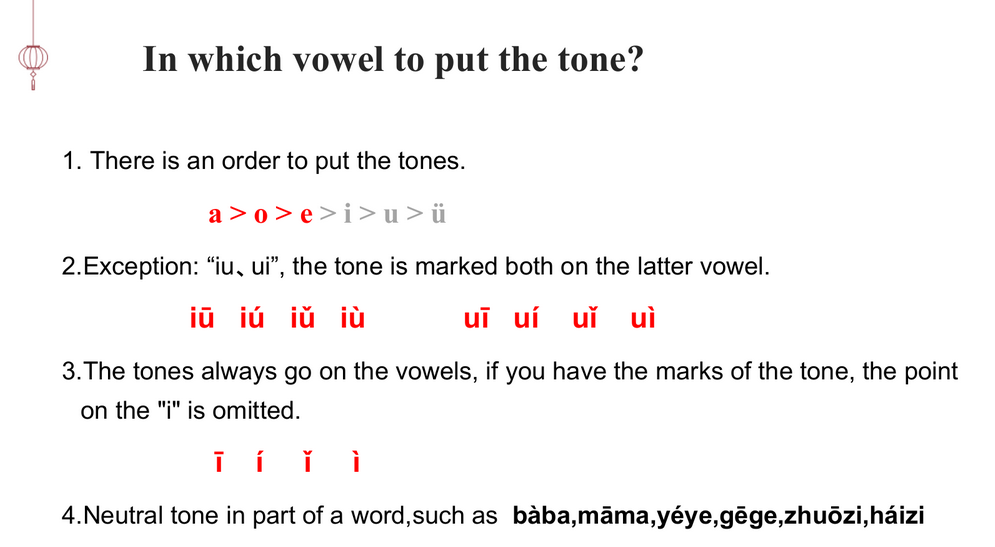
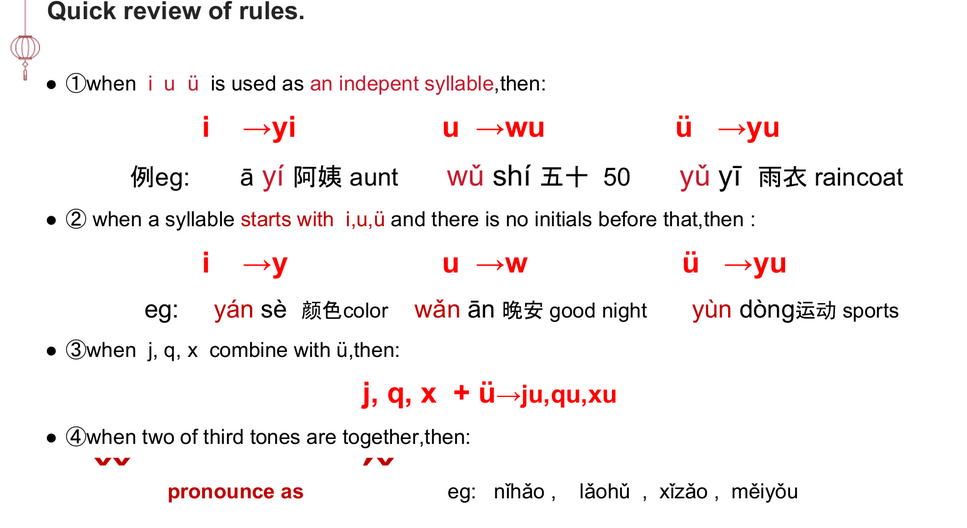
some other rules in pronunciation:
也: sub+也+V.
请 + verb: 请问
很 + adj.: 上海很热。
to ask question,put 吗 after the question sentence: 你 是 中国人吗?
S 不 V O: 我不说爱沙尼亚语
他们是+(occupation name): 他们是老师。
s 有 N.M.O: 我 有 一个妹妹。
s 没有 O: 我 没有 妹妹。
s 都 VO: 他和我 都没有钱。
S [adv]/[time]/[at/in+place] V O: 我不学习英语
想+Verb. want to do sth: 我 想去中国旅行。
想+n. miss……:我 想我的中国朋友。
Noun 1 + 的 + Noun 2 < This means "Noun 1's Noun 2" (sometimes means Noun 2 belongs to Noun 1). 我的老师
这/那+measure word+noun: 这本běn书
number+measure word+noun: 三个苹果
“几” and “多少” are used to ask about a quantity or an amount, “几”is used when the number is expected to be less than 10, while “多少” is used if the expected number is above 10
sb.+有+几/多少+measure word+noun?: 你 几 本 词典(cí diǎn)?
sb 觉得 … to show someone’s opinion: 我觉得 爱沙尼亚的冬天很长。
A以后,我B。
B以后,我C。
……以后 - after……
…,以后,……in the future
sb 听说…: 我听说 下个月胡老师要回中国。
A听B说… A heard sth from B
一下 : used after a verb to indicate one action or one try < 等一下
S + 很 adj. description: 这儿的风景很漂亮。
rarely use “和”: 公园风景非常漂亮,空气非常新鲜。
V不V: 是不是?< can be used to form yes or no question
一点儿+sth. (how many/much + sth) : 我 会说 一点儿汉语。< 一点儿 a little, 一些 some, 很多 many/much
非常+ adj. : 非常好
小….: 小狗
谁 【去/在+哪里】 做什么 (S 【在+place】 V O./S 去+place V O.): 我 在kadriorg 公园 散步。
……的时候 - when…: 上课的时候,不要看手机。
从……到…… < can be used from (从) A place to (到) B place or from (从) time1 to (到) time2 (the ‘‘time’’ here does not have to be a standard time word, it can be any event or action): 从我家到学校,坐公交车需要25分钟
跟……见面 jiàn miàn
跟……聊天儿 (topic)
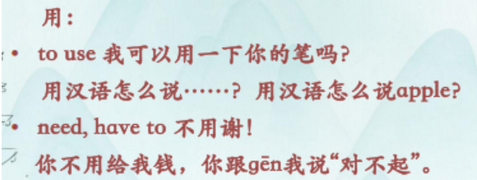
用:
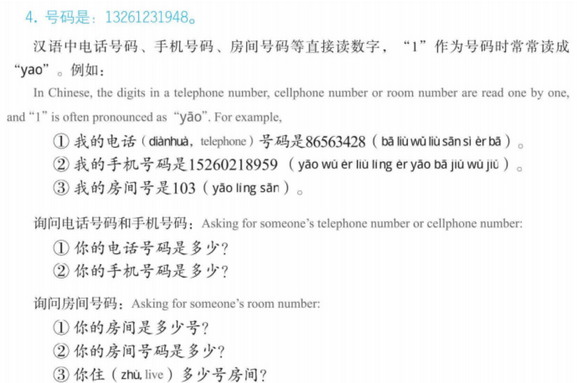
手机号码:
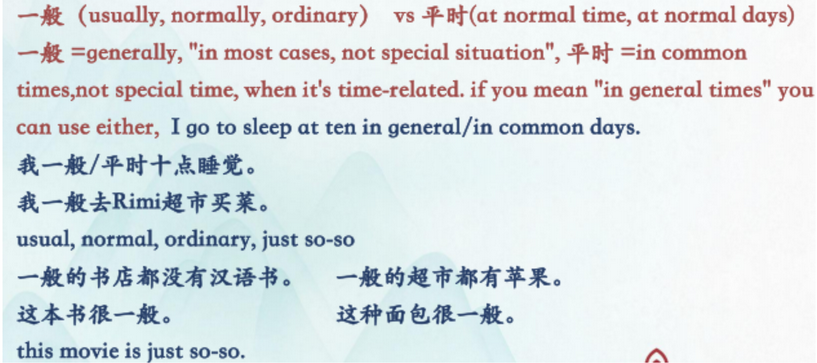
一般:
S 有时候 喜欢 跟... 去...... DO STH.
平时: 我平时喜欢 【with sb】去公园 散步。
在:
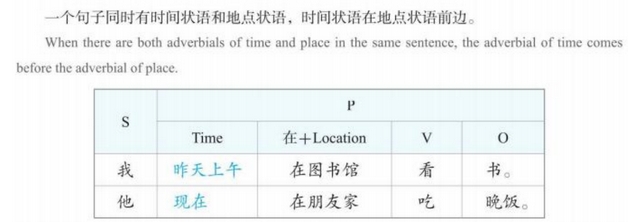
谁 【什么时候】 【在哪里】做什么:
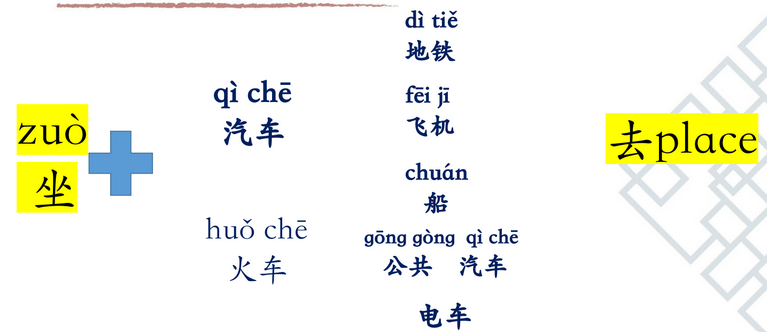
坐 + transportation + 去:
S V A 还是 B ?: 你喜欢 喝茶 还是 喝咖啡?
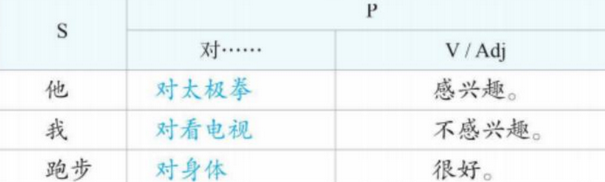
我 对...... 不/不太/很 感兴趣。/ 你还对什么感兴趣?: 你对工作感兴趣吗?
S 【对......】 V O.:
…, 可是 …: 我很想出去玩, 可是我有很多作业
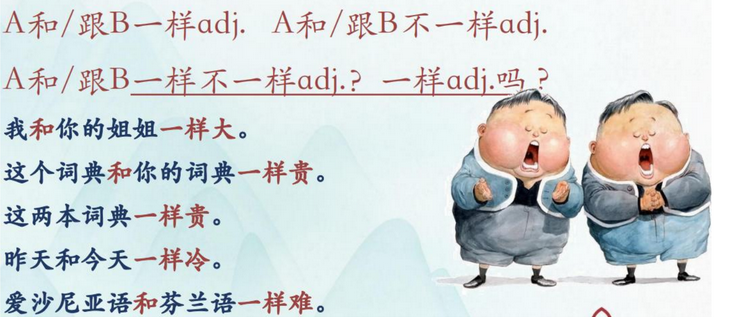
一样 Yīyàng:
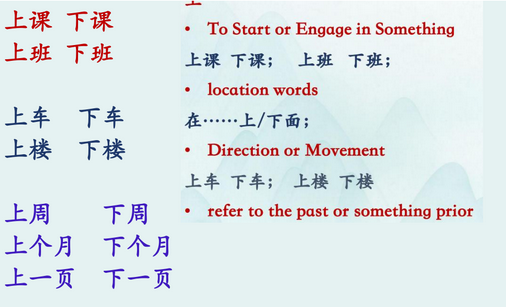
下......:
A 对 B 好/不好:
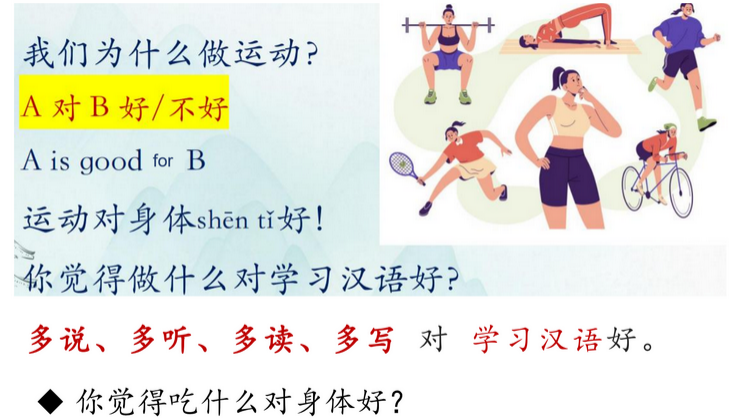
最 喜欢/爱 的 +Noun.是......: 你最喜欢的颜色是什么?
最 + adj.: 最小的国家...... the smallest country
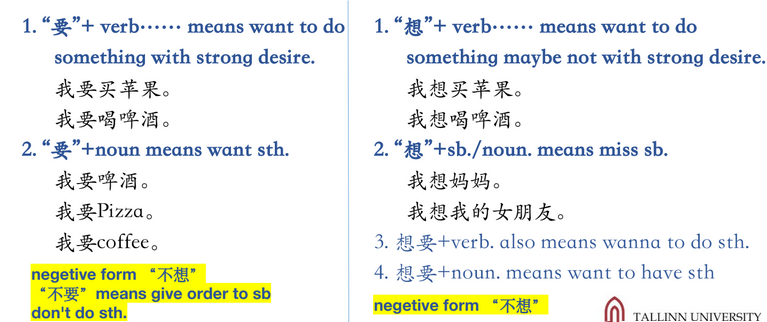
要 vs 想:
每:
又:
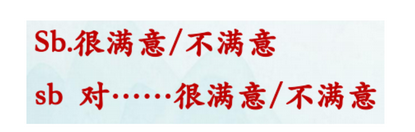
满意:
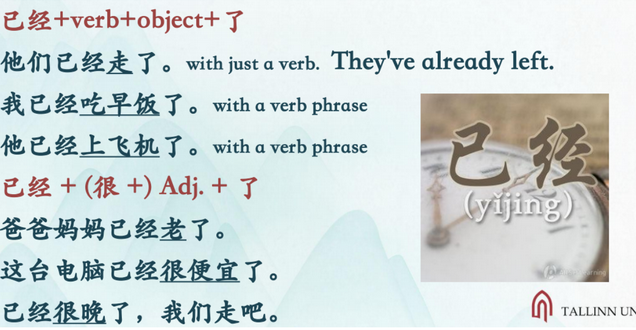
已经……了:
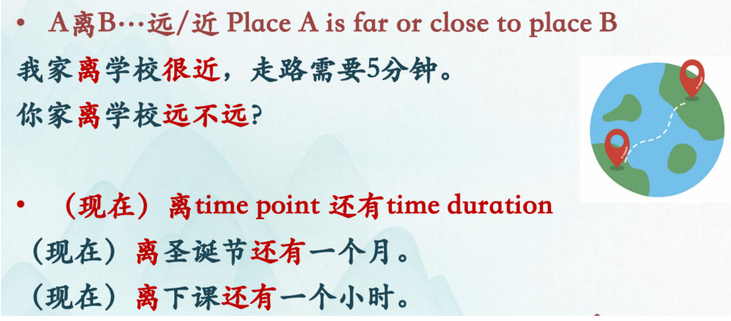
离:
行: ......,行不行?(end of sentence)
...... ,行吗?(end of sentence)
怎么:
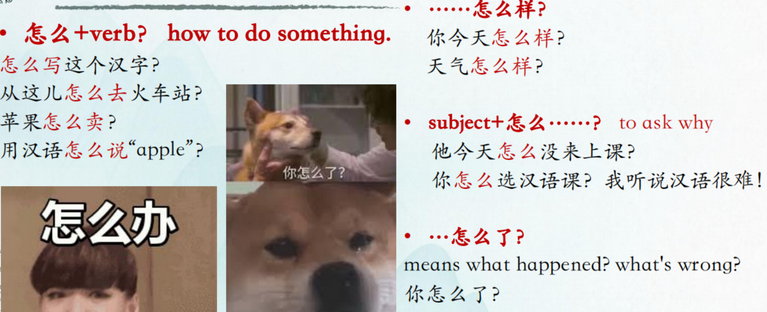
了。:
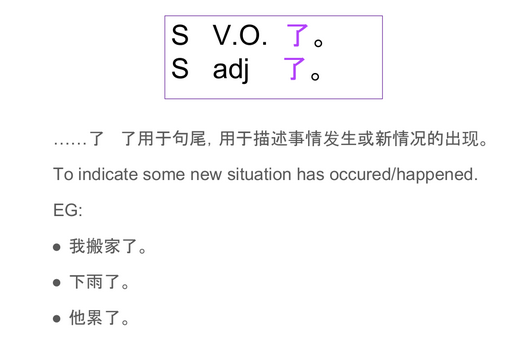
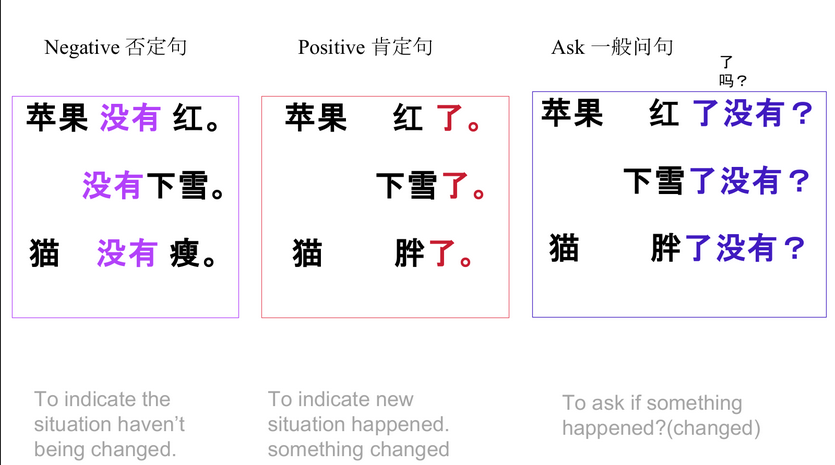
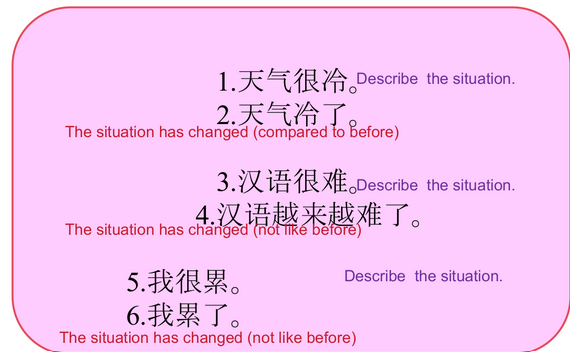
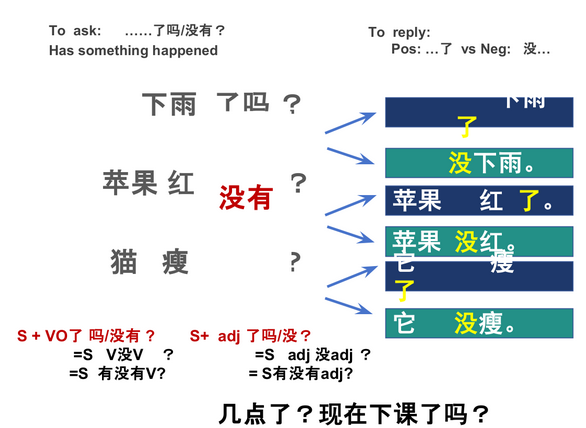
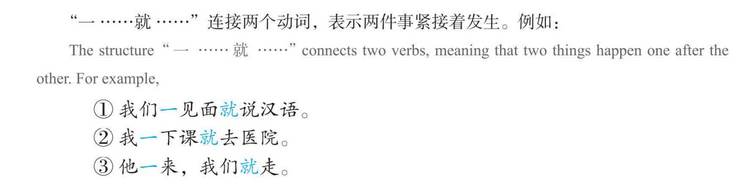
一…就… < no sooner.. than…, hardly… when…, as soon as:

verb+一点儿+noun: 喝 一点儿 茶 < a little bit tea
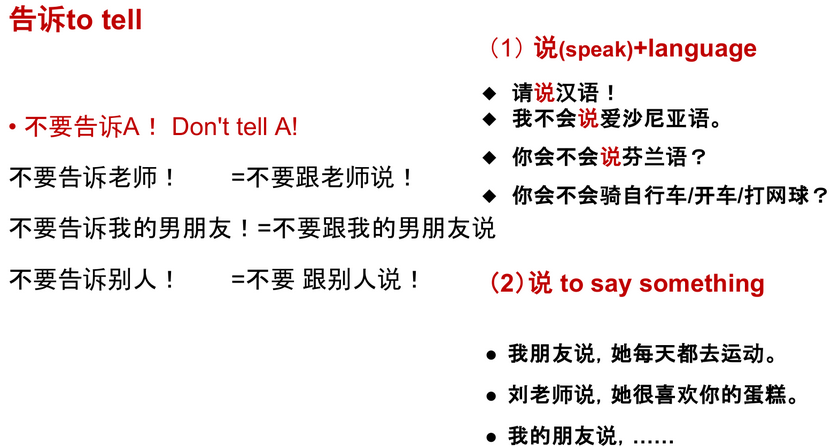
A告诉B,+content: Liu li告诉我,她买了一件新衣服。
告诉 or 说:
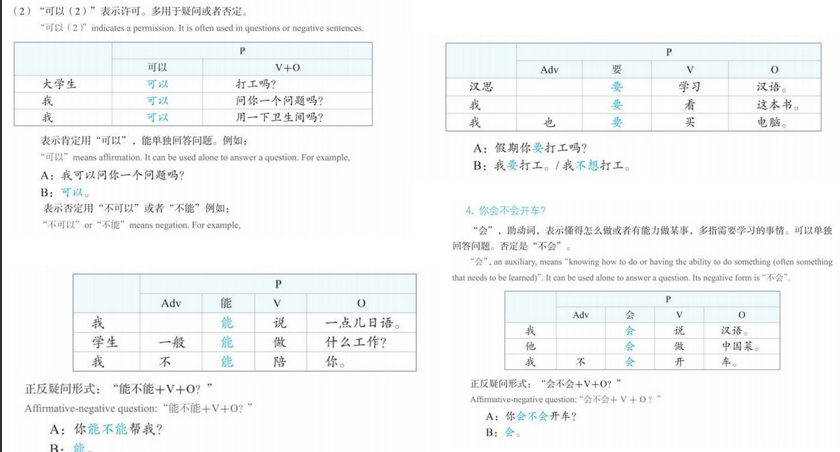
会 < can … (the skill or ability of doing sth.): 我不会画画,我也不会唱歌,但是我会骑自行车。
要(Num.+Mea.)+sth.: 我要一杯咖啡
要+Verb. < have strong desire to do sth. and probably will do with determination: 我要好好学习!
想 +Verb/想+做什么 < want;wish(have the willing but haven’t plan to do yet): 我以后不想在欧洲工作。
想 +n. < miss someone: 想朋友
辅导 < A 辅导B verb… or A辅导B noun. (A helps B to learn something): 我辅导弟弟英语。
互相+verb < 互相帮助bāng zhù(to help)
可以: 1. to indicate an ability or a possibility < 我可以帮你。2. to ask permission (put 可以 in directly before a verb to create a meaning of "may " (plus the verb).) < negative form: 不能/不可以+verb……你明天不能看电视。
S 会 /想/能/可以 V O. < 1.我会......,但是我不能......,因为......
可以:
s. 帮 +谁+ 做什么 (S. help somebody do sth.): 姐姐的房间很乱,我要 帮她收拾房间
会 (huì) < can also be used to indicate that something will happen or that someone will do something.: 天气预报说,明天会下雪。