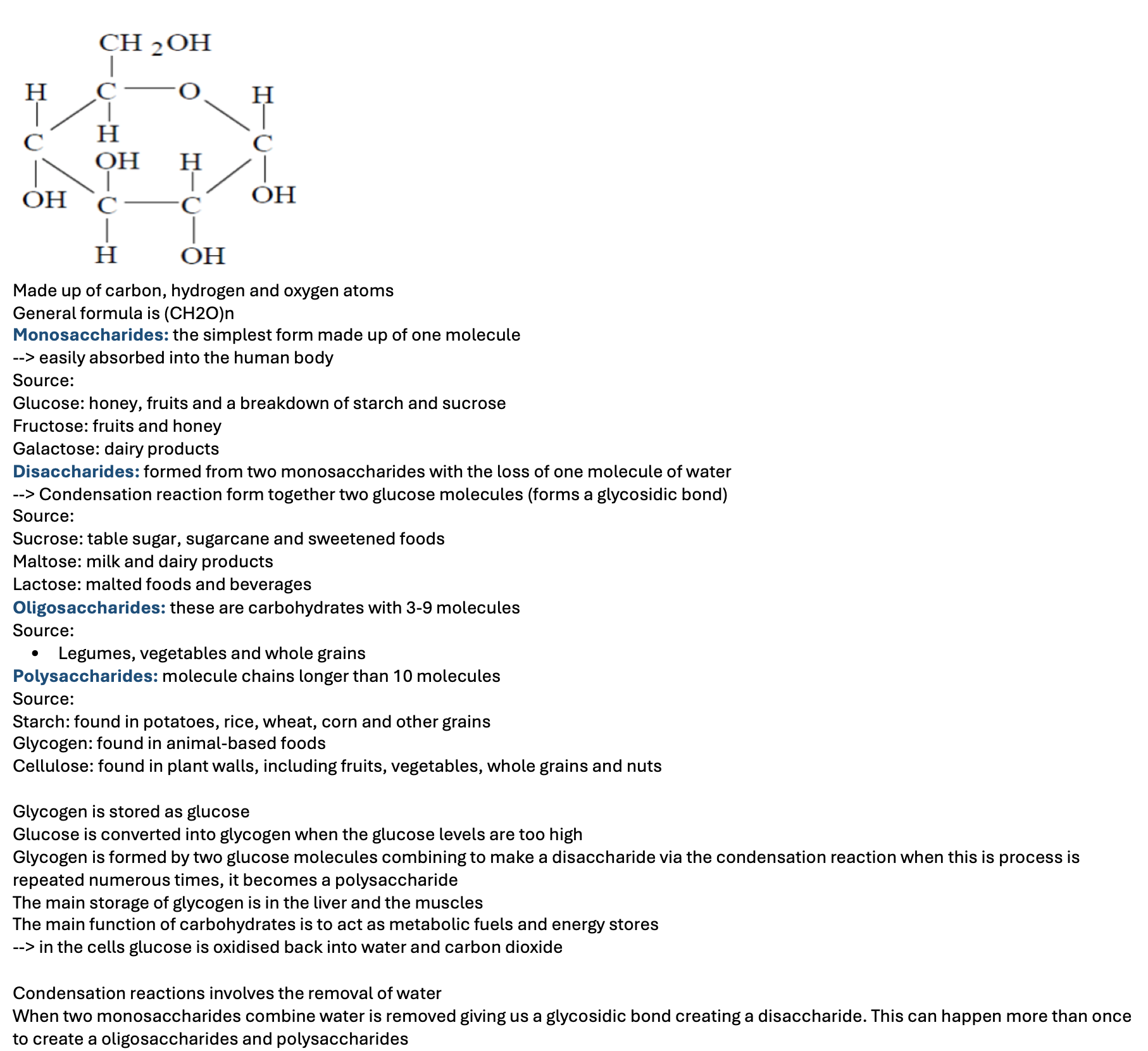
Carbohydrates
Made up of carbon, hydrogen and oxygen atoms
General formula is (CH2O)n
Monosaccharides: the simplest form made up of one molecule
--> easily absorbed into the human body
Source:
Glucose: honey, fruits and a breakdown of starch and sucrose
Fructose: fruits and honey
Galactose: dairy products
Disaccharides: formed from two monosaccharides with the loss of one molecule of water
--> Condensation reaction form together two glucose molecules (forms a glycosidic bond)
Source:
Sucrose: table sugar, sugarcane and sweetened foods
Maltose: milk and dairy products
Lactose: malted foods and beverages
Oligosaccharides: these are carbohydrates with 3-9 molecules
Source:
Legumes, vegetables and whole grains
Polysaccharides: molecule chains longer than 10 molecules
Source:
Starch: found in potatoes, rice, wheat, corn and other grains
Glycogen: found in animal-based foods
Cellulose: found in plant walls, including fruits, vegetables, whole grains and nuts
Glycogen is stored as glucose
Glucose is converted into glycogen when the glucose levels are too high
Glycogen is formed by two glucose molecules combining to make a disaccharide via the condensation reaction when this is process is repeated numerous times, it becomes a polysaccharide
The main storage of glycogen is in the liver and the muscles
The main function of carbohydrates is to act as metabolic fuels and energy stores
--> in the cells glucose is oxidised back into water and carbon dioxide
Condensation reactions involves the removal of water
When two monosaccharides combine water is removed giving us a glycosidic bond creating a disaccharide. This can happen more than once to create a oligosaccharides and polysaccharides