Electricity in AQA GCSE Physics
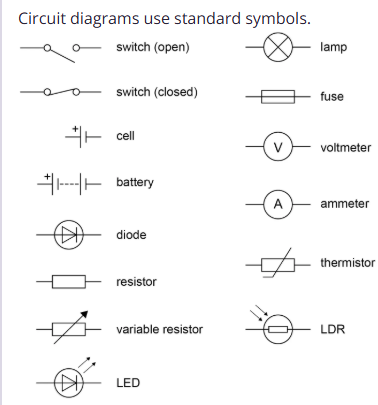
Key Points:
A closed circuit is required for charge to flow, allowing electrons to travel through a continuous path, which is necessary for any electrical device to operate.
A source of potential difference, commonly provided by batteries or cells, is essential to push the charge through the circuit. The voltage of the battery determines how much current can flow in the circuit, with higher voltage sources able to deliver more power.
Electrical Current
Definition: The flow of electrical charge, typically carried by electrons in a conductor.
Current Formula:
where:
= charge in coulombs (C)
= current in amperes (A)
= time in seconds (s)
Characteristics:
The electrical current remains the same throughout a single closed loop due to the conservation of charge.
The current that passes through a component is determined by both its resistance (R) and the potential difference (V) across it, expressed by Ohm's Law:
.
Resistance and Components
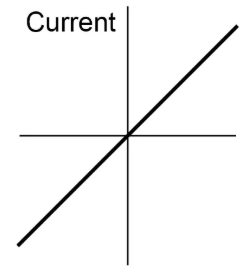
Ohmic Conductors: These components have constant resistance, meaning that the current is directly proportional to the potential difference applied across them. Their I-V graph (current vs. voltage) is linear, indicating a predictable relationship between current and voltage.
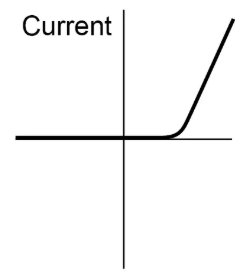
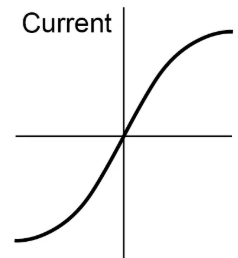
Non-Ohmic Components: These include devices like filament lamps and diodes where the resistance varies with current. Their I-V graphs are nonlinear, showing that as the current changes, the resistance also alters.
Factors Affecting Resistance:
Current: An increase in current often results in more collisions between charge carriers, which increases the resistance in certain materials.
Temperature: For most conductors, the resistance increases with temperature due to increased vibrations, which alter electron flow. However, for materials like thermistors, this relationship can be inverse, where resistance decreases as temperature rises.
Length: In a conductor, longer lengths of wire lead to greater resistance since electrons encounter more obstacles as they move through the material.
Light: Light Dependent Resistors (LDRs) exhibit decreased resistance with increased light intensity, making them useful in light-sensing applications.
Series and Parallel Circuits
Series Circuits:
In series circuits, the current remains the same at all points, meaning that all components share the same flow of charge.
Total Resistance: The overall resistance in a series circuit is calculated by the sum of individual resistances:
The potential difference, or voltage, across the components is divided among them, leading to voltage drops based on their resistances.
Parallel Circuits:
In parallel circuits, the current splits across the different branches, allowing each component to operate independently but still receiving the same potential difference.
The total current entering a junction is equal to the total current flowing out, which is governed by Kirchhoff's Current Law.
The potential difference across all branches remains constant and the total resistance of the circuit is less than the resistance of the smallest branch resistor, calculated using:
.
Mains Electricity
Key Points:
Mains electricity in the UK is supplied as alternating current (AC) with a frequency of 50 Hz and a standard voltage of approximately 230 V.
There are three wires in a typical electrical plug:
Live wire (Brown): Carries the potential difference of 230V and provides the voltage necessary for electrical devices to operate.
Neutral wire (Blue): Maintains a potential of 0V, completing the circuit by providing a return path for current.
Earth wire (Green/Yellow): Also at 0V, this safety wire prevents electrical shock by directing any fault current safely to the ground.
Power:
The relationship between energy transferred, power, and time is expressed as:
where E is energy in joules, P is power in watts, and t is time.Power loss in electrical systems is proportional to the square of the current, highlighting the importance of managing current levels to minimize energy waste.
National Grid
The National Grid is an extensive system of cables and transformers linking power stations to consumers across a geographical area, ensuring a reliable electricity supply.
Transformers:
Step-up Transformers: These devices increase the potential difference (voltage) during transmission to reduce energy losses over long distances, as higher voltage allows for lower current, which minimizes resistive heating loss.
Step-down Transformers: These reduce the voltage for safety and usability once the electricity reaches homes.
Static Electricity
Static electricity occurs when insulators are rubbed together, resulting in the transfer of electrons from one object to another, leading to a build up of electric charge.
sparks are caused when the potential difference gets large enough so electrons jump the gap between the charged object and the earth.
They can also jump between any earthed conductor that is nearby.
Key Concepts:
Like charges repel, while unlike charges attract, exemplifying the fundamental nature of electrical forces.
Electrostatic forces act at a distance, classifying them as non-contact forces, allowing charged objects to interact without physical contact.
Electric Fields
Electric fields represent the forces experienced around charged objects, demonstrating how charges interact with one another.
The direction of an electric field points away from positive charges and towards negative charges. The field strength increases with the magnitude of the charge and decreases with increasing distance from the charge.