Research With Prisoners
The only research that is allowed to be done on prisoners is material about their lives or conditions within incarceration.
Prisoners can also include individuals in hospitals or drug treatment facilities, work-release, or house arrest, all by court order no matter if they are adults or minors
However, it does not include those on parole
Minimal Risk for Prisoners
includes the probability and mangitude of harm within nromal of medical, dental, or psychological examination of healthy persons
Non-prisoner minimal risk

This definition includes discomfort, not just physical or psychological harm
Who regulates this?
The Office for Human Research Protections (OHRP)
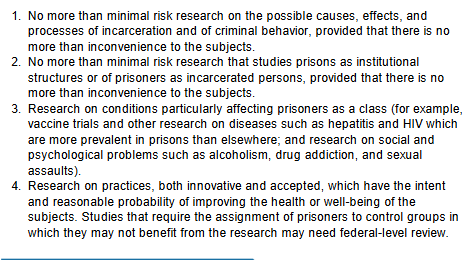
Prisons can be involved in 4 categories of risk in research
Challenges to Consent with Prisoners
free choice
without coercion or undue influence
need to be informed that participation has no effect on status of charge or sentence
the use of incentives
keep them appropriate to the research setting and population
should not infringe on ability to make a sound and informed decision e.g. if incentive is food, money, extra calls, medical care, quality of food, earnings, living conditions, creating pressure to participate
Descriptions of Confidentiality
need to be written at a reading level that is accessible for participants
risk and minimization plan explicitly states
state what info would be available to correctional staff
Limits to Confidentiality
let them know what kind of information has to be reported such as escape plans or self harm
consent forms may expose if prisoner has a certain condition, illness, conviction, or other info they may not want staff or other inmates to know about, so they need to make informed decisions
Assessing Risk for prisoners
Harm in asking questions
limited support system to allow them to debrief afterwards, or means and skills to process thier feelings, even going for a run or talking to a friend afterwards. So researchers need to provide strategies to help prsioners when talking about senstive or emtionally heavy topics
Breaches of confidentilaity
unique to prison setting and strategies to manage the risk
nature of conviction
can interview a variety of convictions and only keep the ones you needed to conceal those who don’t want to be exposed
Health status
quality of life for those with HIV, can do the same as first scenario, and talking in private
Prison life
e.g. if focus groups are used, still make the same statement about not being able to guarantee
some things shared can be used against them by other inmates, so individual interviews for sensitive topics is best
IRB Requirements for Prsion Studies
composition required for prison studies boards
no association with prisons involved
one must be a prisoner or representative with background experience to step in the shoes of prisoners
e.g. former prisoners, chaplains, psychologists, social workers, service workers, rights’ advocates, etc.
must be a voting member on the board
Required findings can only include

additionally must:
be presented in a lnaguage that is understandable to population
be clearly informed about pparole status being unaffected
have adeqaute provisions for follow-up examination or care, and be infromed that the provisions have been made
expempt and expedited reveiw of prisoner research
expedited is usually discouraged by OHRP
some studies incidentally involved prisoners in broader studies, and in some corcumstance that is ok
use of waivers
is fine as long as no effect on parole is communicated
If a research participant gets incarcerated

How to actually Access Prisoners
jurisdiction can be local, state, or federal level
policies differ in various counties
juvenile facilities have different processes and policies
incarcerations has different phases, as well.
must get familiar with policies of target prisons
Usually have a review process sometimes similiar to the IRB within facility
superintendent has final say for if researcher gets access
seek safety of ALL involved
is there office space? will it get in the way of good daily routines? Is there enough staff?
Can form relationships and partners with prison social workers, psychologists, and custody staff while conducting study
can somteimtes further gals of different departments