Natrual science
METALS AND OXYGEN
"Some metals react with oxygen during burning. This is called
COMBUSTION.
When a substance reacts with oxygen - a product called an OXIDE is formed.
METAL + OXYGEN • METAL OXIDE
E.g. SODIUM + OXYGEN •
E.g
IRON + OXYGEN O
(Iron oxide = RUST)
METALS BURNING IN OXYGEN
SODIUM BURNS WITH A BRIGHT YELLOW FLAME IN OXYGEN
POTASSIUM BURNS WITH A BRIGHT LIGHT
MAGNESIUM BURNS WITH A BLINDING WHITE LIGHT.
WORD AND CHEMICAL EQUATIONS
-MAGNESIUM + OXYGEN • MAGNESIUM
OXIDE
"Mg + 02
Mgo
•2Mg + 02 • 2MgO
Some metals react with oxygen during burning. This is called COMBUSTION.
When a substance reacts with oxygen - a product called an OXIDE is formed.
METAL + OXYGEN • METAL OXIDE
E.g. SODIUM + OXYGEN •
E.g
IRON + OXYGEN O
(Iron oxide = RUST)
42,
4 of 5
METALS BURNING IN OXYGEN
SODIUM BURNS WITH A BRIGHT YELLOW FLAME IN OXYGEN
POTASSIUM BURNS WITH A BRIGHT LIGHT
MAGNESIUM BURNS WITH A BLINDING WHITE LIGHT.
WORD AND CHEMICAL EQUATIONS
•MAGNESIUM + OXYGEN • MAGNESIUM
OXIDE
Mg + 02 0 MgO
2Mg + 02 • 2MgO
RUST
Rusting is a type of CORROSION. Corrosion weakens and damages metal.
RUSTING: A slow chemical reaction of iron with oxygen in the air, in the presence of water.
Do you think that things rust faster in Cape Town or Gauteng?
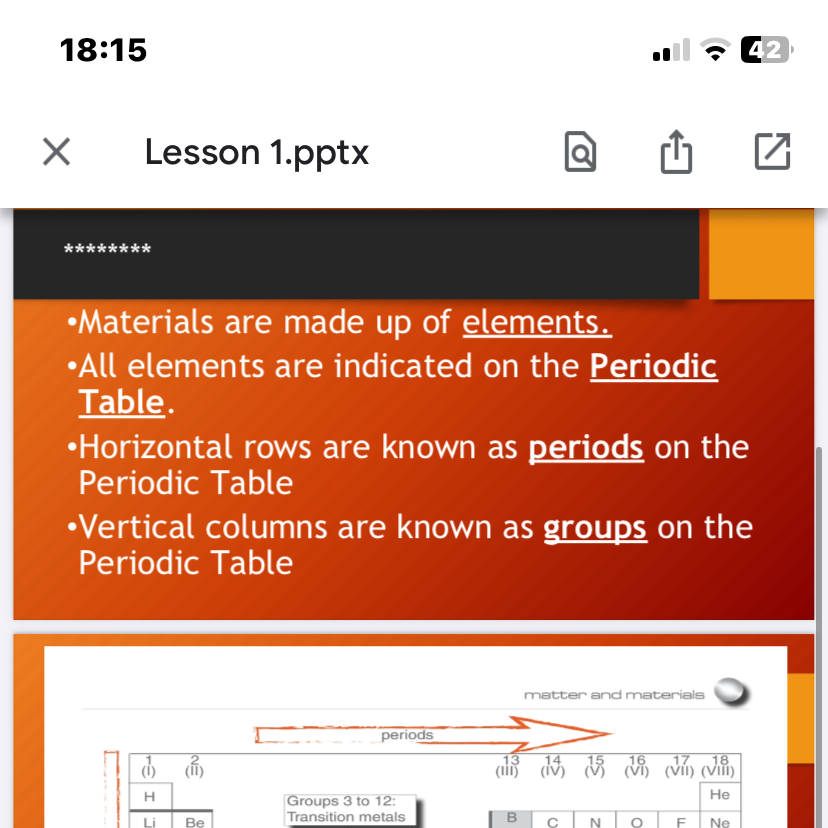
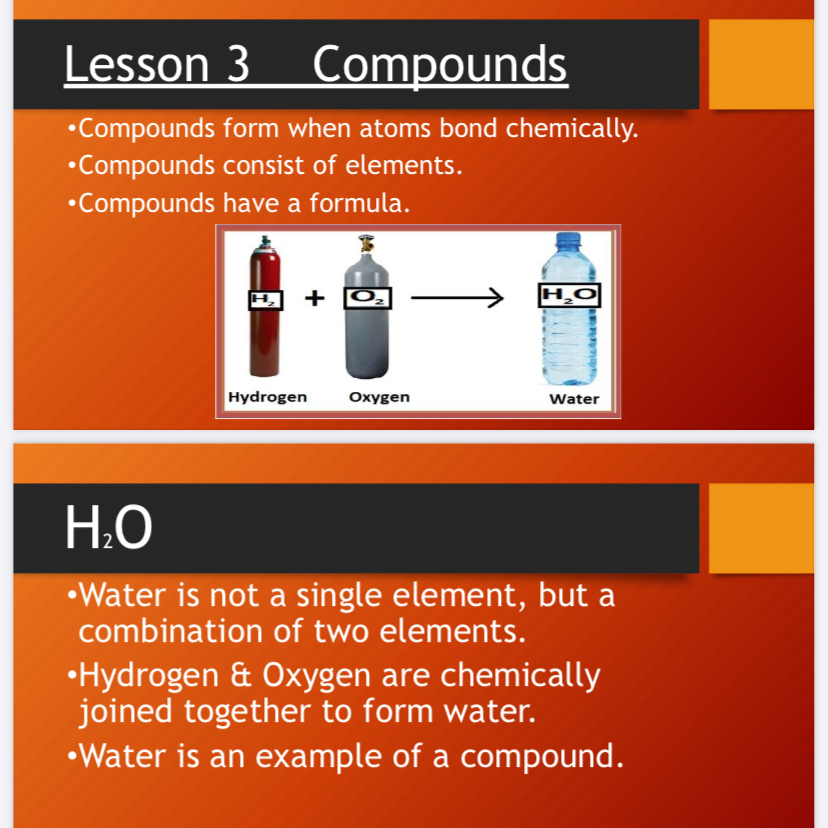
•Materials are made up of elements.
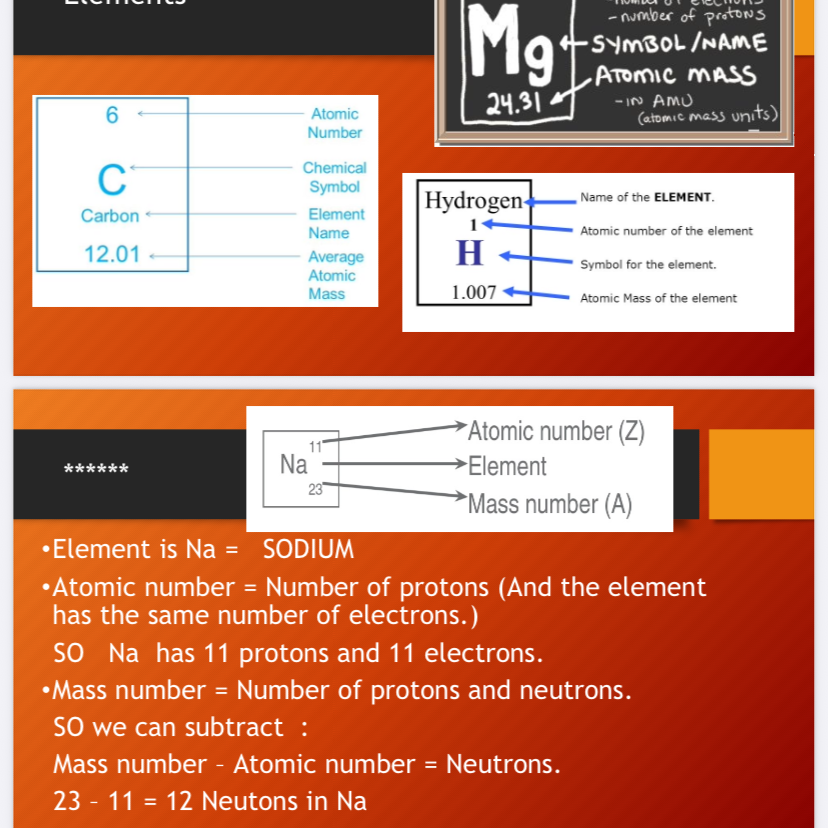
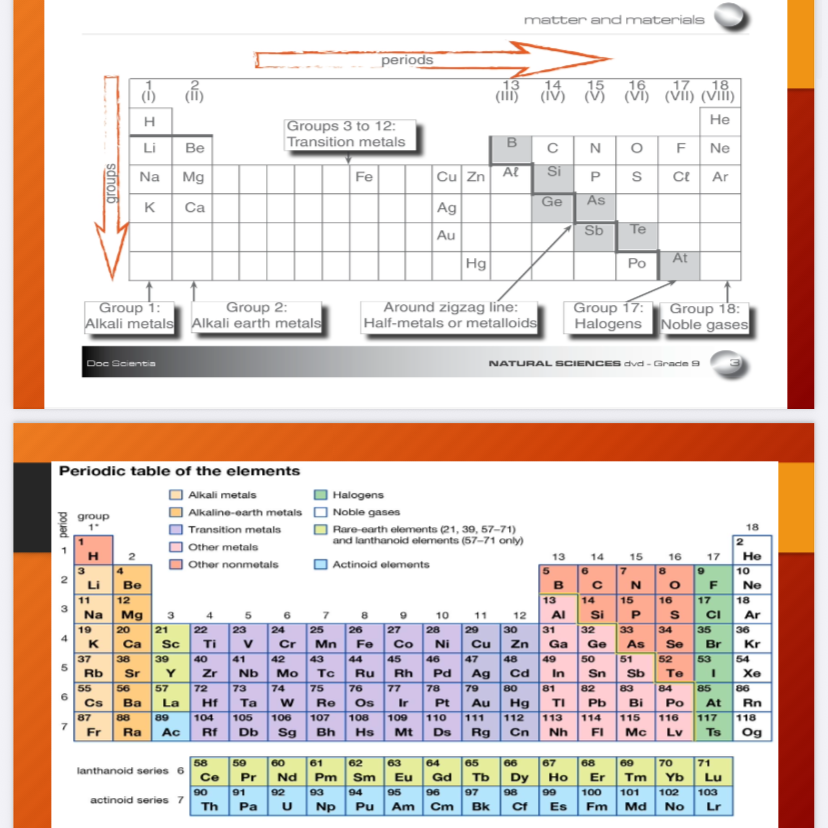
•All elements are indicated on the Periodic Table.
•Horizontal rows are known as periods on the Periodic Table
•Vertical columns are known as groups on the Periodic Table
The Atom
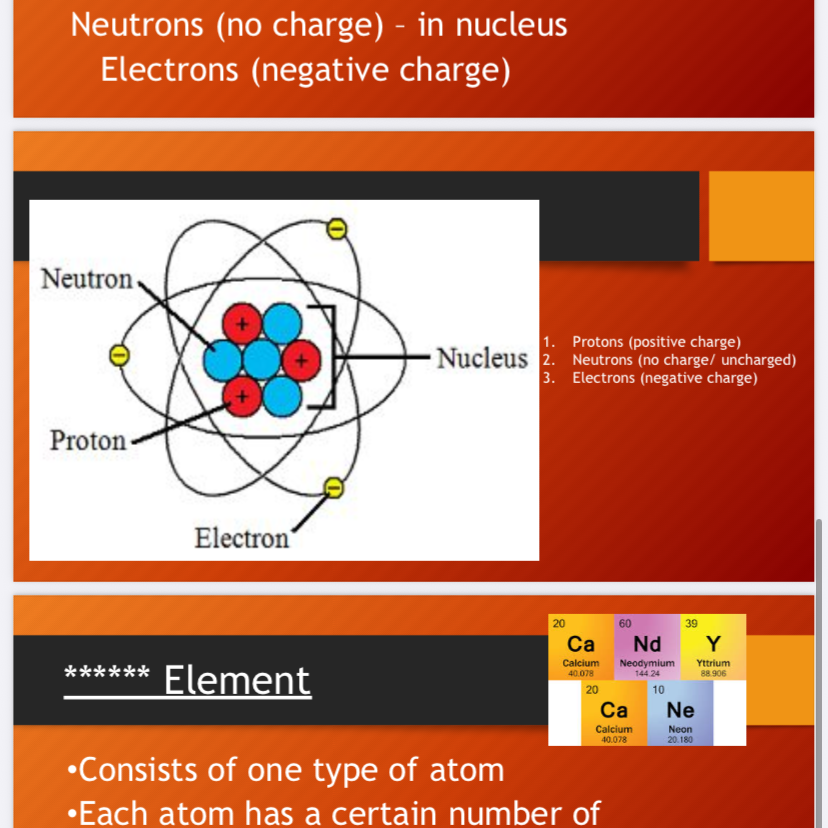
All matter is made up of tiny particles called atoms
Atoms are made up of 3 basic particles, namely:
Protons (positive charge) - in nucleus
Neutrons (no charge) - in nucleus
Electrons (negative charge)
Element
Consists of one type of atom
Each atom has a certain number of neutrons, protons and electrons.
An element is the simplest him form of matter
you cannot break it down into simpler substances.