EXAM 2 STUDY
poussin, eliezer and rebecca at the well, 1640’s
subject: depicts the story, from the genesis, about eliezer seeking a wife for issac, his son. when he stops at a well to ask for water, he meets rebecca, who offers a drink to both him and his camels, showcasing her generosity, which leads to her being chosen as issac’s wife.
style: french classical style. the figures are arranged in a frieze-like arrangement, similar to classical greek reliefs. the scene is highly organized, avoiding the dramatic chaos commonly found in baroque paintings. the expression of the other female figures range from curiousity to jealously, adding to the narrative.
commission: the work was commissioned by a wealthy french silk merchant who was already a patron of poussin. they requested the art to feature female figures that reflect beauty. to further emphasize the theme, poussin adds jugs that look similar to the female form.
french classical baroque characteristics: poussin avoids dramatic lighting in favor of more rational light that illuminates the whole scene. the figures are arranged in “frozen” poses opposed to dynamic actions.
rubens, the raisings of the cross, 1610’s
style: high baroque, flemish
key features of the baroque style shown is the dynamic action shown through a diagonal composition, dramatic lighting, strong emotions, and realistic bodies
subject: alterpiece made of 3 connected panels that tell the story of jesus being put on a cross. in the middle panel, a group of men are struggling to lift a wooden cross with jesus already nailed to it, a moment of intense drama. the left panel show’s jesus’s followers watching sadly. his mother, mary is looking distressed. in the right panel, roman soldiers are dealing w thieves who were crucified on the same day as jesus.
context: the altarpiece was commissioned by the leaders of a church in antwerp, belgium. it was placed above the main alter in their church. emphasizing both the sorrows and chaos from the Crucifixion vof jesus. ruben responded to the iconoclasm by creating religious work that glorified the catholic faith
rubens, Henry IV (4) receiving the portrait of maria de medici, 1620’s
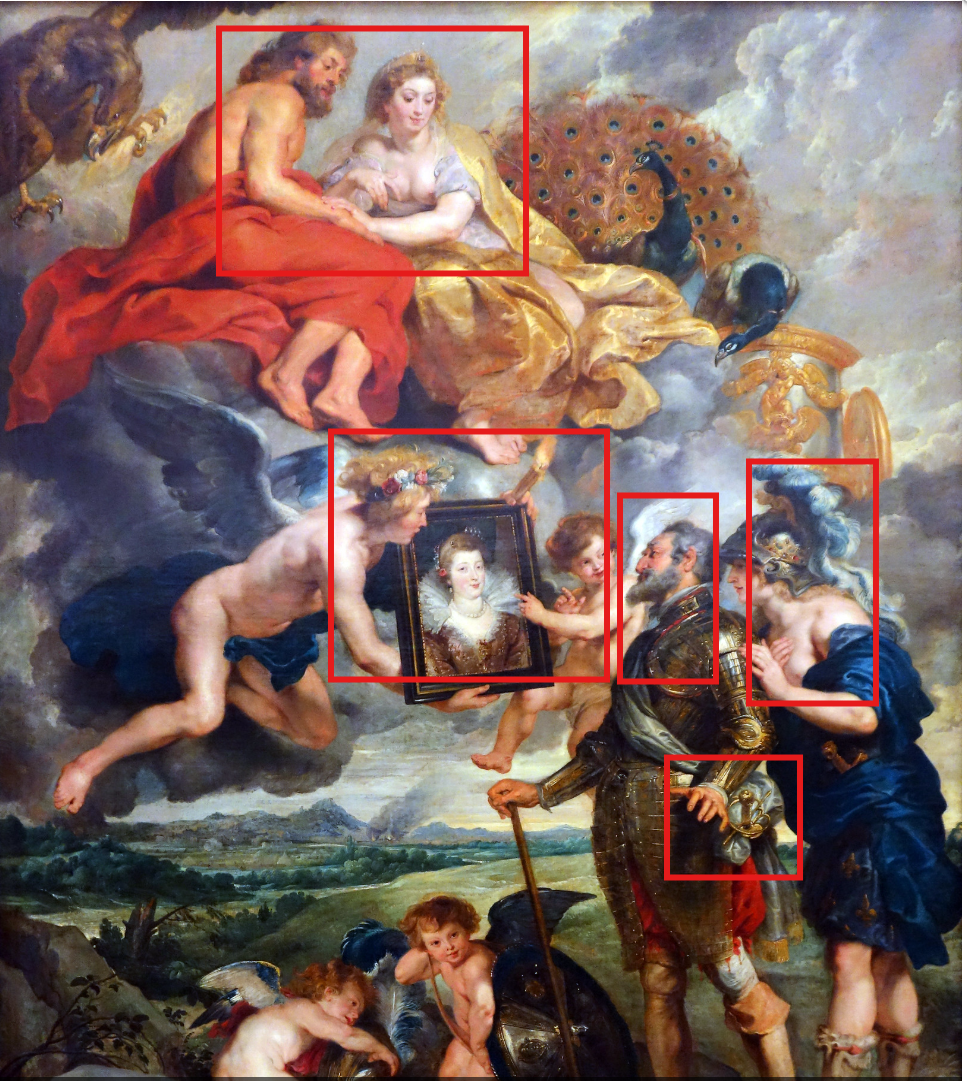
subject: depicts the moment king henry iv of france agreed to marry marie de medici. the king is shown pausing from war, his armor off to reflect the end of the war and choosing love over war. the portrait of marie de medici is held up by cupid, the god of love, and hymen, the god of marriage. the king and queen of roman gods are looking down from the clouds, giving their blessingsm making the marriage seem divinely ordained. a figure behind the king, reflecting france, is pushing him towards marriage, suggesting that the marriage was also a political move for the good of the country
context: main purpose of the marie de medici cycle was political. medici commisioned these massive paintings to show everyone that her life was important and legitimize her role as queen
style: flemish baroque style
dynamic composition w strong diagonal lines to create sense of movement
chiascuro is used to illuminate the figures and darker backgrounds to create a sense of depth. focus attention on details, specficially the portrait and the king’s face
vibrant colors added a sense of grandeur
blends real historical figures w several roman gods and allegorical personificiations, elevating the mundane event to an epic narrative
scale and grandeur of the work, projected authority and inspire awe in the public audience