Challenging, Resistance, and Transference
Transtheoretical Model of Change
precontemplation
no perceived need for change
contemplation
awareness of problem, lack of commitment to act
preparation
decision to make change as evidenced by small actions
action
overt behavior change, moving toward desired outcome
maintenance
continuation of actions necessary to maintain change
Cycle - precontemplation → contemplation → preparation → action → maintenance → recovery or relapse → precontemplation
Client Change Scale (CCS)
denial
denies existence of incongruity or conflict
partial examination
partially recognizes and understand conflict
acceptance and recognition
recognizes situation for what it is and begins to feel congruent emotions, but no significant change
generation of a new solution
generates new thoughts, feelings, behaviors
transcendence
major changes in thoughts, feelings, behaviors
new sense of “being”, moving past issues
Challenging your Client
listen and identify conflict in client communication
what are the internal conflicts?
incongruity in
verbal and nonverbal behavior
affect and content
conflicting statements
what are the external conflicts?
conflicts between
client & important others
client & counselor
client & expectations
client & religious/cultural norms or figures
clarify and clearly point out issues of incongruity
clearly identify the incongruity or conflicts
present evidence - nonverbal, verbal, behavioral
useful language
on one hand.. on the other hand…
and yet…
but at the same time…
how do you put those two together?
what do you make of that?
draw out and clarify all aspects of the conflict
using observation, active listening, reflection of feeling, etc.
periodically summarize those aspects
follow up with a check out
encourage and support through positive asset search
provide feedback is necessary
if client cannot see discrepancy on their own, use of advanced influencing skills may be needed (particularly in working with adolescents)
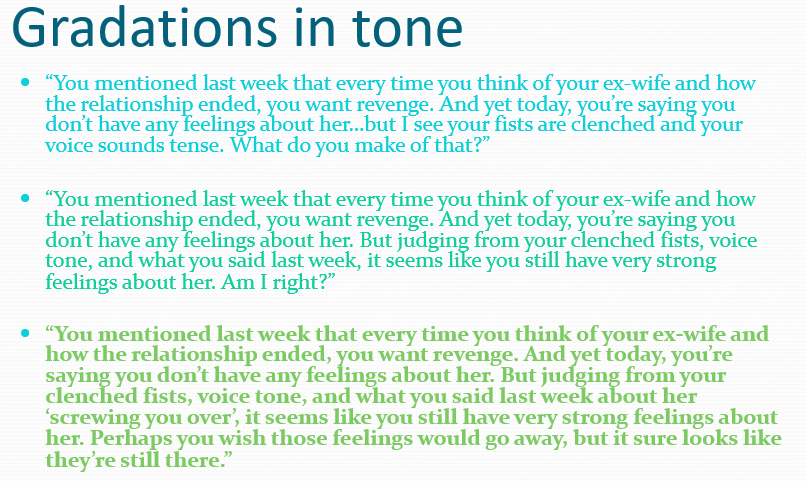
all of these tones are okay! it depends on the client & your comfortability
listen, observe, and evaluate
effectiveness i measured by client response
does the client display change in the here and now?
does the client display change outside of session?
Client Resistance
what is resistance?
traditional psychoanalytic definition - any and all behaviors that interfere with the therapeutic alliance or therapeutic process
what are some alternative conceptualizations?
a joint responsibility for a difficult situation
how is it manifested?
indirectly
talking excessively
talking very little
arriving late or early
being unprepared or overprepared
too much or too little emotional control during session
directly
expressing ambivalence or unwillingness to come to counseling
interacting in a confrontational manner with counselor
Addressing Client Resistance
indirect:
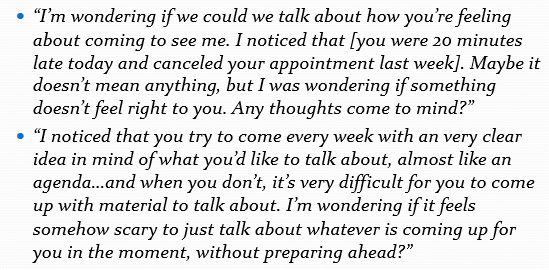
direct:
emotional validation
I get it. I don’t blame you for feeling pissed about having to come to see me
I hear you saying you don’t trust men. That makes sense to me. I’m a stranger… why should you trust me before you get to know me?
radical acceptance
wow. thanks for being so honest… lots of people don’t really like school counselors, but they just sit here and pretend. So I really appreciate you telling me exactly what you’re thinking.
paradox
based on what’s happened in the past, it’s pretty likely that you won’t be able to have a good relationship with your mom - you won’t be any better off. so why try at all?
Promoting change in “resistant” adolescents
are adolescents really “resistant” and “difficult”
developmentally appropriate conceptualization
counselors may encourage adolescents to be assertive, direct, autonomous
may be adaptive, especially in girls
adolescents resist making “contact”
“Resistant” adolescents
what are some strategies that may work well in breaking through with adolescents?
person-centered
motivational interviewing
solution-focused
developmental, multicultural, and feminist considerations
choice theory (the only person’s behavior you can control is your own)
cognitive-behavioral problem solving
playful interventions - movement, games, what are their interests?
Transference
the displacement of feelings, attitudes, or impulses experienced toward previous figures in a person’s life onto current figures who do not realistically apply
can be an idealized image or negative
seen as both useful and as an impediment
early relationships act as templates
what are some common transference reactions?
all clients come to therapy with interpersonal dispositions determined by previous experience, which in turn get reenacted in session
fear or resentment of authority figures
dependence or avoidance
trust or mistrust of motives
reluctance or readiness to divulge intimacies
often stem from familial relationships since they are likely to be involved in initial psychological conflicts
discussing transference can help
progress the treatment
alleviate resistance
identify aspects of patients’ interpersonal relationships that would otherwise go unnoticed
Client Profile
a client who, in the midst of recalling an event, suddenly gets angry and states “are you even listening to me”
likely transference reaction happening here?
consider
distorted perception/misattribution not grounded in reality
why is the client bringing it up now?
how would you address it?
Issues in the Real Relationship
not every reaction is transference
it can be very frustrating if you behave as thought it is
clients can react to “real” frustrating aspects of care
frequent cancellations by counselor
counselor regularly being late
counselor traveling for extended periods of time
counselor going on leave
real relationship is distinct from the working alliance
clients may at times respond to the “realness” of the counselor, and this can be taken at face value and responded to as such
Related Skills
counselor tracked the client and responded to underlying emotion when it presented itself
counselor empathically confronted the client with a discrepancy in the client’s communication
the counselor verbally acknowledged non-verbal affect cues