Virology
Viruses: what are they and what do they do?
Viruses are microscopic organisms that exist almost everywhere on earth. They can infect animals, plants, fungi, and even bacteria
Viruses vary in complexity. They consist of genetic material, RNA or DNA, surrounded by a coat of protein, lipid (fat), or glycoprotein.
Viruses cannot replicate without a host, so they are classified as parasitic.
Viruses
Non-cellular form of life
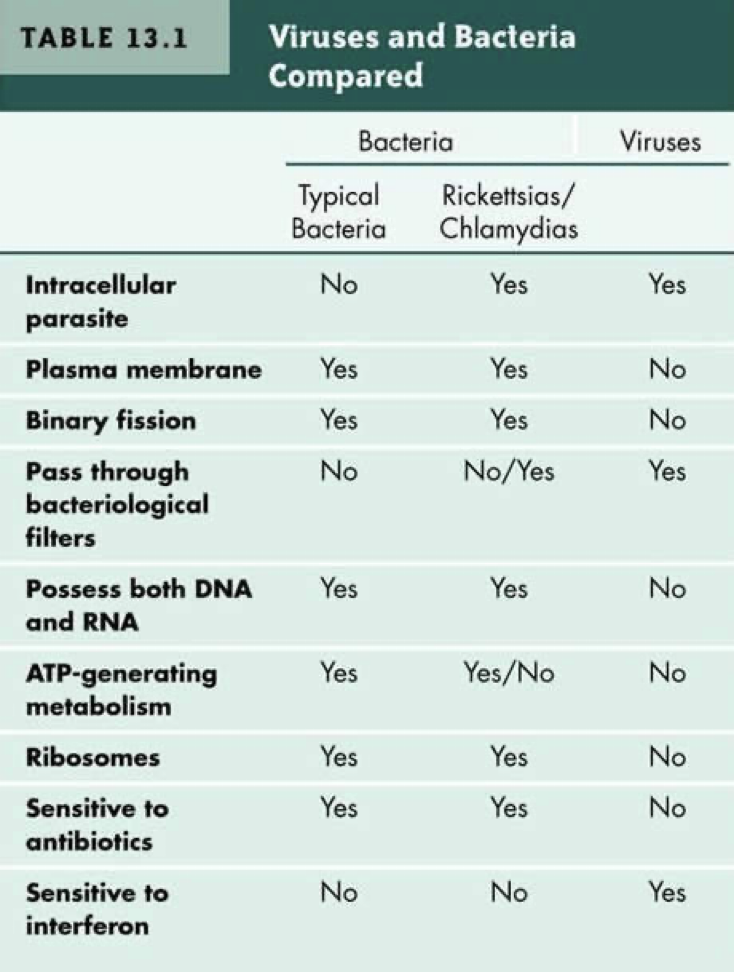
Obligate intracellular parasites
The fundamental characteristic is their absolute dependence on a living host organism for their reproduction, no metabolic activity outside host
Exist as inert particles (virions) outside the cell
Virions harbor viral genome protected by protein shell
Virion vs virus:
Virion is the infectious particle
composed of nucleic acid, protein capsid, +/- envelope
may be extracellular or intracellular
Virus is any stage of infection
Transmission of Viruses
Touch/direct contacts
Exchanges of saliva, coughing, or sneezing
Sexual contact
Contaminated food or water
Insects that carry them from one person to another
Viral Epidemiology
Viral epidemiology is the scientific discipline concerned with the study of the incidence and spread of viruses in populations over time.
Host, virus and environmental factors are monitored to determine the dynamics of viral infections, the ultimate goal of which is to devise intervention strategies.
Basic Structures of Viruses
General Structure of Viruses
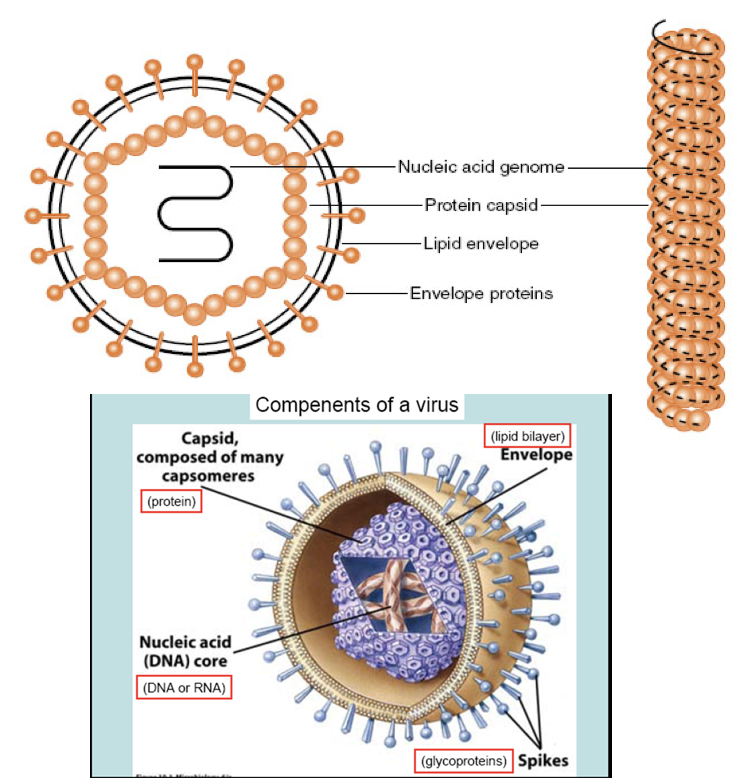
Capsid
Definition: Protein coat surrounding the virus
Function: Protects genetic material
Composition: Made of protein subunits called capsomers
Nucleic Acid
Types: DNA or RNA (single-stranded or double-stranded)
Role: Carries genetic information for replication
Envelope (in some viruses)
Definition: Lipid membrane surrounding the capsid
Origin: Derived from host cell membranes
Function: Aids in entry into host cells
III. Virus Shapes and Symmetry
Shapes
Helical: Rod-shaped elongated nucleocapsid, e.g., Tobacco Mosaic Virus
Icosahedral: Cubic or Spherical, e.g., Adenovirus
Complex: Combination of shapes, e.g., Bacteriophage, Hepatitis B virus, HIV, Ebola
Symmetry
Importance in classification
Types: Helical symmetry, icosahedral symmetry, complex symmetry
IV. Classification of Viruses
By Host Type
Animal viruses
Plant viruses
Bacterial viruses (bacteriophages)
By Nucleic Acid Type
DNA viruses
RNA viruses
By Morphology
Enveloped vs. non-enveloped viruses
V. Virus Replication Cycle
Attachment
Binding to host cell receptors
Entry
Mechanisms: Endocytosis or direct fusion
Replication and Assembly
Use of host cellular machinery
Release
Lysis of host cell or budding process
Based on:
the disease they cause, e.g. poliovirus, rabies virus
the type of disease, e.g. murine leukemia virus
geographic locations, e.g. Sendai virus, Coxsackie virus
their discovers, e.g. Epstein-Barr virus (human herpesvirus 4 (HHV-4)
how they were originally thought to be contracted, e.g. dengue virus (“evil spirit”), influenza virus (the “influence” of bad air)
combinations of the above, e.g. Rous Sarcoma virus
Viral Classification
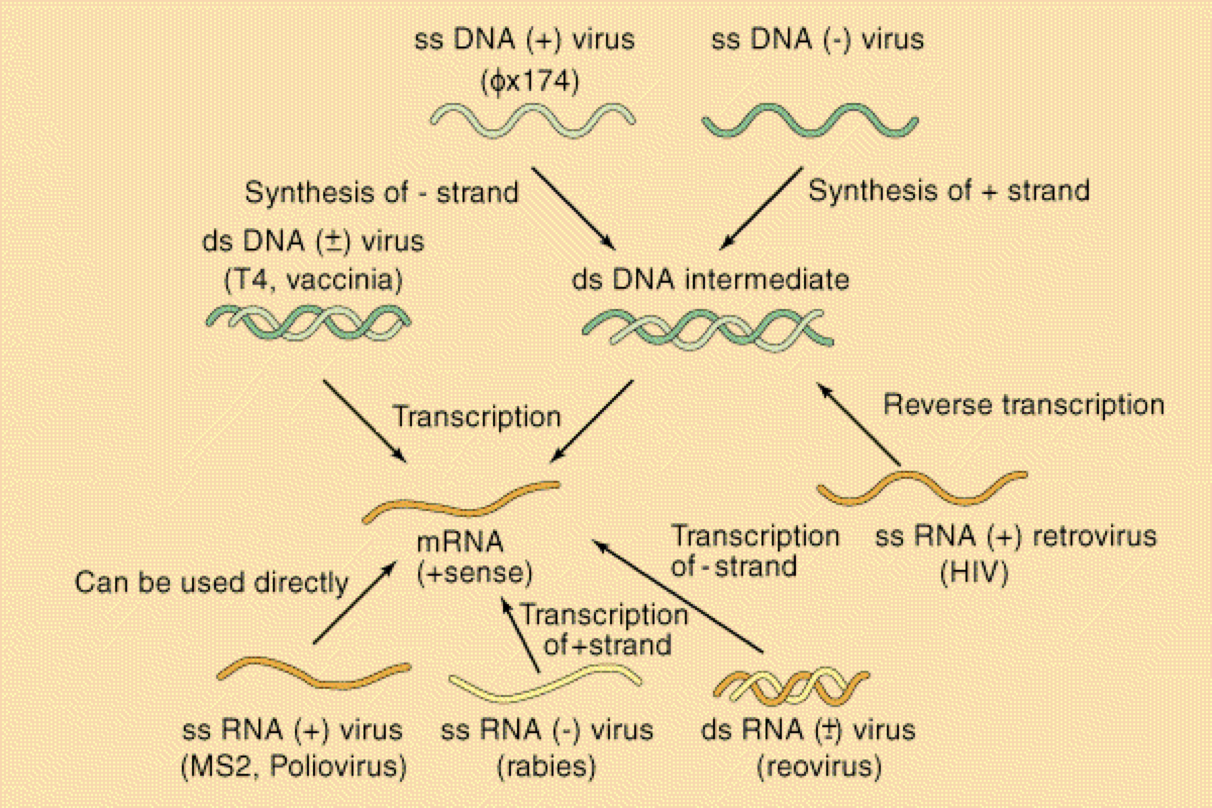
Based on one or all of the following:
Nucleic acid
Morphology
Strategy of replication
Routes of ENTRY:
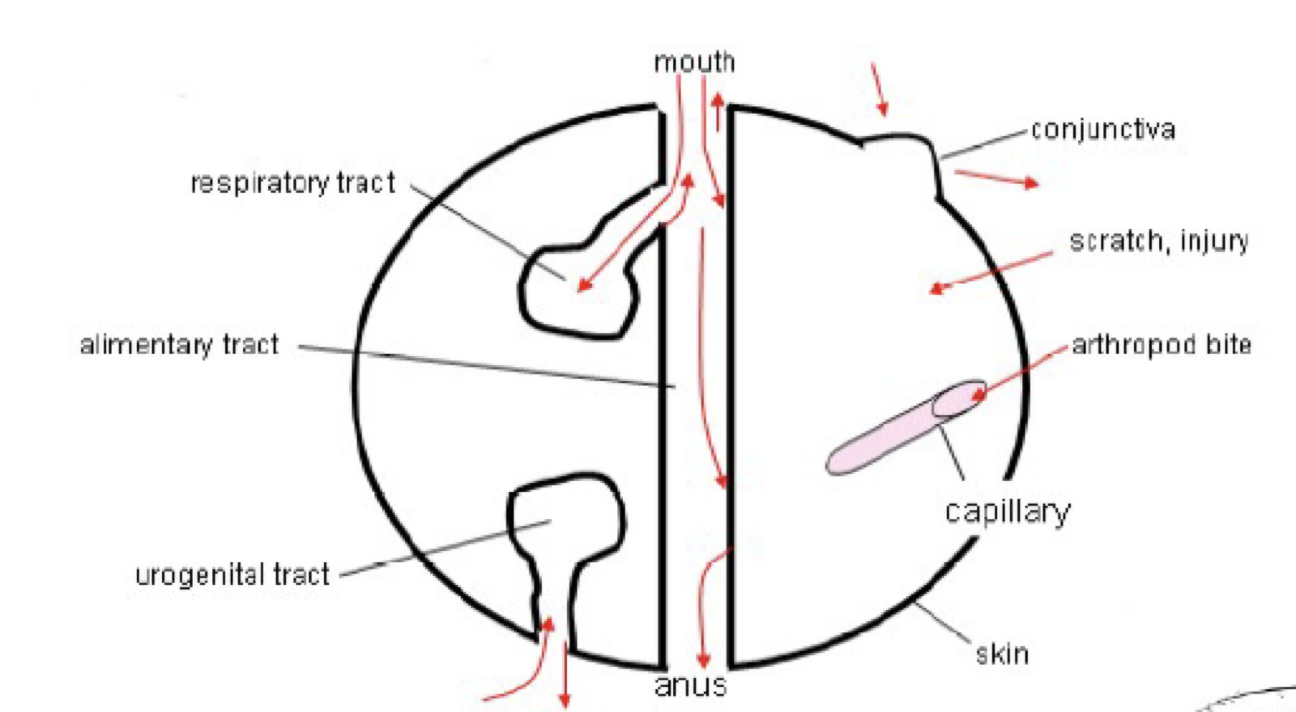
Virus Host range:
•Host range: each virus type can only infect a specific range of host organisms
•Some viruses infect only one host; others have a broader range
Virus Specificity
Viral specificity: molecules on the surface of a virus determine whether it can attach to a particular cell type; cell must have correct surface receptors, plus other internal factors, for virus to infect it.
Some viruses infect only one cell type in a single host species; others can infect many cell types
Viral Pathogenesis: Elements of Virus-Host Interaction
Viral strain
Inoculum size
Route of exposure
Susceptibility of host
Is there pre-existent immunity from past exposure or vaccination?
Host genetic factors
Immune status and age of host
Viral Pathogenesis: Net Result of Virus-Host Interaction
No infection
Abortive infection with limited viral replication
Asymptomatic infection
Symptomatic infection
Persistent, latent or self-limited infection
Depending upon the agent and immune competence of host
Influenced by availability of effective prophylaxis or therapy
The Influenza Virus
Has an RNA genome (8 genes)
Highly variable virus
Lipid envelope with protein spikes
Relatively unstable at room temperature (half life = a few hours)
There is a species barrier due mostly structure of HA protein
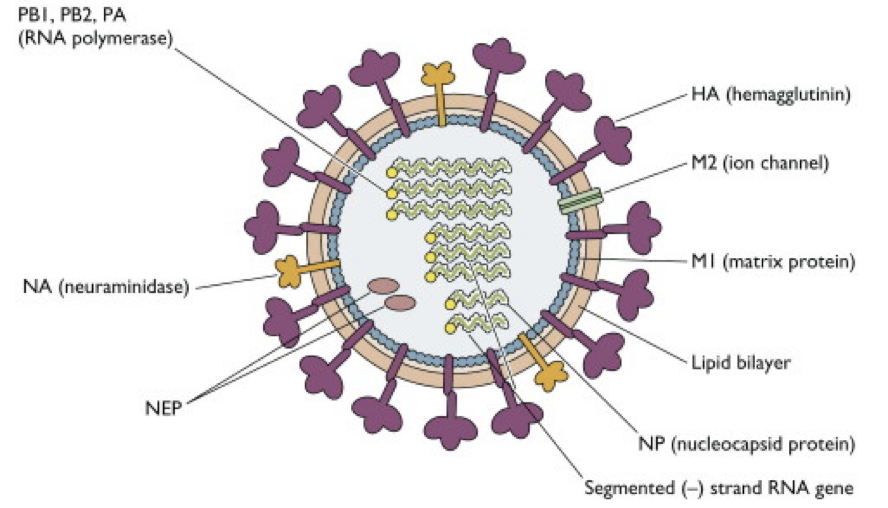
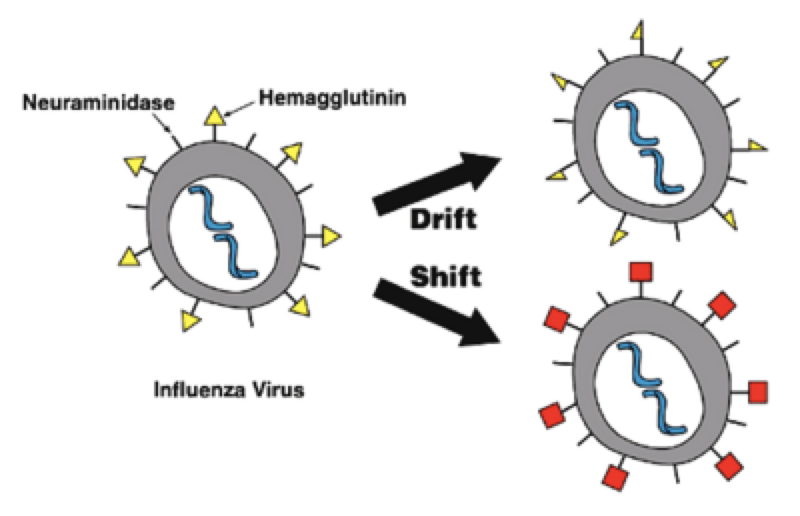
HEMAGGLUTININ (HA) - The “H” in influenza names
On the surface of the virus
Functions as the receptor for the virus to bind to the host cell
There are 17 different subtypes of HA (representing the numbers, H1, H5, etc. in influenza naming)
HA elicits an immune response and is part of the influenza vaccine
NEURAMINIDASE (NA) - The “N” in influenza names
On the surface of the virus
Functions as an enzyme to let the new viral particles out of the host cell
There are 10 different NA subtypes
NA is also part of the influenza vaccine
The species which different types of influenza viruses are able to infect are determined by HA receptor binding to different forms of the receptor present on the host cell
This provides a considerable species barrier between birds and humans which is not easily overcome.
Pigs provide a "mixing pot" - able to be infected by both types of virus & thus allowing the passage of avian viruses to humans.
How the FLU virus changes: antigenic shift and drift
Flu viruses constantly change and mutate.
Antigenic drift refers to changes to the flu virus that happen slowly over time.
Antigenic shift results when two different flu strains combine and infect the same cell and their genomes combine. This results in a sudden change in the virus. This can result in a pandemic strain.