Blood
Blood
Introduction
In this lesson, we will delve into the composition of blood, examining its cellular makeup, including red blood cells, white blood cells, and platelets, as well as the liquid plasma that serves as the medium for their transport. We will also explore the vital role of hemoglobin in red blood cells for oxygen delivery to tissues as well as the importance of platelets in the clotting process.
Furthermore, we will discuss the ABO and Rh blood group systems, which determine an individual's blood type and compatibility for blood transfusions. Blood specimens are gathered with the purpose of obtaining samples for laboratory testing, which may include serum, plasma, or whole blood. Understanding these blood types is crucial for safe transfusion practices and for managing the supply of blood in medical settings. Join us as we uncover the intricacies of blood components and the significance of blood type compatibility in health care.
Blood Components
Blood is a living tissue composed of multiple cell types and substances. It flows through the body's cardiovascular system, including the heart, arteries, veins, and tiny capillaries. This vital fluid delivers essential nutrients, vitamins, electrolytes, hormones, immune proteins, heat, and oxygen to the tissues of the body. Additionally, it carries away waste products and carbon dioxide, delivering them to organs responsible for their elimination.
Whole Blood
An average adult's circulatory system contains about 5 liters of blood, with the exact volume varying based on the individual's sex and body size. Whole blood is the most common type of blood specimen collected. It is obtained by drawing blood into a collection tube that contains an anticoagulant to prevent clotting. Whole blood is used for various tests, such as complete blood count (CBC), blood typing, and blood chemistry analysis.
Plasma
Plasma makes up about 55% of blood volume. Plasma itself is predominantly water, which constitutes about 91%, with the remaining 9% consisting of a blend of proteins, sugars, electrolytes, clotting factors like fibrinogen, and other components. The remaining 45% of blood is made up of cells, including red blood cells (erythrocytes), white blood cells (leukocytes), and platelets.
Once blood is extracted from the body, it will begin to coagulate within a time frame of 30 to 60 minutes. This process results in the formation of a clot, which is a meshwork of blood cells trapped in a fibrin network. By utilizing centrifugation, the remaining liquid component (known as serum) can be separated from the clot.
Erythrocytes
Red blood cells are characterized by their hemoglobin content, a complex protein with iron that transports oxygen to various parts of the body and imparts the characteristic red color to blood. These cells are designed to be flexible, allowing them to navigate through the circulatory system with ease. They have a lifespan of about 120 days in the bloodstream before they break down, at which point the bone marrow generates new red blood cells to replace them.
Leukocytes
White blood cells are diverse and include five types of cells.
Monocytes
Lymphocytes
Neutrophils (a type of granulocyte)
Eosinophils (a type of granulocyte)
Basophils (a type of granulocyte)
Each type plays a unique role, but collectively, they serve to protect the body from infections by attacking pathogens and creating antibodies.
Platelets
Platelets are small cell fragments that are crucial for the blood clotting process. They work by adhering to the inner walls of blood vessels to prevent bleeding.
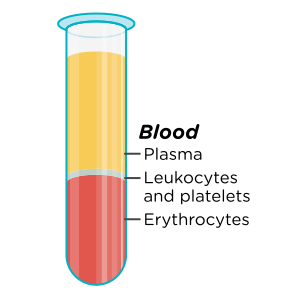
CENTRIFUGATION
Blood Group Systems
Every individual possesses a specific blood type categorized under the ABO system as either A, B, AB, or O, along with a Rhesus (Rh) factor designation of either Rh-positive or Rh-negative. The ABO blood type is determined by the presence or absence of A and B antigens on the surface of red blood cells.
Blood type A carries the A antigen.
Blood type B carries the B antigen.
Blood type AB has both A and B antigens.
Blood type O lacks both A and B antigens.
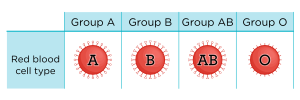
BLOOD TYPES
In addition to these antigens, the plasma component of blood contains antibodies that react against the antigens not present on the person's own red blood cells.
Plasma in type A blood contains antibodies against the B antigen.
Plasma in type B blood contains antibodies against the A antigen.
Plasma in type AB blood does not contain antibodies against the A or B antigen.
Plasma in type O blood contains antibodies against both A and B antigens.
Rhesus Factor
For the Rh system, individuals with Rh-positive blood have the Rh antigen, while those who are Rh-negative do not. Rh-negative people can safely donate blood to Rh-positive individuals, but they should only receive Rh-negative blood themselves.
In urgent situations, type O blood can be transfused to anyone, making it universally compatible. Conversely, individuals with type AB blood can receive transfusions from any blood type, earning them the status of universal recipients. Additionally, donors with type AB blood can provide plasma to recipients of any blood type.
The distribution of ABO blood types varies, with type O being the most prevalent, followed by type A, which is slightly less common. Type B is significantly less common, and type AB is the least common of the four.
ABO Blood Type Compatibility
Blood Type | Can Receive From | Can Donate To |
|---|---|---|
A | A, O | A, AB |
B | B, O | B, AB |
AB | A, B, AB, O | AB |
O | O | A, B, AB, O |