4.2.1 Biodiversity- Summary Notes
Biodiversity
Biodiversity- Variety of living organism in an area this has been decreasing due to human activity such as; Deforestation, Climate change, Monoculture/Agriculture and increase human population
It can be measures by:
Species richness-The number of different species in a community can be recorded by counting the species in an area by random sampling of a habitat/area.
Systematic sampling- Taken by a transect as regular intervals
Opportunistic sampling- Whenever the source is encountered it is recorded to it is based on ease of access
Stratified sampling- Population is dived into groups based on similar characteristics and then a random sample of each is taken to get a proportion of each characteristic in a population
Species evenness- The relative abundance of different species in a habitat
Genetic diversity- The number of different alleles in a population
Number of polymorphic genes divided by the number of alleles in a population/area
Biodiversity can also be measured using the index of diversity
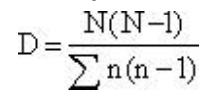
D = Diversity index
N = total number of organisms
n = total number of organisms of each species
Maintaining biodiversity is important for ecological, economic and aesthetic reasons such as protecting landscapes.
In situ-Marine conservations, Wildlife reserves
Ex situ- Zoos, breeding programmes, seed backs, botanic gardens
Zoos use various methods to conserve endangered species and their genetic diversity, some of the methods used include:
• Scientific research such as studying the behaviour of animals
• Captive breeding programmes in which endangered species are carefully bred to increase genetic diversity and population size
• Reintroduction programmes which aim to release animals bred in captivity into their natural habitat as well as to restore lost habitats
• Education programmes which aim to educate people about the importance of maintaining biodiversity, captive breeding programmes as well as illegal trade of animal products.
Seedbanks store a large number of seeds in order to conserve genetic diversity and prevent plant species from going extinct this reduces the amount of spaces needed and can prevent diseases and can be cheaper. The seeds are stored in cool, dry, conditions and can be tested for viability.
Biodiversity conservation needs international co-operation. There are historic and current agreements, including the Convention on International Trade in Endangered Species (CITES), the Rio Convention on Biological Diversity (CBD) and the Countryside Stewardship Scheme (CSS)