Bones and Joints of Pectoral Girdle
Terminology for the Upper Limb
Pectoral girdle refers to the scapula and clavicle and is part of the appendicular skeleton
Arm refers to the region between shoulder and elbow
Forearm refers to the region between elbow and wrist
Clavicle
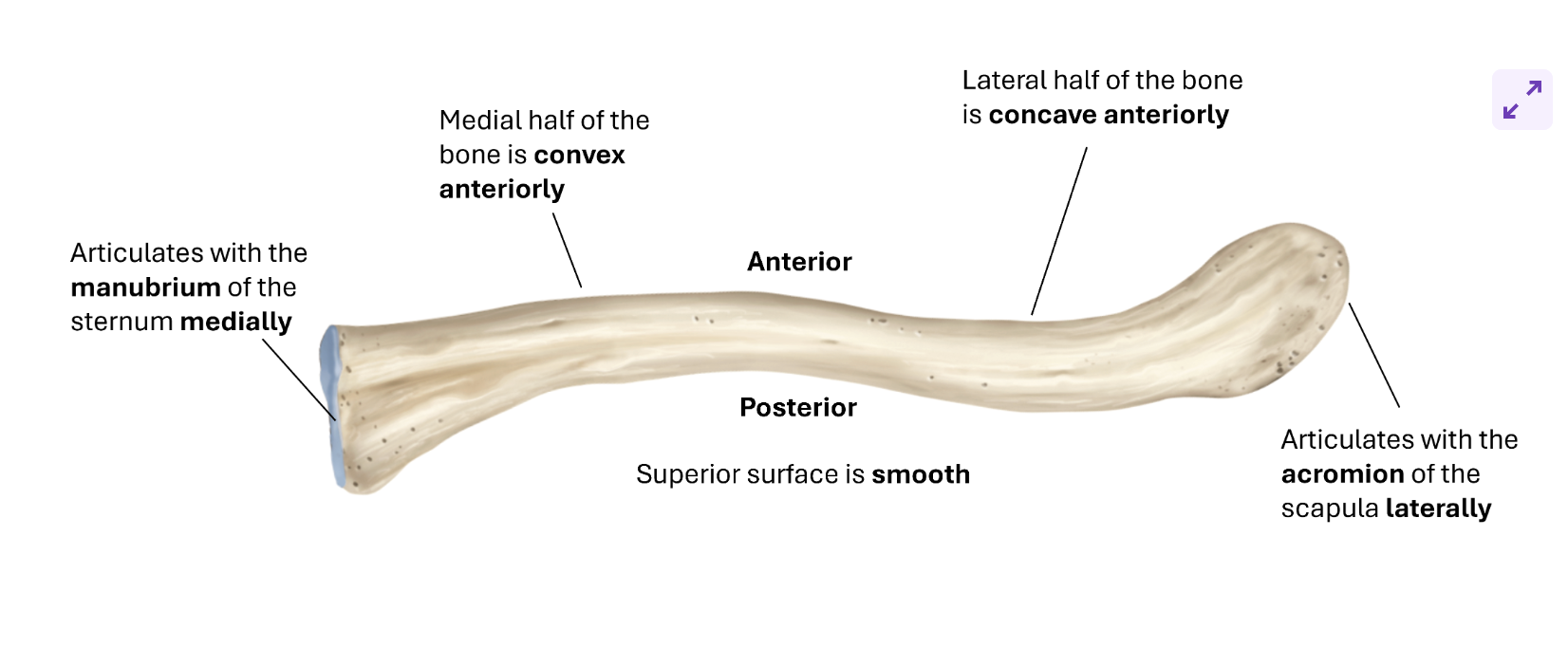
An S-shaped bone that connects the upper limb to the trunk
Medial half of the bone is convex anteriorly
Lateral half of the bone is concave anteriorly
Articulates with the manubrium of the sternum medially
Articulates with the acromion of the scapula laterally
Superior surface is smooth
Inferior surface is rough due to bone markings from ligaments and muscles
Scapula
A triangular shaped bone that lies on the posterior aspect of the rib cage
Acromion of the scapula articulates with the lateral end of the clavicle
Glenoid fossa/cavity articulates with the head of the humerus
Provides surface area for muscle attachments
Humerus
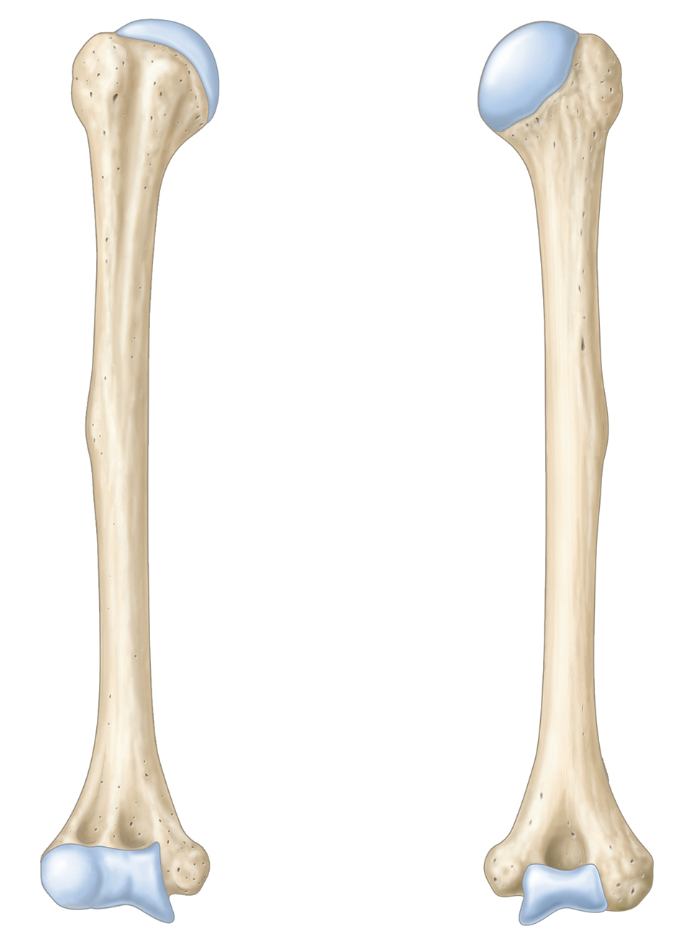
Figure 4.2
A long bone found in the arm
Head of the humerus articulates with the glenoid fossa/cavity of the scapula
Proximal humerus has 2 necks, 2 tubercles, and an intertubercular sulcus (bicipital groove)
The intertubercular sulcus (bicipital groove) consists of a medial lip, a lateral lip, and a floor
Classification of Ligaments
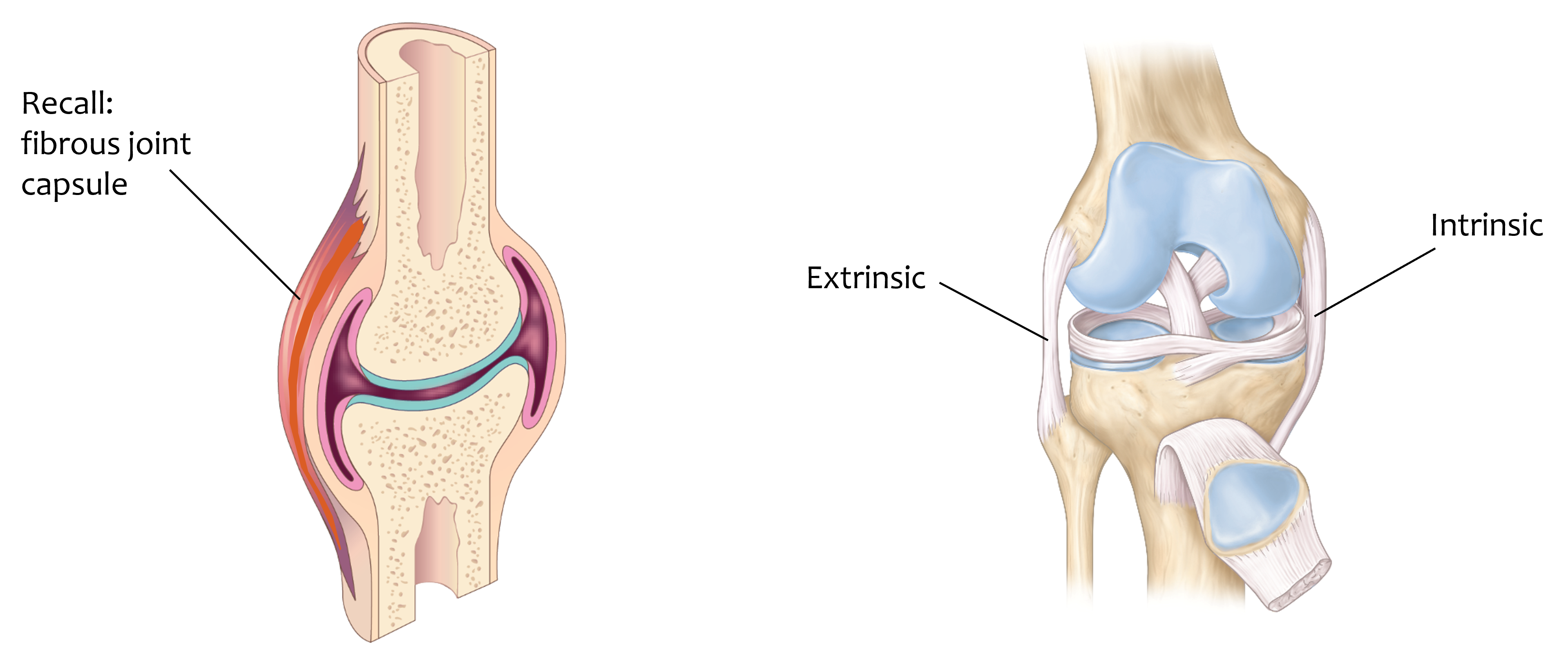
Ligaments are classified as being either intrinsic or extrinsic
Intrinsic ligaments are thickenings of portions of the joint capsule
Extrinsic ligaments provide support to a joint but are located some distance away from the joint capsule
Sternoclavicular Joint
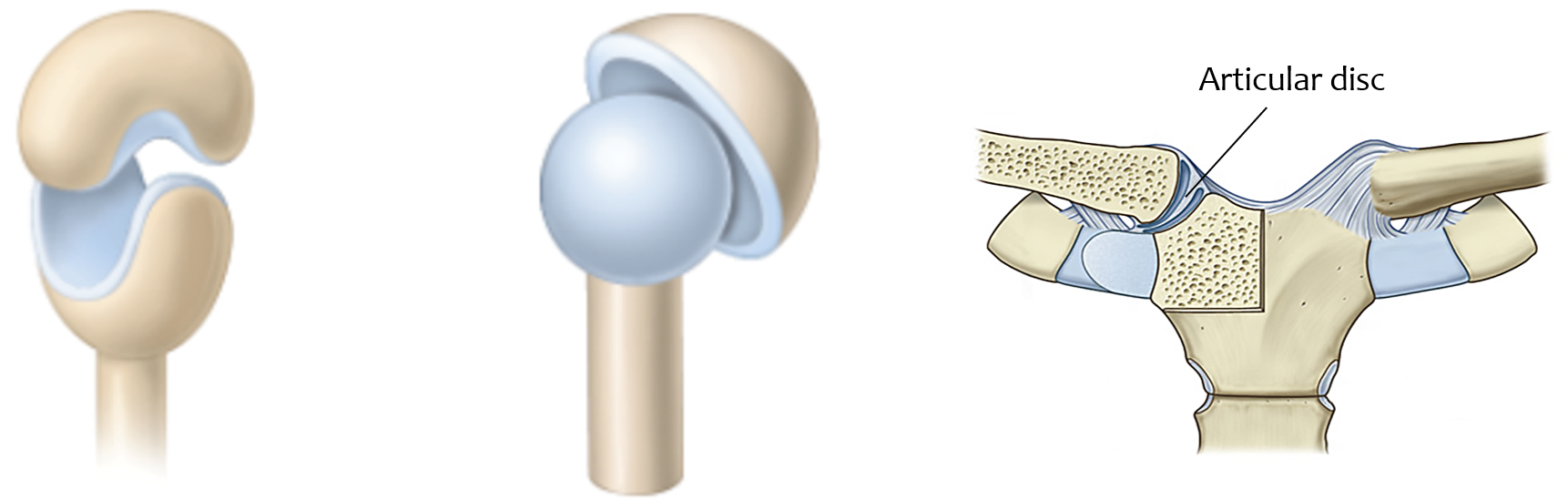
Sternal end of the clavicle articulates with the manubrium of the sternum
Structurally, the sternoclavicular (SC) joint is classified as a saddle joint
Functionally, the SC joint acts like a ball and socket joint
Within the joint capsule there is an articular disc
Ligaments of the Sternoclavicular Joint
Intrinsic ligaments:
Anterior sternoclavicular ligament
Posterior sternoclavicular ligament
Extrinsic ligaments:
Interclavicular ligament
Costoclavicular ligament
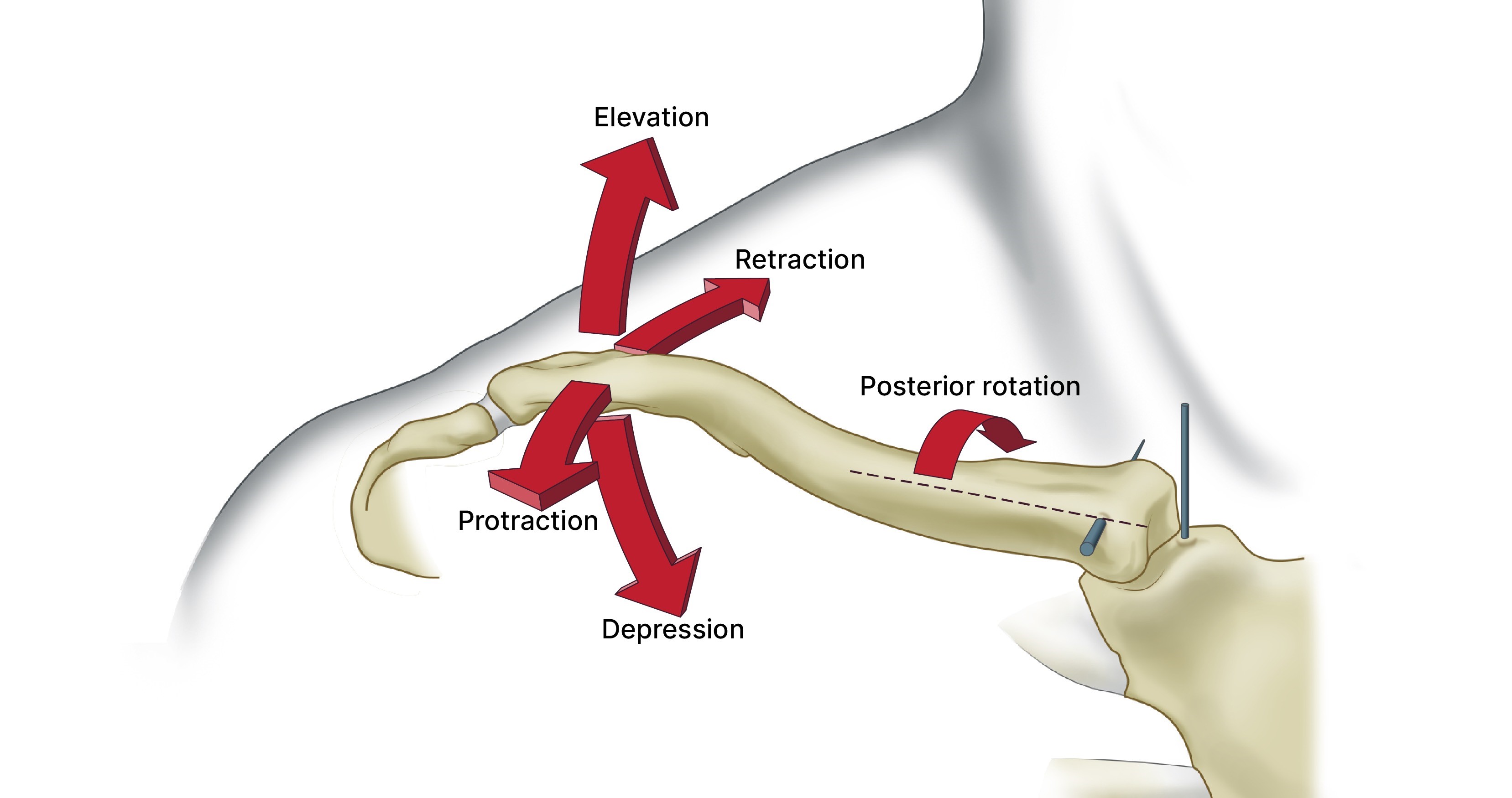
Movements of the Sternoclavicular Joint
SC joint is very strong and also very mobile
During abduction of the arm, the clavicle elevates to an angle of approximately 60°
During protraction and retraction of the scapula, the lateral end of the clavicle swings anteriorly and posteriorly
During flexion of the arm, the clavicle rotates on its own longitudinal axis
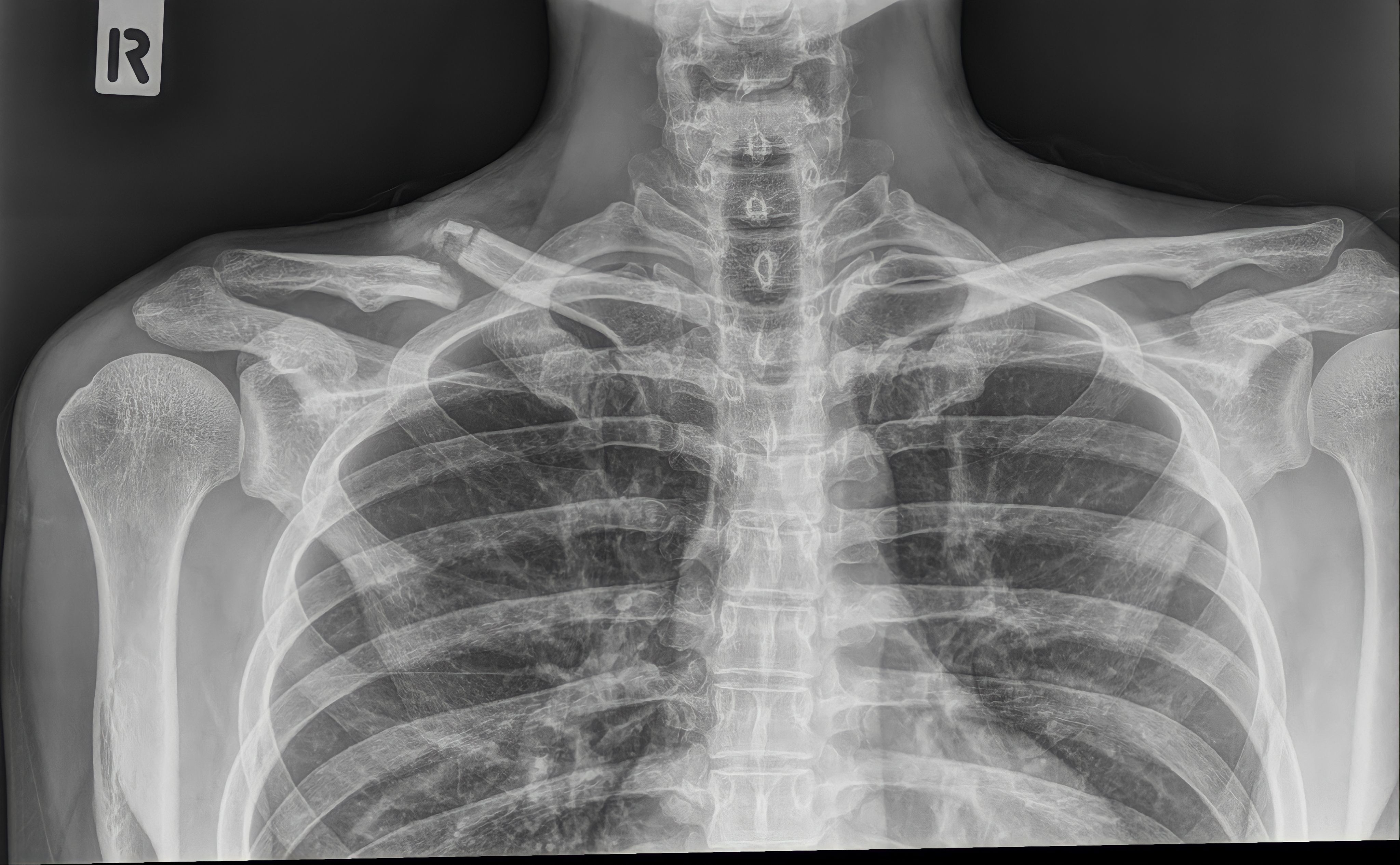
Clavicle Fracture
The sternoclavicular joint is so strong, it very rarely dislocates
Instead, the clavicle is a commonly fractured bone
Acromioclavicular Joint
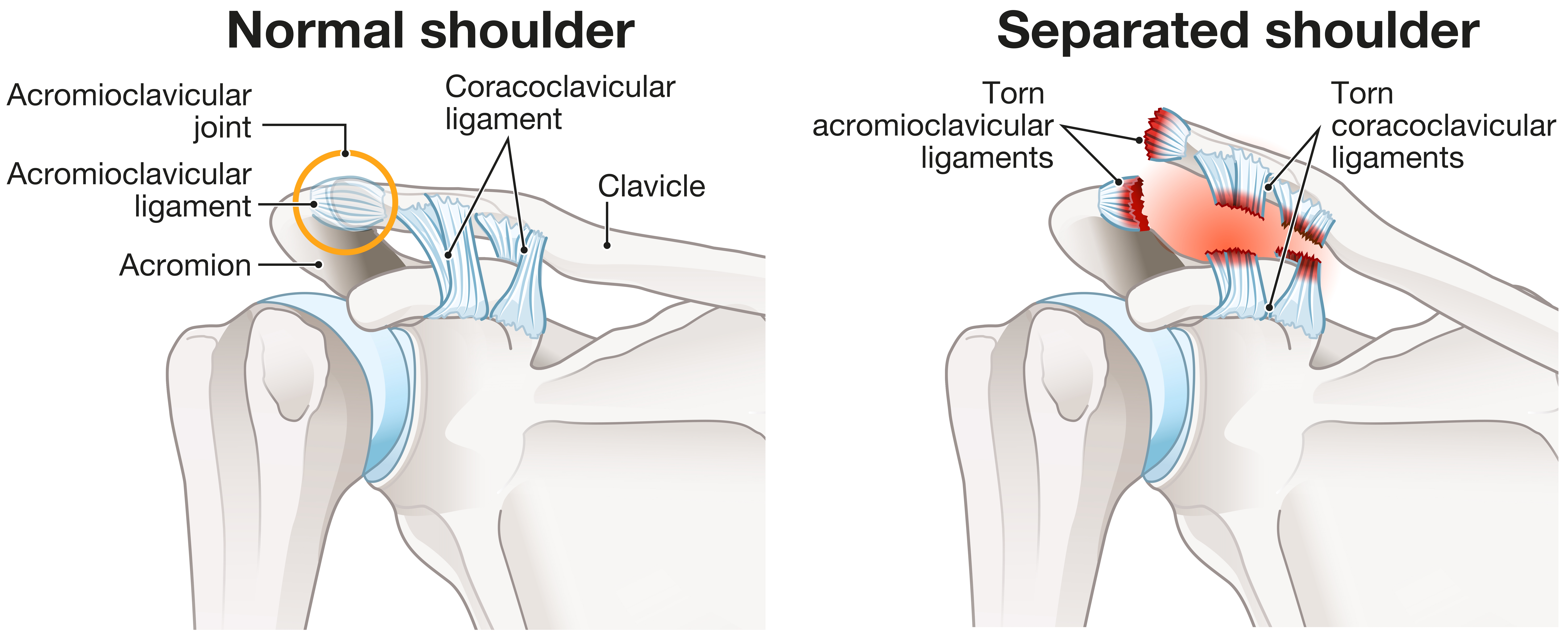
Acromion of the scapula articulates with the acromial end of the clavicle
Classified as a plane joint
Within the joint capsule, there is an articular disc
Ligaments of the Acromioclavicular Joint
Intrinsic ligament:
Acromioclavicular ligament
Extrinsic ligaments:
Coracoclavicular ligament
Conoid ligament
Trapezoid ligament
Dislocation of the Acromioclavicular Joint
Dislocation of the AC joint is usually referred to as a shoulder separation
Can occur due to falling on an outstretched upper limb or by a direct blow to the shoulder
The coracoclavicular ligaments may or may not rupture
Glenohumeral Joint
Head of the humerus articulates with the glenoid cavity/fossa of the scapula
Classified as a ball and socket joint
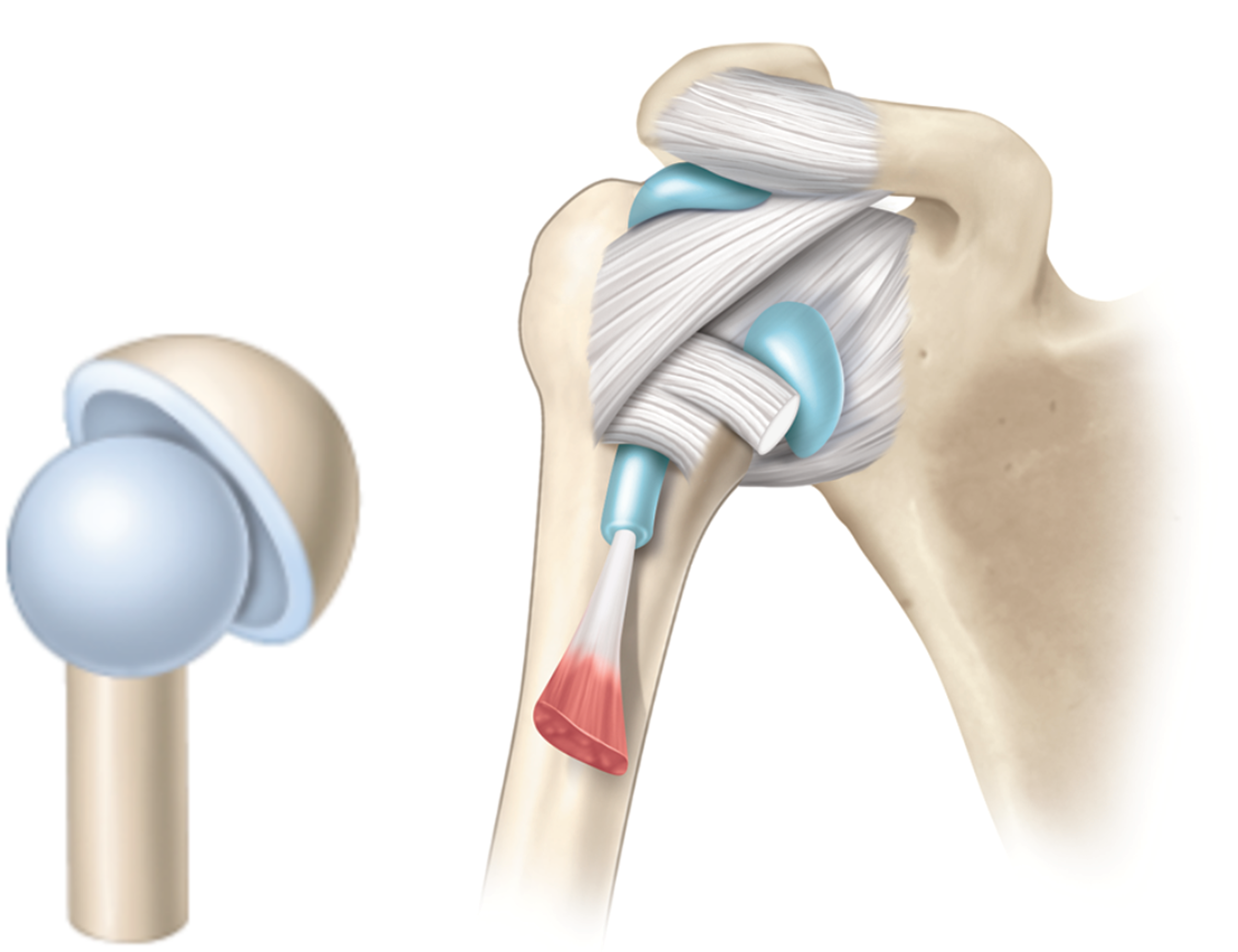
The shallow glenoid cavity is deepened slightly by the glenoid labrum
Tendon of long head of biceps brachii passes through the capsule to reach the supraglenoid tubercle
Rotator cuff muscles assist in maintaining shoulder joint stability
Inferior aspect of the joint capsule is loose and weak but this allows for full abduction of the arm
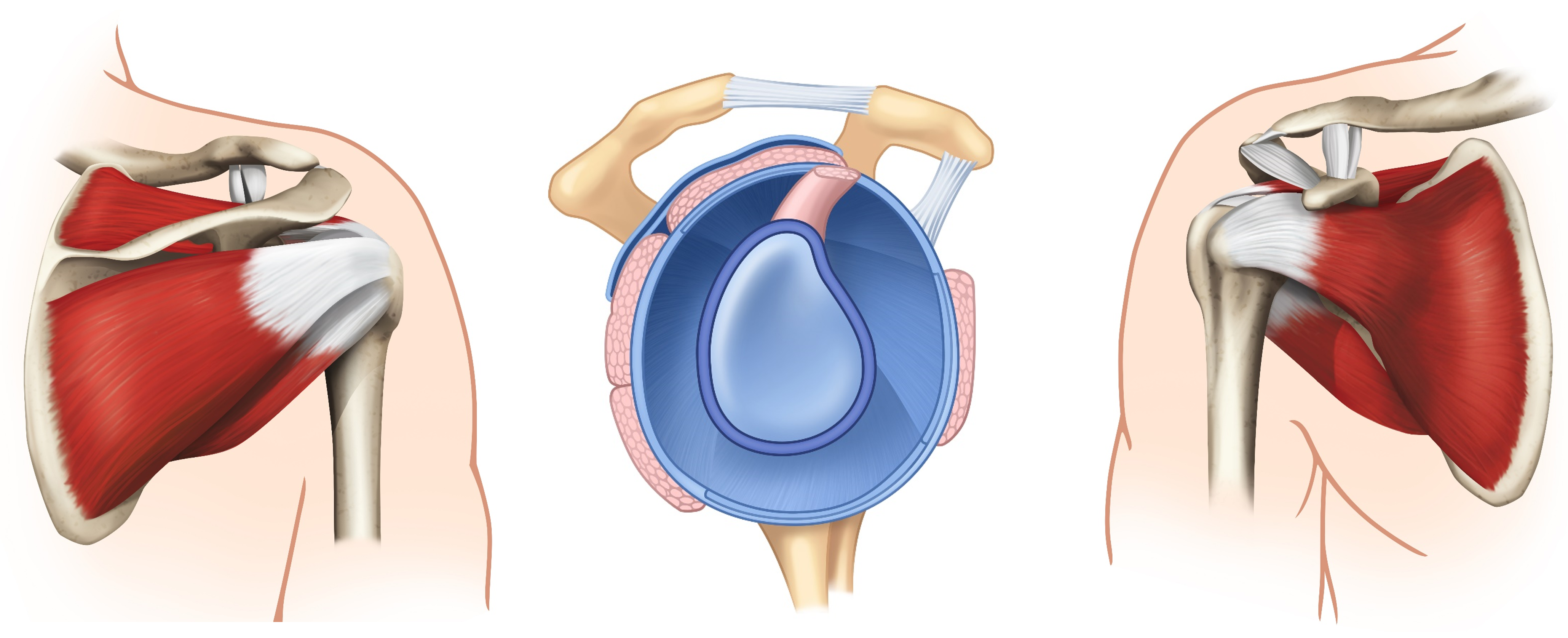
Ligaments of the Glenohumeral Joint
Intrinsic ligaments:
Glenohumeral ligaments
Superior
Middle
Inferior
Coracohumeral ligament
Transverse humeral ligament
Extrinsic ligaments:
Coracoacromial ligament
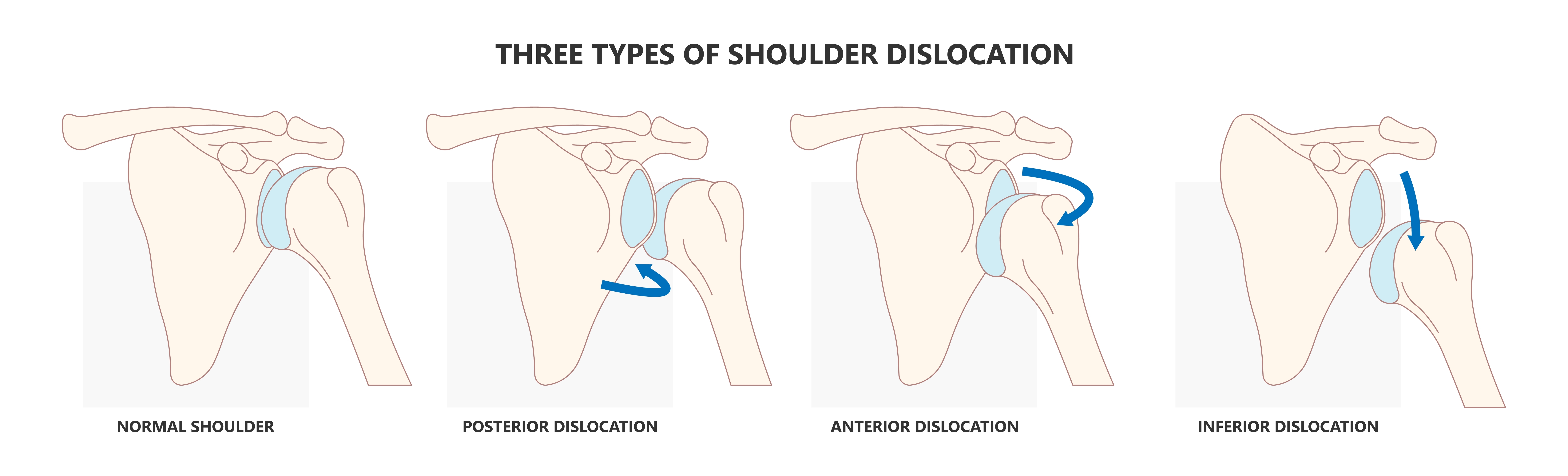
Glenohumeral Dislocation
Dislocation of the GH joint is usually referred to as a shoulder dislocation
Joint is highly mobile at the expense of stability
Dislocations tend to happen inferiorly due to the protective nature of the coracoacromial arch superiorly
Scapulohumeral Rhythm
The scapula has no direct attachment to the rib cage
However, the scapulothoracic joint is described as a physiological joint
Movement of the scapula permits and contributes to movement of the humerus in extreme flexion and abduction
For every 3° of rotation, 2° comes from the glenohumeral joint and 1°comes from the scapulothoracic joint