PLTW HBS - Final Exam Review
DIRECTIONAL TERMS
Medial - towards the midline of the body
lateral - away from the midline of the body
proximal - closest to the point of attachment
distal - furthest from the point of attachment
ventral/anterior - on the frontal side of the body
dorsal/posteroir - on the back side of the body
superior - above
inferior - below
superficial - towards the surface of the skin
deep - away from the sorfuace of the skin
REGIONAL TERMS
frontal - the forehead/frontal muscle
buccal - cheek
oral - the mouth
mental - chin?
axillary - armpit
brachial - upper arm/humerus
antecubital - inner elbow
antebrachial - forearm/before brachial
carpal - wrist
palmar - palm
digits - fingers/toes - phalanges
patellar - knee
crural - shin
tarsal - ankle
oculus - eye
nasal - nose
cervical - neck
sternal - sternum
pectoral - chest
mammary - breast
abdominal - abdomen
umbilical - belly button
coxal - hip
pelvic - upper pelvis
inguinal - groin
pubic - lower pelvis
femoral - femur
cephalic - crown of head
acromial - shoulder
dorsal - the back
lumbar - lower back
sacral - lowest back
gluteal - glutes
popliteal - behind the knee
sural - calf
calcaneal - heel
plantar - bottom of foot
PLANES
saggital - vertical midline of the body
transverse - horizontal midline
coronal - front/back
PARTS OF THE PELVIS
iliac crest
ilium
ischium
pubis
sacrum
coccyx
BONES OF THE SKULL
frontal
parietal
occipital
temporal
nasal
sphenoid
mastoid process
maxilla
mandible
zygomatic arch/ridge
MUSCLES
skeletal muscle - striated, multinucleated, voluntary
smooth muscle - nonstriated, involuntary, internal organs
cardiac muscle - striated, uninucleated, involuntary, wall of heart
SLIDING FILAMENT THEORY
Myosin heads bind to actin, forming cross bridges
myosin heads rotate toward the center of the sarcomere (power stroke)
as myosin heads bind to ATO, the cross bridges detach from actin
Myosin heads split ATP and become reoriented and energized
MUSCLE LAYERS
epimysium - outermost layer of muscle
perimysium - outer covering of the fascicle
endomysium - inner layer of fascicle
muscle fiber - component of fascicle
fascicle - segment of muscle
KNEE LIGAMENT TESTS
Anterior Drawer Test - with the knee flexed 90 degrees, the proximal tibia is pulled anteriorly - joint laxity or excessive looseness in the knee joint is a positive test result
Posterior Drawer Test - with the knee flexed at 90 degrees, the tibia is pushed posteriorly - joint laxity or excessive looseness in the knee joint is a positive test result
Valgus Stress Test - with the knee at approximately 30 degrees and the femur held stable, the tibia is rotated medially so the knee is placed in a valgus position - joint laxity or excessive looseness is a positive test result
Varus Stress Test - with the knee flexed approximately 30 degrees and the femur held fixed, the tibia is rotated laterally - joint laxity or excessive looseness in the knee joint is a positive test result
NERVOUS SYSTEM
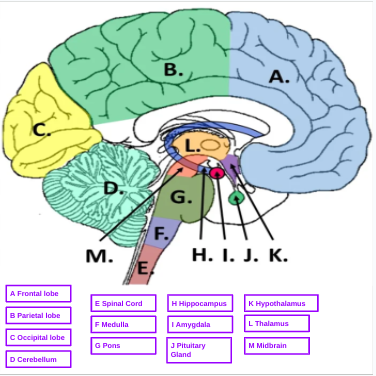
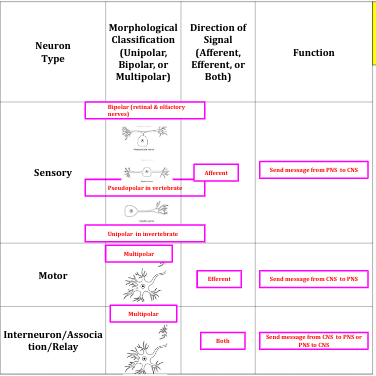
central nervous system (CNS) - the brain and spinal cord
Peripheral Nervous System (PNS) - nerves of the rest of the body
BRAIN
gyrus - the top of the brain ridges
sulcus - the creases of brain ridges
MAJOR NERVES
Spinal serves - within the spine
sciatic nerve - the medial thigh
brachial plexus - starts by the clavicle
radial nerve - the thumbside of the arm
median nerve - middle of forearm
ulnar nerve - pinky side of arm