1.3 science of development - human growth and development
how do we study lifespan development?
• Lifespan development involves understanding changes and constants over time.
• Research using the scientific method is essential for reliable findings.
• Data collection varies by age group and type of information.
• Developmental design influences data outcomes, whether tracking individuals over time or comparing different ages at a single point.
• Challenges exist in conducting developmental research, particularly with infants and children.
research in lifespan development
how do we know what we know?
• Understanding scientific techniques is essential for learning any science.
• Scientific investigation is characterized by procedures that maintain skepticism and questioning.
• Trust issues regarding academicians arise from perceived changes in scientific theories.
• Changing perspectives reflect the essence of science, which is about continually refining our understanding.
• There have been shifts in recommendations related to nutrition, psychological states with aging, and parenting.
• Learning about human development is viewed as an ongoing, lifelong process.
personal knowledge
• Knowledge about childhood often derives from personal history, cultural ideas, and information relayed by others (experiential and agreement reality).
• Personal inquiry has limitations; assumptions can shape perceptions, leading to confirmation bias, which is the tendency to seek evidence that supports one's beliefs while ignoring contradictory information.
• Karl Popper posited that scientific inquiry must be falsifiable, emphasizing that unscientific theories cannot be disproved.
• Scientific methods provide systematic approaches to minimize bias; for example, using random sampling can help ensure diverse participant selection.
• Random sampling involves selecting participants in such a way that each member of the population has an equal chance of being chosen, enhancing the representativeness of the study.
• Consumers of research should be aware of how samples are obtained, as results may not generalize if the sample is not representative.
scientific methods
• Research methods in lifespan development vary across disciplines, often incorporating both quantitative and qualitative approaches.
• The scientific method follows a cyclical process:
- Determine a research question
- Conduct a literature review
- Gather information
- Conduct the study
- Interpret results and state limitations
- Share findings for scrutiny and further exploration
• In psychology, replication of studies with different samples is crucial for confirming results.
• Quantitative research focuses on numerical data and statistical analysis.
• Qualitative research involves:
- Starting with a broad interest and research question
- Gaining access to a research group
- Gathering field notes and conducting open-ended interviews
- Modifying questions based on ongoing findings
- Reporting culturally grounded insights from participants
• Researchers must acknowledge their biases to ensure accurate reporting.
• Qualitative studies often precede quantitative studies for deeper exploration of topics.
• Understanding these methods can be enhanced by reviewing journal articles, which typically adhere to the APA format, including sections for an abstract, introduction, methods, results, discussion, and references.
research methods and objectives
• Psychological research is categorized into three main types: descriptive, correlational, and experimental research.
• Descriptive research, also known as qualitative studies, does not test specific relationships between variables and aims to describe behaviors and attributes.
• Early-stage research may involve descriptive studies to gather information before formulating a hypothesis for experimental or correlational research.
• Examples of descriptive questions include inquiries about parental time spent with children, frequency of intercourse among couples, and periods of greatest marital satisfaction.
• Types of descriptive studies comprise observation, case studies, surveys, and content analysis.
• Correlational research tests whether a relationship exists between two or more variables.
• Experimental research randomly assigns participants to different conditions, employing hypothesis testing to infer behavioral effects.
• Explanatory studies within experimental research aim to understand reasons behind phenomena, such as trends in divorce or teen pregnancy rates.
• Evaluation research assesses the effectiveness of policies or programs, such as safety initiatives regarding car seats and helmets for children.
• Each research method has distinct strengths and weaknesses, suitable for specific types of questions.
• Observational studies yield rich data but have limitations in generalizability due to small sample sizes.
• Surveys enable large sample data collection and better generalization, yet are limited by self-reported data issues.
• Archival research is cost-effective and insightful but lacks control over the data collection process.
types of descriptive research
observation
• Observational studies, or naturalistic observation, involve watching and recording participants' actions in natural settings or controlled environments.
• These studies can take place in various contexts, such as parks or laboratories, and may include systematic recording of behaviors, like conflicts among children.
• Researchers can choose to be participant or non-participant observers.
• Strengths include the ability to directly observe behavior instead of relying on potentially inaccurate self-reports.
• A major weakness is that observational studies cannot establish causal relationships.
• Observational studies are particularly useful for studying children but are subject to the Hawthorne effect, where individuals change their behavior when aware of being observed.
case studies
• Case studies focus on in-depth exploration of a single case or situation.
• Information is obtained through methods like observation, interviews, and testing.
• They are particularly useful for investigating unique cases such as brain trauma or social isolation in children.
• Clinicians often use case studies in their practice to assess clients or patients.
• Case studies can provide extensive detail about lesser-known areas or conditions.
• Findings from case studies are not generalizable to broader populations due to the lack of random selection and control groups.
• "The Man Who Mistook His Wife for a Hat" by Dr. Oliver Sacks is cited as an illustrative example of the case study method.
surveys
• Surveys are widely used for data collection across various domains.
• They enhance accessibility through multiple modes: in-person, phone, mail, and online.
• A survey consists of standard questions and can be highly structured, requiring specific response choices.
• Common users include sociologists, market researchers, political scientists, and therapists.
• Surveys provide surface-level information potentially lacking in-depth insight into human behavior.
• They are effective in examining values, attitudes, and reported practices.
• Self-reporting in surveys can introduce accuracy limitations.
• Validity pertains to accuracy, while reliability refers to consistency, both critical for survey design.
content analysis
• Content analysis examines various media (texts, images, commercials, lyrics) to identify cultural patterns or themes.
• An example includes Philippe Aries's "Centuries of Childhood," which analyzes childhood history, or studies of television commercials depicting sexual content, violence, or ageism.
• This method allows researchers to avoid recruitment costs; however, it may not accurately represent population sentiments.
• Secondary content analysis, also known as archival research, involves studying previously collected information to discover attitudes or practices.
• Researchers benefit from not having to recruit participants but must assess the original data's quality and are restricted by the data and questions previously collected.
correlational research
• Correlational research involves passive observation and measurement of phenomena without intervention.
• The primary objective is to identify patterns of relationships between variables rather than establishing cause and effect.
• This research typically examines the relationship between two variables at a time.
• An example of correlational research is Professor Elizabeth Dunn's study on spending and happiness at the University of British Columbia.
• Participants reported their income spent on others or donations to charity and their happiness levels.
• The findings indicated a positive correlation: higher spending on others was associated with greater happiness.
understanding correlation
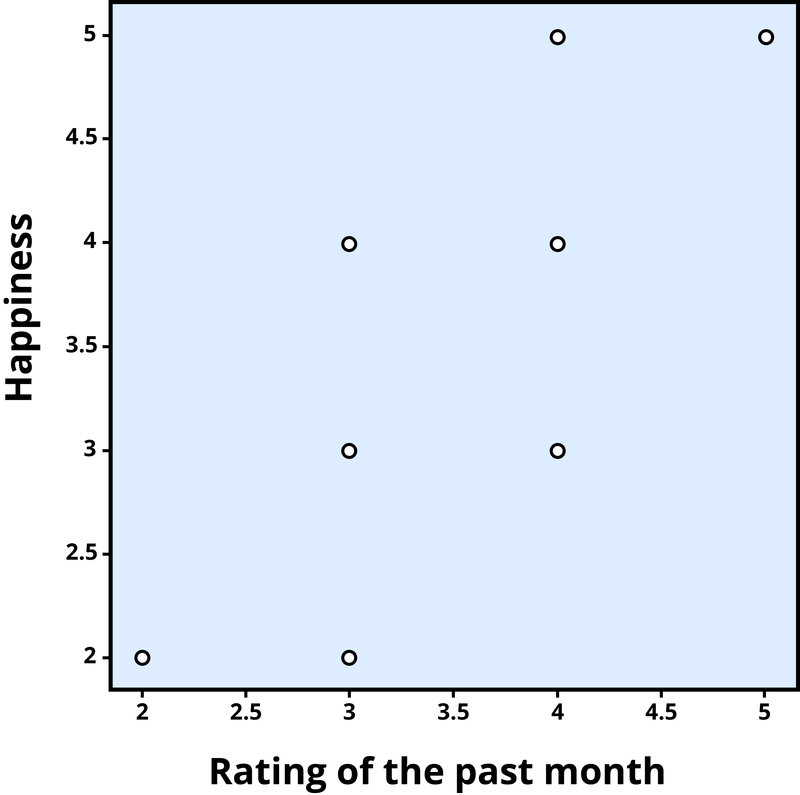
• Positive correlation occurs when two variables move in the same direction, indicated by a positive correlation coefficient (r).
• An example is the positive correlation (r = .81) between happiness and recent ratings; better ratings correlate with increased happiness.
• Negative correlation occurs when two variables move in opposite directions, indicated by a negative correlation coefficient (r).
• An example is the negative correlation (r = –.83) between average male height and pathogen prevalence; where disease is more common, average height decreases.
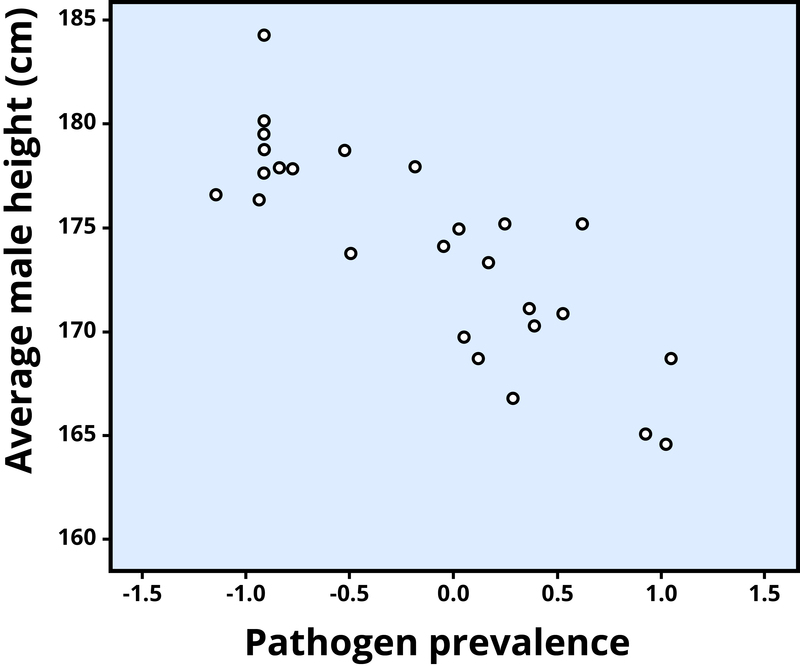
• Correlations indicate the relationship between variables.
• They reveal both the strength and direction of that relationship.
• Correlations do not imply causation between the variables.
• Experiments are necessary to establish causal relationships.
experimental research
• Experiments test hypotheses about the relationship between variables in a controlled environment.
• A variable is defined as anything that changes in value; concepts need to be operationalized into measurable variables.
• Researchers must clarify measurable indicators for constructs like marital satisfaction, affecting the quality of data obtained.
• The experimental method uniquely measures cause and effect relationships between variables.
• Three criteria for establishing cause and effect: related independent and dependent variables, temporal precedence, and isolation of causes.
• The independent variable is manipulated by the researcher as the treatment, while the dependent variable is the observed outcome.
• Random assignment to experimental or control groups is essential to isolate the effect of the independent variable.
• Control groups receive placebo or inert substances for comparison, vital for eliminating bias.
• Double-blind procedures benefit experiments by preventing participant and researcher biases.
• Major advantages of experimental design include establishing causation; disadvantages include challenges in applying findings to real-life, uncontrolled situations.
developmental research designs
• Research methods are tools for collecting information.
• Research design serves as a strategy or blueprint for information collection and analysis.
• Research design determines the methods used.
• Developmental research designs focus on lifespan development research.
• They are crucial for understanding development and change.
• Key factors examined include age, cohort, gender, and social class impact on development.
cross-sectional designs
• Most developmental studies utilize cross-sectional designs due to their efficiency and cost-effectiveness.
• Cross-sectional research explores behavior across different age groups at a single time point.
• Example: Researchers may hypothesize that intelligence declines with age.
• They could test 20, 50, and 80-year-olds simultaneously to compare intelligence test scores.
• Findings might show that older adults score lower than younger counterparts.
• Such data could lead researchers to conclude a decline in intelligence with age.
• However, the validity of this conclusion may be questioned.
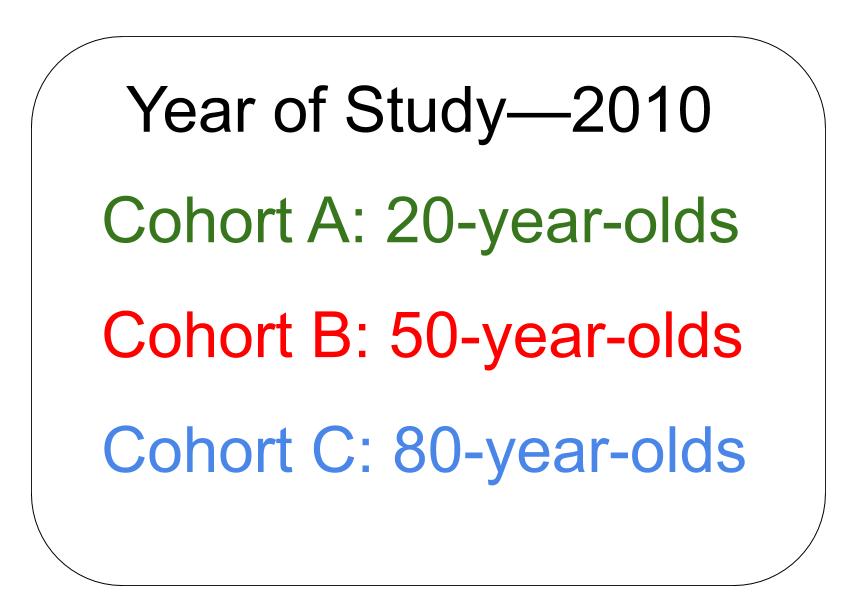
• Cross-sectional research does not track individuals over time, leading to potential misconceptions about age-related differences versus age-related changes.
• The study in question compared intelligence test scores of different age groups from distinct cohorts instead of following the same individuals as they aged.
• Results indicated 80-year-olds scored lower than 50-year-olds, who in turn scored lower than 20-year-olds, but these findings do not confirm changes in intelligence over time.
• Cohort effects may explain differences observed, as each group experienced unique historical events, education levels, and technological advancements.
• Factors such as wars, social movements, and varying access to education and technology may influence test performances across generations.
• The limitations of cross-sectional research include reliance on data from a single point in time and the potential impact of contemporary events on participants' mindsets during that time.
longitudinal designs
• Longitudinal research follows the same group (cohort) of individuals over time, allowing for repeated measurements and comparisons across different ages.
• Advantages include the ability to track individual changes over time and measure age-related developments.
• Disadvantages encompass high costs, extended duration, and participant drop-out rates.
• The film "63 Up" exemplifies longitudinal research, showcasing the physical, emotional, and social changes of participants filmed every seven years.
• Participant experiences can vary; some dislike frequent interviews and may withdraw from the study.
• Longitudinal designs are instrumental in examining behavior over time, as illustrated by a potential study on intelligence in individuals at ages 20, 50, and 80.
• Results may differ from cross-sectional studies, with possible intelligence gains at age 50 rather than declines observed in cross-sectional research.

• Longitudinal research spans over time, presenting risks of attrition where participants may drop out for various reasons including relocation, disinterest, or death.
• Larger initial sample sizes are recommended to mitigate the potential impact of attrition on study results.
• Selective attrition occurs when specific groups (often less healthy, less educated, and lower socioeconomic) drop out, leading to a non-representative sample.
• This selective drop-out can skew findings, as remaining participants are generally healthier and more educated, possibly resulting in an overly positive view of intelligence and aging.
• To address selective attrition, researchers can randomly recruit additional participants from the original cohort at each testing phase to replace those who have left the study.
• Longitudinal study results can also be affected by practice effects, where repeated assessments lead to improved performance due to familiarity with the task rather than true skill enhancement.
• A limitation of longitudinal research is that data is confined to a single cohort, which may not reflect broader population trends.
sequential designs
• Sequential research designs integrate features from both longitudinal and cross-sectional research.
• Participants are followed over time (longitudinal) while also including individuals of various ages (cross-sectional).
• This design enrolls different age groups at different times to study age-related changes and developmental processes.
• It addresses potential cohort and time of measurement effects.
• K. Warner Schaie (1965) identified three specific sequential designs: cross-sequential, cohort sequential, and time-sequential.
• The distinctions between these designs depend on the variables analyzed, which can include multiple perspectives from cross-sectional, longitudinal, or cohort designs.
• Comparing results across these analyses allows for separation of age, cohort, and temporal influences.
challenges conducting developmental research
• The document discusses research tools for assessing lifespan development and research designs for tracking age-related changes.
• It highlights the unique challenges in developmental research when testing different age groups, particularly infants and children.
• Key issues encountered in this field include ethical concerns, recruitment difficulties, and participant attrition.
ethical concerns
• Institutional Review Boards (IRBs) are required to review and approve research projects in academic and clinical settings.
• IRBs consist of panels of experts aiming to ensure ethical research practices and a favorable risk-benefit ratio for participants.
• Certain groups, such as infants and young children, are considered more vulnerable and at-risk in research contexts.
• The limited cognitive capabilities of infants and young children prevent them from consenting or withdrawing from studies.
• Special accommodations are necessary for these vulnerable populations during the informed consent process.
• Typically, adults or guardians provide written informed consent for child participants, as children cannot verbally express willingness or comprehension of risks and benefits.
• Assent, the process by which children are asked to agree to participate, typically begins around age seven.
• Researchers must be attentive to the emotional state of child participants and parental concerns, ensuring the well-being and rights of both minors and their guardians.
recruitment
• Participant recruitment poses challenges in developmental science, particularly for infants and young children.
• Recruitment of university students is straightforward, but young children cannot be recruited in the same manner.
• Researchers must consider participant numbers, financial resources, and location when recruiting children.
• Options for recruiting infants and children include:
- Obtaining infant birth records from local authorities.
- Hiring recruitment agencies to contact families.
- Posting advertisements in family-friendly locations like preschools, daycare centers, or mommy-and-me classes.
- Utilizing online social media platforms like Facebook for targeted ads.
• All recruitment methods require IRB approval, and school-based recruitment necessitates consent from teachers, schools, and parents.
• Recruiting adults, particularly college students, is easy but can lead to concerns about representativeness due to convenience sampling.
• Historical comparisons between college students and nursing home residents illustrate the limitations of convenience samples in aging research.
• Issues of recruitment and random sampling are significant for research involving both adult populations and young children.
attrition
• Attrition is a significant issue in research involving infants and young children, particularly in longitudinal studies.
• Infants and young children often exhibit higher attrition rates compared to adults due to factors like fatigue, fussiness, and loss of interest.
• Research studies should be designed to be brief, ideally breaking long studies into shorter sessions to maintain participant engagement.
• Incorporating breaks into study protocols is essential for allowing infants to rest or have snacks.
• Ensuring participant comfort leads to higher quality data.
conclusions
• Lifespan development is a complex field requiring appropriate research methods and experimental designs.
• Researchers must consider special challenges inherent in developmental studies.
• Understanding the issues in lifespan development prepares researchers to formulate better research questions.
• The field examines how and why individuals change or remain stable throughout their lives.
• Lifespan development involves various interdependent domains and must be viewed holistically.
• Influences on development include individual and societal factors, such as genetics, culture, and historical context.
• The design of developmental research and the methods of data collection and analysis are crucial for uncovering insights about human development.
• Future researchers are encouraged to explore unanswered questions in lifespan development for potential groundbreaking discoveries.