Essential of Systems Analysis & Design
Information Analysis Design
A method used by companies to create and maintain systems that perform basic business functions.
Main goal is to improve employee efficiency by applying software solutions to key business tasks.
A structured approach must be used in order to ensure success.
Systems Analyst performs analysis & design based upon:
Understanding of the organization’s objectives, structure & processes.
Knowledge of how to exploit information technology for advantage.
CORE CONCEPTS OF SYSTEMS ANALYSIS & DESIGN
Their major goal is to improve organizational systems by developing or acquiring software and training employees in its use.
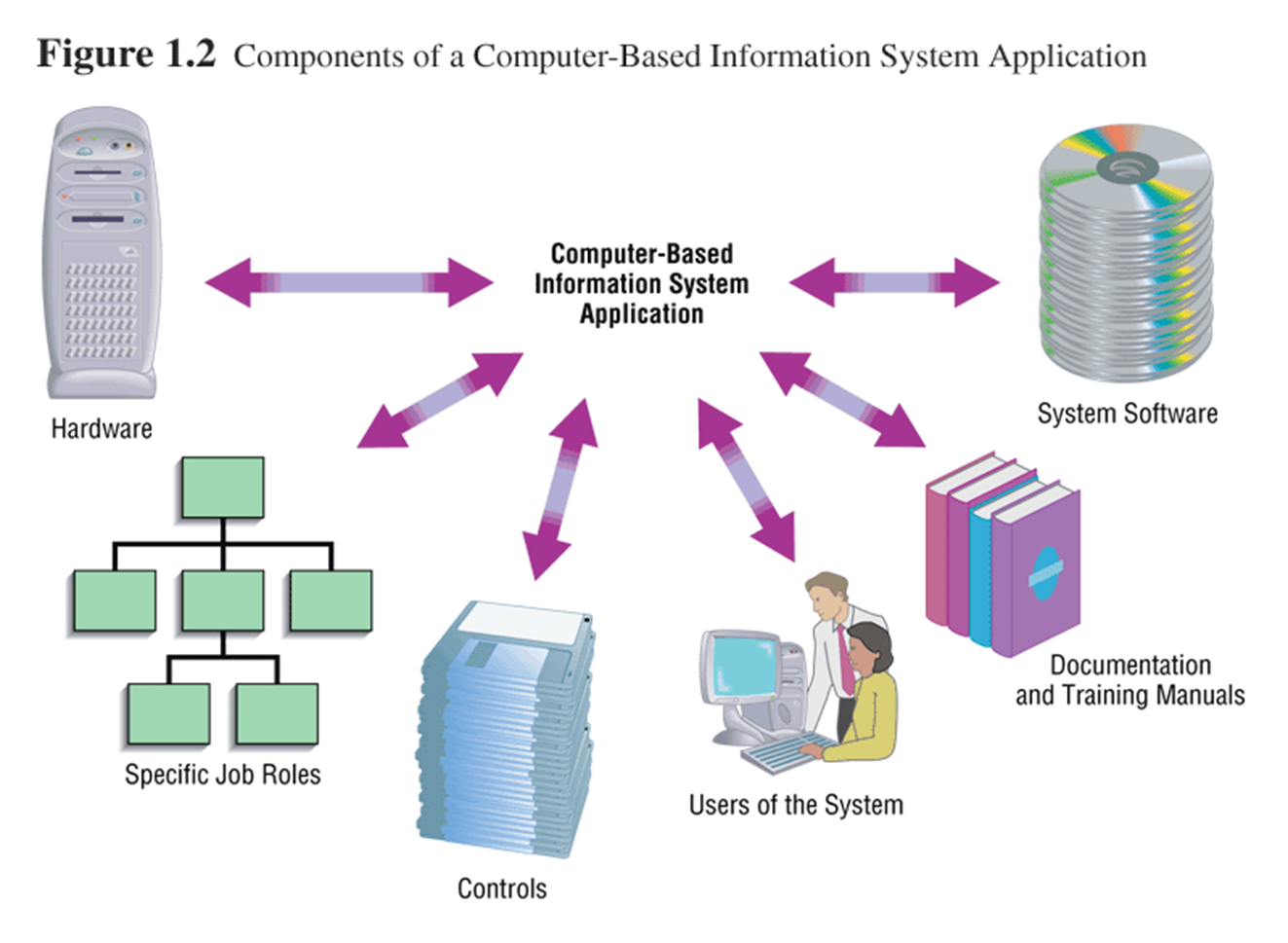
Application software, or software, or a system, supports organizational functions or processes.
System - turns data into information and includes:
Hardware & System Software
Documentation & training materials
Job roles associated with the system
Controls to prevent theft of fraud
The people who use the software to perform their jobs.
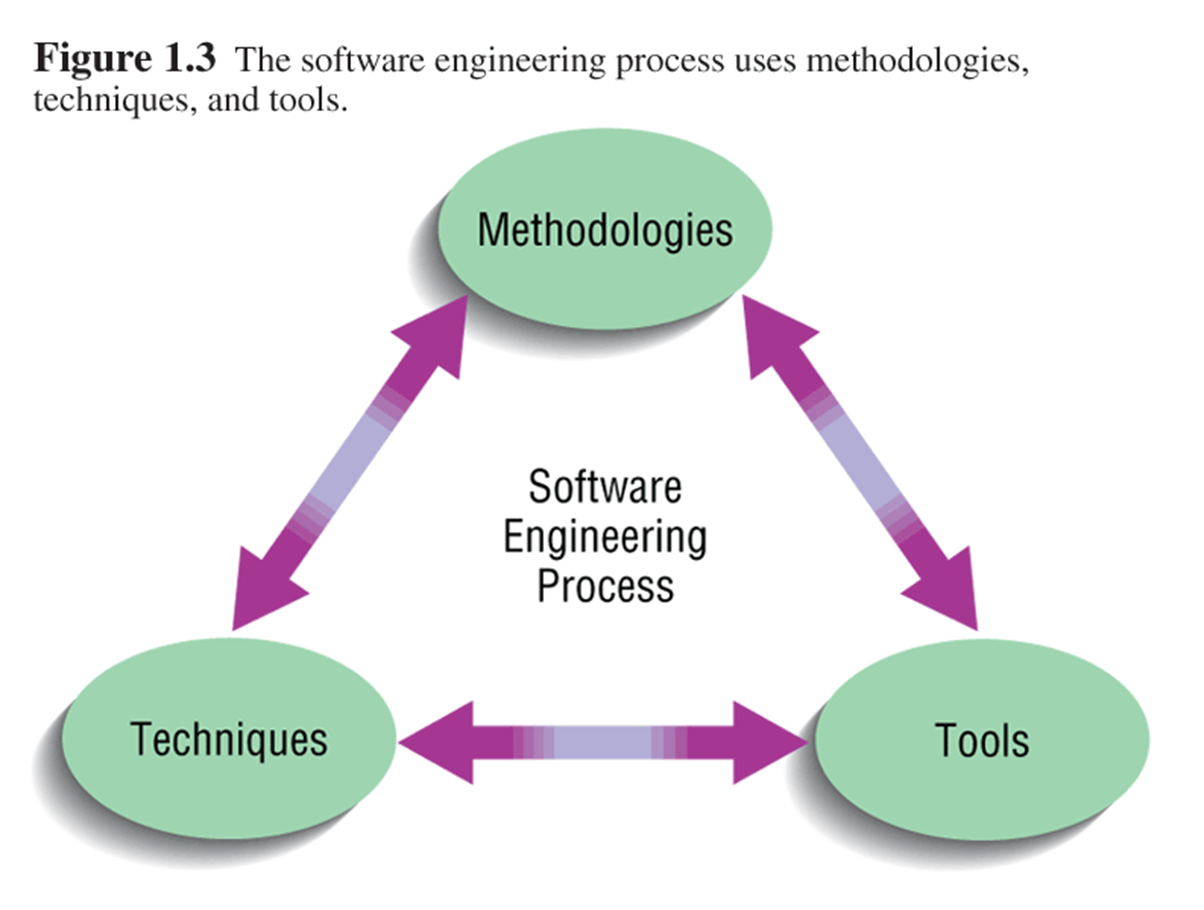
Software Engineering Process
A process used to create an information system
Consists of:
Methodologies
a sequence of step-by-step approaches that help develop the information system.
Techniques
Processes that the analyst follows to ensure thorough, complete and comprehensive analysis and design
Tools
Computer programs that aid in applying techniques.
System
an interrelated set of business procedures used within one business unit working together for a purpose.
exists within an environment
separates a system from its environment.
CHARATERISTICS OF A SYSTEM
Components
Boundary
Environment
Interfaces
Interrelationship
Input
Output
IMPORTANT SYSTEM CONCEPTS
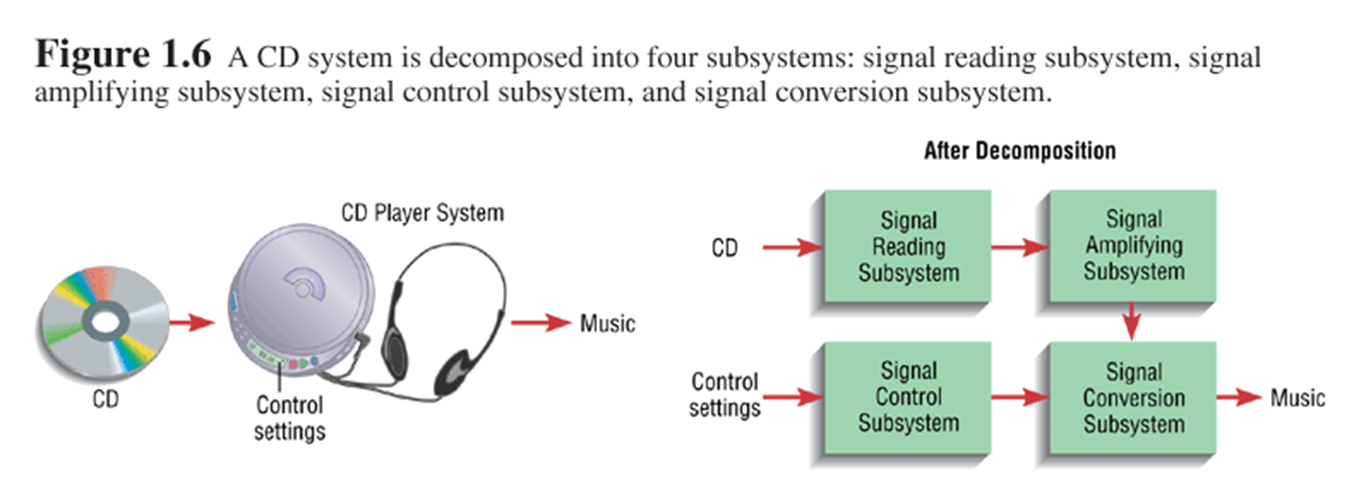
Decomposition
the process of breaking down a system into smaller components
allows the systems analyst to:
Break a system into small, manageable subsystems
Focus on one area at a time
Concentrate on components pertinent to one group of users.
Build different components at independent times.
Modularity
Process to dividing a system into modules of a relatively uniform size.
Modules simplify system design.
Coupling
Subsystems that are dependent upon each other are coupled
Cohesion
The extent to which a subsystem performs a single function.
A MODERN APPROACH TO SYSTEMS ANALYSIS AND DESIGN
Systems Integration
Allows hardware and software from different vendors to work together.
Enables procedural language systems to work with visual programming systems
Visual programming environment uses client/ server model
DATA & PROCESS
Components of an Information System
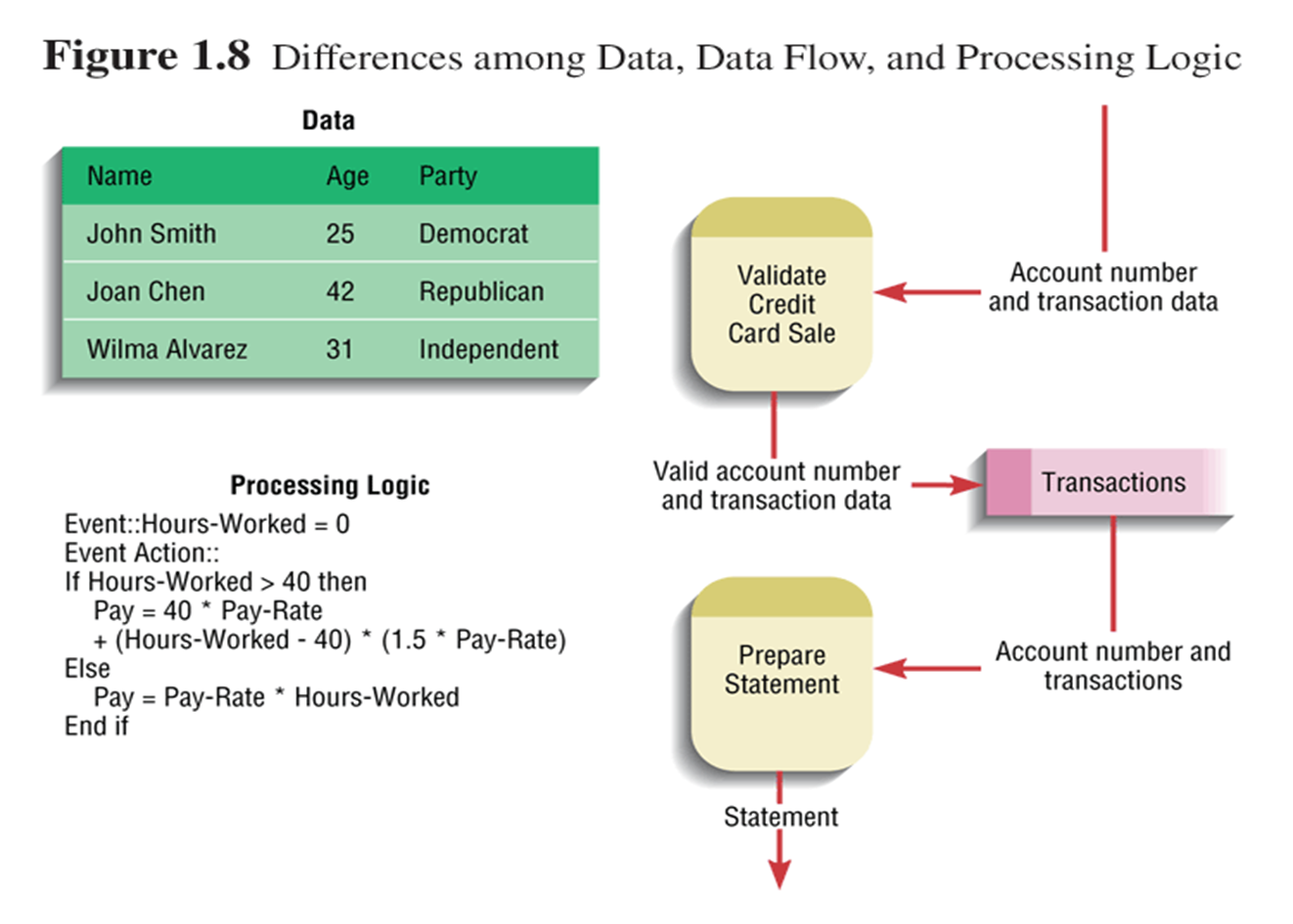
Data
Understanding the source and use of data is key to good system design
Various techniques are used to describe data and the relationship amongst data
Data Flows
Groups of data that move and flow through the system
Include description of sources and destination for each data flow.
Processing Logic
Describe steps that transform data and events that trigger the steps.
Data - raw or unprocessed facts or data
Information - derived from data wherein it was organized in a manner that humans can understand.
APPROACHES TO SYSTEMS DEVELOPMENT
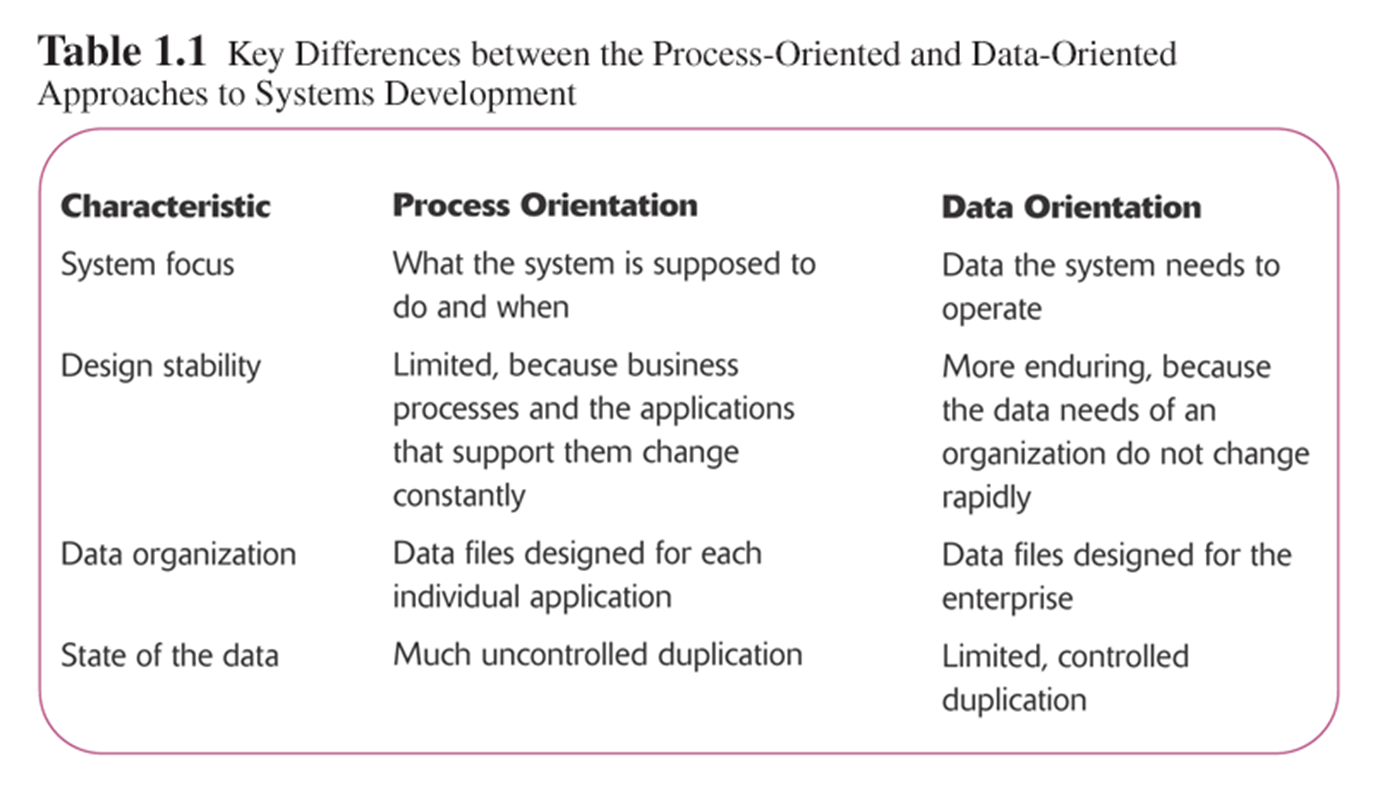
Process- Oriented Approach
Focus is on flow, use and transformation of data is an information system
Involves creating graphical representations such as data flow diagram and charts
Data are tracked from sources, through intermediate steps and to final destinations.
Natural structure of data is not specified
Disadvantages: data files are tied to specific applications
APPROACHES TO SYSTEMS DEVELOPMENT
Data-Oriented Approach
Depicts the ideal organization of data, independent of where and how data are used.
Data model describes the kinds of data and business relationships among the data.
Business rules depict how an organization captures and processes the data.
DATABASES AND APPLICATION INDEPENDENCE
Database
Shared collection of logically related data
Organized to facilitate capture, storage and retrieval by multiple users
Centrally managed
Designed around subjects
Customers
Suppliers
Application Independence
Separation of data and definition of data from applications
ROLE OF THE SYSTEMS ANALYST
Study problems and needs of an organization
Determine the best approach to improving the organization through the use of:
People
Methods
Information technology
Help system users and managers define their requirements for new or enhanced systems.
ROLE OF THE SYSTEMS ANALYST
Assess options for system implementation
In-house development
Outsourced development
Outsourced development & operation
Commercial application
For in-house projects, work on a team of analysts and developers
SKILLS OF A SUCCESSFUL SYSTEMS ANALYST
Analytical
Understanding of organizations
Problem-solving skills
System thinking
Ability to see organizations and information systems as systems
Technical
Understanding of potential and limitations of technology
Managerial
Ability to manage projects, resources, risk, and change
Interpersonal
Effective written and oral communication skills
TYPES OF INFORMATION SYSTEMS & SYSTEMS DEVELOPMENT
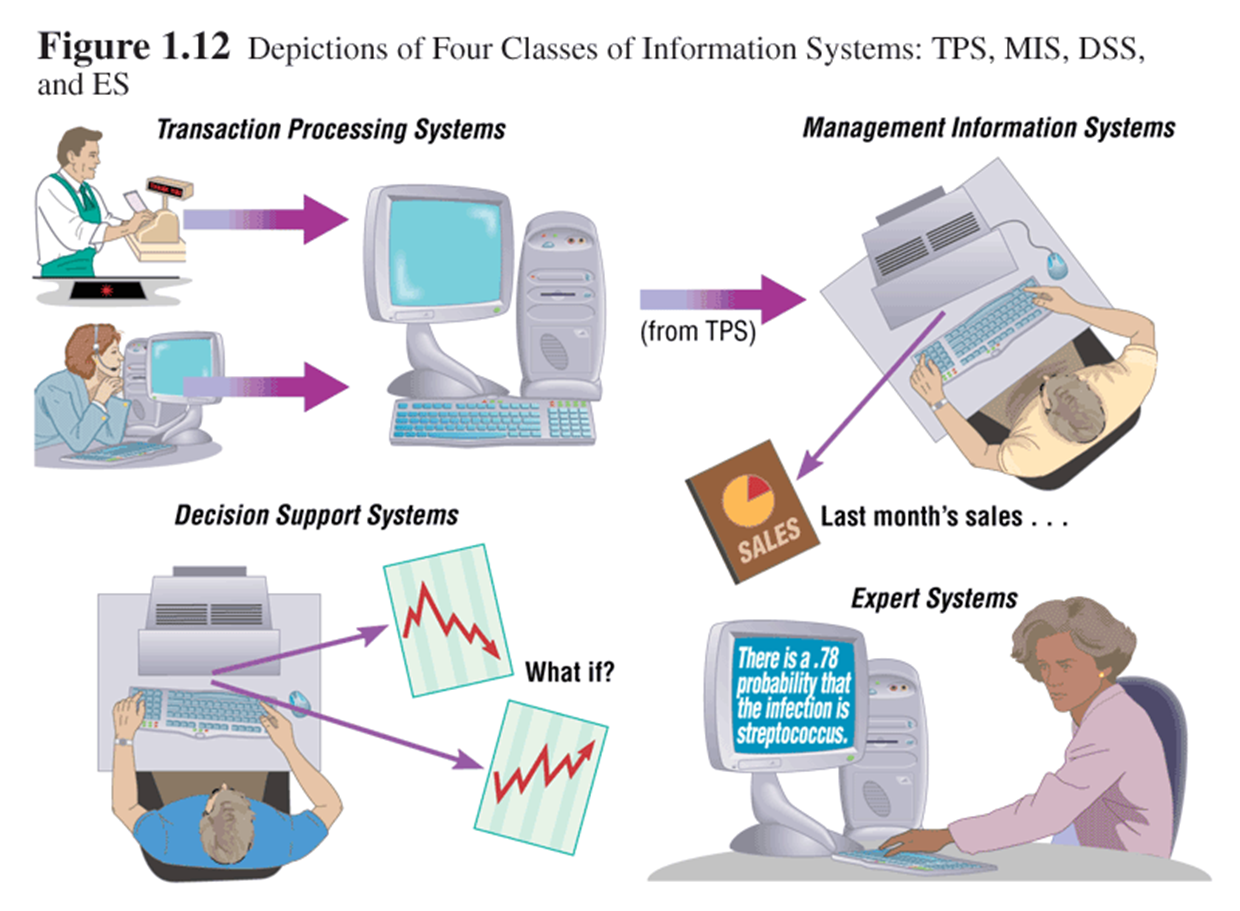
Transaction Processing Systems (TPS)
Automate handling of data about business activities (transactions)
Management Information Systems (MIS)
Converts raw data from the transaction processing system into meaningful form.
Decision Support System(DDS)
Designed to help decision-makers
Provides an interactive environment for decision-making
Expert System (ES)
Replicates decision-making process
Knowledge representation describes the way an expert approach the problem
SYSTEM DEVELOPMENT LIFE CYCLE
System Development Methodology
Standard process followed in an organization
Consists of:
Analysis
Design
Implementation
Maintenance
Series of steps used to manage the phases of development for an information system
Consists of Four Phases
Planning & Section
Analysis
Design
Implementation & Operation