Lab Exam Review - Protozoa
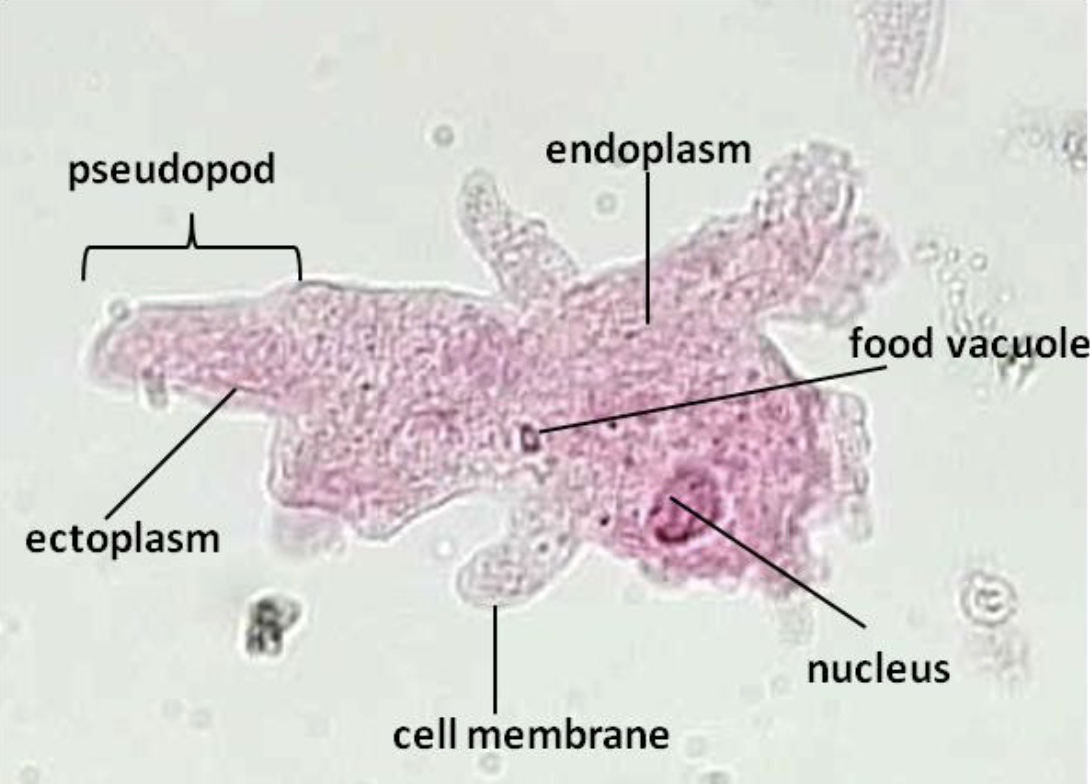
Amoeba sp.
Live in fresh and salt water, and in moist soil
Bottom dwellers
Require a surface on which to glide
Feed on bacteria, algae and other protozoa
Support:
Cell membrane — semi permeable to facilitate exchange of products
Ectoplasm — beneath cell membrane (made of fibrous actin)
Endoplasm — contains cytoskeleton and organelles
Movement:
Psuedopodia — grasps surface pulls rest of cell forward
Endoplasm in pseudopodia stiffens into ectoplasm, and existing ectoplasm softens into endoplasm to facilitate a moving stream forward
Feeding/digestion:
Phagocytosis
Encircle food items with pseudopodia
Form water filled food vacuoles that are later digested by enzymes
Waste products and excess water removed by semipermeable cell membrane
Reproduction
Asexual reproduction by binary fission
Organism copies DNA, organism splits into two, each new organism has nucleus with genetic material
Paramecium sp.
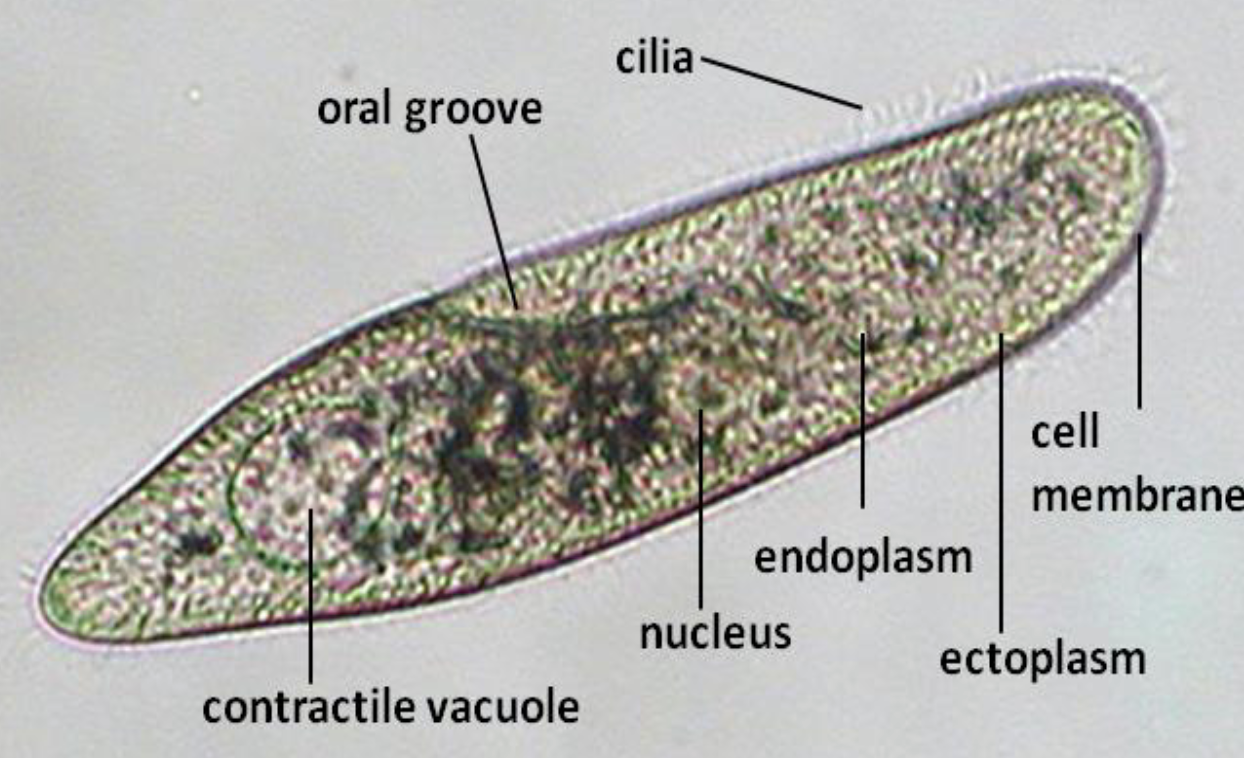
Ciliate protozoa
Found in freshwater containing much organic material
Feed on small particles (e.g. bacteria)
Support:
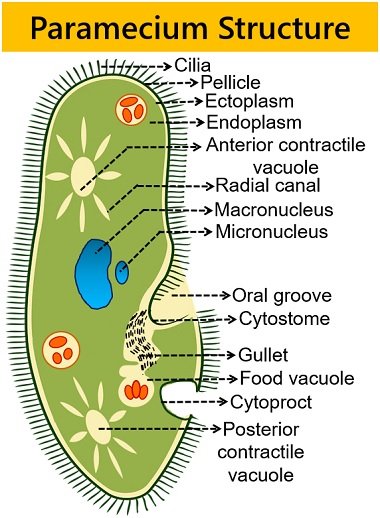
Cell membrane
Ectoplasm
Endoplasm — contains cytoskeleton and organelles
Movement:
Oar-stroke actions of cilia that move the organism forward or in circles
Feeding/digestion:
Cilia-lined oral groove draws food particles into endoplasm, food vacuoles form for later digestion
Waste products removed by semi-permeable cell membrane
Contractile vacuoles are responsible for osmotic balance — pumping out excess water
Reproduction:
Asexual — binary fission
Sexual — conjugation
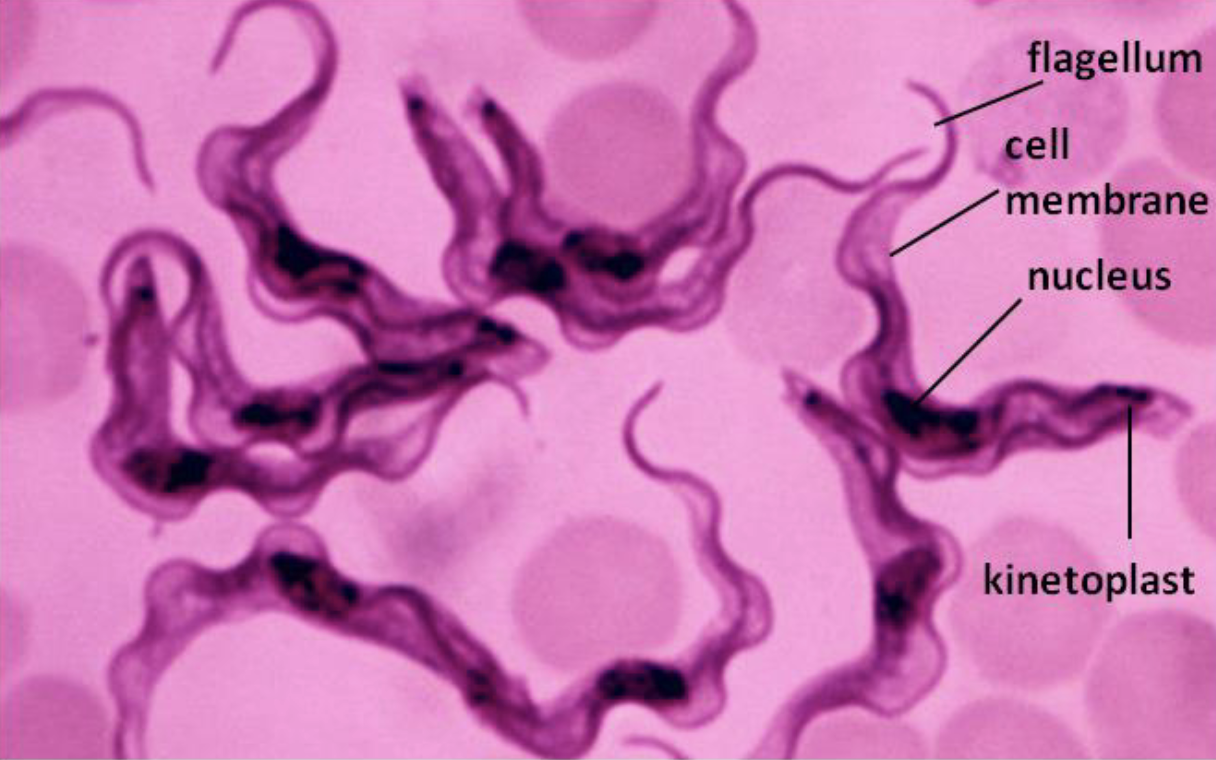
Trypanosoma sp.
Parasite that can cause serious illness
(e.g. sleeping sickness and Chaga’s disease)
Requires intermediate blood-sucking host (e.g. mosquito) to infect human hosts
Support:
Cell membrane
Ectoplasm
Endoplasm
Movement:
Whip-like organelle called flagellum that moves organism through fluid environment
Feeding/digestion:
Absorb food from host’s blood or other body fluids through cell membrane
Reproduction:
Sexual — within insect vector
Asexual — binary fission within human host