Chapter 9
Intake of sodium and potassium affect our risk for hypertension
Minerals are solid, stable inorganic elements
Minerals are ions Elements with positive or negative charge
Minerals sturcutal function
- Part of hormones and enzymes
- Transmit nerve impulses
- Maintain fluid balance
- Support the immune system
- Act with enzymes as cofactors to facilitate chemical reactions
- Work in partnership with other minerals
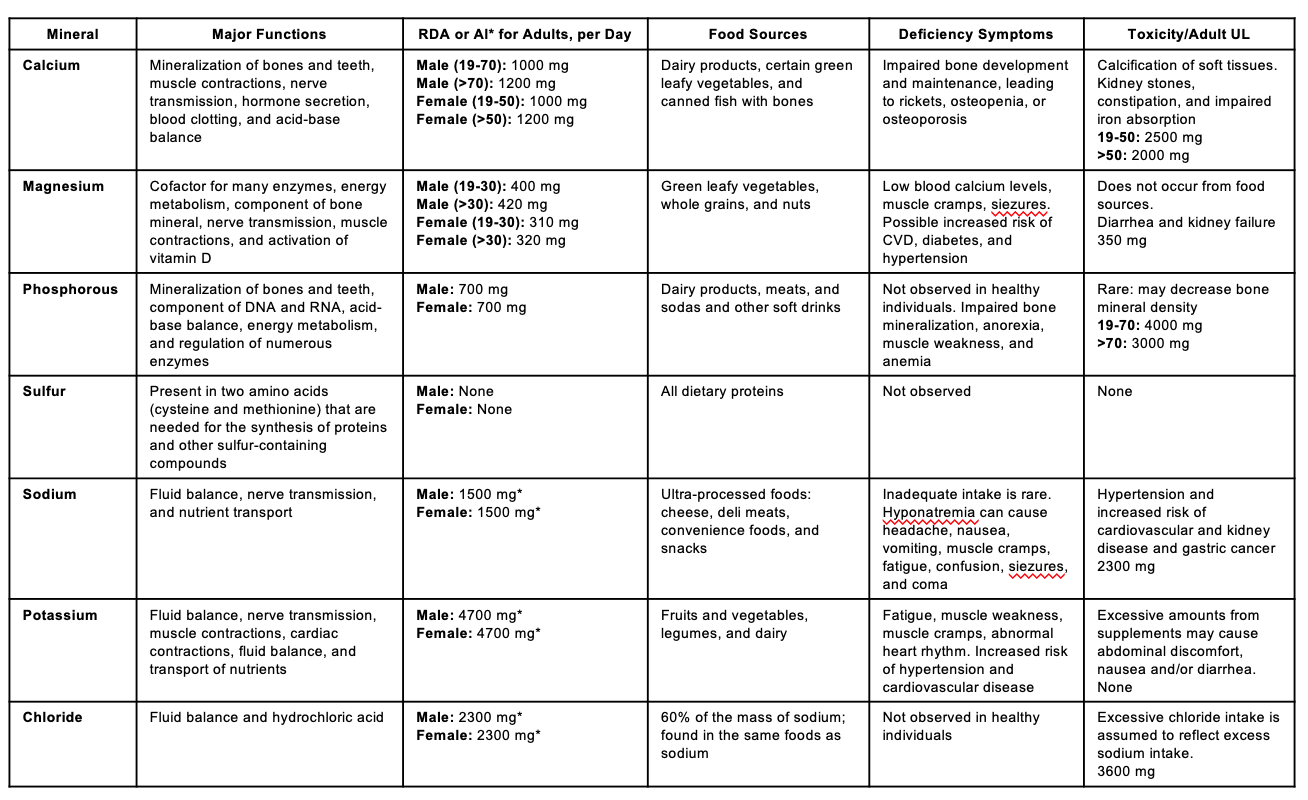
Major minerals: >100 mg/day -
- Sodium
- Potassium
- Chloride
- Calcium
- Magnesium
- Phosphorus
- Sulfur
Trace minerals:
- Iron
- Zinc
- Copper
- Iodine
- Selenium
- Molybdenum
- Fluoride
- Manganese
- Chromium
Bioavailability is affected by nutritional status
- Deficiency
- Increased need
Presence of binders in foods
- Phytates
- Oxalates
- Polyphenols
- Other minerals
minerals found in
- plants
- whole unprocced foods
- animal food
- tap water
Bone formation and maintenance Calcium Magnesium Phosphorus
Calcium (Ca) is the most abundant mineral in the body
99% in bone and teeth
1% in cells and fluid
Blood levels of calcium are closely controlled through the process of calcium homeostasis
RDA = 1000 mg/day for adults 19 to 50 years of age
Achieving a higher peak bone density decreases the risk of osteoporosis as one ages
to much calcium and fortified
High dietary intakes may cause: Constipation Interference with iron absorption Hypercalcemia
Magnesium (Mg) is a cofactor in more than 300 chemical reactions in the body
- 50-60% in bones
- function: transport ions across membrane
- role in protein production
- necessary for vitamin d
Approximately 60% of American adults do not meet the magnesium recommendations
do meet require meant: cancer, atherosclerosis, hypertension, osteoporosis
to much: diarrhea, nausea, and abdominal cramping
Phosphorus (P) is present in every cell of the body
function: component of bon and cartilage, phospholipid, DNA and RNA; energy metabolism, regulates enzyme, maintain acid base balance
Sulfur (S) occurs in our diets as a component of other compounds
Present in two amino acids Cysteine and methionine Present in B vitamins Thiamine and biotin
Sodium (Na+), potassium (K+), and chloride (Cl–) are electrolytes that maintain fluid balance in the body
Sodium (Na+) is the primary electrolyte in extracellular fluid
function: regulating fluid balance, blood pressure, nerve impulse, contracting muscles
most sodium is from processed, packaged foods
AI = 1500 mg/day UL for adults = 2300 mg/day Average intake in Unites States = 3400 mg/day 1 teaspoon table salt (sodium chloride) = 2400 mg sodium
Overconsumption of sodium increases risk of hypertension
The DASH eating plan has been found to be an effective approach in helping lower blood pressure and reduce the risk of heart disease
Potassium is the primary electrolyte within cells
function: regulates fluid balance, cofactors certain enzymes, nutrient transport
Mild forms Increase risk of hypertension, stroke, and heart attacks
Potassium toxicity results only from supplement misuse
low heart rate and abnormal heart rhythm
Supplementation prescribed and monitored by a health care provider
Chloride is an electrolyte also found in extracellular fluids
Two-thirds of water is intracellular One-third of water is extracellular Water moves by osmosis
Inadequate or excess water intake can have adverse—possibly deadly—effects
Deficiency = dehydration Nausea Dizziness Elevated temperature Concentrated urine
Excess water consumption without electrolytes = hyponatremia Confusion Nausea Vomiting Bloating Swelling around the brain