Week 8 Pre-work for Work, Energy, and Conservation of Energy
Work and Energy
Lecture PowerPoints are based on Chapter 7 and 8 of "Physics for Scientists and Engineers, with Modern Physics, 4th Edition" by Giancoli, Copyright © 2009 Pearson Education, Inc.
These materials are protected by copyright and are intended for use by instructors in teaching their courses and assessing student learning.
Dissemination or sale of this work is not permitted.
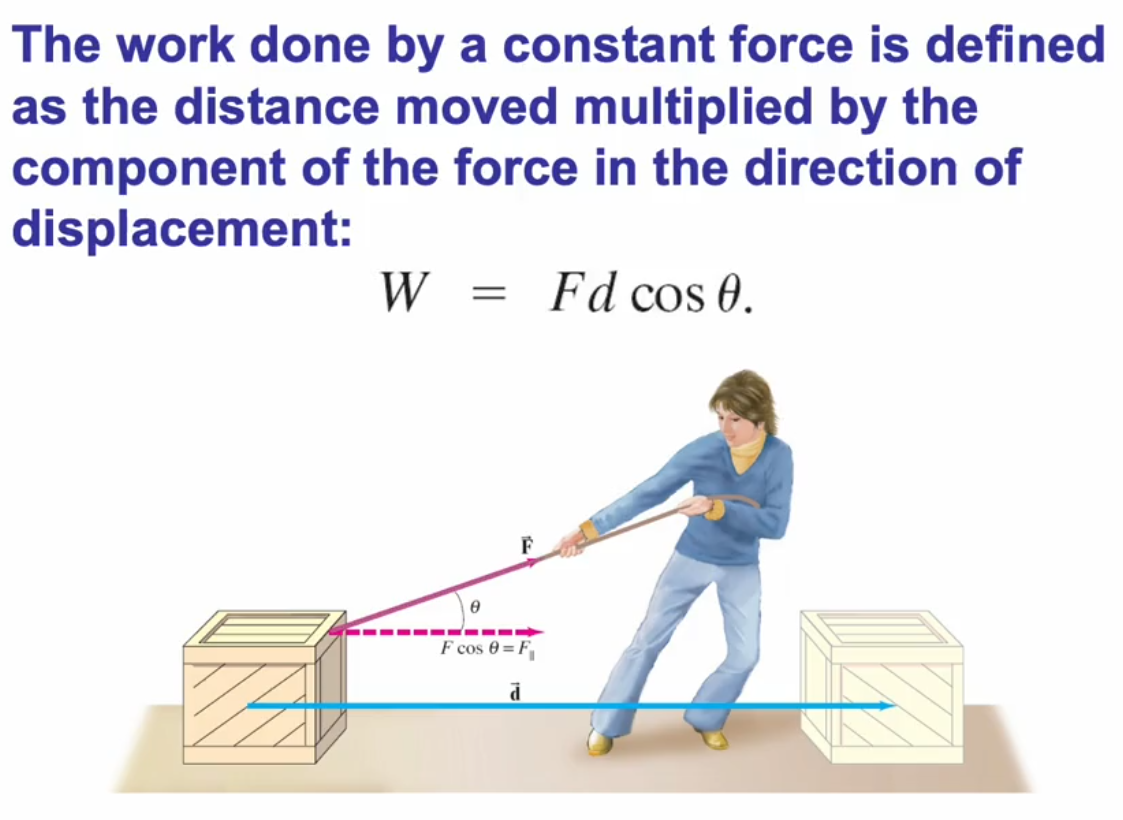
Work Done by a Constant Force
Work done by a constant force is defined as the distance moved multiplied by the component of the force in the direction of displacement.
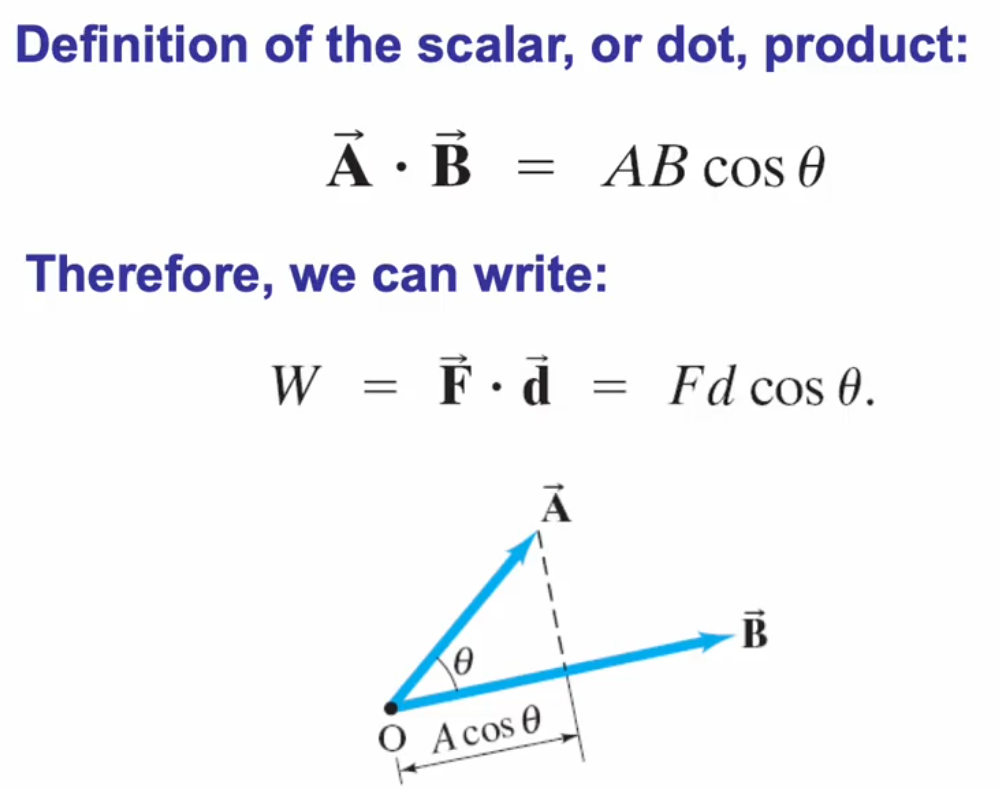
Scalar or Dot Product
Definition of the scalar, or dot, product allows us to write:
General Definition of Work
The general definition of work is:
where is the force vector and is the infinitesimal displacement vector.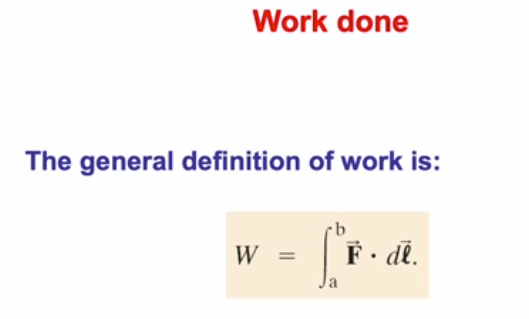
Work Done by a Spring
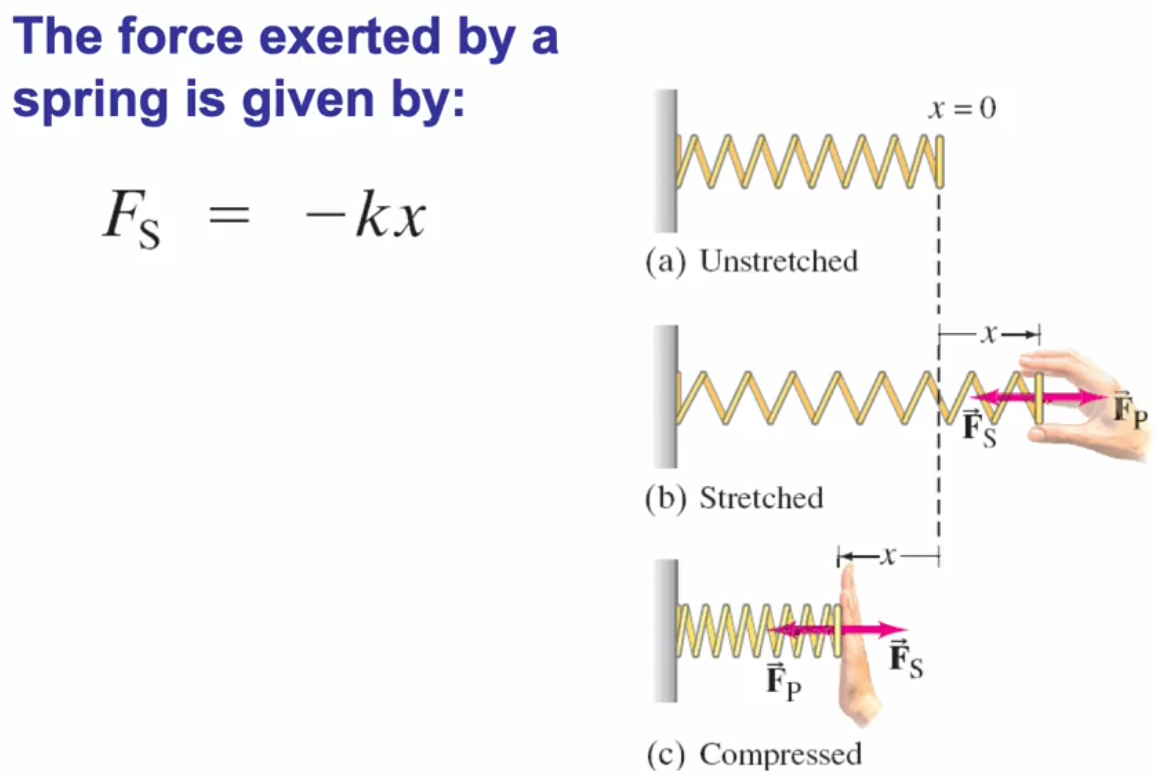
The force exerted by a spring is given by:
where:is the force exerted by the spring.
is the spring constant.
is the displacement from the equilibrium position ().
The figure illustrates:
(a) Unstretched spring.
(b) Stretched spring.
(c) Compressed spring.
Work Done on a Spring
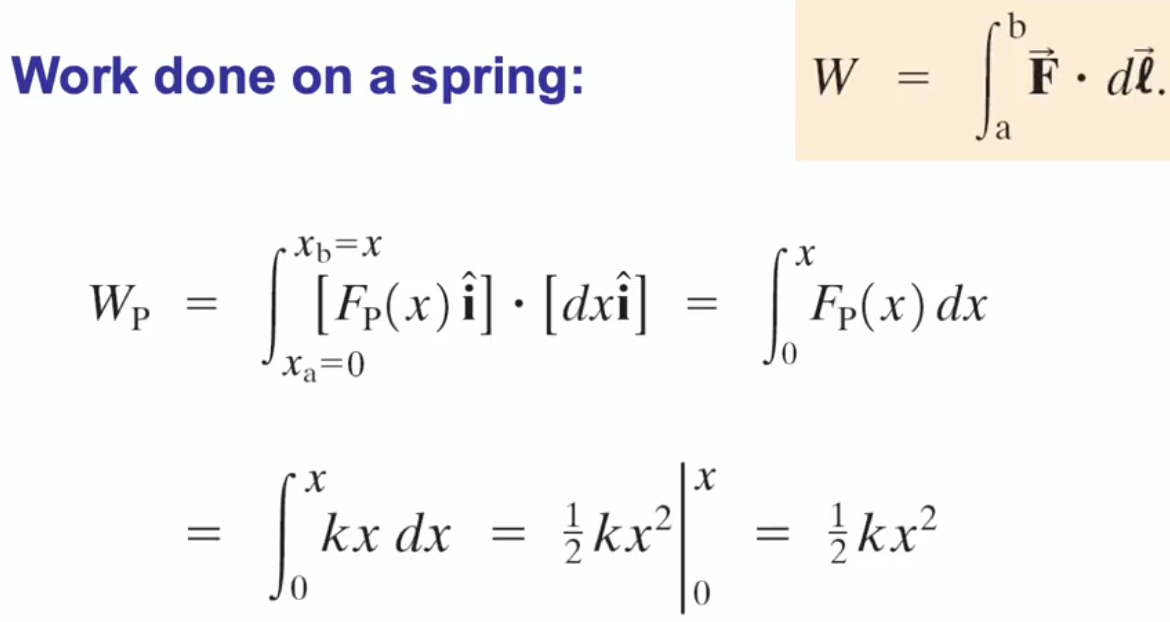
Work done on a spring is calculated by integrating the force over the displacement:
The work done is equal to the change in potential energy stored in the spring.
Kinetic Energy
Kinetic energy is defined as: where:
is the kinetic energy.
is the mass of the object.
is the speed of the object.
Work-Energy Principle
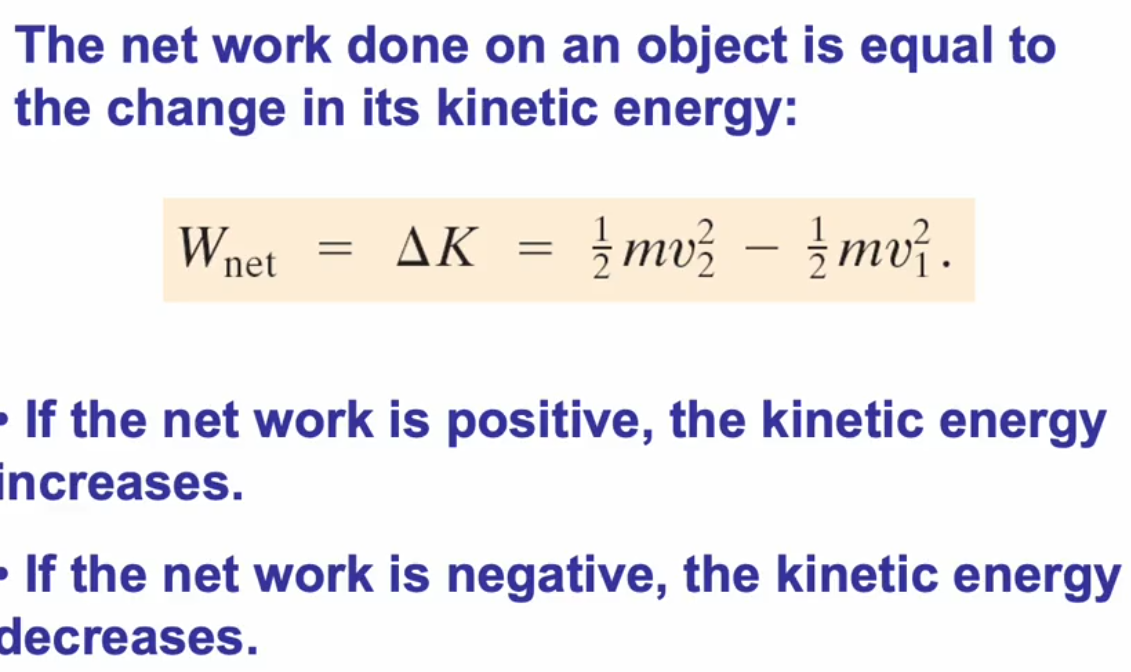
If the net work is positive, the kinetic energy increases.
If the net work is negative, the kinetic energy decreases.
The net work done on an object is equal to the change in its kinetic energy:
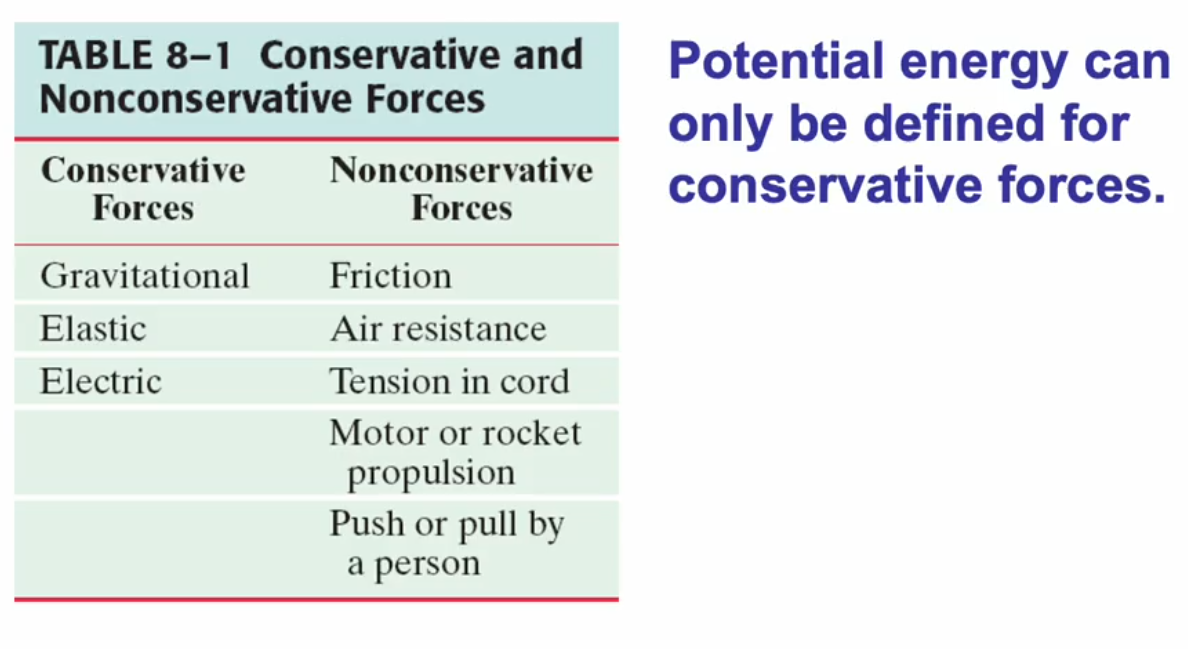
Conservative and Nonconservative Forces
A force is conservative if:
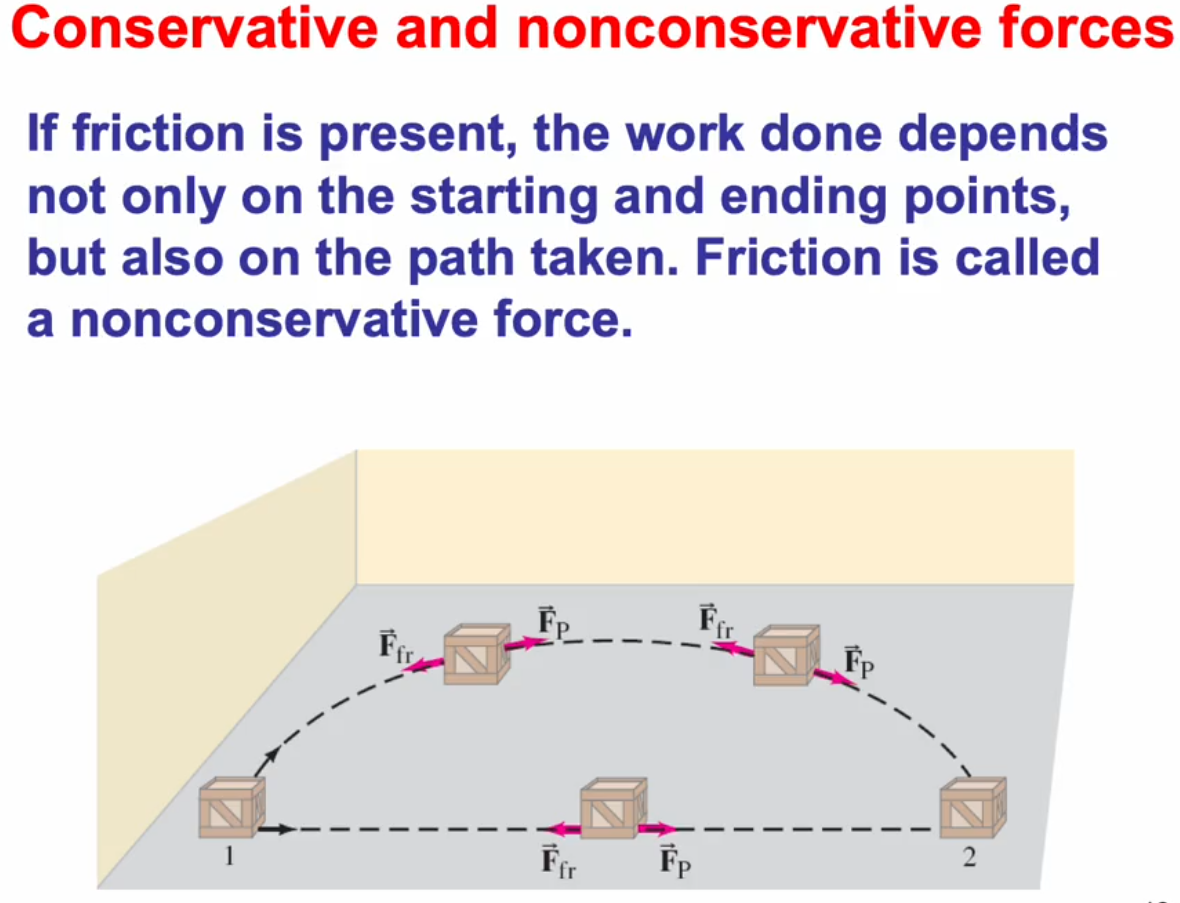
The work done by the force on an object moving from one point to another depends only on the initial and final positions of the object.
It is independent of the particular path taken.
If friction is present, the work done depends not only on the starting and ending points but also on the path taken.
Friction is a nonconservative force.
Potential energy can only be defined for conservative forces.
Potential Energy
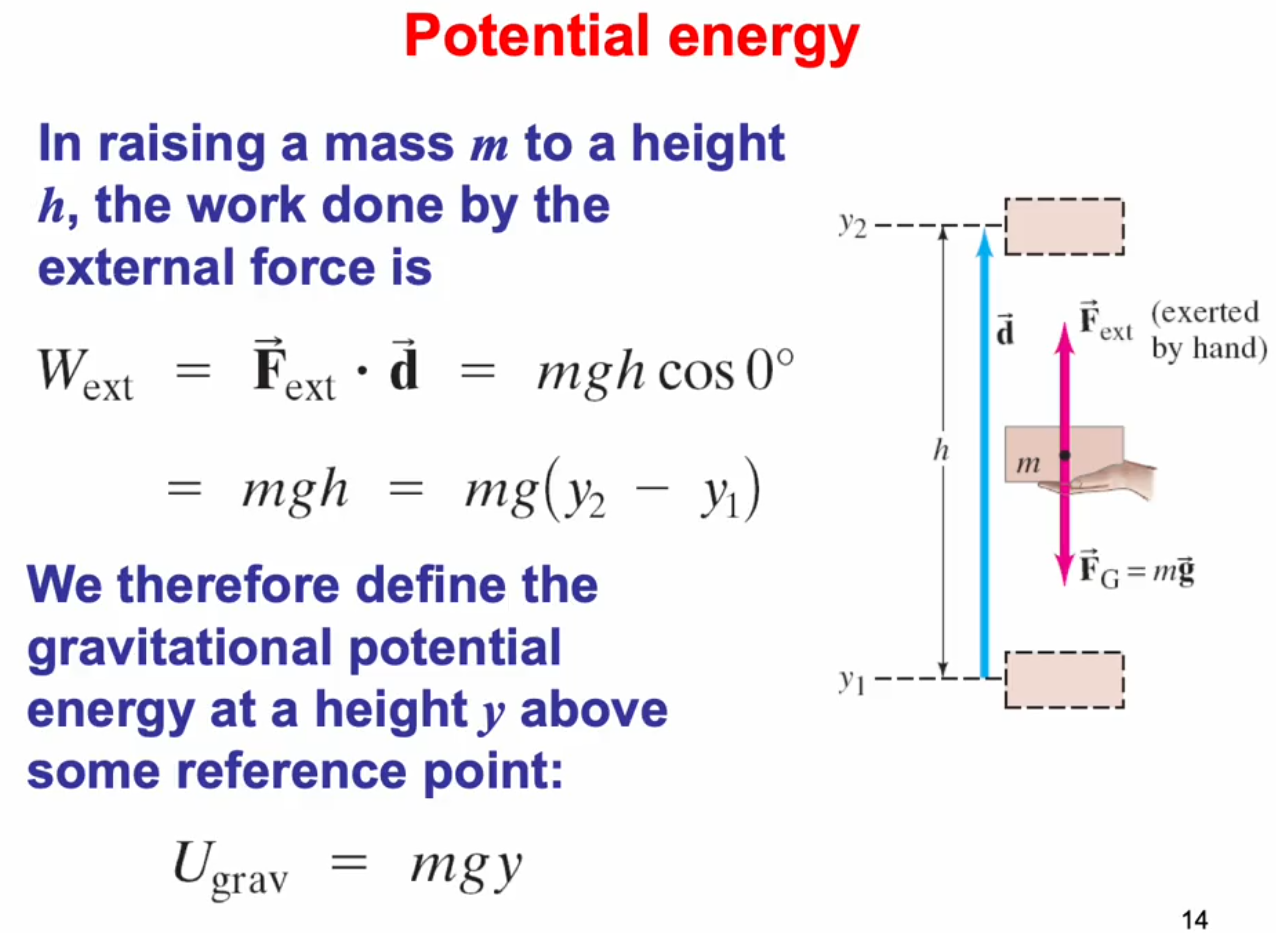
In raising a mass to a height , the work done by the external force is .
Gravitational potential energy at a height above some reference point is:
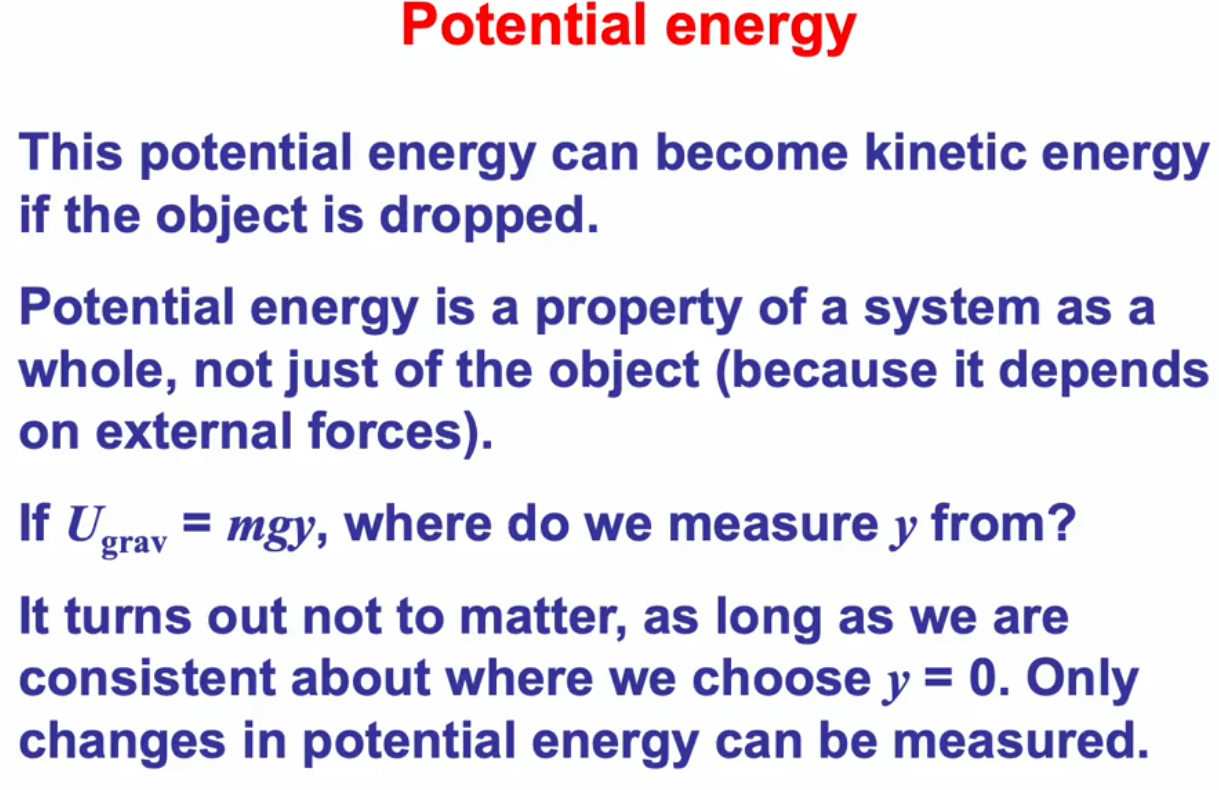
This potential energy can become kinetic energy if the object is dropped.
Potential energy is a property of a system as a whole, not just of the object because it depends on external forces.
Only changes in potential energy can be measured; the absolute value is not meaningful.
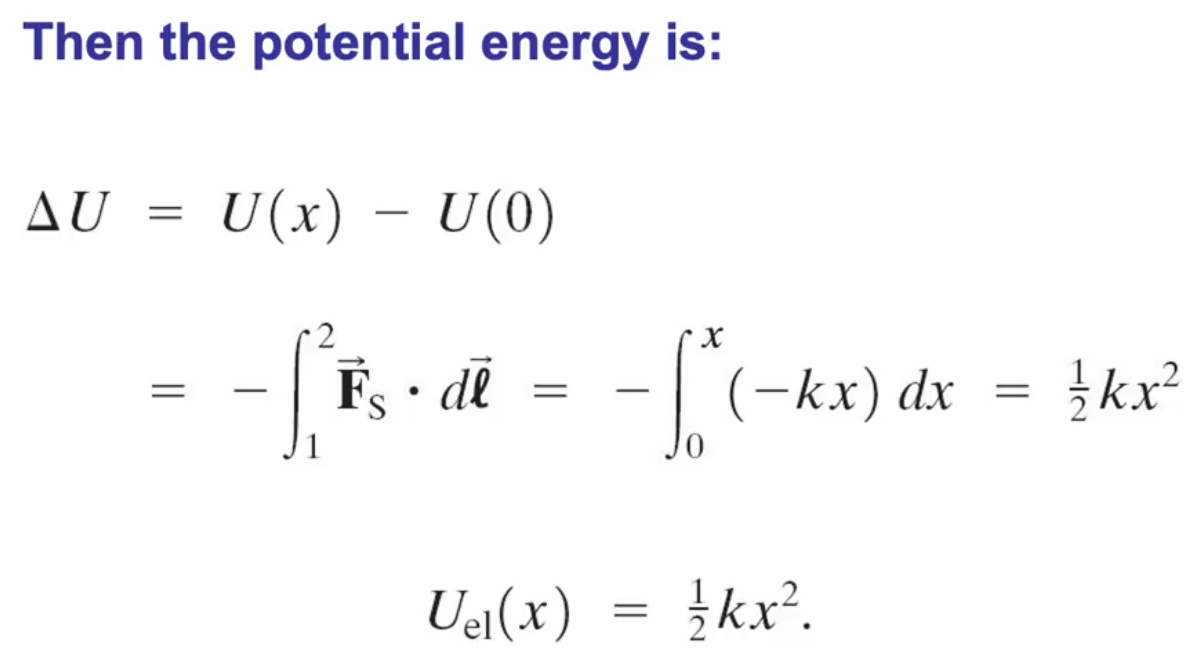
Elastic Potential Energy
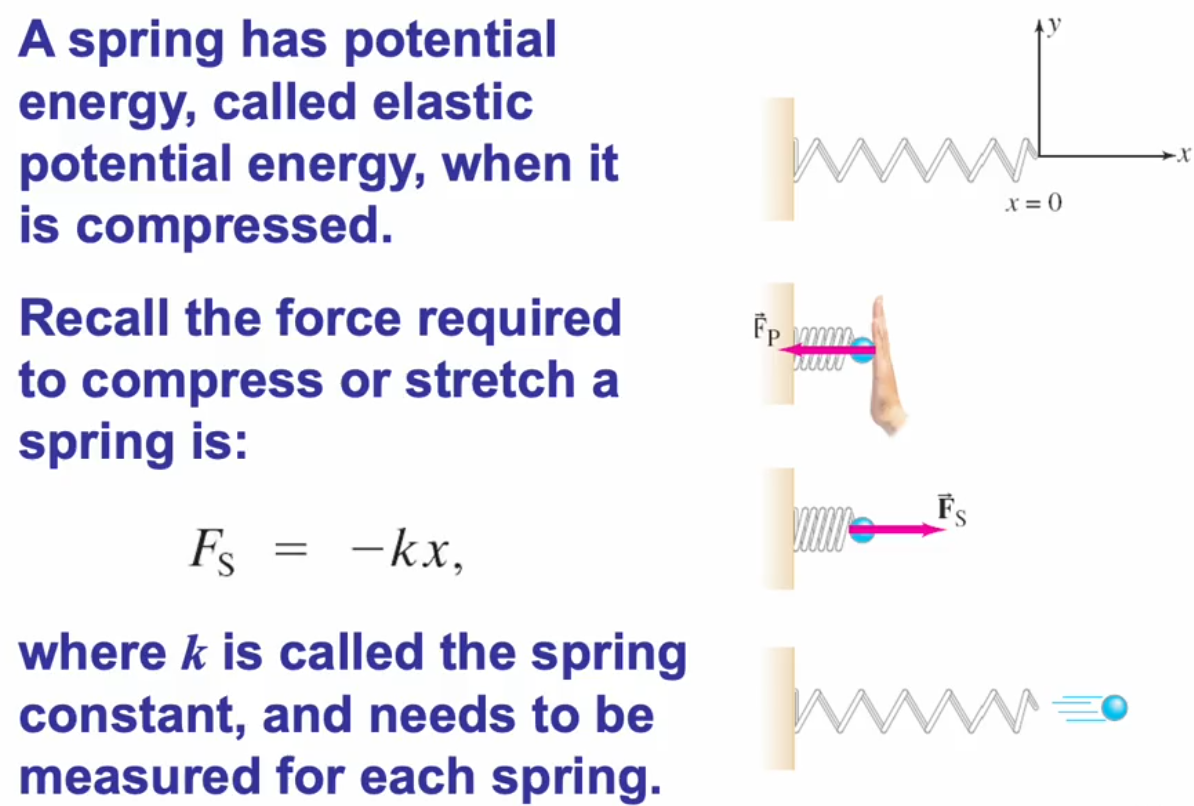
A spring has potential energy, called elastic potential energy, when it is compressed or stretched.
The potential energy is: where:
is the spring constant.
is the displacement from the equilibrium position.
Conservation of Energy
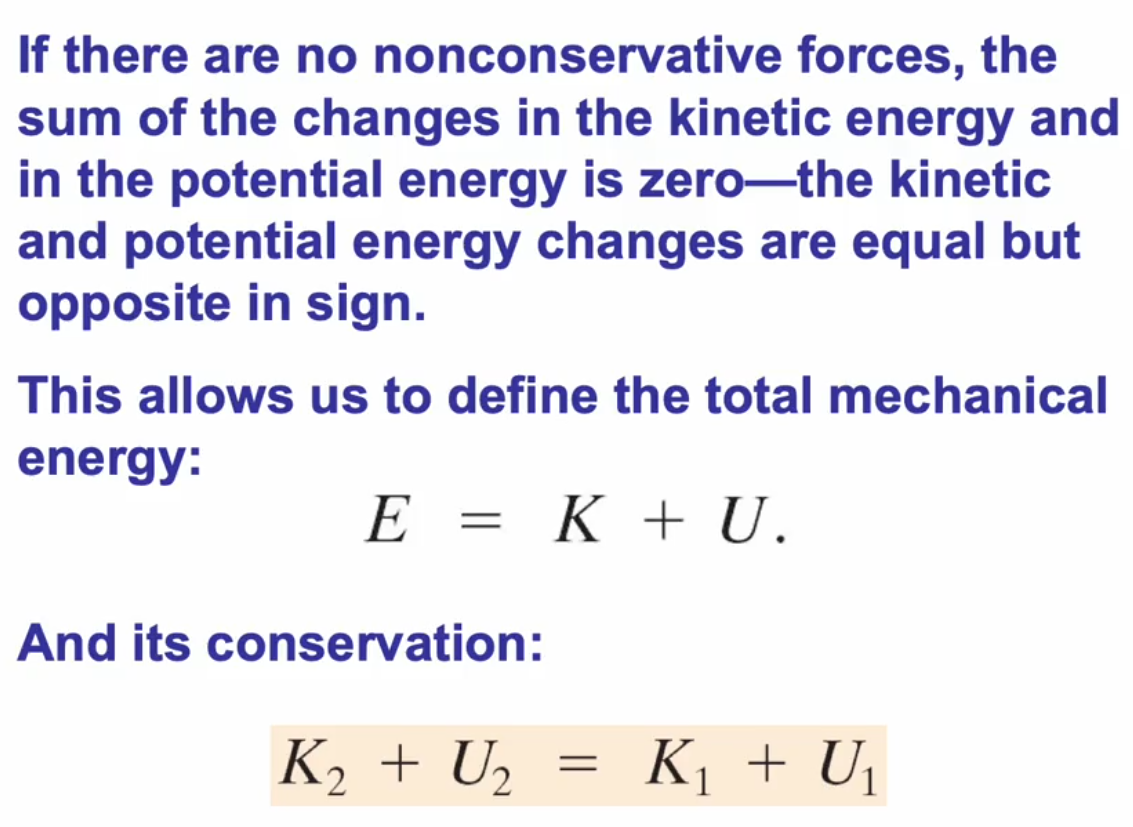
If there are no nonconservative forces, the sum of the changes in the kinetic energy and in the potential energy is zero
The kinetic and potential energy changes are equal but opposite in sign.
The total mechanical energy is:
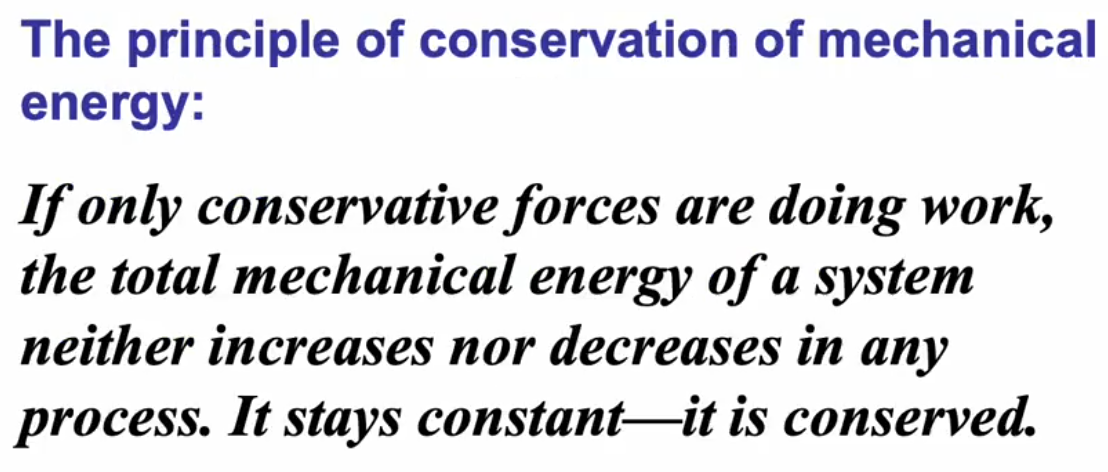
Conservation of mechanical energy:
If only conservative forces are doing work, the total mechanical energy of a system neither increases nor decreases in any process. It stays constant—it is conserved.
Nonconservative Forces
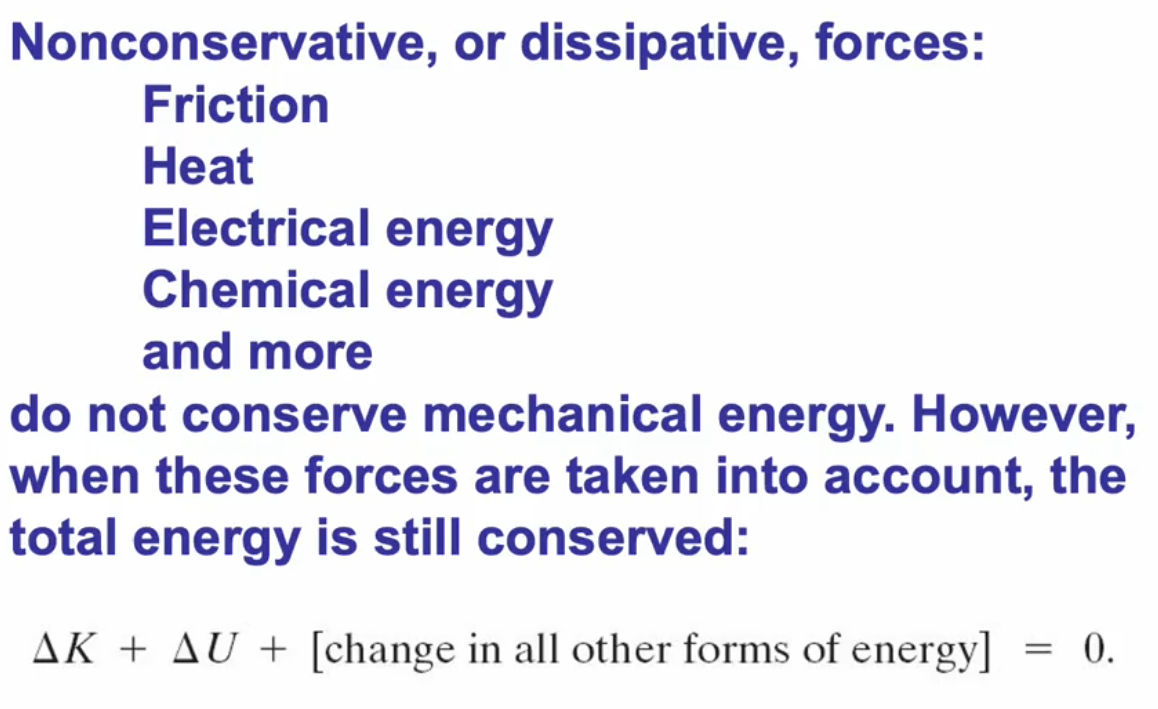
Nonconservative, or dissipative, forces include:
Friction
Heat
Electrical energy
Chemical energy
These forces do not conserve mechanical energy.
However, when these forces are taken into account, the total energy is still conserved.
Law of Conservation of Energy
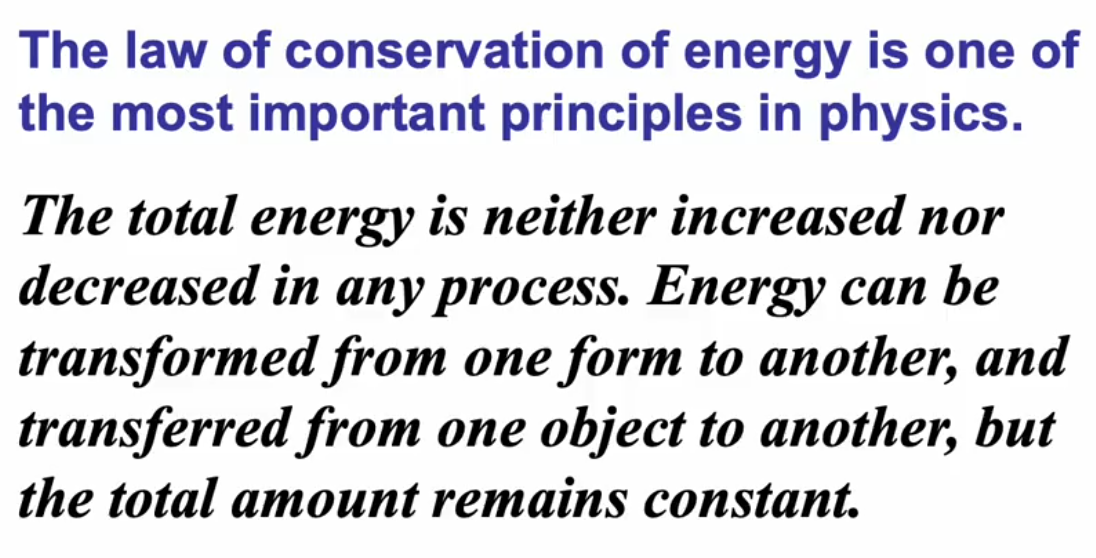
The law of conservation of energy is one of the most important principles in physics.
The total energy is neither increased nor decreased in any process.
Energy can be transformed from one form to another and transferred from one object to another, but the total amount remains constant. Mathematically expressed as: , where represents the total energy of an isolated system.