Natural selection
Natural selection
the mechanism for evolution
individuals that are better adapted to their environment survive and reproduce
survival of the fittest
eventually new species are formed
Process of natural selection
there is natural variation in a population (new alleles can arise by mutation)
Environmental selection occurs - those with mutations that give rise to variations which allow the organism to overcome the selective pressure have a survival advantage
thus best adapted organisms in a population outcompete those that are less well adapted (survival of the fittest)
these individuals survive and reproduce
individuals in the next generation with these alleles are also more likely to survive
over many generations the frequency of the advantageous alleles are also more likely to survive
process continues and may eventually lead to a new species formation
EXAMPLE CASE: antibiotic resistance
bacteria can carry antibiotic resistance genes in their plasmids
they will be able to survive and reproduce in the presence of the antibiotic passing on the resistance gene to their offspring
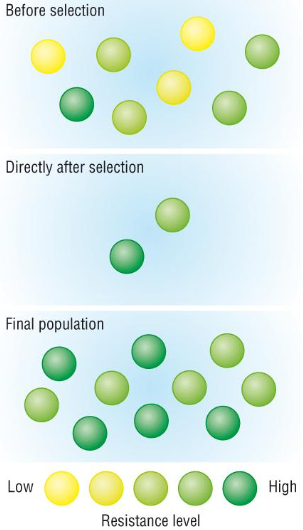
How the resistance evolves
the original population of bacteria shows variation in its level of antibiotic resistance
the antibiotic (selective pressure) is added
only bacteria with the advantageous allele (selective advantage) of the gene for resistance survive and then reproduce
eventually all of the bacteria that survive will carry the advantageous allele for the antibiotic resistance gene