AP Music Theory Unit 6: Harmony and Voice Leading III - Embellishments, Motives and Melodic Devices
Nonchord Tones
note that does not belong to a chord
passing tone (P or PT)
approached by step, left by step in the same direction
unaccented
on weak part of the beat
neighbor tone (N or NN for neighbor note)
approached by step and left by step in different directions
always unaccented
double neighbor (neighbor group)
combo of upper and lower neighbors
anticipation (ANT)
note from the next chord gets held over into the previous chord
incomplete neighbors
combo of a step and a leap
escape tone (E or ET)
step followed by a leap in opposite directions
unaccented
appoggiatura (APP)
leap followed by a step in the opposite direction
accented
Suspensions
note from previous chord is held over into the next
do not double the note of resolute
one exception
three parts
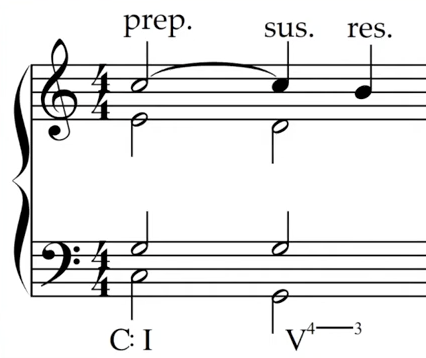
prep
previous chord
always consonant
suspension
on the beat
dissonant
w one exception
resolution
off the beat
consonant
always down by step
if it resolves upwards it is a retardation
anticipations when soprano had too much coffee and comes in early
suspensions when had no coffee and comes in late
Types of Suspension
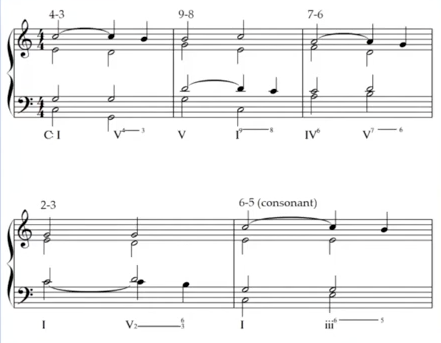
4-3
suspended note forms a 4th above thebass
the resolving note forms a 3rd above the bass
3rd is note of resolution
most common type
9-8
root is the note of the resolution
the only instance where the note of resolution is doubled
7-6
embellishments 1st inversion triads
2-3
bass suspension
6-5
consonant suspension
weaker effect bc both suspension and resolution are consonant
Motifs, Phrases and Sentences
Motif: small musical idea
Phrase: musical thought
ends in a cadence
usually played in one “breath”
Sentence: way of building phrases from motifs
consists of basic idea which is comprised of one or more motifs
The Period
group of two phrases
antecedent
question
consequence
answer
parallel period
both phrases begin w similar ideas
contrasting period
both phrases begin w different ideas
Melodic Devices
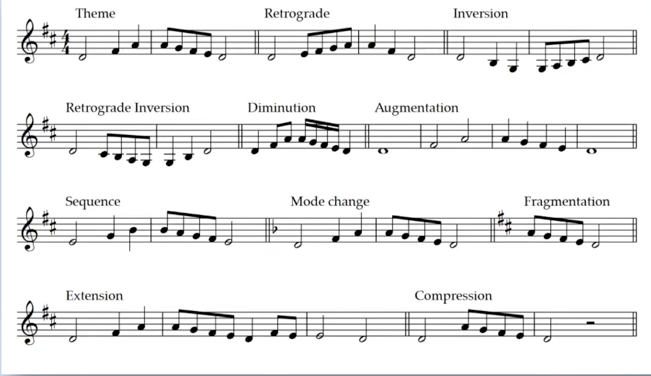
retrograde
inversion
retrograde inversion
diminution
augmentation
sequence
mode change
fragmentation
extension
compression
Other Terms
Prefix: extension at the beginning of the phrase
Cadential extension: extension at the end of a phase
usually after a DC or IAC
Ellison: when the end of a phrase overlaps w the beginning of another
Visual Score Analysis
Form: analysis of phrase structure (i.e periods, etc)
most common is aaba sequence
abab sequences
abac sequences
coda/codetta closing few measures of a composition after the PAC
not part of the main thematic but added for closure