Chapter: Lesson 7
Ah, A tall glass of ice-cold lemonade can be refreshing on a hot day. Lemonade is a combination of lemon juice, water, and sugar. Do you know what kind of matter lemonade is? It isn't an element because it consists of more than one substance. Is it a compound? Not all combined substances are compounds. Some—including lemonade—are mixtures.
What Is a Mixture?
A mixture is a combination of two or more substances in any proportion. Mixtures are different from compounds, which consist of different elements in fixed proportions. The substances in a mixture also do not combine chemically to form a new substance, as they do in a compound. Instead, they just intermingle and keep their original properties. The lemonade pictured above is a mixture because it doesn’t have fixed proportions of ingredients. It could have more or less lemon juice, for example, or more or less sugar, and it would still be lemonade.
Q: What are some other examples of mixtures?
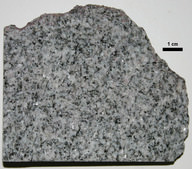
A: Other examples of liquid mixtures include salt water and salad dressing. Air is a mixture of gases, mainly nitrogen and oxygen. The rock pictured in the Figurebelow is a solid mixture.
[Figure 2]
This rock is a mixture of smaller rocks and minerals.
Homogeneous or Heterogeneous?
Lemonade without pulp or other undissolved substances is an example of a homogeneous mixture. A homogeneous mixture has the same composition throughout. Another example of a homogeneous mixture is salt water. If you analyzed samples of ocean water in different places, you would find that the proportion of salt in each sample is the same: 3.5 percent.
The rock in Figure above is an example of a heterogeneous mixture. A heterogeneous mixture varies in its composition. The black nuggets, for example, are not distributed evenly throughout the rock.
Types of Mixtures
Mixtures have different properties depending on the size of their particles. Three types of mixtures based on particle size are solutions, suspensions, and colloids, all of which are described in the Table below.