PT-2
LOs:
1) Describe the basic anatomy of the ANS
2) Name the main transmitters and receptors involved in the ANS
3)Recognise there are several different adrenoreceptors
4) Understand how the PNS affects airway smooth muscle
5)Outline how SNS influence airway smooth muscle
1)Describe the basic anatomy of the ANS
Most of the nerves from SNS are contained within the thoracic and lumbar spinal chord.
Nerves in PNS can originate in the brain stem and sacral region of the spinal chord.
SNS= post ganglionic nerves closer to target organ than PNS
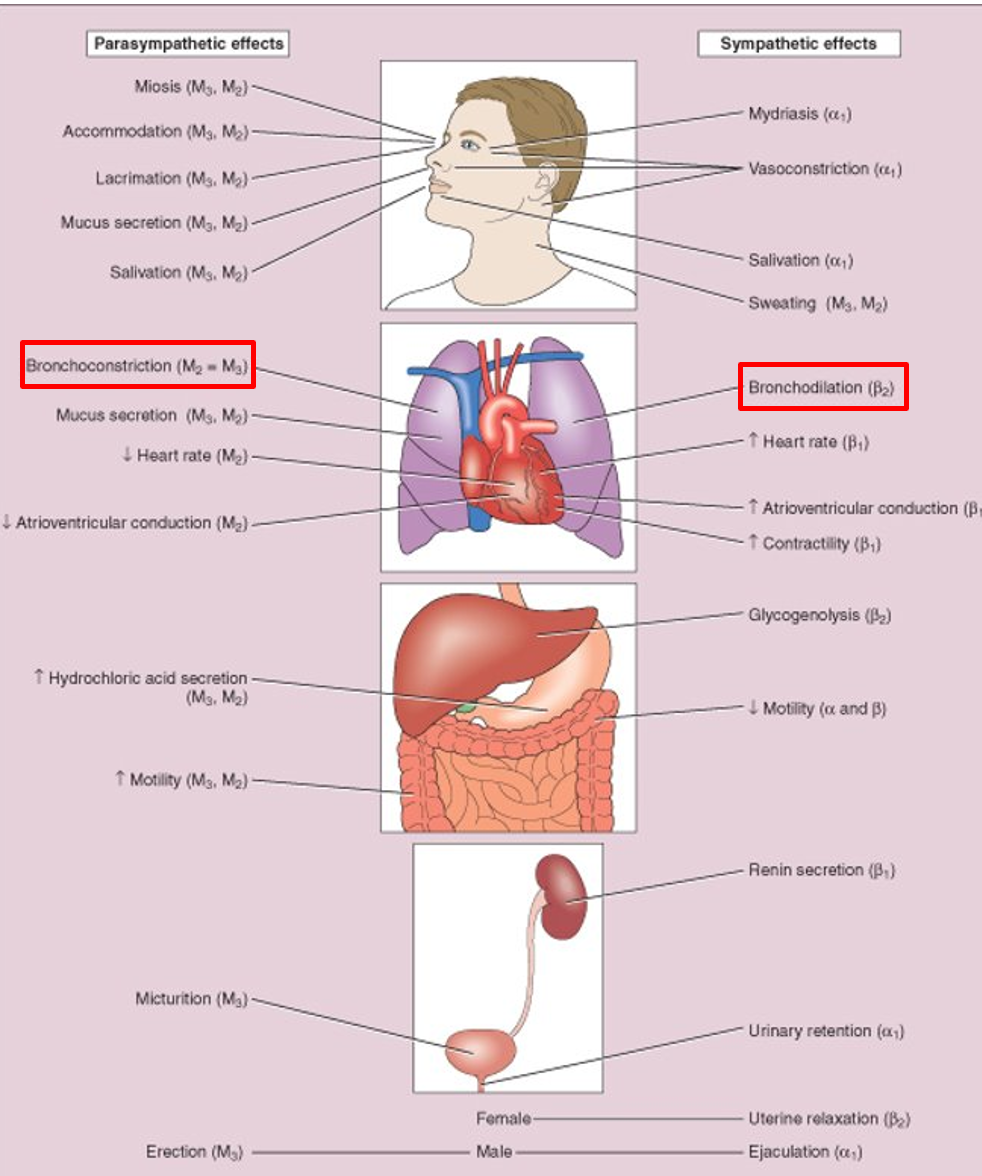
An example of when PNS and SNS product the same response: salivation
Sympathetic only: Sweat glands, blood vessels
Parasympathetic only: Ciliary muscle of eye
SNS + PNS has opposing actions in: heart, airways, smooth muscle of gut & bladder
Both PNS and SNS operate all the time because of homeostasis
Two neuron system :
Preganglionic neuron - cell body is in the CNS
Postganglionic neuron - cell body in autonomic ganglion
2) Name the main transmitters and receptors involved in the ANS
3)Recognise there are several different adrenoreceptors
Both ANS and PNS have autonomic ganglia present just difference in length of pre and pro ganglionic fibres.
Because they both have autonomic ganglia they have a neurotransmitter in common: Ach
Within the autonomic ganglia Ach acting on nicotinic receptors
Share neurotransmitters in ganglia but upon reaching target organ have different neurotransmitters involved.
Presynaptic fibres release ACh: acts on nicotinic receptors
Postsynaptic sympathetic fibres release noradrenaline (norepinephrine): acts on adrenergic receptors
Postsynaptic parasympathetic fibres release ACh: acts on muscarinic receptors
Know synthesis and metabolism of Ach
Muscarinic receptors:
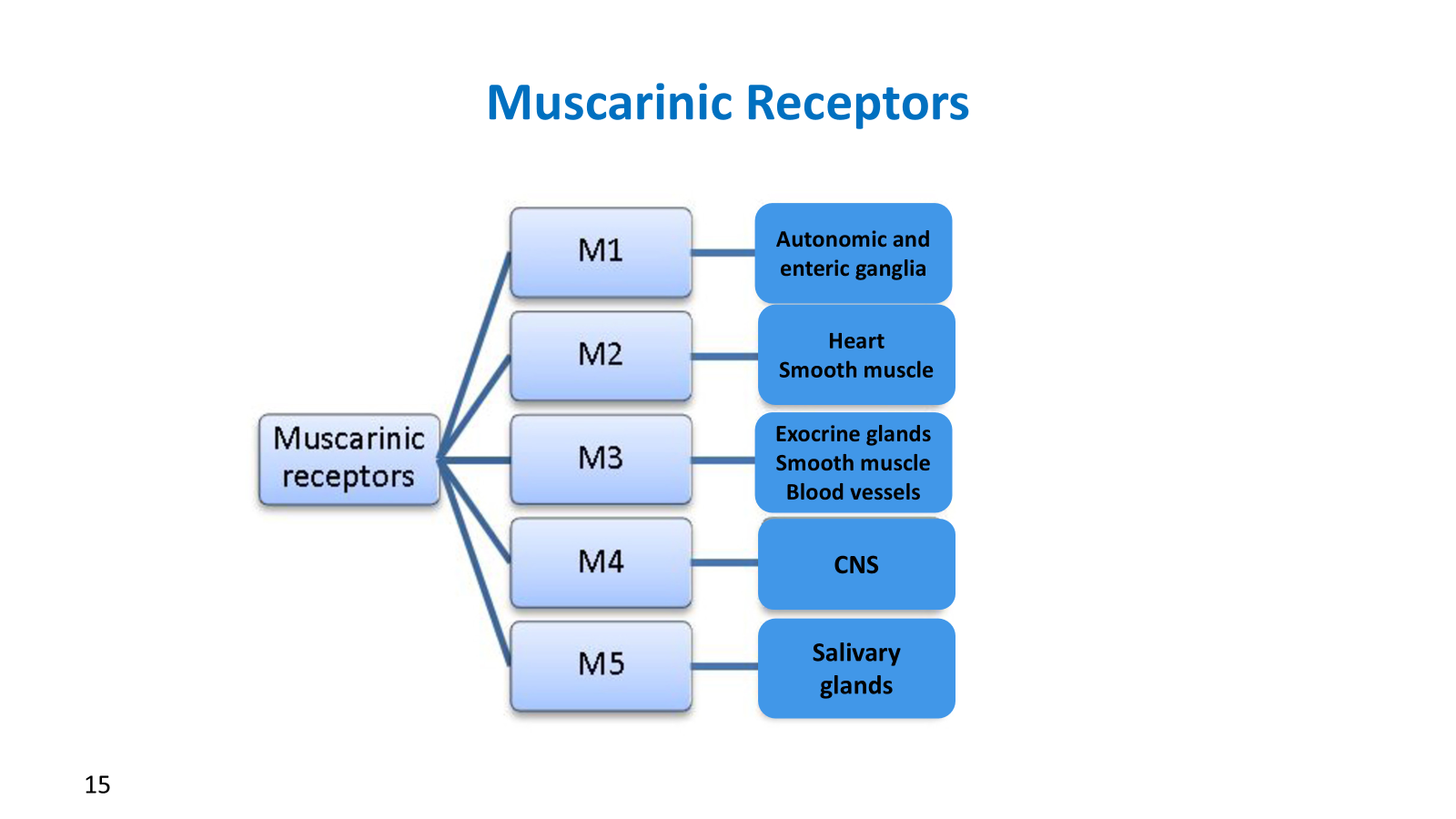
M1 increase gastric acid secretion and gastric motility.
Exocrine glands: salivary, gastric
Smooth muscle: GI tract, eye, airways, bladder
Blood vessels: endothelium
M5 receptors: Salivary glands, iris, ciliary muscle
Muscarinic receptors are GPCRs
GPCRs are 7 transmembrane receptors
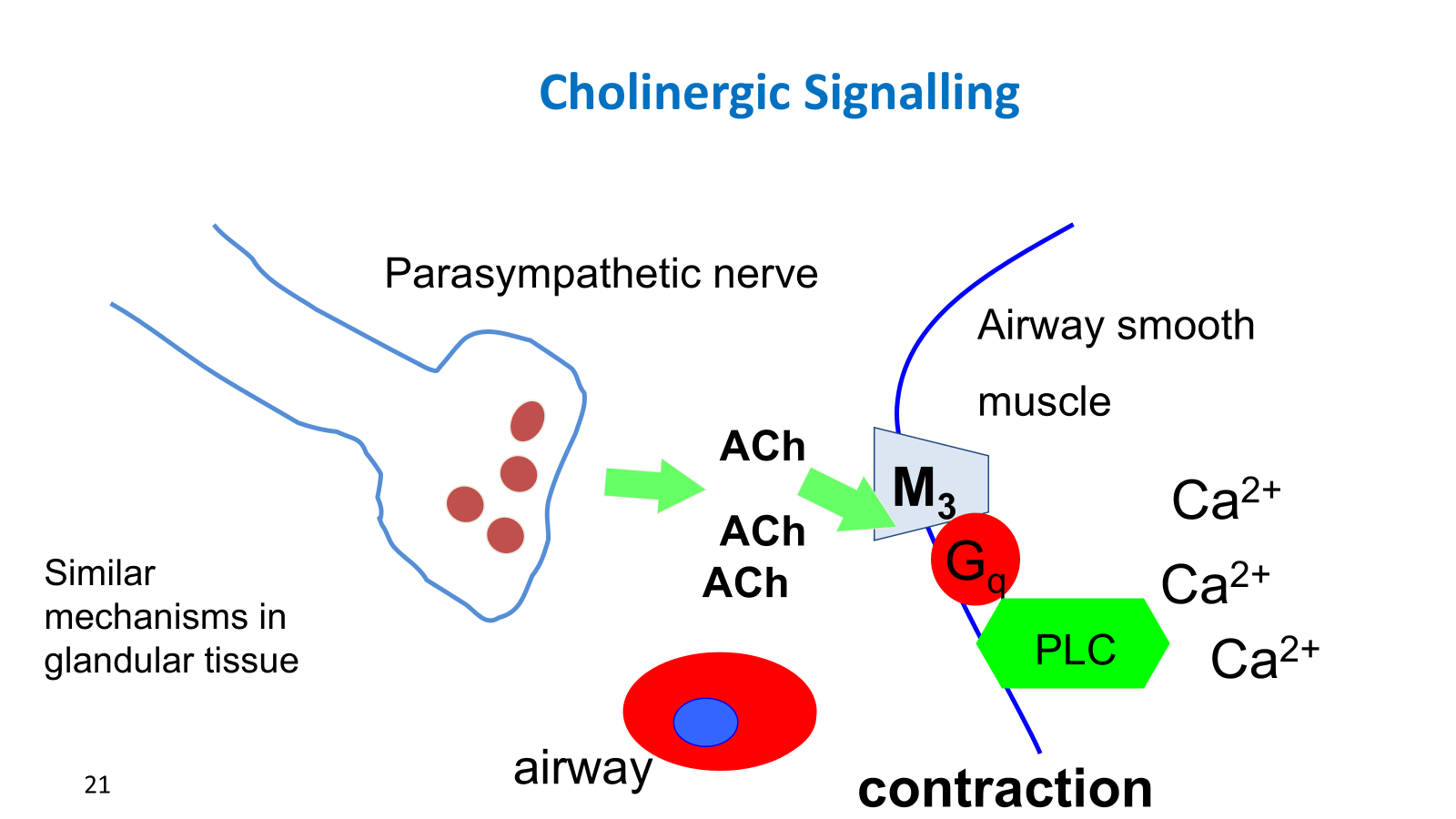
Process: Ach binds to the 7 transmembrane receptor, it’s got 3 components. When Ach binds to its receptors it causes a conformational change in the receptor, some of the sub-units can become disassociated. These disassociated sub-units can bind to other target proteins in the membrane and cause activation of proteins or inhibit activity of those proteins. With M3 receptor causes activation of target protein PLC
PLC can signal through 2 different pathways:
1) IP3 pathway- activation of PLC increases amount of IP3 which is involved in the movement of Ca2+. Get an increase in the calcium dependant protein kinase activity.
2) DAG pathway- Once activated can increase activation of PKC which can modulate activity of proteins through phosphorylation
4) Understand how the PNS affects airway smooth muscle
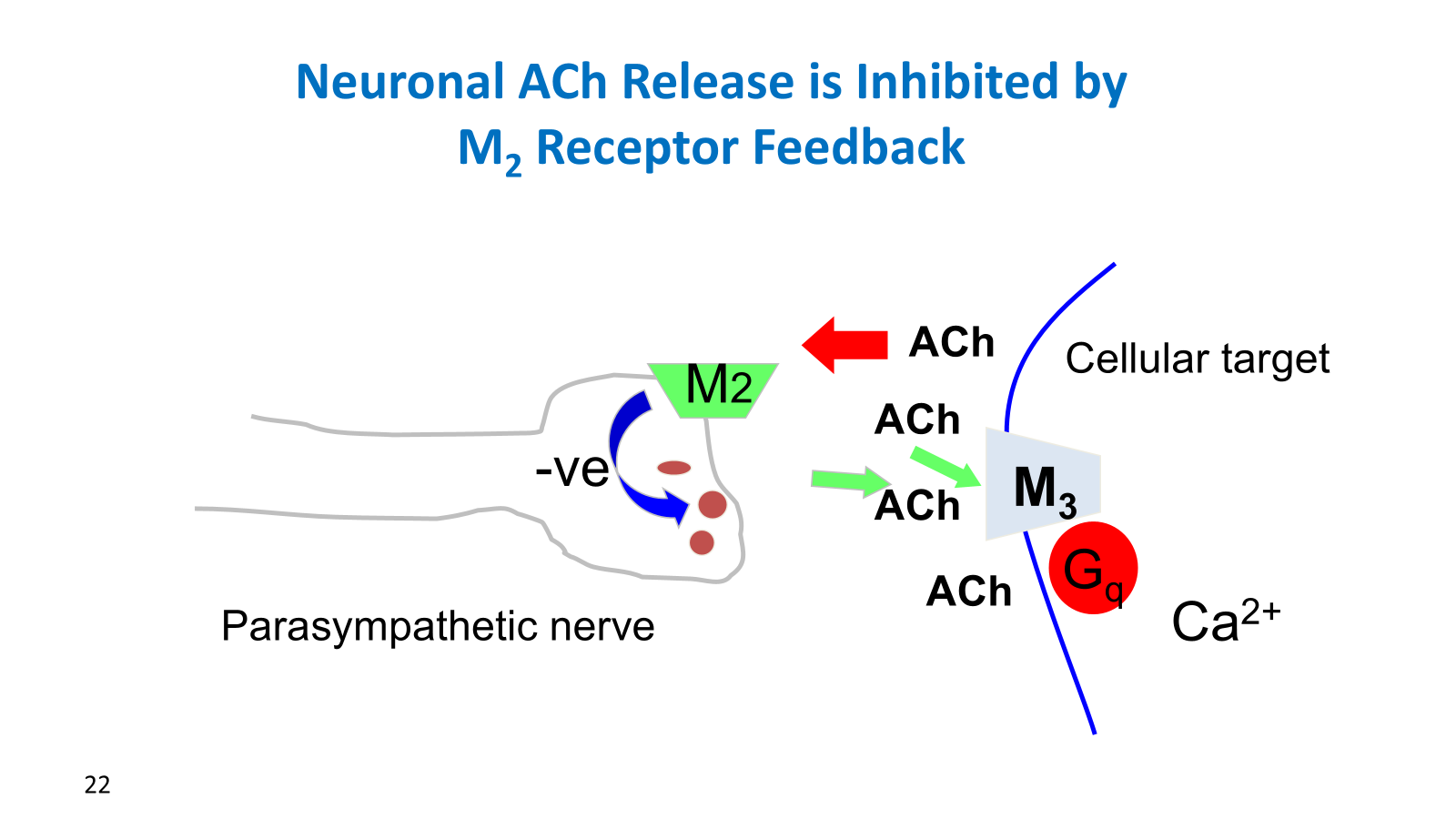
But can also act on M2 receptors on presynaptic neurone which signals it to stop releasing Ach- negative feedback loop. Limiting activity of Ach on M3 receptors
5)Outline how SNS influence airway smooth muscle
Most postsynaptic sympathetic fibres release noradrenaline (NA)
acts on adrenoceptors
NA is synthesised, stored and released from sympathetic nerves
but in the airways not that much innervation caused by SNS
Very sparse sympathetic innervation of the airways
Sympathetic control via circulating adrenaline (from adrenals)