Rotorcraft and Hybrid Drone Operations
DRONE OVERVIEW
Definition: A drone is an unmanned aerial, ground, or underwater vehicle with no human pilot onboard.
Terminology: Common acronyms include RPAS (Remotely Piloted Aircraft System), UAS (Unmanned Aircraft System), RPA (Remotely Piloted Aircraft), UAV (Unmanned Aerial Vehicle), and GCS (Ground Control Station).
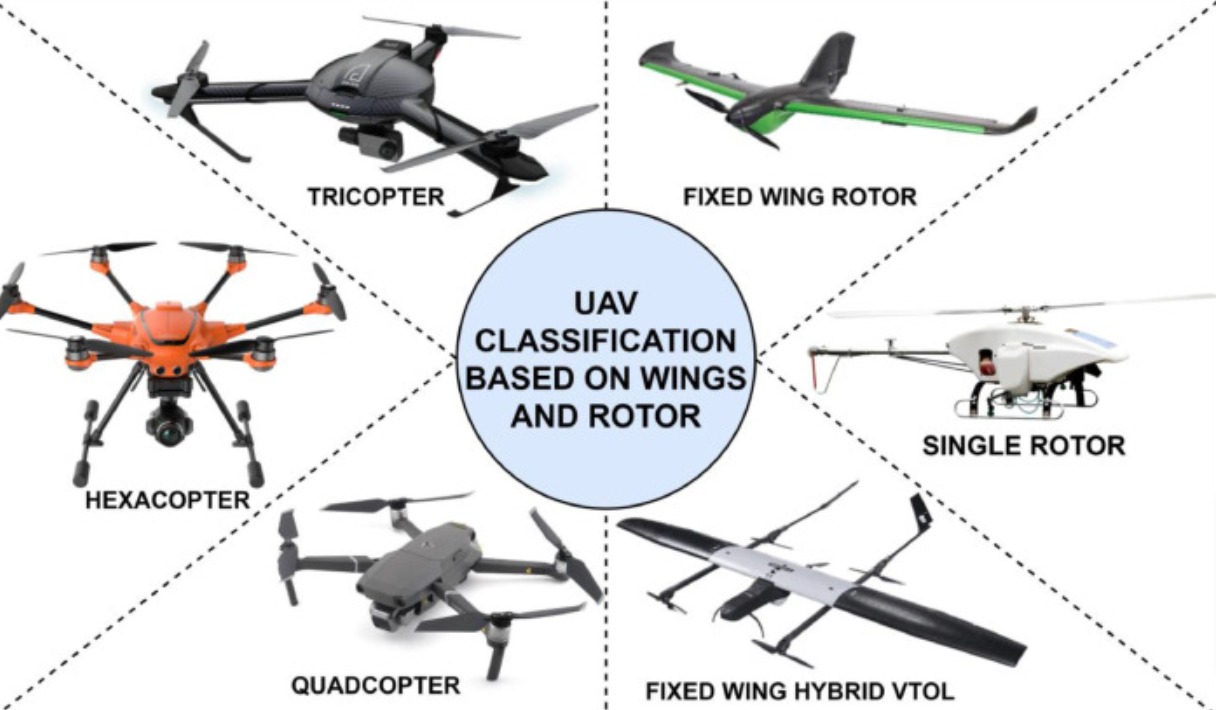
HOW DRONES WORK
Operation:
Remotely controlled by a human operator.
Autonomous flying capabilities using onboard computers.
TYPES OF DRONES
MULTI-ROTOR DRONES
Classification:
Tri-copter
Quad-copter (most popular)
Hexa-copter
Octa-copter
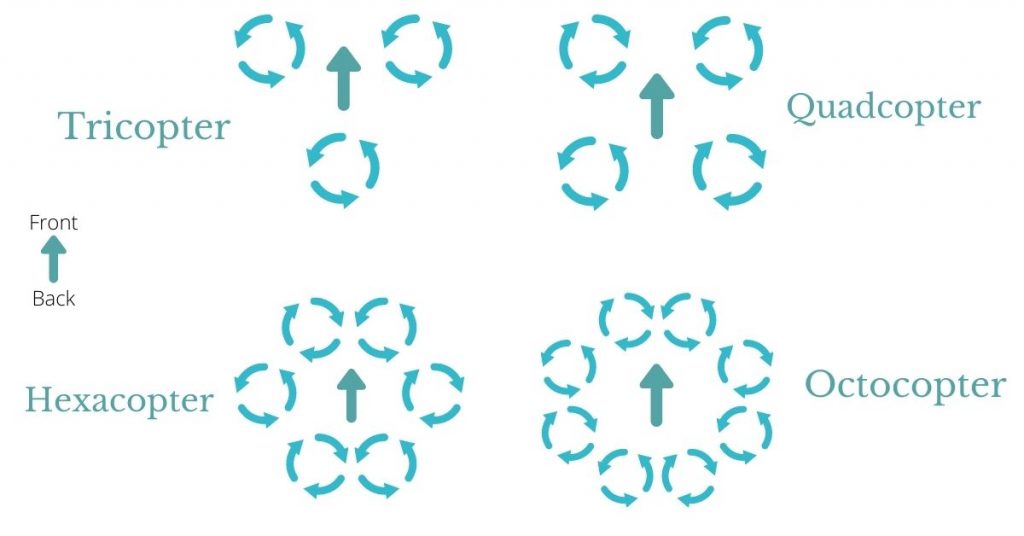
Features: More than two rotors increase stability and control.
QUADCOPTER ANATOMY
Key Components:
Canopy: Protects internal electronics.
Propeller: Converts rotational motion to thrust, influenced by Bernoulli's principle and Newton's third law.
BLDC Motor: Brushless DC motor that is efficient.
Battery: Rechargeable LiPo or Li-ion for power.
Landing Gear: Provides support when grounded.
Control Board: Manages flight operations and stabilizes the drone.
GPS: Essential for navigation and positioning.
LED Lights: Indicate operational status.
COMPONENTS OF MULTIROTOR ANATOMY
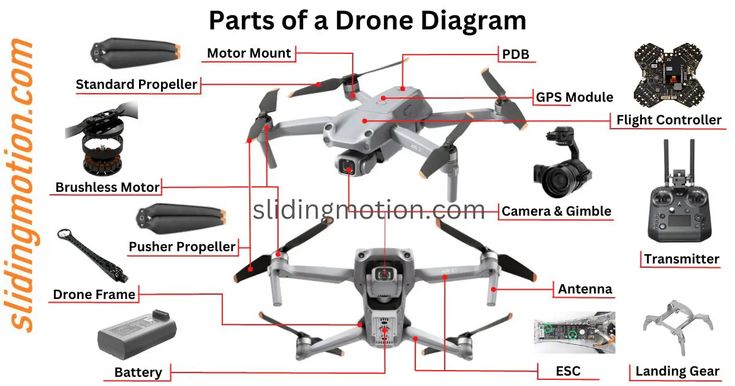
Propeller Dynamics: Related to thrust generation based on the number of rotors.
Brushless DC Motors:
Key parameters include speed, thrust value, kV rating, compatibility with ESC (Electronic Speed Controller) and batteries.
Electronic Speed Controller (ESC):
Regulates motor speed, reverses motor direction, and functions as a dynamic brake.
Battery:
Variations include discharge rate, capacity, and voltage, generally offering higher energy density than traditional batteries.
Power Module:
Distributes power from the battery to the flight controller and other components.
Airframe:
Constitutes the structure enclosing electronics and motors; commonly built with materials like carbon fiber.
Landing Gear:
Varies in design (fixed/retractable) which aids in field visibility during flight.
Flight Controller:
Stabilizes flight, facilitates navigation, and ensures failsafe operations.
Common brands include Ardupilot, DJI, and Pixhawk.
Radio Transmitter/Receiver:
Communicates pilot inputs to the drone using specific frequency bands for best performance.
Telemetry Systems:
Collects and transmits flight data back to the ground control.
NAVIGATION AND POSITIONING SYSTEMS
Inertial Measurement Unit (IMU):
Collects data on speed, angular rate, and magnetic field for autonomous operations.
GPS Module:
Provides crucial location data (longitude, latitude, elevation) and aids in emergency return functions.
ADVANTAGES/DISADVANTAGES OF MULTI ROTOR DRONES
Pros:
Vertical Take-off and Landing (VTOL)
Hovering capability
Operation in confined spaces
Cons:
Limited endurance
Risk of failure in case of motor malfunction
Restricted speed compared to fixed-wing alternatives.
HYBRID VTOL DRONES
Hybrid Functionality: Combines the traits of fixed-wing and multirotor drones
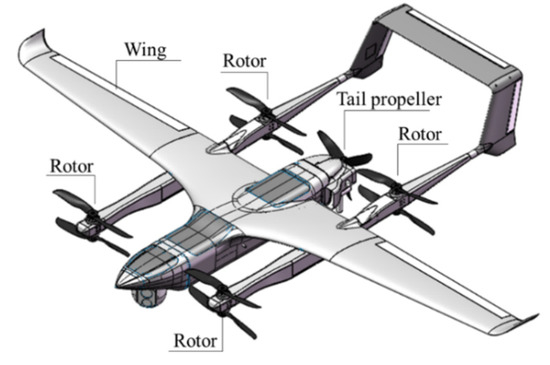
Flight Dynamics:
Take-off like a rotorcraft.
Transition to fixed-wing configuration for operation.
Back to multirotor for landing.
Benefits: Long-range, high endurance, hovering capabilities, suitable for confined spaces.
DRONE HISTORY
FATHER OF DRONES
Dr. Abraham Karem:
Known for the invention of the modern combat drone, "Predator".
Founded Leading Systems Inc. and created the Albatross drone.
APPLICATIONS OF DRONES
Agriculture: Crop monitoring, soil assessment, resource utilization.
Traffic Management: Road condition monitoring, traffic feedback.
Forest/Wildlife: Conservation, human-wildlife conflict management.
Healthcare: Epidemic control, delivery of goods.
Mining: Mineral scouting, managing encroachment, contract monitoring.