Anaphy Rawr
a) cardiomyopathy
Cardiomyopathy (kahr-dee-o-my-OP-uh-thee) is a disease of the heart muscle that makes it harder for the heart to pump blood to the rest of the body. Cardiomyopathy can lead to heart failure.
It causes the heart to lose its ability to pump blood well. In some cases, the heart rhythm also becomes disturbed. This leads to arrhythmias (irregular heartbeats).
b) corpus striatum:
Primary nuclei that is located deep within the cerebrum
Part of the basal ganglia
Involved in motor control and reward processing
c) coronary thrombosis:
Blood clot in the coronary arteries
Can lead to heart attack
d) substantia nigra:
Group of darkly pigmented cells in the midbrain
Produces dopamine
Involved in movement control
e) myocardial infarction:
Medical term for heart attack
Occurs when blood flow to the heart is blocked
f) Nearsightedness:
Difficulty seeing distant objects clearly
Caused by elongated eyeball or steep cornea
g) Hemophilia:
Genetic disorder affecting blood clotting
Results in prolonged bleeding and easy bruising
h) Farsightedness:
Difficulty seeing nearby objects clearly
Caused by shorter eyeball or flat cornea
i) Malaria:
Infectious disease caused by parasites
Transmitted through mosquito bites
j) Color blindness:
Absence or perception of one or more colors
Inability to distinguish certain colors
Most commonly affects red and green perception
k) Stroke:
Caused by bleeding in the brain or a clot or spasm blocking cerebral blood vessels that results in a local area of cell death; symptoms include loss of speech, numbness, or paralysis
Interruption of blood flow to the brain
Can cause brain damage or death
l) Nervous system:
Controls and coordinates body functions
Composed of the brain, spinal cord, and nerves
Receiving sensory input
Integrating Information
Controlling muscles and glands
maintaining hemeostasis
establising and maintaining mental activity
m) Endocrine system:
Is a messenger system comprising feedback loops of the hormones released by internal glands directly into the circulatory system, regulating distant target organs
Regulates hormone production and release
n) Encephalitis:
Inflammation of the brain
Often caused by virus and less often by bacteria or other agents;symptoms include fever, coma and convulsions
o) Meningitis:
Inflammation of the meninges (membranes surrounding the brain and spinal cord)
Can be bacterial infection or viral in nature; symptoms include stiffness in the neck, head ache, and fever; severe cases can cause paralysis, coma or death
Functions of:
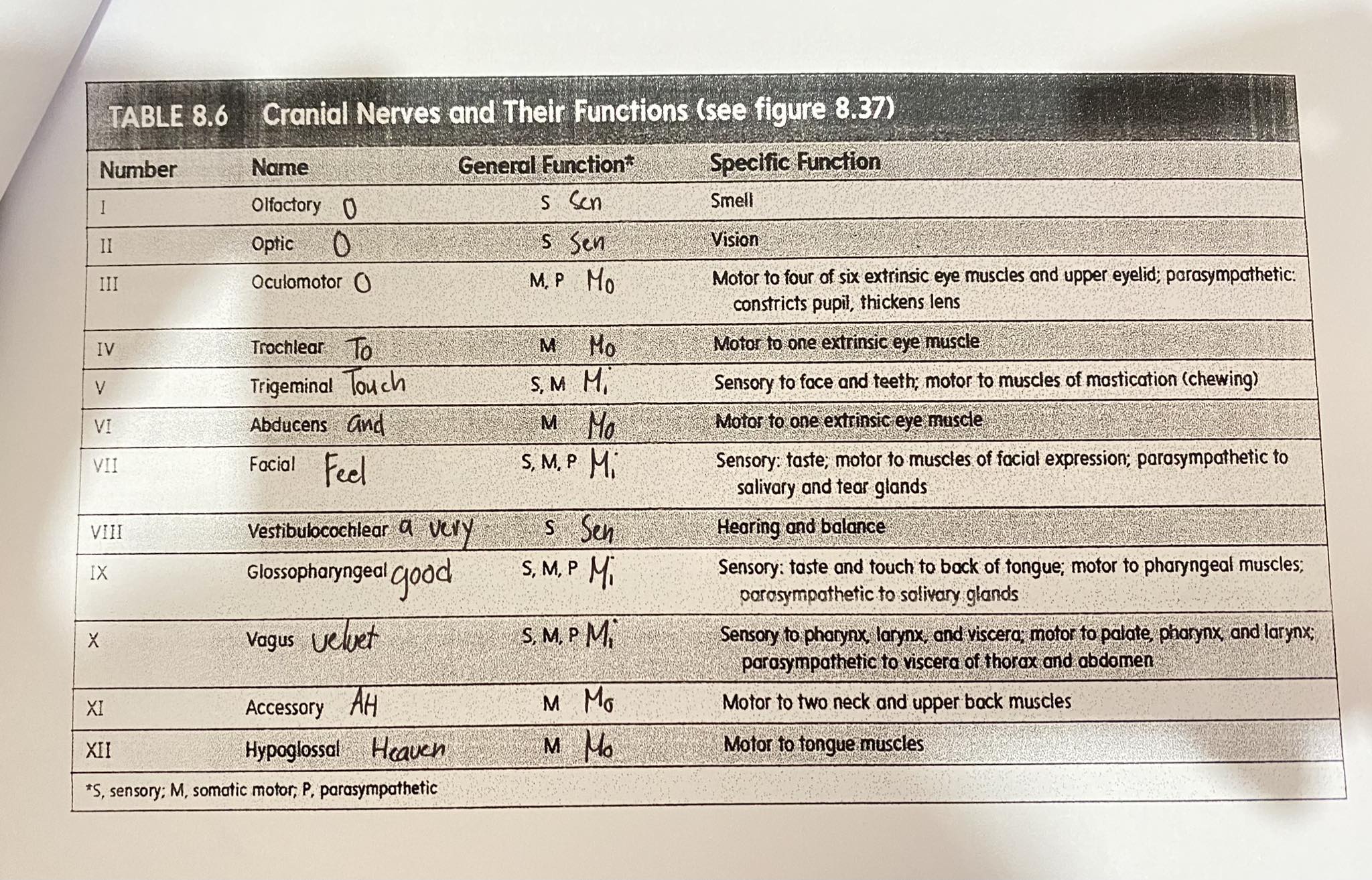
Cranial nerves
carry impulses to and from the brain
Endocrine
Metabolism
Control of food intake & digestion
Tissue development
Ion regulation
Water balance
Heart rate and blood pressure regulation
Control of blood glucose & other nutrients
Control of reproductive functions
Uterine contractions& milk release
Immune system regulation
Blood
Transport of gases, nutrients, and waste products.
Transport of processed molecules.
Transport of regulatory molecules.
Reguiation of pH and osmosis.
Maintenance of body temperatre.
Protection against foreign substunces.
Clot formation.
Nervous system
Receiving sensory input
Integrating Information
Controlling muscles and glands
Maintaining hemeostasis
Establising and maintaining mental activity
Structure of:
Cranial Nerves
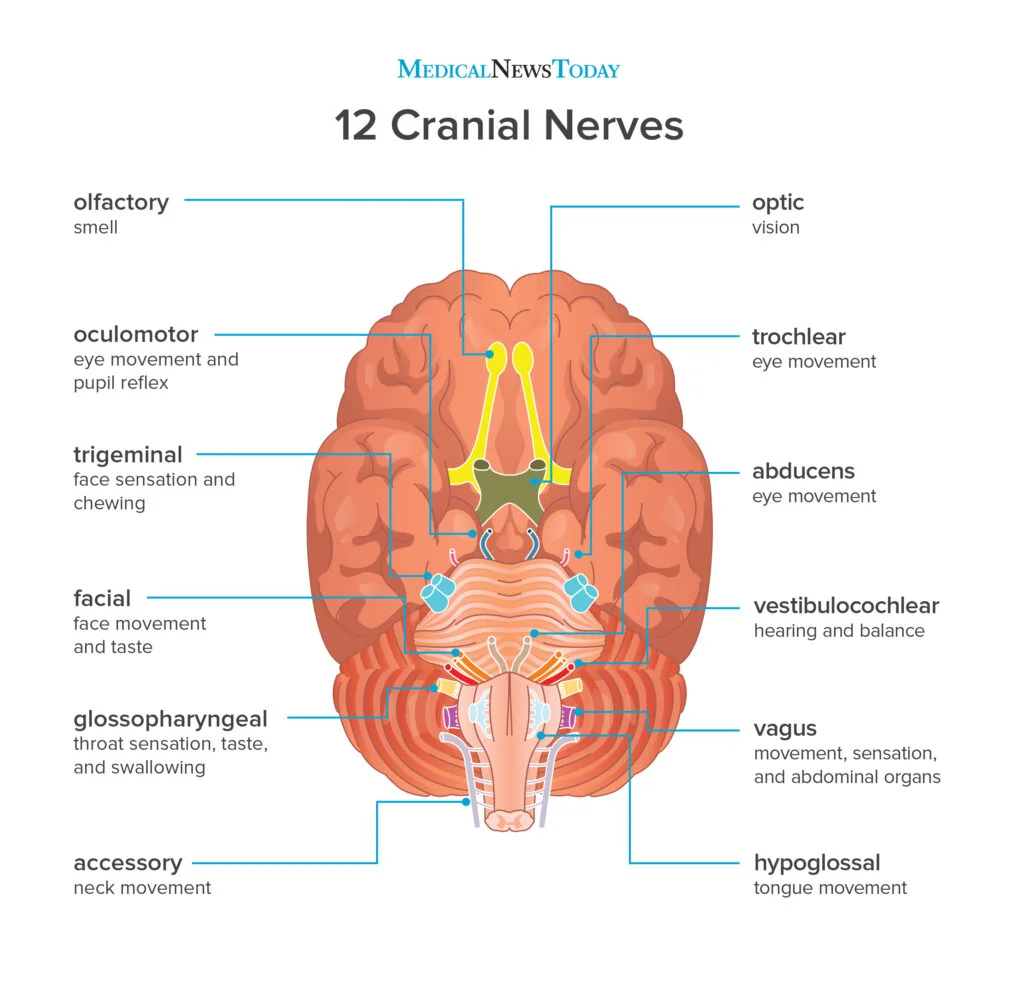
Chambers of eye
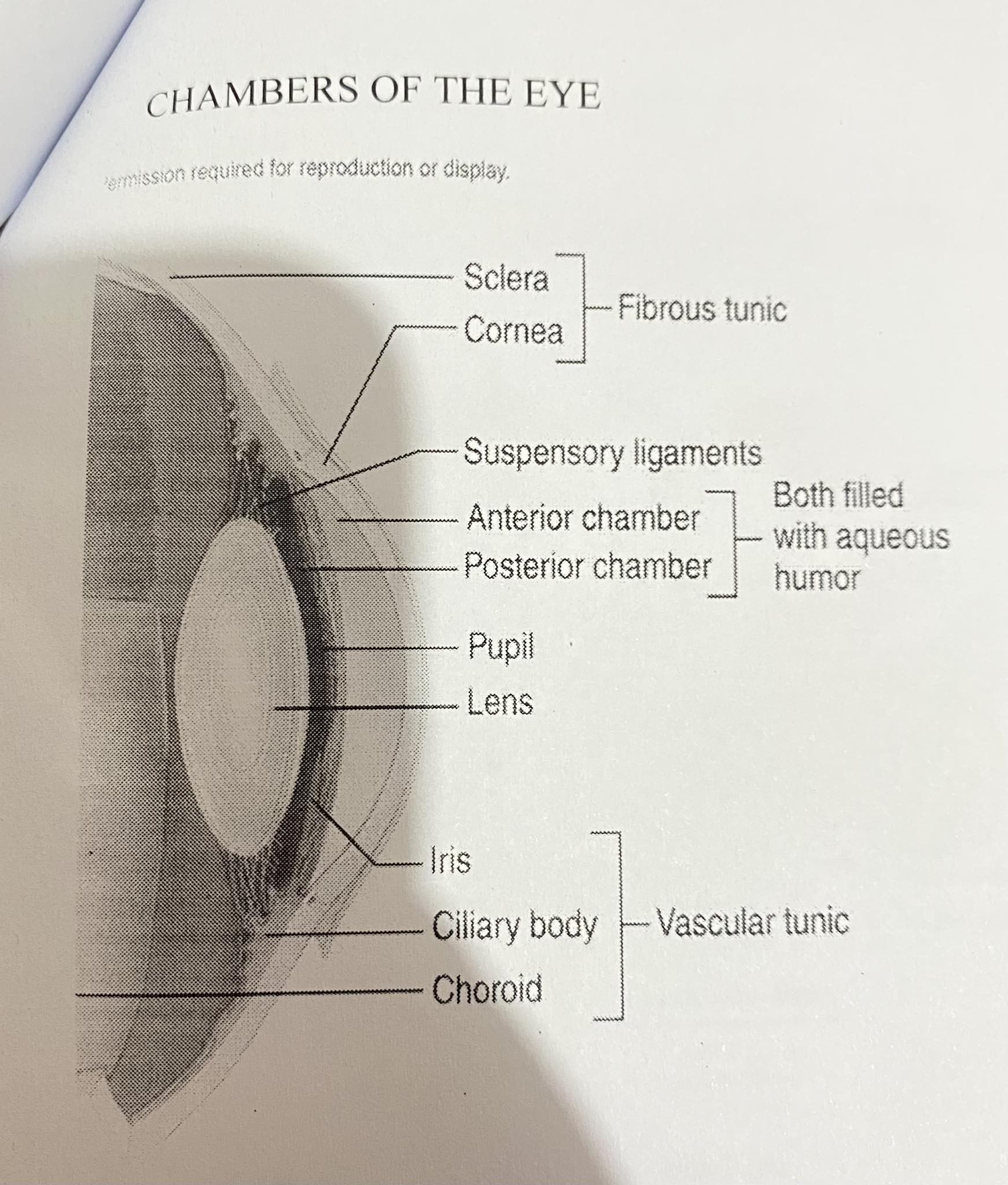
Meninges
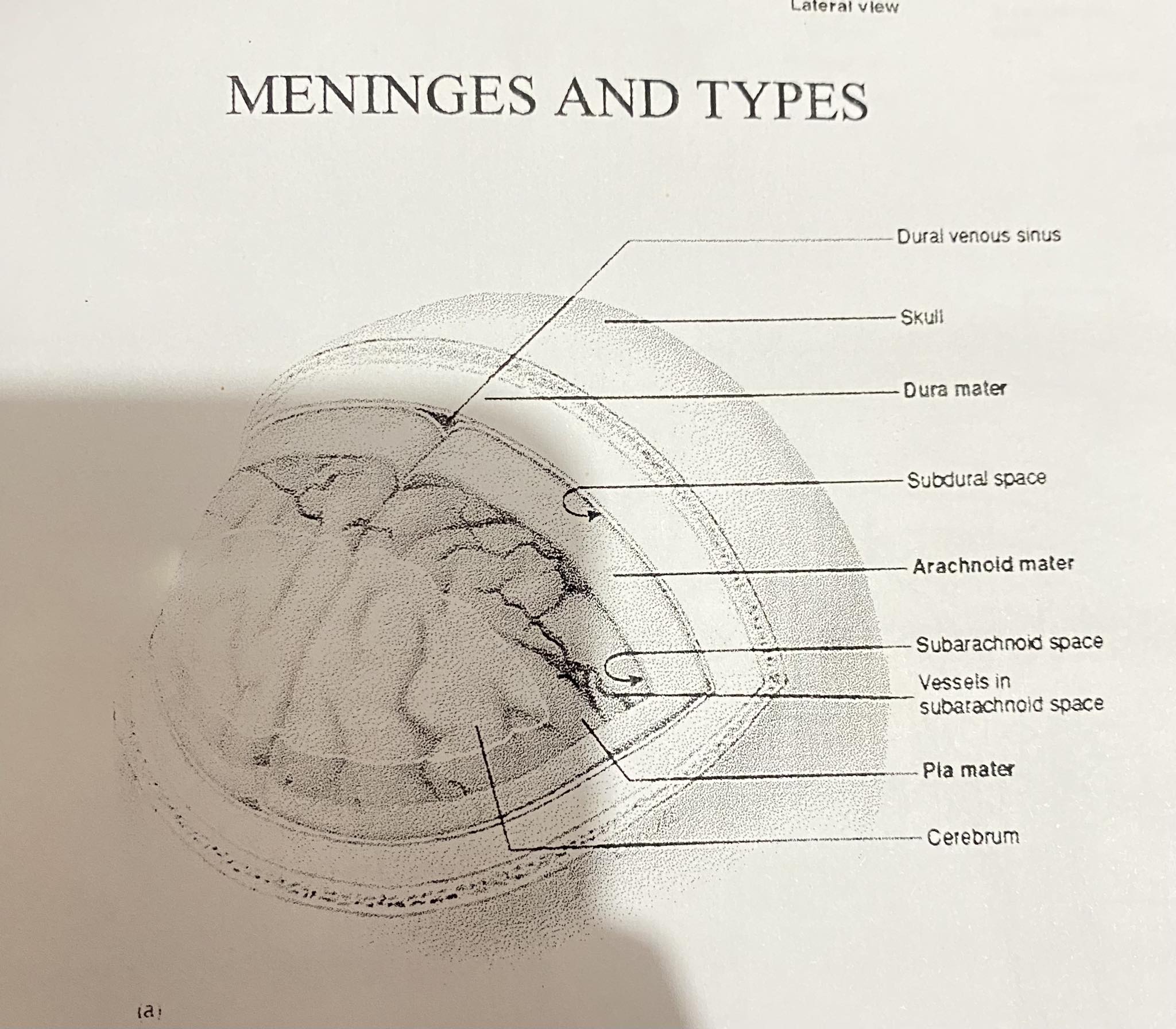 1. Meninges-
membranes that envelop
the brain and spinal cord and separate them from the walls of their bony cases
Types Meninges
a) Dura Mater- superficial and thick layer; adheres tightly to cranial bones; consist
Epidural Space- space of vertebral canal; between the dura mater and vertaebrae which is clinically vital for injection of epidural anesthesia to spinal nervel usually done in childbirth
b) Arachnoid mater- very thin, whispy second layer
• Subdural space- between the dura & arachnoid mater; contains a very small amount of serous fluid.
c) Pia Mater- very tighly bound to the surface of brain and spinal cord.
Subarachnoid space
is the interval between the arachnoid membrane and the pia mater.
Is filled with cerebrospinal fluid and contains blood vessels
Health professionals use such a needle to inject anesthetic into the area as a spinal block or to take a sample of cerebrospinal fluid in a spinal tap
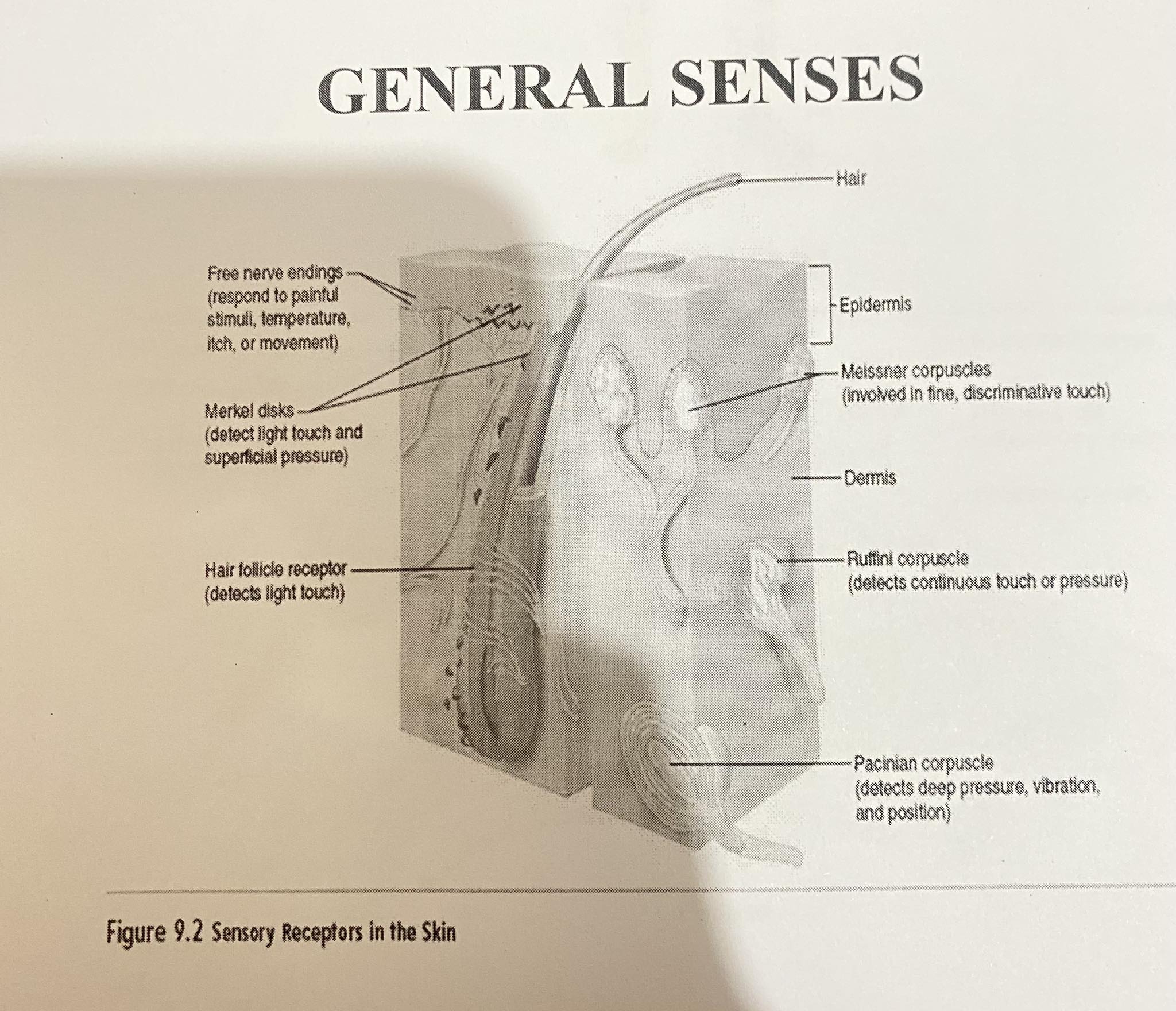
Sensory receptors
Blood from lungs to heart pumps