ch11 concise
Financial Markets and International Capital Flows
Role of Financial Intermediaries
Facilitate allocation of savings to productive investments.
Commercial banks assess borrower risk and pool savings to make loans.
Savings and Investments
Investments are subject to value fluctuations.
Banks provide interest on deposits and help allocate savings efficiently.
Bonds
A bond is a promise to repay debt with specified principal and interest payments.
Key terms: principal amount, maturation date, coupon payments, coupon rate.
term: 30days to 30years; longer term, higher coupon rate
higher risk, higher coupon rate
Municipal bonds free from federal taxes
lower taxes, lower coupon rates
second-hand bond — Inversely related bond prices and market interest rates.
can be sold before maturation date — Market value = $ (depends on coupon rate and int. rate)
Stocks
Represents ownership in a firm; stockholders receive dividends and potential capital gains( stock price increase).
value of stock = expected price + dividend
(stock price)(1+int rate) = value of stock
higher value if:
dividend higher
expected price higher
int. rate lower
risk lower
risk premium = rate of return - safe investment rate
Stock values reflect demand and are impacted by dividends and interest rates.
Bond and Stock Markets
Channel funds from savers to borrowers, providing opportunities for capital investment.
They facilitate risk sharing and diversification across investments.
diversification = spreading wealth over variety of investments to reduce risk
Mutual fund = sell
International Capital Flows
Involves purchase/sale of assets across borders; includes capital inflows and outflows.
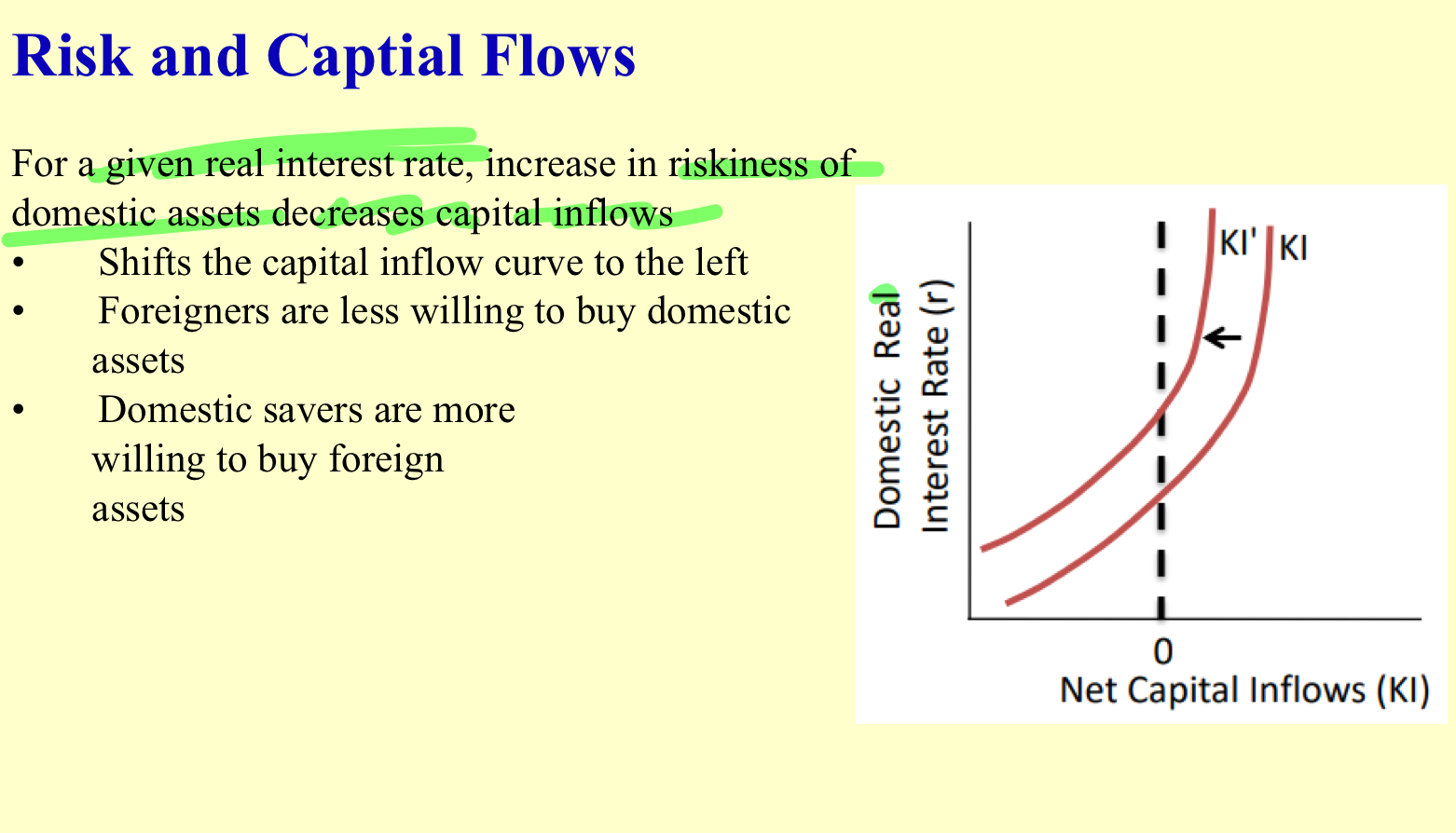
Capital inflows occur when foreign entities invest in domestic assets.
Higher domestic interest rates = greater capital inflow
Trade Balance
Defined as net exports (NX); surplus (exports > imports) (capital outflows)and deficit (imports > exports)(capital inflows).
NX + KI =0
Savings and National Investment
Saving + capital inflows = investment in new capital goods
.
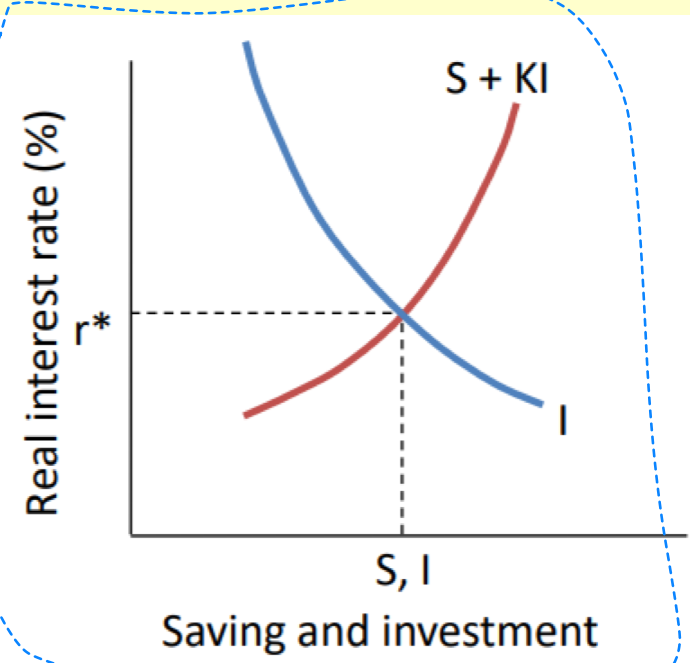
Low national savings leads to trade deficits due to higher imports outpacing exports. S - I = NX
low savings implies high spending
more spent on imports
high domestic spending leaves less available for export
high imports and low exports
trade deficit country receives capital inflows
lack sufficient saving to finance domestic investment
int rate rise and attract capital inflows
US Trade Deficit Trends
Persistent deficits since the 1970s related to low national savings rates and high consumption.
Trade balance can be maintained if the economy continues to grow.