Genetic Engineering
is a process that involves modifying the genome of an organism to introduce desirable characteristics
Specifically, genetic engineering is changing the genetic material of an organism by removing or altering genes within that organism, or by inserting genes from another organism
The organism receiving the genetic material is said to be genetically modified or is described as being a transgenic organism
The DNA of the organism that now contains DNA from another organism as well is known as recombinant DNA
There are many examples of genetically modified organisms, including:
The gene for human insulin has been inserted into bacteria, which then produce human insulin that can be collected and purified for medical use for diabetics
Crop plants, such as wheat and maize, have been genetically modified to contain a gene from a bacterium that produces a poison that kills insects, making them resistant to insect pests
Genetic engineering in medicine
Modern medical research is exploring the possibility of genetic modification to overcome some inherited disorders
As these inherited genetic diseases are caused by faulty genes, it may be possible to treat these by inserting working versions of these genes into people with the genetic disease
This is called gene therapy
Process of Genetic Engineering - practical/6 markers
1) Identify the gene: Desired gene that’s to be inserted is located in the original organism (e.g human insulin gene)
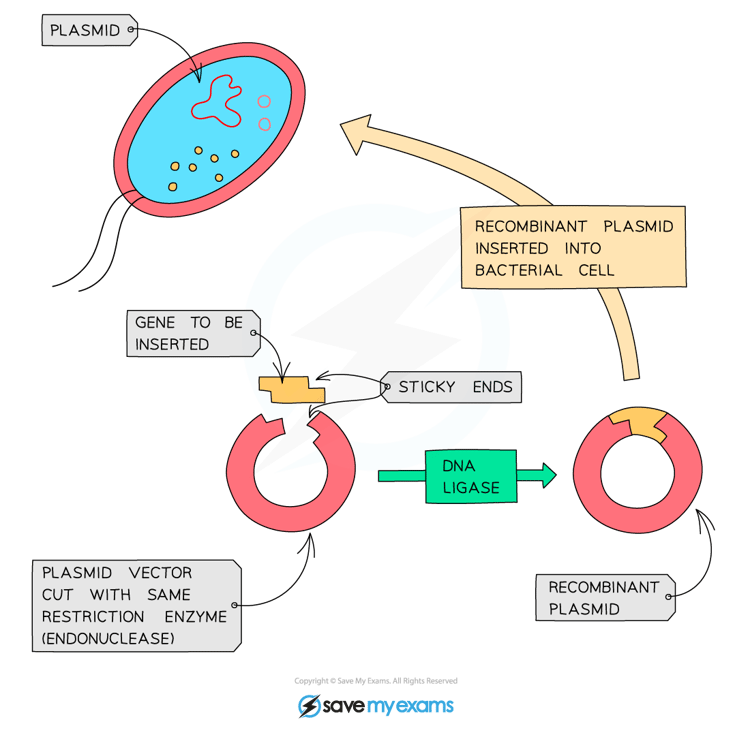
2) Extract the gene: Genes from chromosomes are cut out using restriction enzymes to isolate the required gene to leave a short section of unpaired bases known as “sticky ends”
3) Join the DNA: A bacterial plasmid is cut by the same restriction enzyme leaving it with corresponding sticky ends (plasmids are circles of DNA found inside bacterial cells)& the plasmid and the isolated gene are joined together by DNA ligase enzyme
4) Transform host: Insert the recombinant plasmid into host cells (like bacteria).
5) Select cells: Identify and select the successfully modified cells using antibiotic marker genes.
6) Replicate and express: Grow the bacteria in a fermenter so they replicate and express the gene to produce the desired protein (e.g., insulin).