3.2 Seed Plants
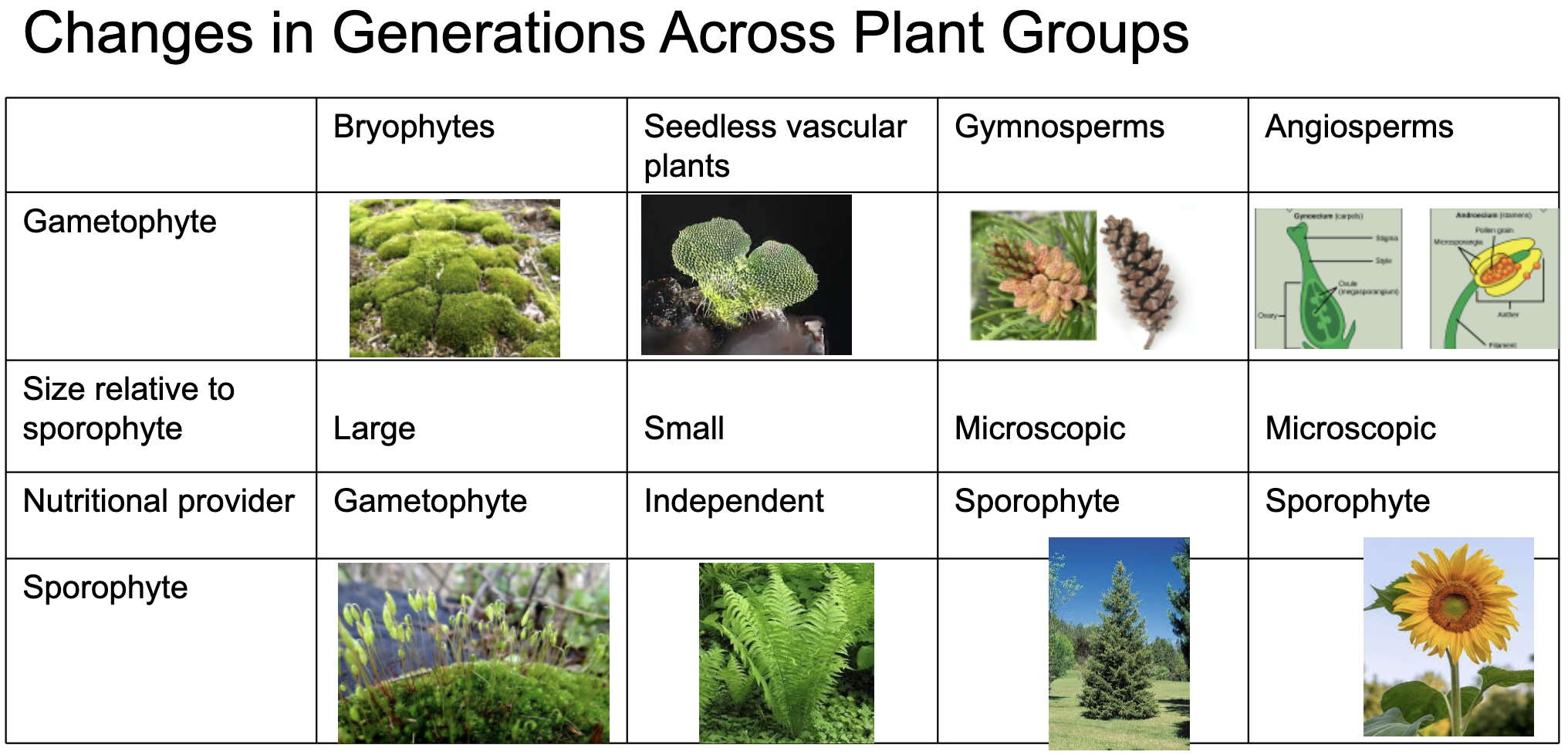
Bryophytes began initial colonization of land
Liverworts→mosses→ ferns
Still, require water for reproduction
Gymnosperms and Angiosperms = Seedplants
Evolved from spore-bearing plants known as pro gymnosperms
Angiosperms (flowering plants) are most recently evolved
Progymnosperms
first naked seedplants
Transitional group
Conifer-life trait of wood production from secondary growth
Fern-like reproduction
Successful when climate changed from wet to dry
All are extinct
Evolution of Seed Plants
Two structures that allowed seed plants to dominate dry land:
Seed (came second)
Protects and provides food for embryo
Dormancy allows survival of harsh periods before germination
Later development of fruits enhanced seed dispersal
Coevolution with seed plants and animals
Pollen (came first)
Replaced flagellated sperm
Encased in a protective coat
Pollen tube delivers male nucleus to the egg cell
Can be delivered by wind, bees, birds
Primitive gymnosperms (ginko and cycads) have pollen with a flagellated sperm
The Seed
Fertilization of haploid female gametophyte by haploid male gametophyte creates the diploid embryo
Seed coat protects the embryo
Endosperm stores food for the developing embryo
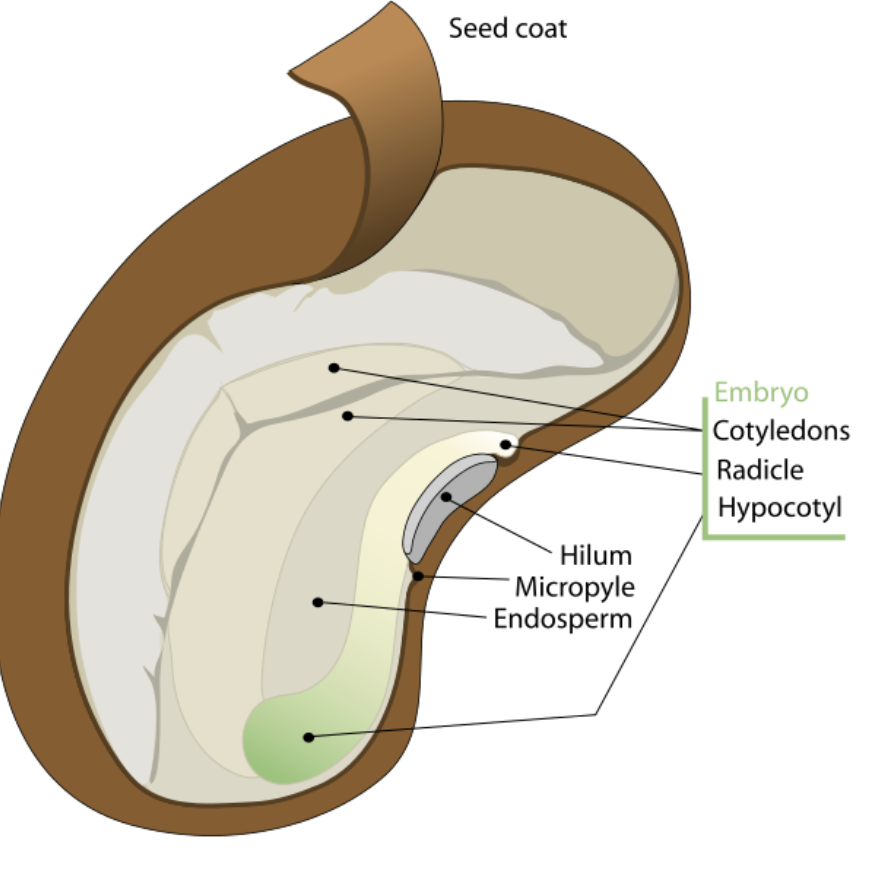
Evolution of Seed Plants
All are heterosporous
Male (micro-) gametophyte
Within pollen grains super tiny
Dispersed by wind or a pollinator
No water needed
Female (mega-) gametophyte
Develop within an ovule
Enclosed within diploid sporophyte tissue in angiosperm
Monoecious: “one home” - male and female on same plant
Dioecious: “two home” - Male and female on separate plants
Gynmopsperm
Unclear if monophyletic or paraphyletic
Dominant sporophytes, gand ametophytes are microscopic nd not independent
Plants with “naked seeds”
Seed not enclosed in ovary (fruit) but sheltered by sporophylls
Lack of flowers and fruit
Four living groups
Coniferophytes
Cycadophytes
Gnetophytes
Ginkgophytes
Conifers
Dominant and most diverse phylum
Mostly monoecious
Pines, sources, firs, cedars, sequoias
Coastal redwood - tallest living vascular plant
Bristlecone pine - oldest living tree
Needle-like leaves with thick cuticles reduce water evaporation and allow snow to slide off preventing broken branches.
Most are evergreen (don’t lose leaves in the fall)
“Softwood”: contains tracheids but no vessel elements (the simple phylum that produces softwood)
Female and Male Strobili (cones)
Megastrobilus or seed cones produes megagametophytes
Microstrobilius or pollen cones produce microgametophytes
Megastrobilus or Seed Cones
Sporogenesis: Diploid megasporocyte (megaspore mother cell) divides via meiosis. One large haploid cell survives = megaspore
Gametogenesis: megaspore divides via mitosis and developed into megagmaetophyte with egg cell inside
Contains archegonium with egg cell
Small opening called micropyle
Microstrobilus or Pollen Cone
Sporogensis: diploid micrsporocyte (microspore mother cell) divide via meiosis to produce four haploid mircopoes = pollen tetrad.
Gametogensis: one microspore divides via mitosis to produce a generative cell and a tube cell. The generative cell then dvived via mitosis to produce two sperm cells. The tube cell growns into the pollen tube that the sperm travels down for fertilization to occur.
Conifer Life cycle
Micro and mega sporocyte undergo meiosis → hapolid gamtes
Archegonium has a sticky pollen trap near microplye → pollination
Pollen tuben growns slowly towards the gametophyte
One sperm nuclei fertilizes the egg→ embryo→ seed
Entire process can take 1-2 years after pollination
Cycads
Slow-growing gymnosperms of tropical and subtropical regions
Dominant and very large during Mesozoic and Jurassic period, but ~100 small species left
Sporophytes resemple palm tree
Female cones can weigh 45kg
Dioecious
Flagellated sperm
Ginkgos
Dioecious
Only one extant species, no longer found in the wild: Gingko biloba
Pollen with flagellated sperm
Fan-like leaves
Fruit-like structures with 3 layers of seed coat; not a true fruit because it does not come from the ovary
Gnetophytes
Dioecious
Angiosperm like features mostly due to convergent evolution:
Vessels in xylem of Gnetum and Welwitschia forms “hardwood”
Double fertilization in Ephedra and Gentum results in 2 competing embryos, only one survies
Fruit-lie ovule coverings
Leaf arrangement and venation
Welwitschia: Parallel venation
Gnetum: netted venation and opposite leaves
Conatin three (unusual) genera
Ephedra: Horsetail-lie leafless desert shrubs that contain high levels of ephedrine
Gnetum: Tropical tree
Welwitschia: One pieces of long lived desert plant wth two large continuely growing leaves
Angiosperms - Flowering Plants
>300,000 spp
Success is due to flowers and fruit
Flower: Pollination and embryo protection
Fruit: seed protection and dispersal
Monophyletic phylum: Anthophyta
Heterosporous: all seed plants
Sporophyte is dominant
Three groups: basal angiosperm, monocots, and dicots
Flowers
Modified stems bearing modified leaves
Houses the gametophytes
Most are hermaphroditic: flowers that have both male & female parts
Monoecious: separate male & female flowers on the same plant
Dioecious: Separate male & female plants
Female Gamete Production
Meiosis in megasporocyte =4 megaspores (3 small, 1 large)
Megaspore survives, via mitosis 8 nuclei and 7 cells (center cell has 2 nuclei)
Three cell at each end of embryo sac
Antipodal cells (Not really talked about) (one end)
Synergids and eggs (Opposite end)
Center cell contain polar nuclei→ endrosperm of seed (where fertilization happens)
Male Gamete Production
Meiosis of mother spore cell(original cell) in microsporangium produces four microspores
Each mircposre forms a pollen grain
Pollen contains 2 cells:
1 generative cell that later divies into two sperm
1 cell becomes pollen tube
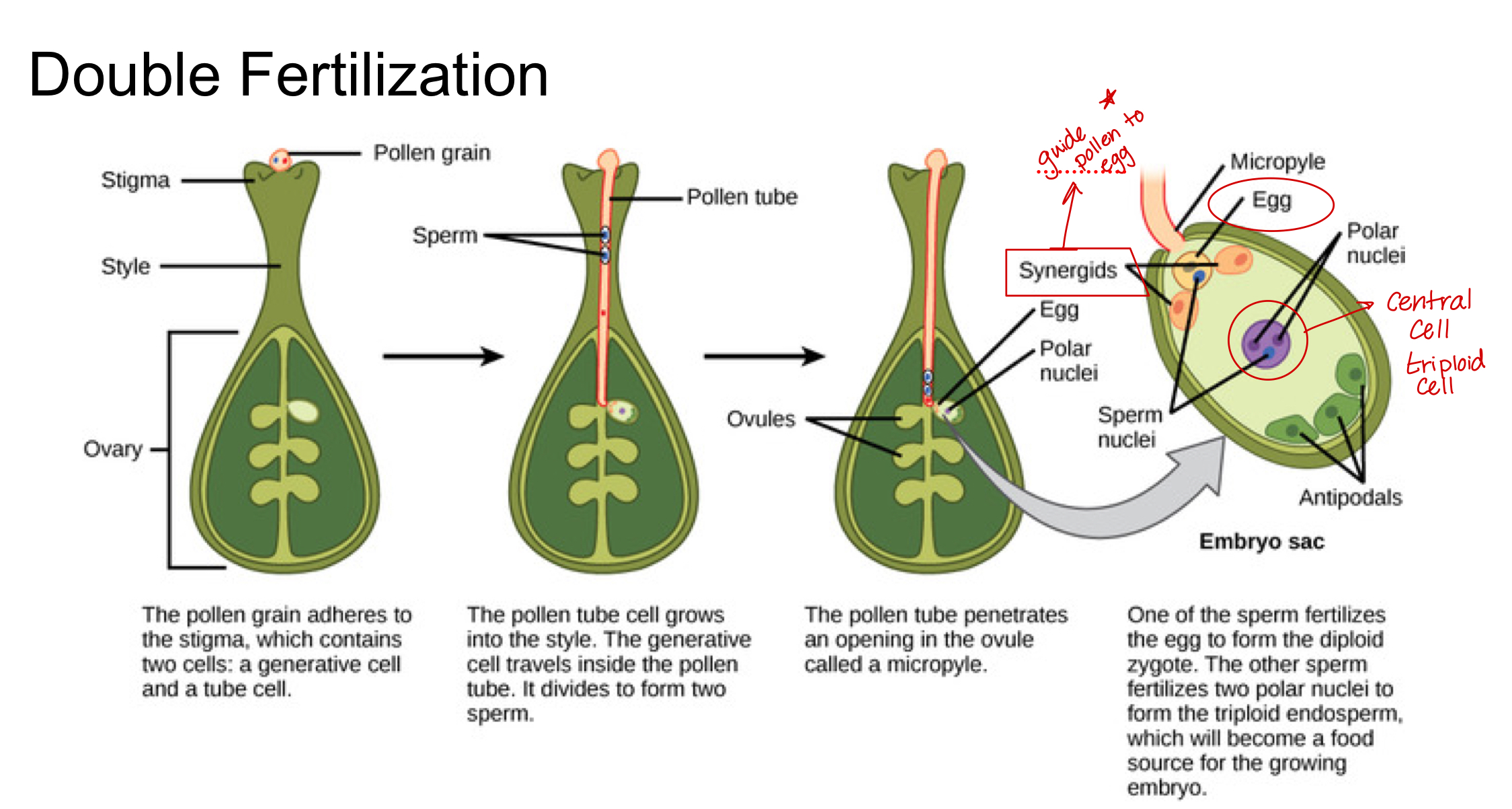
Double Fertilization
Pollen lands on stigma and pollen tube geins to grow
Synergids guide pollen tube to egg
First fertilization event: 1 sperm + 1 egg = diploid zygote
Second fertilization event: other sperm fuses with polar nuclei = triploid cell → endrosperm (food reserve)
Zygote develops into embryo with radicle and one or two cotyledons
Basal Angiosperms
Branches off before monocots and dicots
Magnolidae
Magnolias: Dark shiny leaves and large fragrant flower
Laurels: fragrant leaves and small flowers
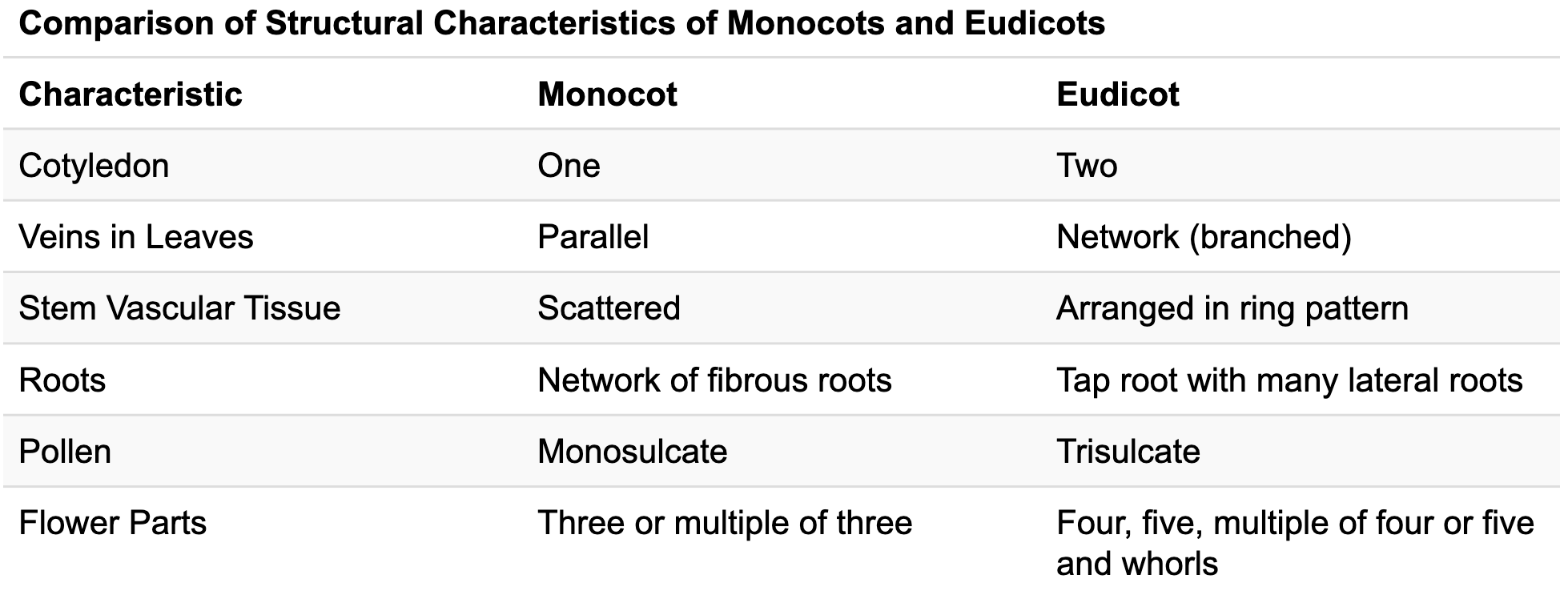
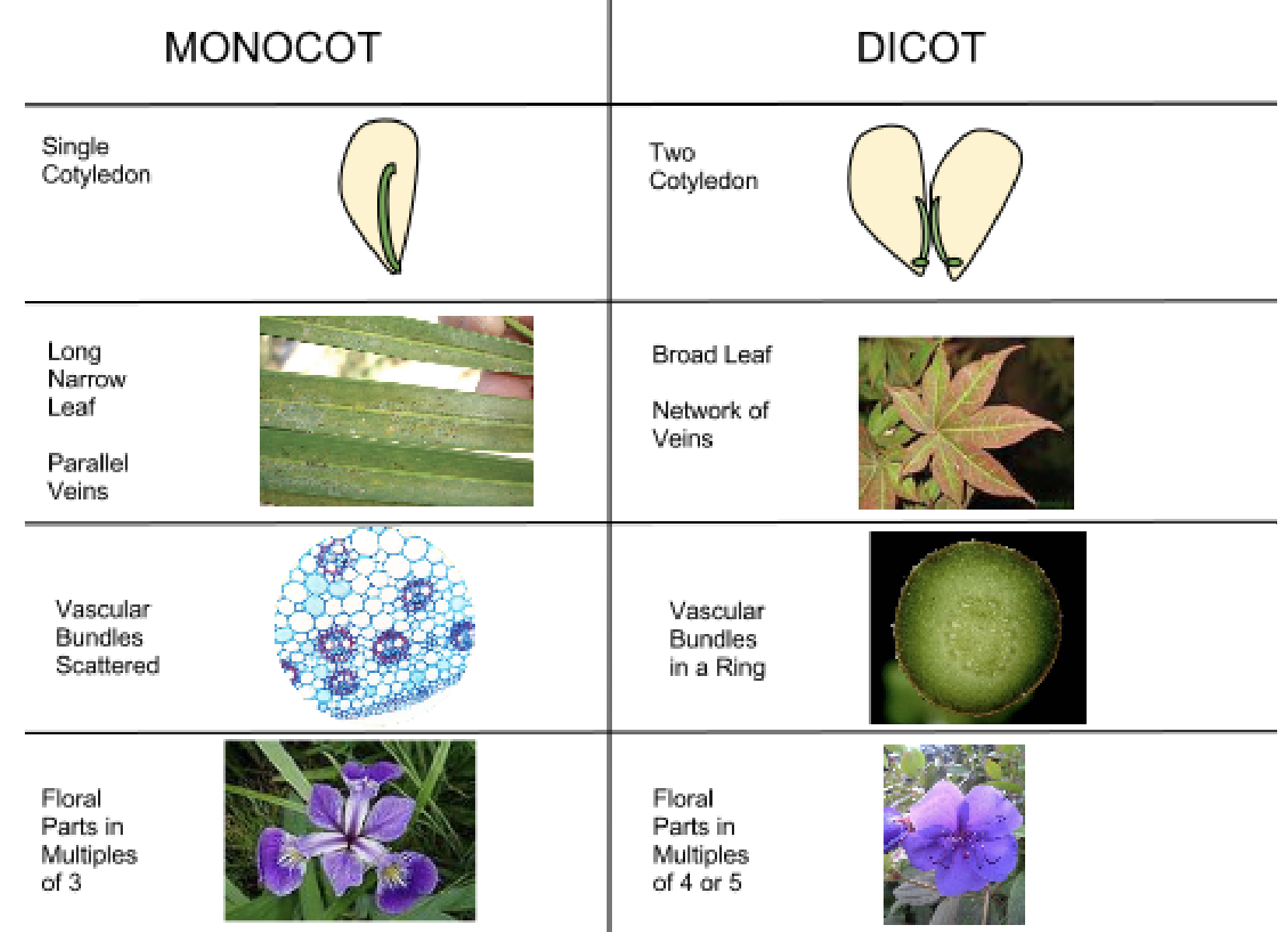
Monocots and Eudicots
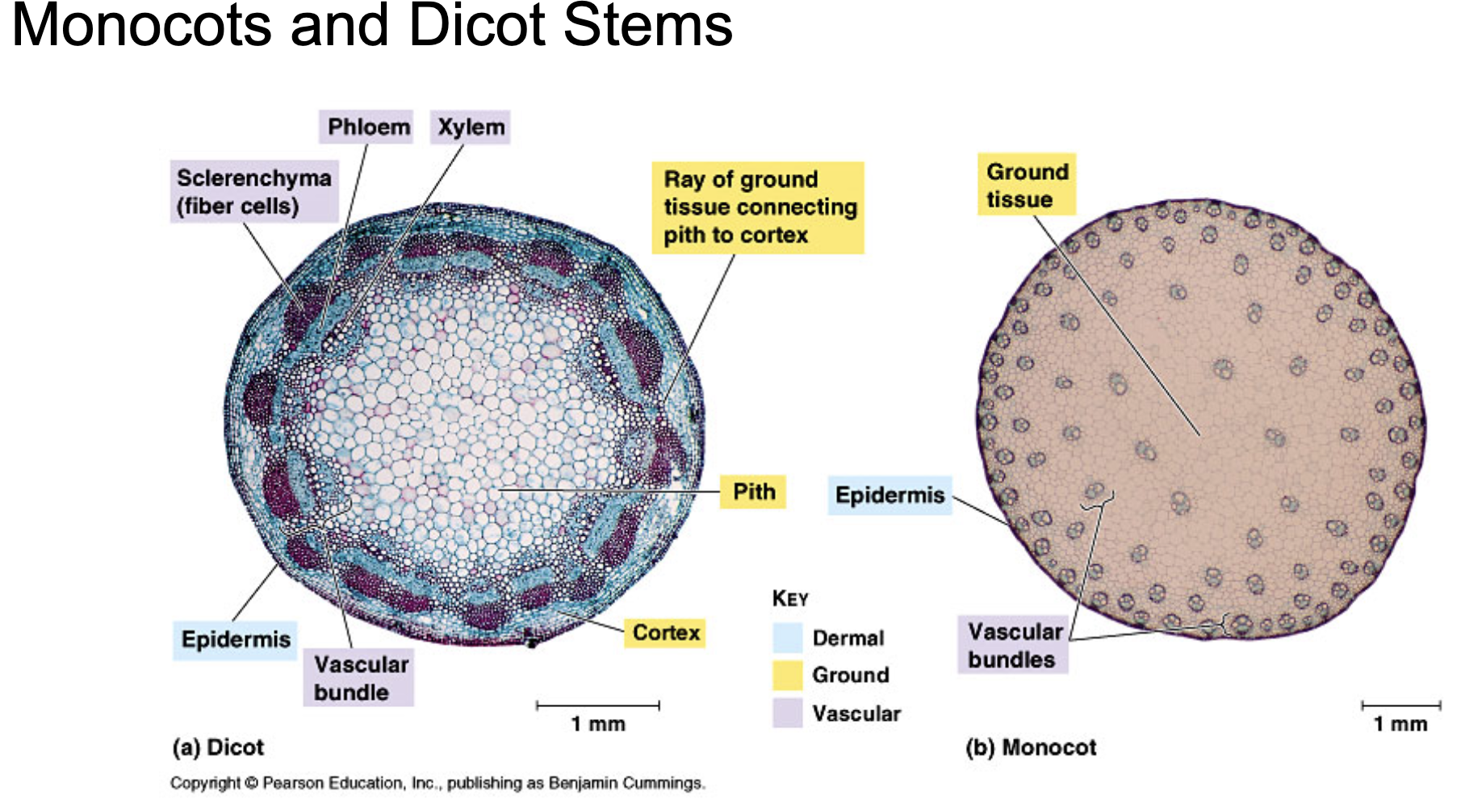
Monocots do not produce true wood
Grasses and palm trees
Herbaceous (doesn’t produce true wood)
Eudicots do produce true wood
Secondary Growth (Oak trees)
Remember all vascular plants have primary growth at the apical meristems (roots & shoots)
Secondary growth deals with expanding girth and creating wood
Wood if proliferating xylems, (; which are responsible for transporting water and nutrients, along with phloem that transports sugars and other metabolic products. This growth results in the thickening of stems and roots, allowing trees like oak to reach impressive heights and support a larger canopy. )
Mono/di cot = # of seed leaves - Cotyledon