FAA Flight controls Notes
1. Basic Functions of Aircraft Structures
Support and Integrity: Provide a rigid framework to support the engine, payload, fuel, and equipment, ensuring load paths are efficient and distributing forces across the airframe to maintain structural integrity under all flight conditions.
Aerodynamic Shape: Maintain the aircraft's aerodynamic profile for efficient flight, minimizing drag and maximizing lift. This includes smooth contours and precise control surface movements.
Load Distribution: Distribute forces evenly across the airframe to prevent stress concentrations that could lead to structural failure. This involves transferring loads from wings, landing gear, and control surfaces through the primary structure.
2. Types of Stresses and Loads
Aircraft structures are subjected to different types of stresses, which are internal forces resisting external loads. The primary types include:
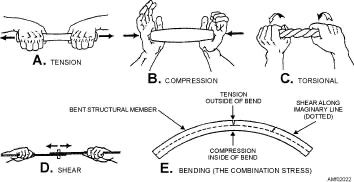
Tension: Pulling forces that tend to stretch a material, common in wing lower surfaces during up-bending flight loads or in suspension cables. The internal resistance to this pulling force is called tensile stress.
Compression: Pushing forces that tend to shorten or crush a material, such as in the upper surfaces of wings under up-bending loads or in structural members designed to resist buckling. Compressive stress is the internal resistance to this pushing.
Shear: Forces that tend to cause parts of a body to slide past each other, often seen in bolted or riveted joints where one part attempts to shear the fastener. Shear stress acts parallel to the cross-section of the material.
Torsion: Twisting forces, particularly prevalent in wing spars, fuselage sections, and propeller shafts due to aerodynamic or engine loads. Torsional stress results from this twisting action.
Bending: A combination of tension and compression, typically seen in beams like wings or fuselage frames. One side of the beam experiences tension while the other experiences compression, creating a moment that resists the applied load.
3. Primary Structural Components
Aircraft are composed of several main structural components, each designed for specific functions:
Fuselage: The main body of the aircraft, which houses the crew, passengers, cargo, and often the engines. Common types include:
Truss Structure: An older design using a framework of steel or aluminum tubing members joined to carry loads primarily in tension and compression. Often covered with fabric or thin metal skin, which contributes little to overall strength.
Monocoque: Relies primarily on the strength of the skin to carry stresses, with minimal internal framing. This offers a very light structure but is susceptible to deformation or collapse if the skin is damaged, as it lacks internal reinforcement.
Semi-Monocoque: The most common modern design, combining skin with internal stringers (longitudinal members) and formers/bulkheads (circumferential members) that share the load. This provides an excellent strength-to-weight ratio and greater resistance to localized damage.
Wings: Generate lift and house fuel tanks and landing gear. Structural elements include major spars (main load-bearing members running spanwise, carrying bending and shear loads), ribs (maintain the airfoil shape and transfer aerodynamic loads to the spars), and stringers (longitudinal stiffeners that support the skin and carry some of the bending loads).
Empennage (Tail Section): Provides stability and control in pitch and yaw. It includes:
Horizontal Stabilizer: An aerodynamic surface that controls pitch (nose up/down movement) and contains the elevators.
Vertical Stabilizer: An aerodynamic surface that controls yaw (nose left/right movement) and contains the rudder.
Landing Gear: Supports the aircraft on the ground during taxi, takeoff, and landing, and absorbs landing impacts. Can be fixed or retractable, and typically features hydraulic shock absorbers and wheels.
Control Surfaces: Movable surfaces (e.g., ailerons, elevators, rudder, flaps, slats, spoilers) that allow the pilot to control the aircraft's attitude and direction by altering airflow and lift characteristics.
4. Materials and Construction Methods
Early sections of the handbook also typically cover common materials like:
Aluminum Alloys: Widely used due to their high strength-to-weight ratio, corrosion resistance, and ease of fabrication. Various alloys are selected based on specific strength, fatigue, and fracture toughness requirements.
Steel: Used in areas requiring high strength or resistance to heat, such as landing gear components, engine mounts, and high-stress fittings.
Composites: Materials like fiberglass, carbon fiber, and aramid fiber combined with resin matrices. Offer superior strength-to-weight ratios, excellent fatigue resistance, and the ability to be molded into complex aerodynamic shapes, increasingly used in modern aircraft.
Construction methods emphasize the importance of fasteners (e.g., rivets, bolts, screws, pins, nuts) for joining structural components, selected based on the type of load, material, and required permanence. Bonding techniques like welding (for steel and some aluminum) and adhesives (for composites and metal-to-metal bonding) are also critical for creating strong, lightweight structures and maintaining aerodynamic smoothness.
A. What Aircraft Structures Do (Their Basic Functions)
Support and Hold Everything Together: Aircraft structures create a strong framework that holds all the important parts like the engine, cargo, fuel, and equipment. They make sure that all the forces the plane experiences (from flying, landing, etc.) are spread out evenly so no part breaks.
Keep the Right Shape: These structures help the aircraft maintain its specific aerodynamic shape. This shape is crucial for efficient flight, allowing the plane to move smoothly through the air, generate lift, and reduce drag. It also ensures that movable parts like wings and tail surfaces work correctly without deforming.
Distribute Forces: Aircraft structures are designed to spread out all the different forces acting on the plane. For example, when the wings push up, or the landing gear hits the ground, these forces are transferred throughout the entire plane, preventing any one spot from getting too much stress and failing.
B. Types of Forces (Stresses and Loads) an Aircraft Experiences
Aircraft parts are constantly battling internal forces (stresses) that resist external pushes or pulls (loads). Here are the main types:
Tension (Pulling Apart): This force tries to stretch or pull a material apart. Think of a rope being pulled tight. In an aircraft, the bottom of a wing in flight or suspension cables can be under tension.
Compression (Pushing Together): This force tries to squeeze or crush a material. Imagine pushing down on a soda can. The top of a wing or landing gear struts can experience compression. Buckling is a key concern for parts under compression.
Shear (Sliding Past Each Other): This force tries to make one part of a material slide past another. Like scissors cutting paper. Bolts, rivets, and the web part of a wing spar often deal with shear forces.
Torsion (Twisting): This is a twisting force. A good example is twisting a wet towel. Wing spars, parts of the fuselage, and propeller shafts often experience torsion due to aerodynamic or engine forces.
Bending (Combination Push and Pull): This force makes a part bend. When a wing bends upwards, the top surface is compressed, and the bottom surface is under tension. There's a neutral axis in the middle where there's no stress.
C. Main Parts of an Aircraft Structure
Aircraft are built from several key components, each with a specific job:
Fuselage (The Main Body): This is the central body of the aircraft, holding the crew, passengers, cargo, and sometimes the engines. There are different ways to build a fuselage:
Truss Structure: An older method using a cage-like framework of tubes (steel or aluminum) joined together. These tubes primarily handle pulling and pushing forces. The outer skin is usually just for looks and doesn't add much strength.
Monocoque: This design relies almost entirely on the outer skin for strength, with very little internal structure. It's light, but if the skin gets a hole, the whole section can weaken significantly.
Semi-Monocoque: This is the most common modern design. It combines a strong outer skin with internal supports: stringers (long bars running along the length) and formers/bulkheads (circular frames). The skin, stringers, and formers all share the load, making it strong, light, and more resistant to damage.
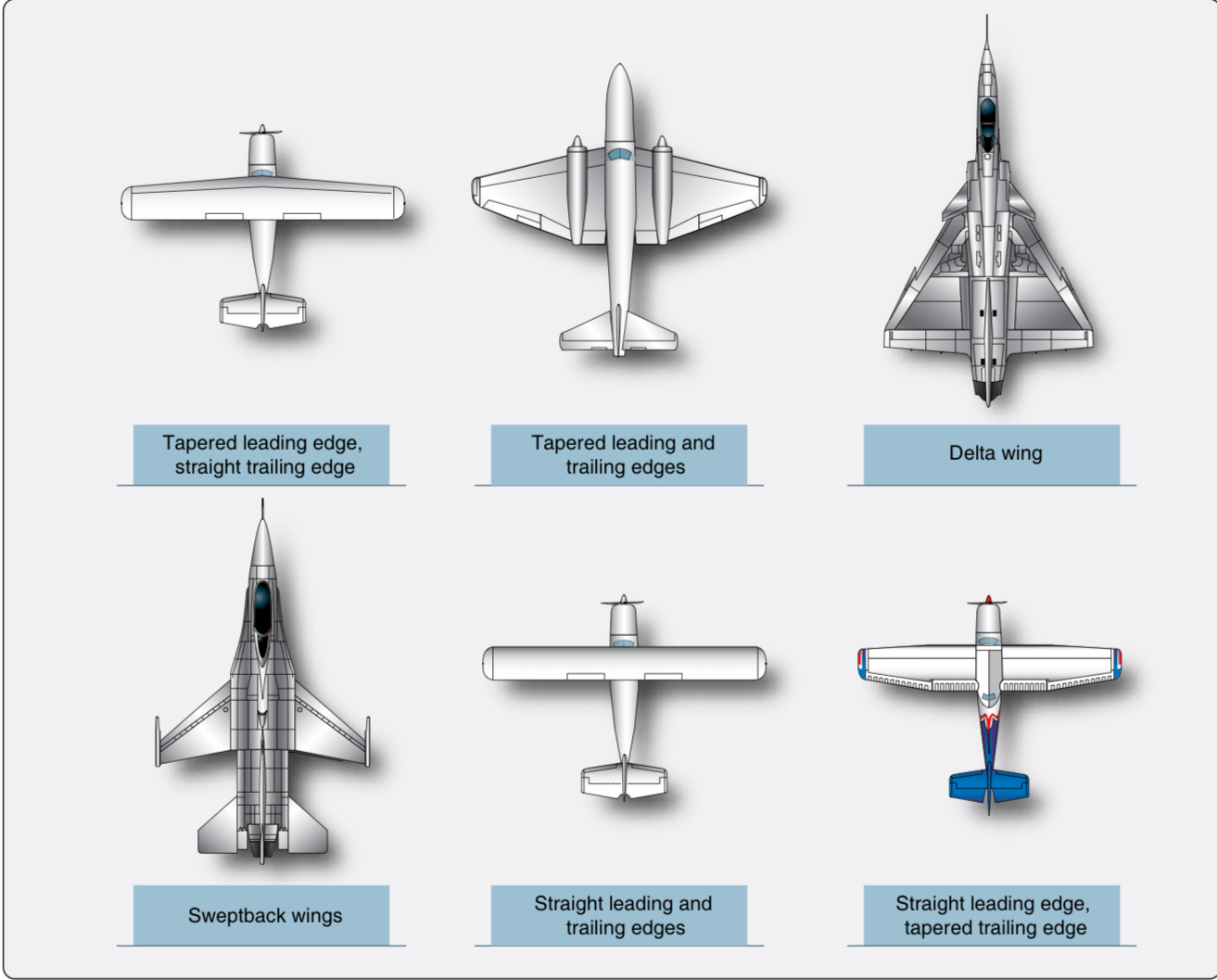
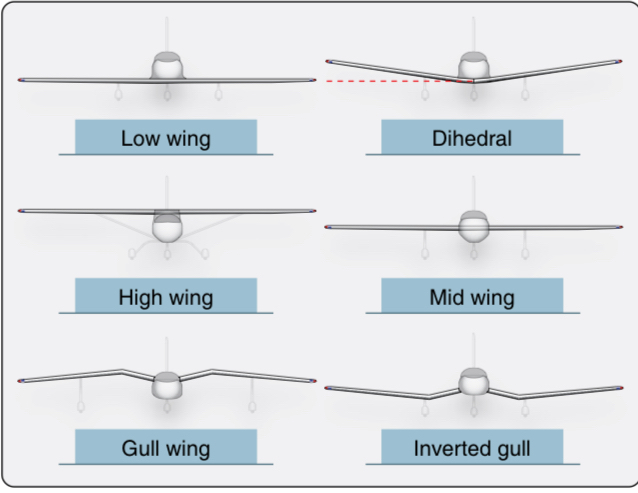
Wings (Generate Lift): Wings are essential for creating lift to keep the plane in the air. They also often hold fuel and the landing gear. Key parts of a wing's internal structure include:
Spars: These are the main, strong beams running the length of the wing. They carry most of the bending and shear loads.
Ribs: These maintain the wing's curved shape (airfoil) and transfer the air forces from the skin to the spars.
Stringers: These are smaller, longitudinal stiffeners that support the wing's skin and help carry some of the bending loads.
Empennage (Tail Section): This provides stability (keeps the plane level) and control (allows turns). It includes:
Horizontal Stabilizer: The horizontal part of the tail that controls the plane's up-and-down movement (pitch) and contains the elevators.
Vertical Stabilizer: The vertical part of the tail that controls the plane's side-to-side movement (yaw) and contains the rudder.
Landing Gear (Ground Support): This supports the aircraft when it's on the ground for taxiing, takeoff, and landing. It also absorbs the shock of landing. It can be fixed or retractable and usually has shock absorbers and wheels.
Control Surfaces (Pilot's Controls): These are the movable parts of the wing and tail that allow the pilot to steer the aircraft by changing how air flows over the surfaces. Examples include ailerons, elevators, rudder, flaps, slats, and spoilers.
D. Materials and How Aircraft are Built
Early sections of the handbook also typically cover common materials like:
Aluminum Alloys: Very common because they are strong for their weight, resist rust well, and are easy to work with. Different types are chosen based on their specific strengths and resistance to cracks.
Steel: Used where very high strength or heat resistance is needed, such as in landing gear, engine mounts, and critical high-stress connections.
Composites: These materials (like fiberglass and carbon fiber combined with a resin) are increasingly used in modern aircraft. They offer excellent strength-to-weight ratios, resist fatigue (wear and tear from repeated stress) very well, and can be molded into complex shapes.
How parts are put together is also important. **