Temperament
Personality and temperament
Temperament refers to the early-appearing, biologically rooted individual differences in emotional reactivity and self-regulation. It is often observed in infancy and is thought to provide the foundation for later personality. Temperament includes traits like activity level, emotional intensity, attention span, and sociability.
When it comes to whether temperament is genetic or interactive, the answer is: we don’t fully know—but most researchers agree it's a combination of both.
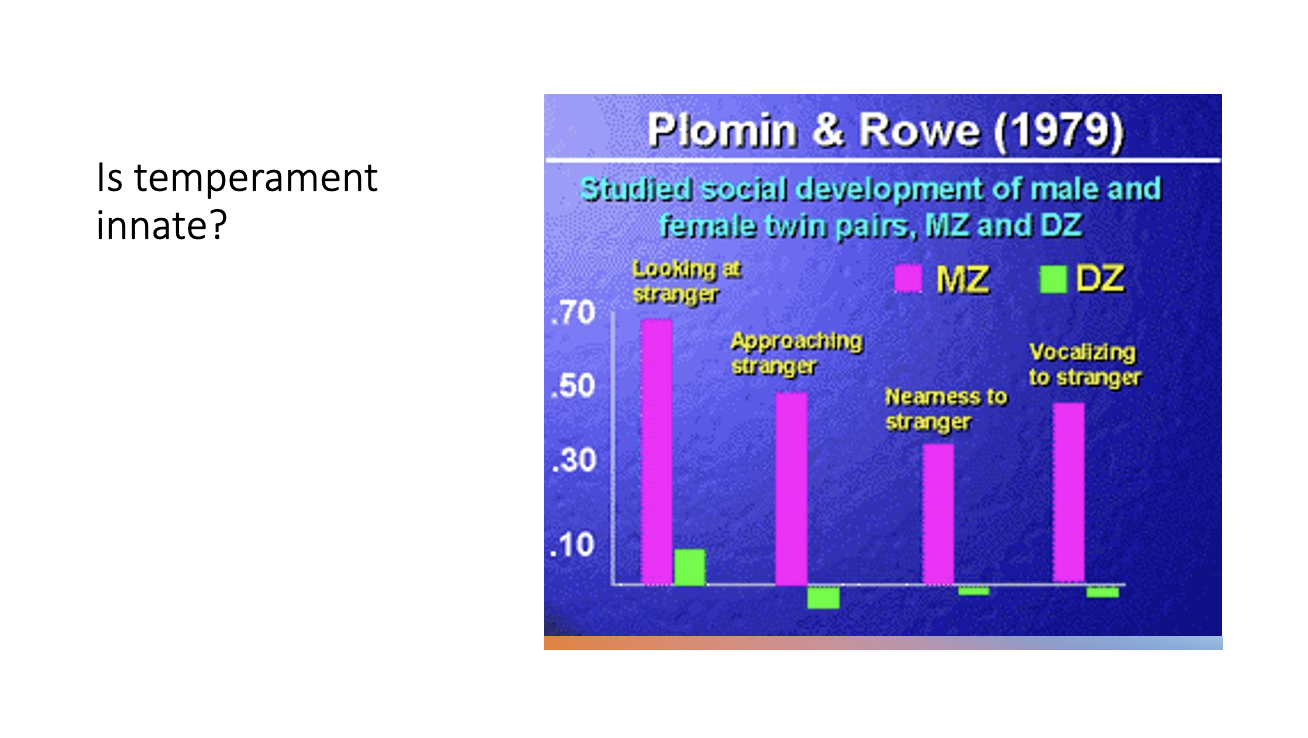
Genetic-based traits: Twin studies suggest a strong genetic component. For example, identical twins show more similar temperaments than fraternal twins.
Interactive traits: However, a child’s temperament is also shaped by environmental factors—like parenting style, culture, and experiences. The interaction between biology and environment can either reinforce or reshape early temperamental tendencies.
Behavioral Inhibition is a key temperamental trait that refers to how infants and young children respond to new people, situations, or environments—specifically, whether they withdraw or engage.
Jerome Kagan was a pioneer in this area. He studied how behavioral inhibition in infancy can predict shyness or social anxiety later in life.
Babies with high behavioral inhibition often:
React strongly to novelty (new faces, objects, or events)
Show avoidance, crying, or hesitation
Tend to have more right hemisphere brain activation, which is associated with negative emotion and withdrawal responses.
Babies with low behavioral inhibition tend to:
Be more curious and sociable
Show less fear or hesitation
Have more left hemisphere brain activation, associated with positive emotion and approach behavior.
Temperament and Personality: Cultural Perspectives
Temperament refers to basic emergent tendencies—early patterns of behavior and emotional reactivity that appear in infancy. These tendencies are biologically based, but they aren’t fully shaped until a child interacts with their environment.
According to Chen et al., there are cultural differences in temperament, particularly when comparing Chinese and North American children. Their research suggests that while all infants are born with a biological foundation for temperament, culture influences how these tendencies are expressed and valued.
For example, Chinese children are more often socialized to be reserved, obedient, and emotionally restrained, and these behaviors are positively reinforced in their culture.
In contrast, North American children are more likely to be encouraged to be assertive, independent, and emotionally expressive, which aligns with cultural values of autonomy and self-expression.
This shows that temperament is universal, but how it is expressed—and whether certain traits are amplified or suppressed—varies across cultures
Temperament vs. Personality
Temperament is considered the core of personality, observable in infancy and biologically rooted.
Personality is a broader set of behavioral traits that includes temperament but is shaped over time through socialization, experience, and culture.
In essence, temperament is the foundation, while personality is the structure built on top of it through life experiences and interactions.
Yes, temperament is generally considered to be innate, meaning it has a biological or genetic basis that emerges early in life and influences how individuals respond to the world around them. Here’s a polished version of your note:
Is Temperament Innate?
Temperament is often viewed as an early, foundational component of personality. It sets the stage for how individuals experience and interact with their environment and shapes the development of personality into adulthood. Variations in temperament across individuals help explain the diverse range of personalities we observe later in life.
Research by Plomin and Rowe (1979) explored the genetic basis of temperament by studying the social development of male and female twin pairs, both monozygotic (identical) and dizygotic (fraternal). They observed the twins' reactions to strangers—such as their willingness to approach, proximity to strangers, and vocal responses.
Their findings showed that monozygotic twins exhibited greater concordance in their reactions than dizygotic twins. This suggests that genetic similarity is associated with similarity in temperament, supporting the idea that temperament is influenced by innate, biological factors.
While environment still plays an important role in shaping behavior, these results point to a strong hereditary component in the development of temperament.
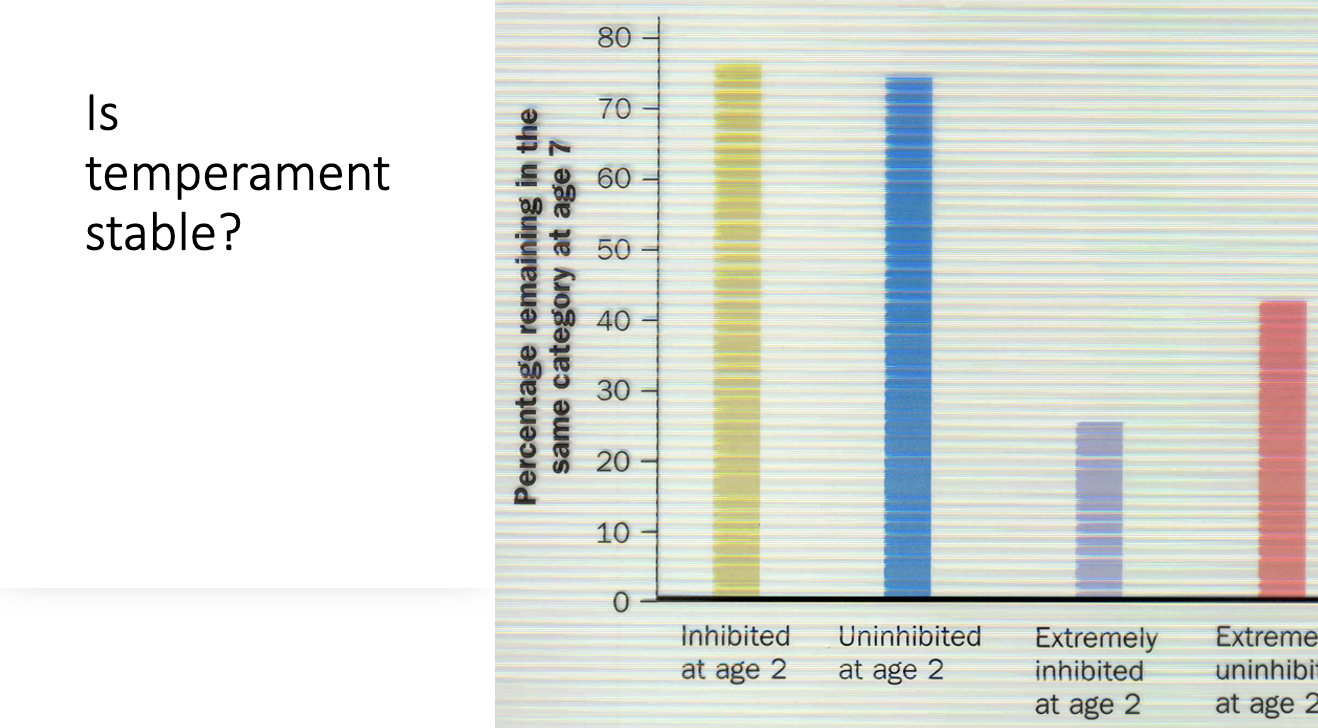
Infants who display slightly inhibited or uninhibited behavior tend to be more stable over time, often remaining within the same temperament category as they grow. In contrast, infants who exhibit more extreme temperamental traits—whether highly inhibited or highly uninhibited—are generally more volatile in early development. These children often show a tempering of their behaviors as they get older.
This shift in extreme temperaments may be due to socialization processes, where children learn to regulate their emotional and behavioural responses through interactions with caregivers and their broader social environment. Responsive caregiving, exposure to different social situations, and modeling of emotional control likely play a key role in helping these children adapt and moderate their early temperament over time
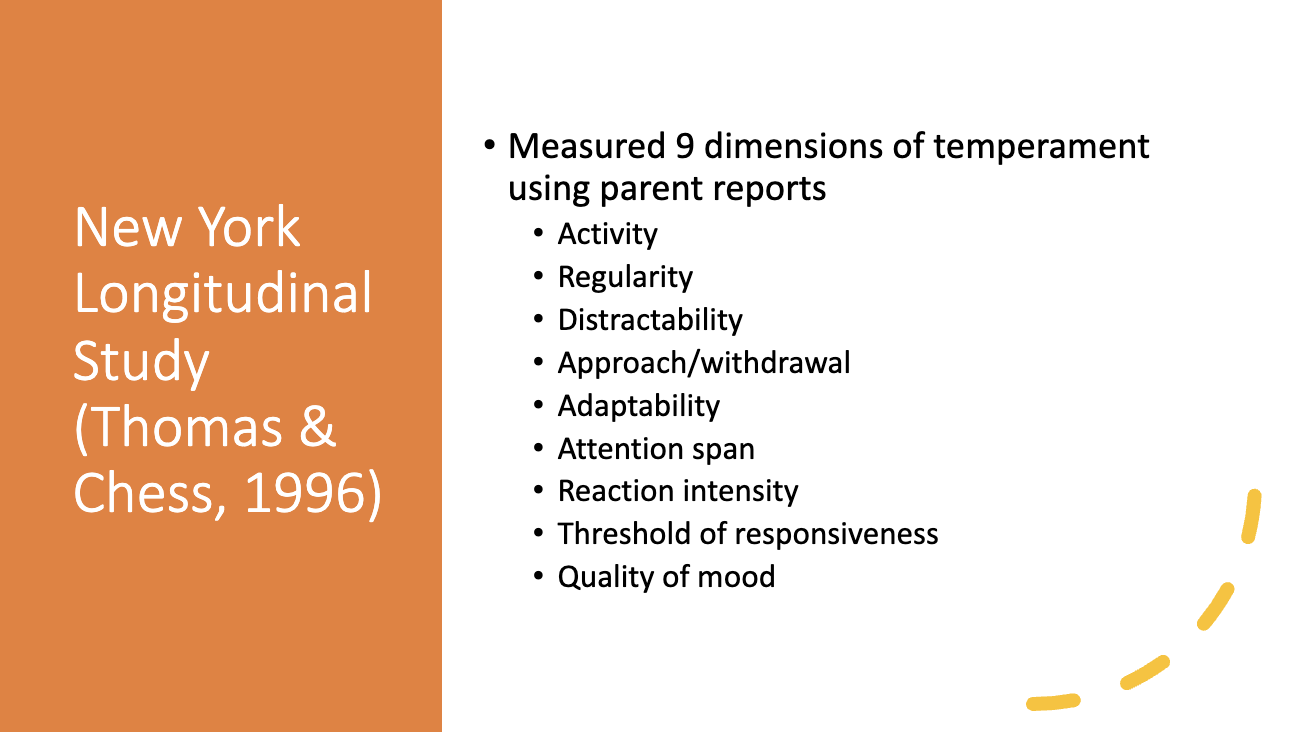
Thomas and Chess followed a group of children over several years to explore individual differences in temperament.
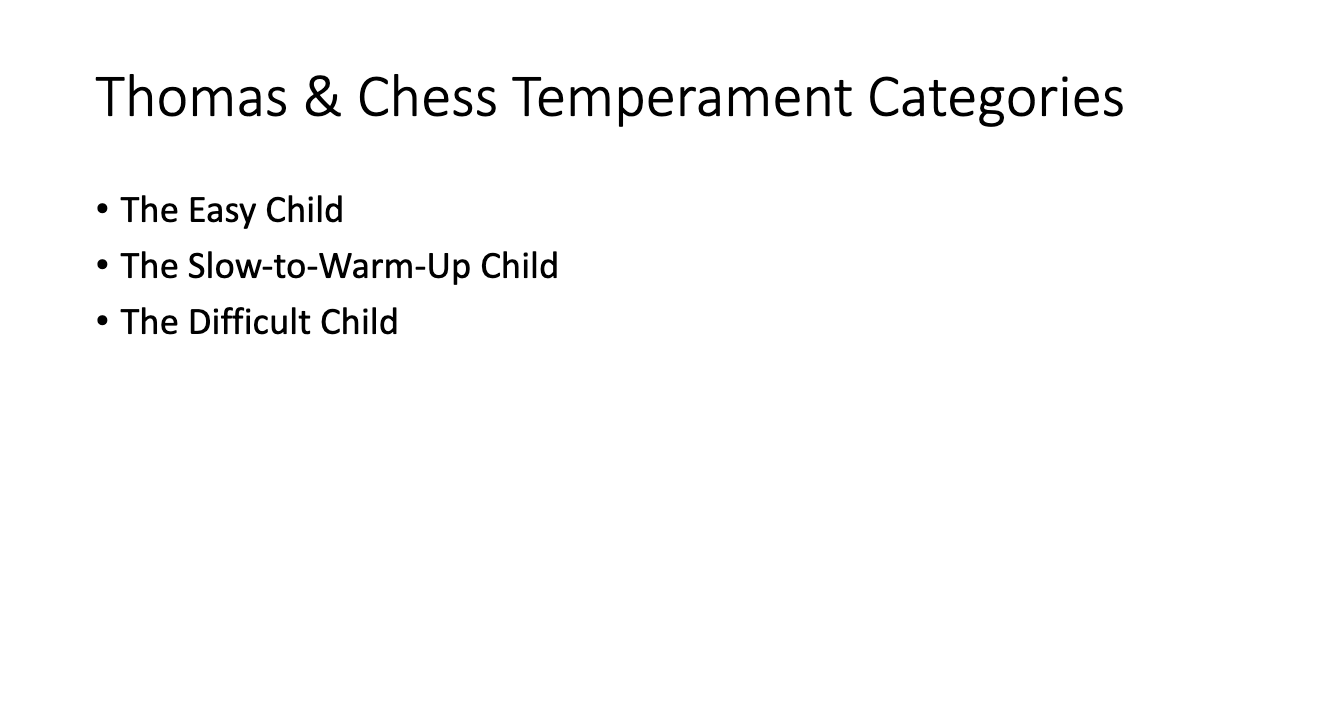
Based on these traits, they grouped children into three broad temperament categories:
Easy (about 40%)
Generally happy, regular in routines, adaptable to new experiences.
Difficult (about 10%)
More intense emotional reactions, irregular routines, less adaptable.
Slow-to-warm-up (about 15%)
Low activity levels, somewhat negative, and adjust slowly to new experiences.
The remaining children (about 35%) didn’t fit neatly into any one category but showed a mix of traits.
Are there differences in attachment due to temperament?
Temperament can influence how attachment is expressed, but it does not solely determine the quality of the attachment relationship. Temperament refers to biologically based individual differences in emotional reactivity and behavior, while attachment is the emotional bond that develops between an infant and their caregiver, primarily shaped by the caregiver’s sensitivity and responsiveness. For example, a baby with an inhibited or more reactive temperament may appear hesitant or clingy in new situations, but this does not necessarily indicate an insecure attachment. Research by Jerome Kagan has shown that these differences in behavior may be more reflective of a child’s temperament than the security of their attachment. Importantly, the concept of “goodness of fit” suggests that secure attachment is more likely to develop when caregivers adapt their responses to suit the child’s temperament. Even children with more challenging temperaments can form secure attachments if caregivers are consistent, patient, and responsive. Therefore, while temperament shapes the way attachment behaviors are displayed, it is the caregiver’s responsiveness that plays the most crucial role in forming a secure attachment.