Unit 2, Chapter 8
Artisan- skilled craftworkers
Calmecas- an actec school for nobles
Calpolli- units of organization in Aztec society
Glyph- pictures or symbols used I’m writing
Omen- a sign of something going to happen
telpochcalli- a school for commoners
Quetzal- bright bird
Aztec Social Hierarchy
It was made up of 2 main classes: nobles and commoners.
The position was determined by which class you were born into
Hereditary- born into
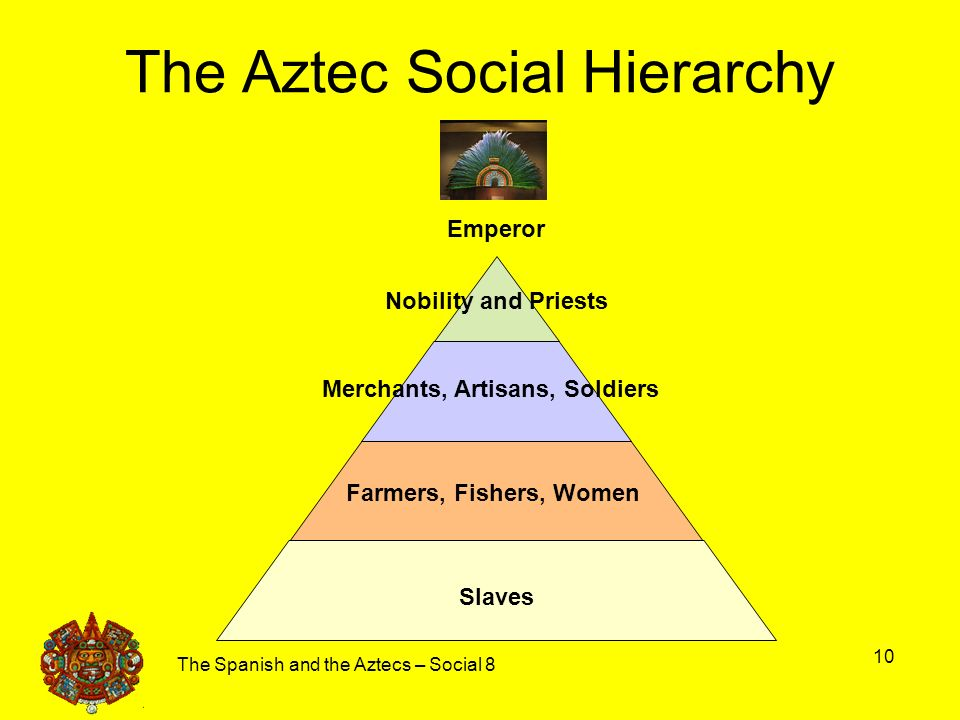
Roles Within Society
The Emperor
Known as huey tlatoani, meaning the great speaker. Treated as a god, and a skilled warrior
Family clans
Society was organized into units called calpolli
Some calpolli was based on the work that people did
Merchants made up the richest calpolli because they dealt with trade. Trade was a significant business. They also acted as spies
The Responsibilities of Farmers and Artisans
Farmer: hunter, fisher, grow crops for everybody
Artisans: mask makers, goldsmiths, and featherwork (The most prized bird feathers were from the quetzal bird)
Signs of Status
In Aztec society, there were three important ways of indicating your position in society
clothing
jewelry
size/location of your house
The main way to move up in Aztec society was by achieving success on the battlefield
A warrior who captured 4 prisoners during battle immediately became eligible for higher status
Contribuing to Society
Aztec society was based on producing citizens who would contribute to the community.
An Ideal Aztec Citizen
Courage
Self-sacrifice
Modesty
Clean living
Obidience
Aztec Law
The law was very important to the Aztecs
Nobles were judged more harshly because they should be the perfect role model for a citizen
Aztec Legal System
Emperor
Judges of the high court
Lower courts
Slaves
The Aztecs depended on slaves to perform necessary work. There were laws in place to protect them
It was not shameful to be a slave, just bad luck
Slavery was not a permanent condition. Saves could own property and even their slaves, they could take their place in society again after repaying any debt they had to their owners, and their children were always born free
Helpful Chater 7-8 questions
What is a primary source? What is a secondary source?
How did the Aztecs modify their physical environments (geography)to make
up for the geographic problems they had?
How are the Aztecs similar to the Spanish explorers that we talked about in the Renaissance unit?
What attitude did the Aztecs have towards other tribes/people?
How was Aztec society structured?
What sort of schooling did Aztecs receive? (talk about the different types of schools and education for girls)
How important were social class and wealth to the Aztecs? How did Aztecs
show their wealth?
What was the life of an Aztec slave like?
How did Aztecs serve their state? Why did they do so? (hint: what characteristics make an ideal Aztec citizen?)
How did the Aztecs pay for capital projects like building chinampas, causeways, and aqueducts?
Answers
primary: original. Secondary: an account made by somebody who wasn’t present at the time
mountains: aqueducts, Island: causeways, swamps: chinampas
they were devoted to their god(s)
they wanted to conquer all the lands because they believed that the gods favored them
(emperors,) (nobility and priests,) (merchants, artisans, soldiers,) (farmers, fishers, women,) and (slaves.)
calmecac and telpochcali. Girls were taught domestic chores
very important. clothes, jewelry, size/location of your house
There were laws for them. It was not frowned upon, it was just bad luck, they were able to own a house and even their slaves. They could take their place in society again when they pay back any debt to the owner. Slave children were born free
Military service was compulsory, sacrifice, courage, self-sacrifice, modesty, clean living, and obedience
They paid taxes. Farmers paid in crops or hours of labor