Impression Materials
Impression Materials
Medium used to record oral tissues and spatial relationships
Negative reproduction
Must be an accurate duplication for restoration and fabrication
Used to pour a positive reproduction-model cast or die
The Ideal Impression Material
Semi-liquid then sets
Appropriate working & setting time
Strength upon removal
accuracy and stability
Biocompatible and compatible with gypsum products
Easy to use
reasonable cost

Impression Material Systems
Forms include:
Powder mixed w/ water
Two-paste systems
Materials that are heated or melted
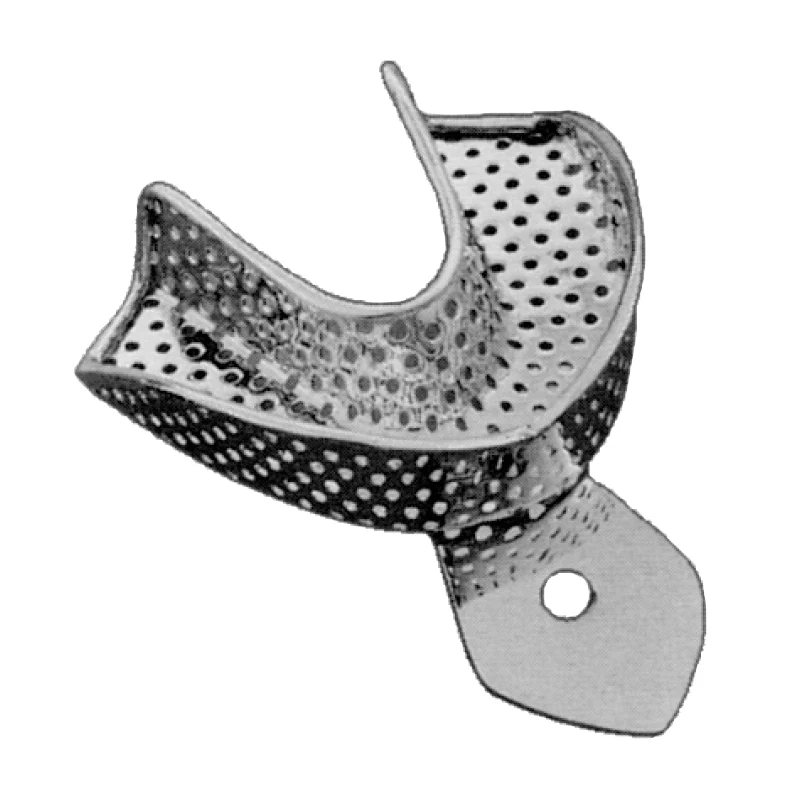
Stock or custom-made trays

Bite Registration
Records the occlusal surface of both arches
Used to relate upper and lower casts

Classification of Impression Materials
By setting reaction
Physical change or chemical reaction
By use
Inelastic or elastic (rigid or flexible)

Types of Impression Materials
Inelastic or rigid
Impression plaster
Impression compound
Zinc oxide-eugenol

Classification of Impression Materials
non-elastic (rigid)
plaster
compound
waxes
ZnO (eugenol)

OR
elastic (flexible)
aqueous hydrocolloids
agar (reversible hydrocolloid)
alginate (irreversible hydrocolloid)
non-aqueous elastomers
polysulfide
silicone
condensation
addition
polyether

Nonelastic or Rigid Materials
NOTE: rigid material cannot be used where undercuts exist

Impression Plaster
Similar to gypsum
edentulous mouths only
Inexpensive
Unpleasant taste
Impression Compound
Wax with fillers added
Thermoplastic
Softened in warm water
Placed in tray and in mouth
Cools and sets to rigid state
preliminary impression for full dentures

Zinc oxide-eugenol
Two-paste system
edentulous impressions
Excellent reproduction
Inexpensive and easy
Largely replaced by rubber-based materials

Aqueous Elastomeric Impression Material
Hydrocolloids
Hydro: water-based
Colloid: particles suspended in a medium
2 phases of a colloid: liquid (sol) and semi-solid (gel)
Sol→liquid state
Gel→ semi-solid state
Setting reaction is called GELATION
Setting reaction results from either:
Thermal reaction
Sol ↔ Gel
Reversible hydrocolloid (agar)
Chemical reaction
Sol →Gel
Irreversible hydrocolloid (alginate)

Hydrocolloids: Advantages
mainly water
Wets tooth surfaces
Easy to pour
Compatible with gypsum products
Gypsum wets impression surface well

Hydrocolloids: Disadvantages
Water content affects stability of the impression
Syneresis: loss of water; impression will shrink
Imbibition: absorption of water; the impression will swell
Hydrocolloid impressions must be poured immediately!

Reversible Hydrocolloid/Agar
Indications
crown and bridge
high accuracy

Composition
Agar-agar 8-15%
Water 80-85%
Introduced in 1925, used until 1950s

Equipment for Hydrocolloid/Agar
3-compartment water bath
Water-cooled trays

Preparing Agar
3-chamber conditioning water bath needed
1. Boiling bath changes material to sol (liquefies material)
212o F for at least 10 minutes

2. Storage bath
150°F→keeps material until ready for use

3. Conditioning bath
110o F → fill tray and place in bath for 15 minutes (gelation begins)
Tempering: lowers temperature for pt’s mouth
seat tray
Cool with water at 13°C for 3 minutes
Converts sol to gel

Alginate/ Irreversible Hydrocolloid
One of the most widely used
Changes from sol to gel and cannot be reversed
NOT as accurate as agar →rounds off sharp angles
Cannot be used where detail is needed, such as impressions for crowns, bridges, and in-lays/on-lays

Indications
study models, impressions for dentures, partial dentures, night guards, whitening trays, fluoride trays
Examples
Jeltrate (Dentsply/Caulk)
Coe Alginate (GC America)
Composition
Sodium alginate: extracted from seaweed (algae)
Calcium sulfate: reactor
Sodium phosphate: retarder
Potassium fluoride: improves gypsum surface
Filler
Supplied as powder that is mixed w/ water
Fluff container before use
Mixing Alginate
Place water in a flexible bowl FIRST then add powder
Wet all particles, then mix against the side of bowl (stropping)
Mix until smooth for 1 minute
Load tray and seat in mouth
Remove 2 to 4 minutes after gelation (loss of tackiness)

Taking Impression
TAKE MANDIBULAR IMPRESSIONS FIRST
Seat impression and allow material to set
Delay removal for 2-3 additional minutes for added strength and elasticity
Remove with a snap to avoid permanent deformation (distortion)
Disinfect according to manufacturer’s directions

Controlling Setting Time
Regular set: gels in 3-4 minutes
Fast set: gels in 1-2 minutes
Water temperature controls the rate of the setting reaction
Warmer water→ sets faster (gagger)
Cooler water→ sets slower (inexperienced user)

Criteria for Evaluation
Lack of voids or air bubbles
No distortion
Extended to all structures
Free of debris
Stable material attached to tray

Pouring impression
Due to imbibition and syneresis, alginate impressions MUST be poured immediately
If unable to pour immediately, store at 100% humidity for less than 1 hour
Humidor→best
Damp towel or plastic bag → next best

Important Considerations
must be disinfected according to the manufacturer’s recommendations before pouring
blood or debris on impression → rinse under water, then disinfect
models should NOT include frenum, uvula, genial tubercle, or other oral structures beyond periodontium
RIGHT handed clinician should presume 11 o’clock (12 only if 11 is not available)

causes of permanent deformation:
improper handing
temperature and humidity
expired impression material
movement during impression
Comparison of Aqueous Hydrocolloids
Feature | Agar (Reversible) | Alginate (Irreversible) |
|---|---|---|
Accuracy | High accuracy; suitable for crowns and bridges. | Lower detail; rounds off sharp angles; unacceptable for fixed restorative work. |
Equipment | Specialized & Expensive: Requires 3-chamber water bath, water-cooled trays, and tubing. | Minimal & Inexpensive: Uses standard stock trays and basic mixing tools. |
Preparation | Time-Consuming: Must be prepared in advance (boiling, storing, tempering); SUBJECTED to imbibition and syneresis | Fast & Easy: Simple powder/water mix; sets in 1–4 minutes. |
Handling | No mixing required; pleasant flavor. | Requires aggressive mixing; can be messy or difficult for beginners. |
Cost | Inexpensive after initial equipment investment. | Very inexpensive overall. |
Tear Strength | Poor tear strength. | Tears easily; High permanent deformation |
Patient comfort | Pleasant taste | |
 |  |
Shared Disadvantages and Stability
Dimensional Instability: Both are subject to syneresis (shrinkage) and imbibition (swelling).
Pouring Requirement: both must be poured with gypsum immediately
Hydrophilic Nature: Both are hydrophilic, meaning they wet tooth surfaces and gypsum well.