The Sympathetic Nervous System
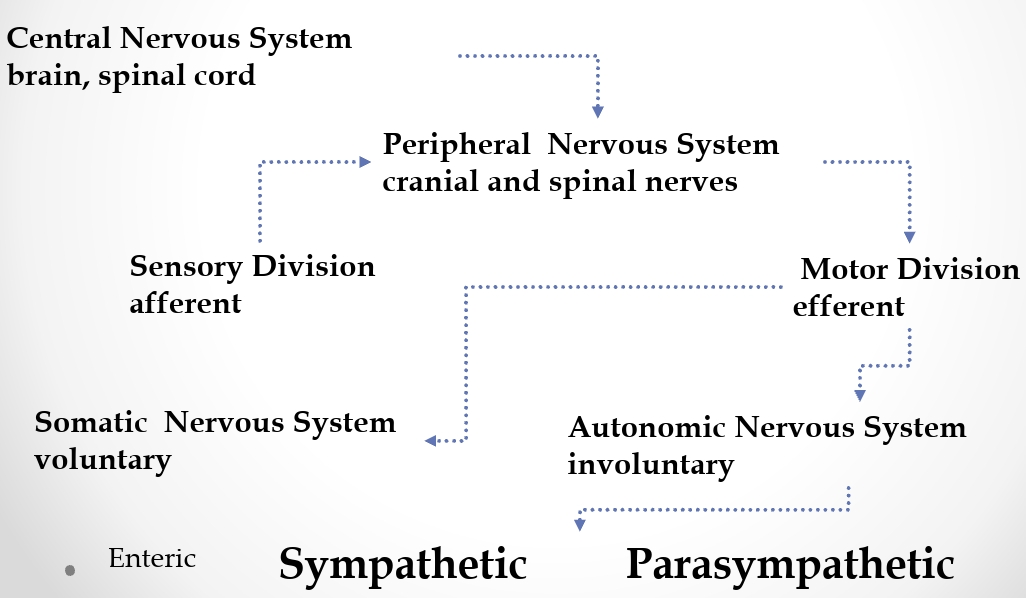
Sympathetic nervous system is part of the autonomic nervous system (ANS)- controls involuntary response (fight or flight).
Parasympathetic is also part of the ANS - rest and digest after activities of the sympathetic nervous system.
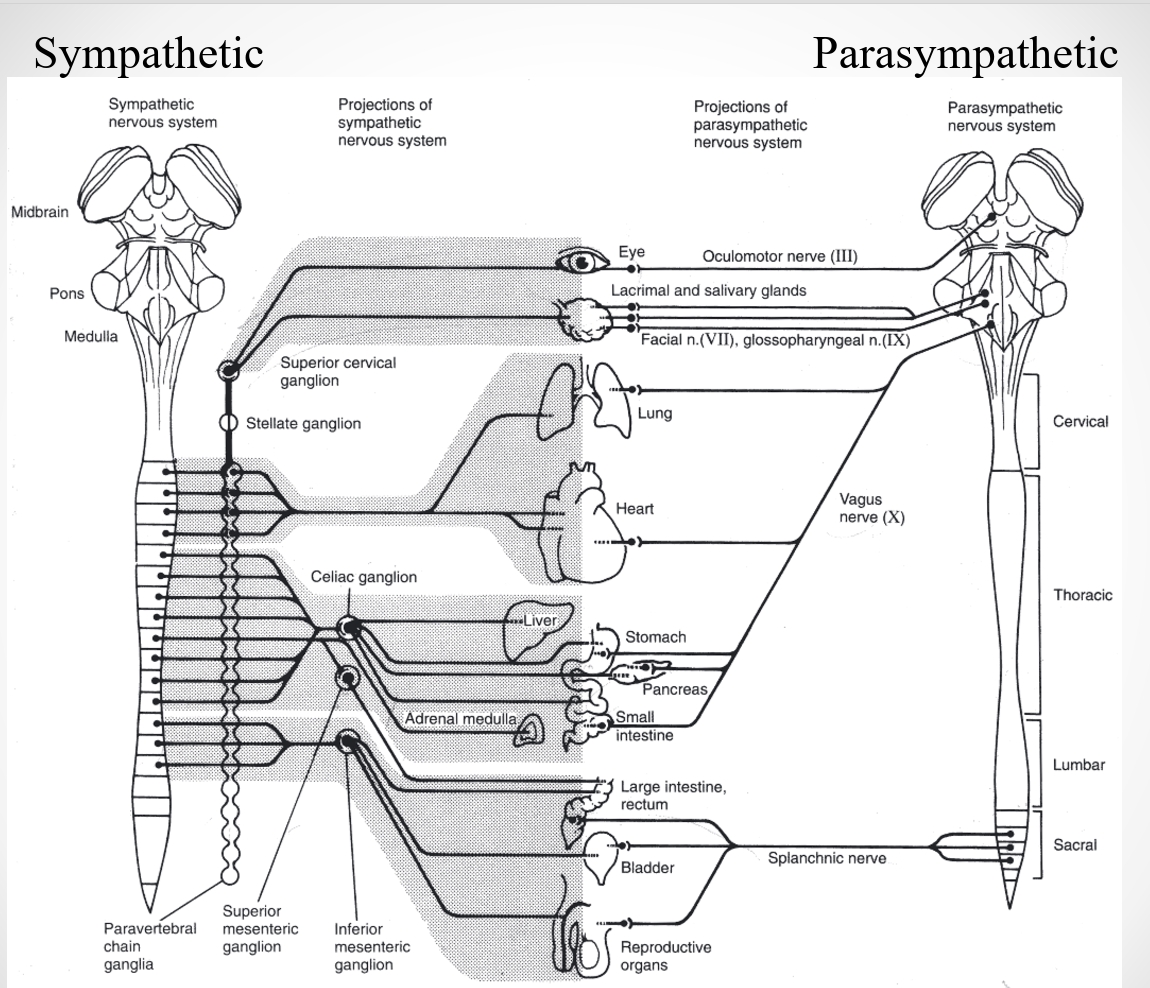
Paravertebral chain ganglia: Ganglia are groups of cell bodies in PNS
Around C2 there are superior cervical ganglion, middle cervical ganglion below that and inferior cervical ganglion.
In some people, the inferior cervical ganglion is fused with T1 and is called the stellate ganglion.
Nerves branch from thoracic region and synapse with ganglions, they then branch from ganglions.
Ganglion | Strucutre it branches to | Effect on organ | Flight or flight response |
Superior cervical (t1-t4) | Eye | Realses noradrenaline which cause pupilary dilation Also makes lens more flattened | Assists with far vision |
Salivary glands | Noradrenaline causes thick mucus production | Mucus production reduced | |
Lacrimal glands | Decreases production of tears | ||
Stellate cervical ganglion (t1-t4) | Heart | Increases heart rate and contraction power which increases cardiac output | Increases blood pressure |
Bronchioles (in lungs) | Dilation (relaxed muscles) Vasoconstriction of brochiole arteries | More oxygen Increased blood pressure | |
Celliac ganglion (T5-T9) | Stomach | Inhbit peristalsis (stop muscle contractions that move food through digestive tract) Motility reduced | Decrease absorption Decrease stomach secretions |
Liver | Glycogenolysis | Releases glucose for energy | |
Pancreas | Inhibits beta cells in islets of langerhans and stimulate the alpha cells | Decrease insulin production and increase glucagon production Increase blood glucose levels | |
Branches off to the adrenal medulla | Chromaffin cells - this is an intramural ganglion - releases noradrenaline and adrenaline into blood | ||
Superior mesenteric ganglion (branches off celliac ganglion) | Ascending colon of large intestine, Transverse colon, illeum, duodenum | Dectease peristalsis, decreases absorption, decrease secretion | Inhibits digestion |
Aortica Renal gangllion (T10-T12) | Kidney Ureter | Decrease urine production due to decrease in blood flow (vasoconstriction) Decreased renin release Decrease peristalsis in ureter | Decreased urine = sphincter Lower blood presure |
Inferior Mesenteric ganglion (L1, L2, sometimes L3 too) | Descending colon Upper rectum, transverse colon, | Decrease peristalsis | |
Branch off inferior mes ganglion (can come from T10-L3) | Detrusor muscle of the bladder Internal urethral sphincter Reproductive organs | Decrease contractions = walls relaxed Increase contractions = sphincter closed Uterine contractions. Pregnant = no uterine contractions | Stops urination Ejaculation for men |
Chromaffin cells: found primarily in the medulla of the adrenal glands. They are responsible for producing and storing noradrenaline and adrenaline.
Intramural ganglion: located within the wall of the target organ it innervates. Usually found in the parasympathetic nervous system.
Vasoconstrition often occurs so blood is diverted away from organs and goes to the muscles and brain.
Renin release: Decreased renin release can lead to lower blood pressure. This is because renin is a key enzyme in the renin-angiotensin-aldosterone system (RAAS), which plays a crucial role in regulating blood pressure.
Drugs can inhibit the sympathetic nervous system or activate it
Organisation of the Sympathetic Nervous System:
1 Preganglionic neurones
Originate in the thoracic and lumbar regions of the spinal cord (T1-L2).
Their cell bodies are located in the lateral horn of the spinal cord.
They release acetylcholine (Ach) as a neurotransmitter.
2 2 types of post ganglionic neurones:
Paravertebral ganglia
Prevertebral ganglia (celiac, superior mesenteric, and inferior mesenteric ganglia)
These release noradrenaline and adrenaline
3 Preganglionic fibres synapse with nicotinic receptors on post ganglionic neurones in paravertebral and release ACh. Post ganglionic fibres travel to target organs and synapse with muscarinic receptors effector organs, releasing NAd.
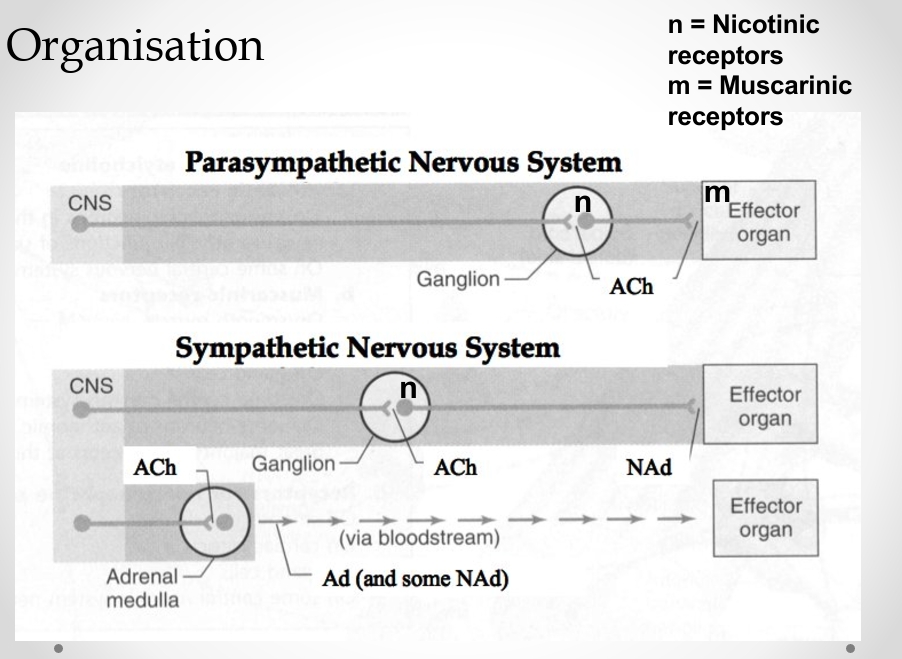
Drugs can target the nicotinic receptors or noradrenaline receptors
Cholinergic Transmission
Synapse between all sympathetic and parasympathetic neurones involves ACh release onto neuronal nicotinic receptors
Sensitivity of the drugs vary depending on number of alpha receptors and type
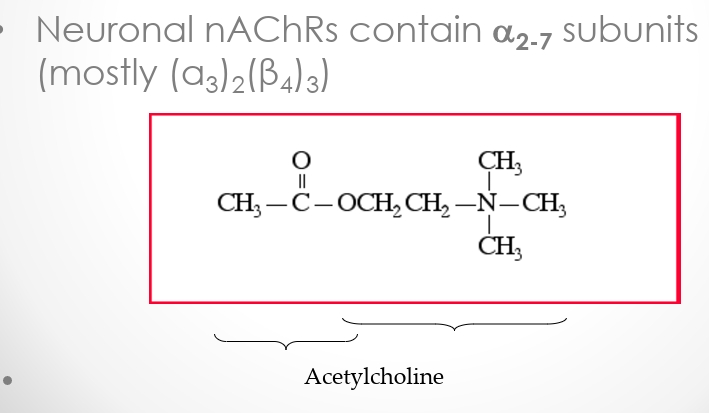
Nicotinic receptors
Found in autonomic ganglia (PNS), CNS receptors, also are muscarinic receptors at neuromuscular junctions
Ionotropic receptors: When acetylcholine binds to a nicotinic receptor, it directly opens an ion channel, allowing ions like sodium and calcium to flow into the cell. This rapid influx of ions triggers an electrical signal
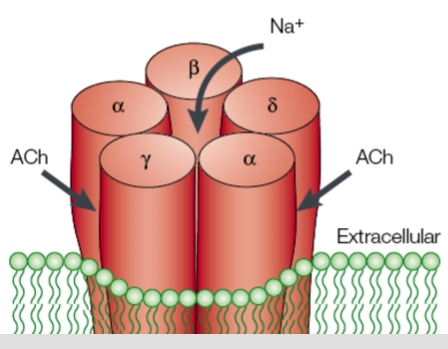
Nicotinic receptors are composed of five protein subunits arranged in a ring around a central pore. Each subunit contains four transmembrane domains, which span the cell membrane
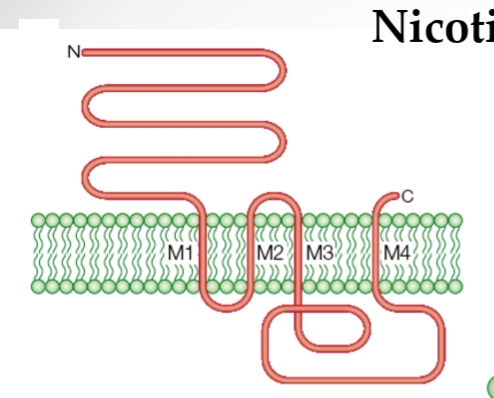
It's also a ligand-gated ion channel: The binding of acetylcholine to the receptor acts as a ligand, causing a conformational change (change in shape of protein), and opening the ion channel
Transmit signals from motor neurones to muscle cells
Hexamethonium- a drug to lower blood pressure, targets the ganglia
Selective antagonist for only nicotinic acetylcholine receptors located in the autonomic ganglia (blocks them)
reduces the activity of both the sympathetic and parasympathetic nervous systems. This leads to a decrease in heart rate, blood pressure, and other autonomic functions
Not competitive for binding site
Blocks sympathetic and parasympathetic transmission = block all sympathetic effects
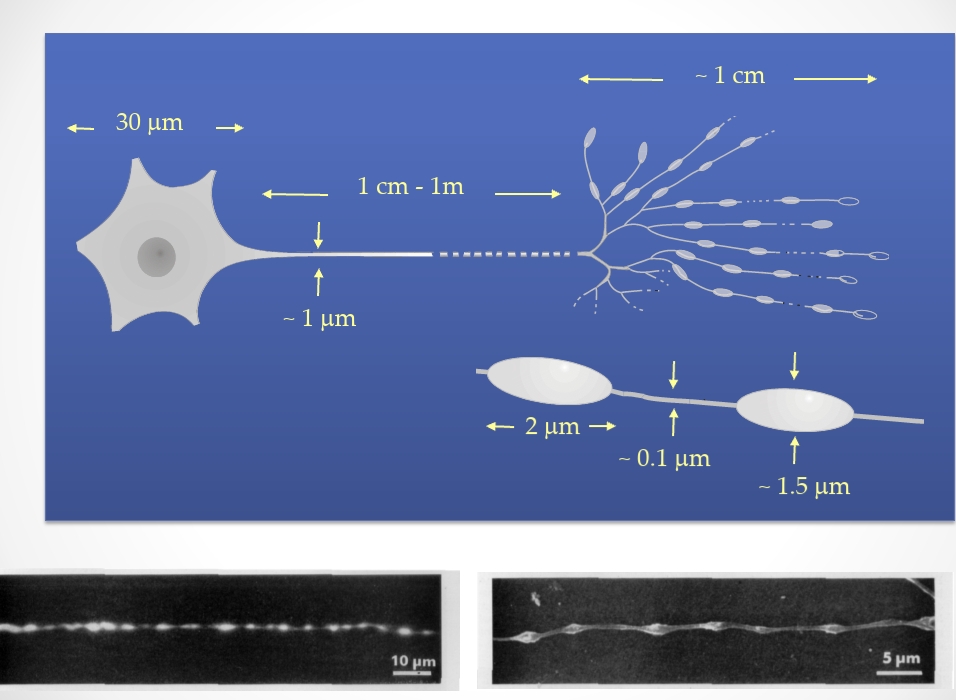
Postganglionic sympathetic nerves
Cell bodies in ganglia
Axons sent out into periphery, branching out into the organs
Adrennoceptors: receptors that respond to noradrenaline released from sympathetic nerve terminals and to circulating noradrenaline
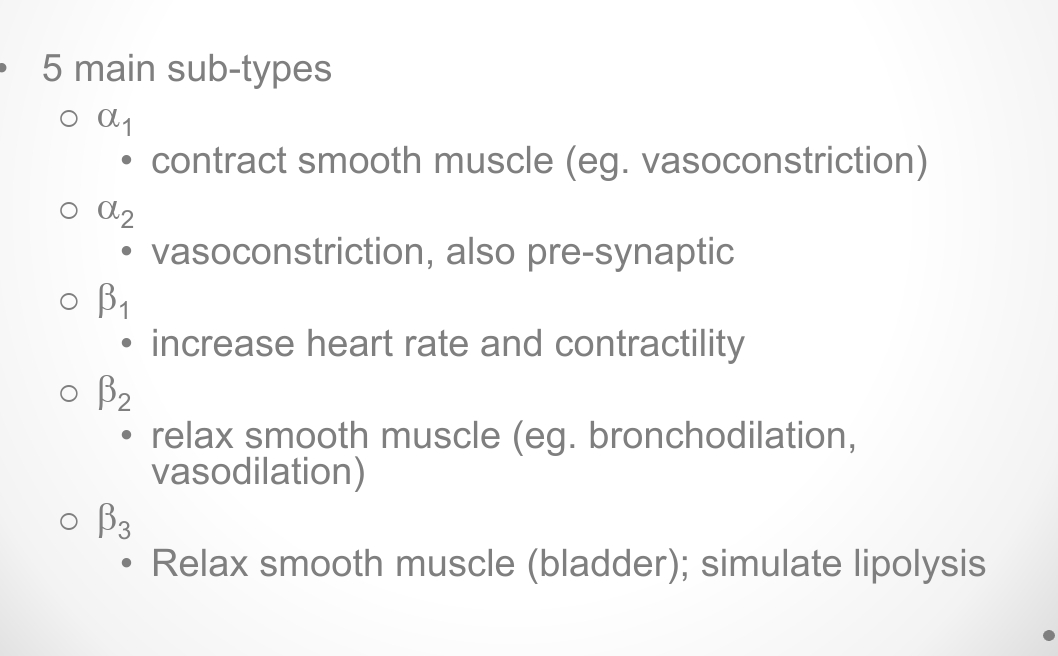
a1 generaly on smoothmuscle
a2- smooth muscle and nerve terminals
b1- heart
b2- lungs
b3- bladder and fat
G-protein Coupled receptors: