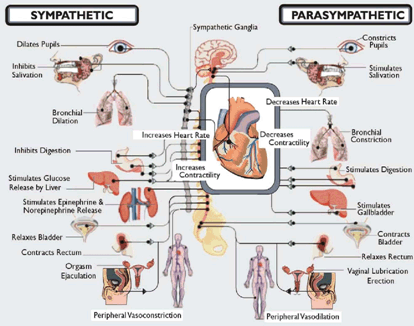
14.2: The Sympathetic Nervous System
I. Sympathetic Nervous System
A. Known as the “fight or flight” division of the Autonomic Nervous System (ANS)
- The sympathetic nervous system is a crucial part of the body’s reaction to stress or perceived threats. It prepares the body to respond rapidly under emergency conditions, facilitating quick responses necessary for survival.
Prepares body for emergency situations
- In response to danger, the sympathetic nervous system triggers a series of physiological changes, including increased heart rate, enhanced blood flow to muscles, and the release of energy stores, equipping the body for physical exertion.
B. Preganglionic cell bodies originate in thoracic and upper lumbar spinal cord; known as the thoracolumbar division
- This origin point emphasizes the central role of the sympathetic system in mobilizing the body during threat situations, connecting directly to the spinal cord regions that control rapid response.
C. Preganglionic axons are usually short and postganglionic axons are usually long
- This anatomical arrangement is significant because it allows for quick transmission of signals from the spinal cord to target organs, ensuring efficient response times.
D. Post Ganglionic neuron cell bodies line in a chainlike manner along the vertebral column, which give them their name: Sympathetic chain ganglion
-the ganglia extend from the superior cervical ganglion down to the inferior sacral ganglion
E. Axons synapse along the vertebral column in a chain-like appearance known as sympathetic chain ganglia
- These ganglia facilitate the relay of signals throughout the body, enabling widespread and coordinated responses to stress, as multiple organs can be activated simultaneously.
F. Preganglionic neurons start at the lateral horns of the thoracic and lumbar spinal cord, which travel with the spinal neurons (anterior root), then they branch off into small nerves called white rami communicantes
. Vital role in maintenance of homeostasis when the body is engaged in physical work
- While primarily associated with stress responses, the sympathetic system also helps maintain equilibrium in bodily functions during periods of strenuous activity by regulating blood flow and metabolic processes.
H. Mediates body’s responses to emotion
- The sympathetic nervous system is not only involved in physical responses but also emotional reactions, influencing how individuals respond to stress and emotional stimuli.
II. Sympathetic Neurotransmitters and Receptors
A. Three classes of neurotransmitters
- Understanding the types of neurotransmitters involved is essential for comprehending the diversity of the sympathetic responses, as different neurotransmitters initiate varied effects on target tissues.
Acetylcholine (ACh)
a. Neurotransmitter used in excitatory synapses between sympathetic preganglionic axons and postganglionic neurons
- ACh is vital for initiating signal transmission within the sympathetic nervous system, influencing various target organs.
b. Also released by some postganglionic axons
- This supports local, immediate responses in certain tissues and organs.Epinephrine (adrenalin)
a. May be released by postganglionic axons
- Epinephrine increases heart rate and blood flow, promoting a heightened state of alertness and readiness to act.Norepinephrine (noradrenalin)
a. Most frequently utilized neurotransmitter released into synapses between postganglionic axons and target cells
- Norepinephrine plays a critical role in maintaining the body’s readiness for fight or flight, optimizing energy use during stress responses.
B. Classes of sympathetic receptors
- The types of receptors determine how various organs will respond to sympathetic activation, highlighting the tailored responses executed by the nervous system.
Adrenergic receptors bind to epinephrine and norepinephrine
- These receptors are essential in mediating the effects of the sympathetic nervous system on target tissues.
- Two major types of adrenergic receptors:
1. Alpha: located in smooth muscle cells of pupil, blood vessels to skin, blood vessels to digestive and urinary organs, and sphincters
- Activation typically results in constriction, aiding in redirecting blood flow to essential regions during stress.
2. Beta: located in cells of salivary glands, cardiac muscle, smooth muscle cells of bronchus, smooth muscle cells of blood vessels to skeletal muscle, smooth muscle cells of digestive and urinary tracts, digestive glands, and cells of pancreas and liver
- These receptors generally facilitate relaxation processes, increasing airflow and improving efficiency of dynamic functions under stress conditions.Cholinergic receptors bind to acetylcholine
- Essential for certain local responses within the sympathetic framework, particularly where rapid neurotransmission is necessary.
- Include two types:
1. Muscarinic receptors on sweat glands in skin
- These receptors modulate local responses to increased body temperature and stress, exemplifying the complexity of the sympathetic response.
2. Nicotinic receptors in membranes of all postganglionic neurons within sympathetic ganglia and adrenal medullae
- These receptors are pivotal in facilitating communication between neurons, ensuring rapid response times across the system.
C. Effects on Target Cells
- The actions of the sympathetic nervous system target specific cells and systems to ensure survival and efficiency during periods of physical activity or emotional stress, demonstrating its adaptive capabilities.
1. Directed at ensuring survival and maintenance of homeostasis during time of physical activity or emotional stress
- The sympathetic system's responses are fine-tuned to effectively balance immediate bodily needs against ongoing homeostatic functions.
2. Refer to figure