Percy Bysshe Shelley, A Defence of Poetry & The Necessity of Atheism
Percy Bysshe Shelley
1792-1822
descended from an aristocratic family; attended Eton and Oxford
expelled for publishing pamphlet The Necessity of Atheism (1811)
became well known in radical circles for Queen Mab (1813)
married Mary Wollstonecraft Godwin, of Frankenstein (1816)
wrote his greatest works in exile from England in Italy
died in a shipwreck at age 29 (NAEL D759-62)
Shelley, The Necessity of Atheism (1811)
“ There is no God! This negation must be understood solely to affect a creative Deity. The hypothesis of a pervading Spirit coeternal with the universe, remains unshaken…. [H]aving no proofs from [any] of the three sources of conviction [evidence of the senses, reason, and testimony of others], the mind cannot believe the existence of a creative God…. Every reflecting mind must acknowledge that there is no proof of the existence of a Deity.”
written by Shelley when he was a student at University College, Oxford; sent to all College Heads
at the time, most Oxford dons were ordained by the Church of England; promotion of atheism was a punishable crime
resulted in Shelley’s expulsion from Oxford when he refused to acknowledge authorship
updated in 1813 and appended to Shelley’s epic poem Queen Mab (Wikipedia)
Shelly, A Defence of Poetry (1840)
“Poetry is not like reasoning, a power to be exerted according to the determination of the will. A man cannot say, “I will compose poetry.” The greatest poet even cannot say it: for the mind in creation is as a fading coal, which some invisible influence, like an inconstant wind, awakens to transitory brightness: this power arises from within, like the colour of a flower which fades and changes as it is developed, and the conscious portions of our natures are unprophetic either of its approach or its departure. Could this influence be durable in its original purity and force, it is impossible to predict the greatness of the results; but when composition begins, inspiration is already on the decline, and the most glorious poetry that has ever been communicated to the world is probably a feeble shadow of the original conception of the poet.” (NAEL D876)
Mont Blanc
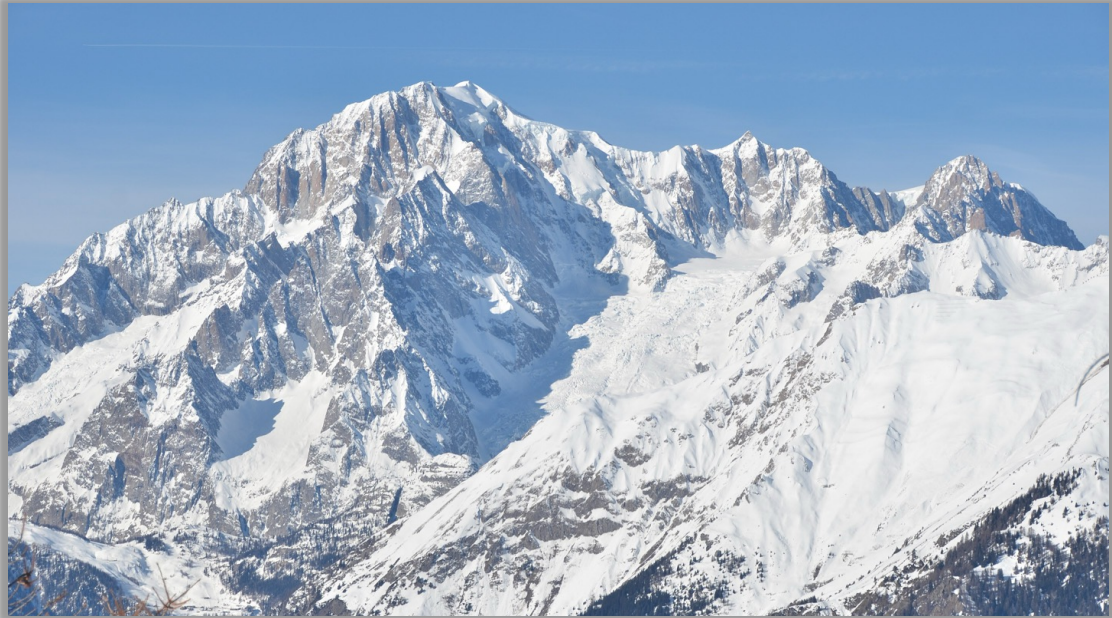
The Sublime
a quality of awesome grandeur in art or nature, surpassing the merely beautiful; loftiness of thought and feeling
associated with terrifyingly impressive natural phenomenon, such as mountains, volcanoes, storms, the sea, etc.
characterized by obscurity, vastness, power
challenged the restraint of neoclassicism, paving the way for Romanticism (Baldick 346-47)
Hymm
a song or lyric poem set to music in praise of a divine or venerated
being
sometimes given to a poem on an elevated subject, such as Shelley’s “Hymn to Intellectual Beauty” (1816)
sometimes praises an historical hero, such as McDiarmid’s “First Hymn to Lenin” (1931)
related to the ode in its encomiastic purpose and tone (Baldick 346-47)
Awful
1.1.a. That which inspires or instils fear, terror, or dread; terrible, dreadful; (from the 18th century often) extremely shocking or distressing; horrific.
earliest use ca. 1175
1.1.b. Not pleasant or desirable; disagreeable, objectionable; bad. (Chiefly North American colloquial in early use.)
earliest use 1781 (OED)
Shelley, “Hymn to Intellectual Beauty” (1818)
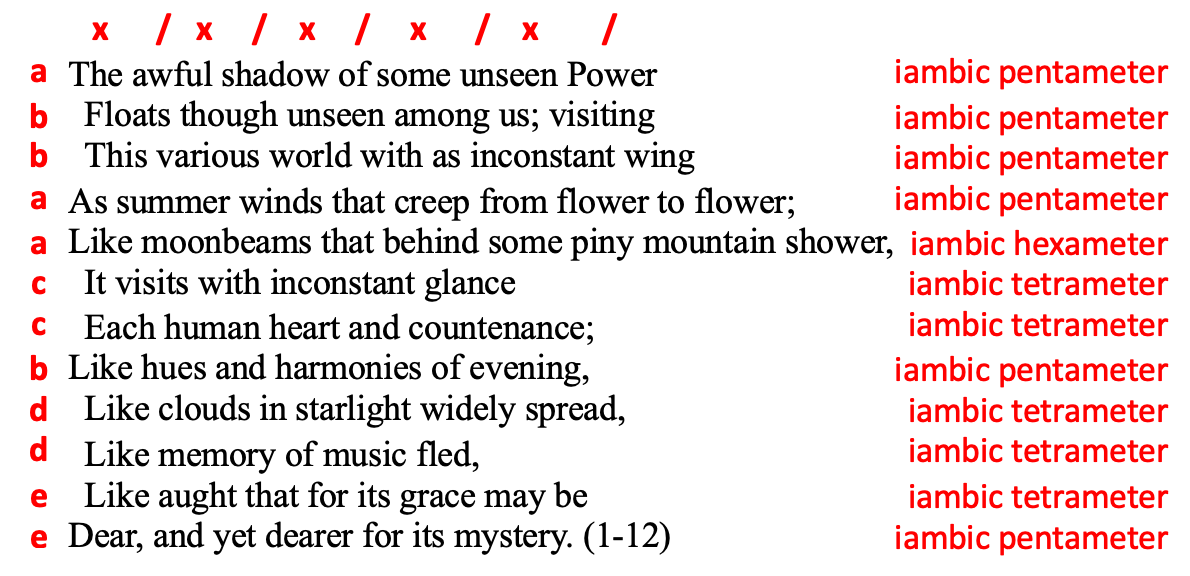
“unseen”
not physical
“visiting this various world with as inconstant wing”
visiting: alien to, not common
inconstant: not always there
“mystery”
This phrase suggests a fleeting engagement with the complexities of existence
Rhetoric Device: Simile
Like, As
Shelley often employs similes to draw vivid comparisons, enhancing the emotional resonance of his themes and inviting readers to engage more deeply with his philosophical inquiries.
Rhetorical Questions