Experiment 15- Bacterial Transformation BIOL221 Lab
REVIEW: In Experiment 14, students learned about vertical and horizontal gene transfer.
Horizontal Gene Transfer: Transfer of genetic information between organisms of the same generation, without reproduction.
Example: Conjugation= involves direct cell-to-cell contact, where a donor bacterium transfers genetic material to a recipient cell through a pilus.
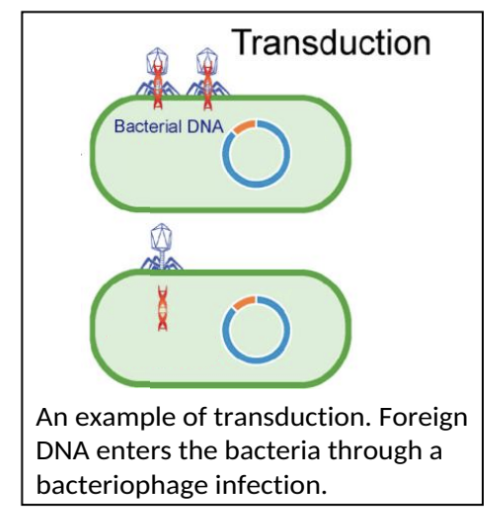
Transduction: Transfer of genetic material from one bacterium to another via a bacteriophage.
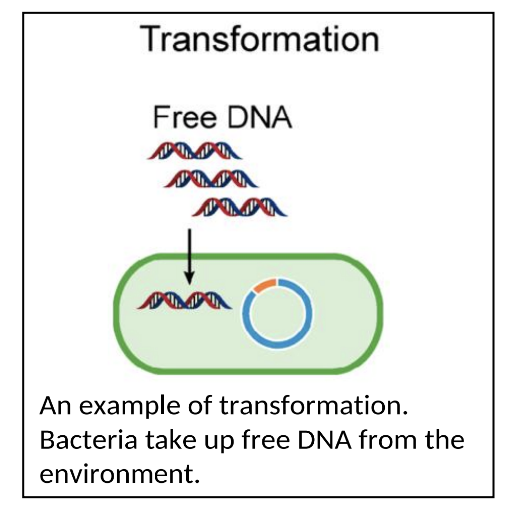
Transformation: Bacteria take up free DNA from the environment.
Natural Competence
Definition: The ability of certain bacteria to take up free DNA from their environment.
Not all bacteria possess natural competence; Only NATURALLY COMPETENT bacteria have this ability
Characteristics of Naturally Competent Bacteria:
Benefits and Risks of DNA Uptake:
Benefits:
Can utilize free DNA as nutrient sources.
Can aid in chromosome repair.
Can lead to acquisition of new genotypes.
Risks:
Depends on the type of free DNA taken.
Membrane-Bound Proteins (Natural Competence) CONT…
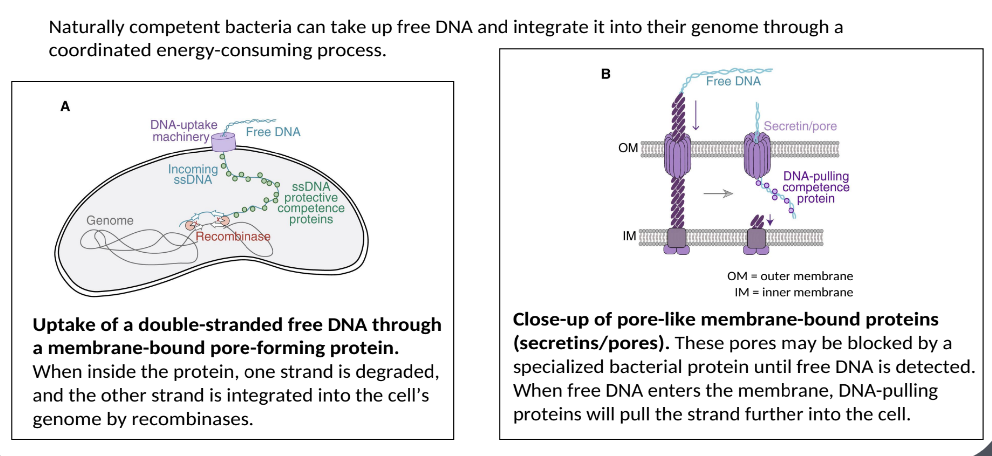
Naturally competent bacteria utilize double-stranded free DNA and integrate it into their genome.
Mechanism:
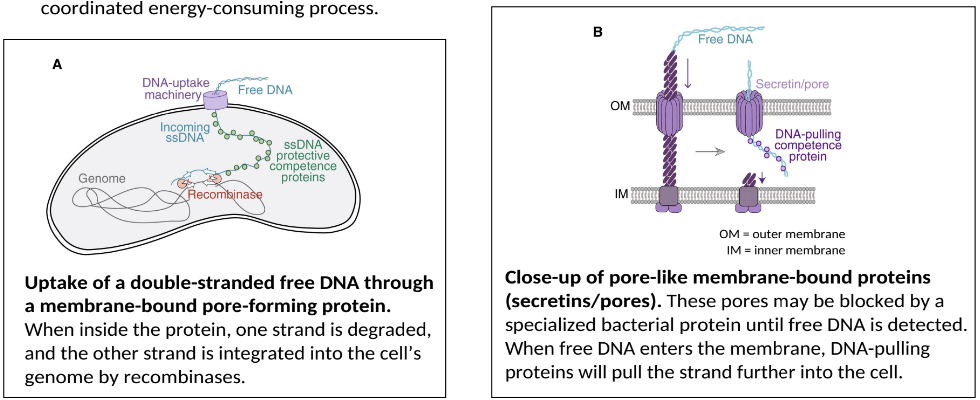
DNA uptake through membrane-bound pore-forming proteins.
Once DNA is inside, one strand is degraded while the other is incorporated into the genome via recombinases.
Process Overview:
Pore-like proteins (secretins/pores) may be initially blocked by specialized bacterial proteins until free DNA is detected.
When free DNA is present, DNA-pulling proteins transport the strand further into the cell.
Chemical Competence
Scientists can replicate natural competence in laboratory settings through bacterial transformation. This process involves introducing foreign DNA into bacteria, allowing them to take up and express new genetic material.
Applications:
Cloning DNA and producing significant quantities of proteins for research or drug development.
Example: Inducing bacteria to produce human insulin for diabetes treatment.
Types of Transformation Techniques:
Electroporation
Chemical Transformation
Electroporation
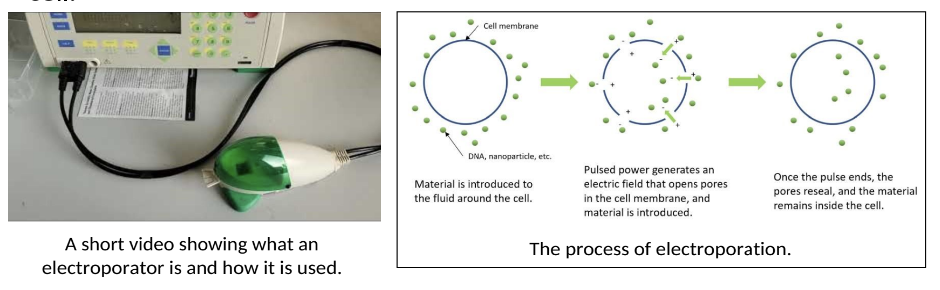
Method: Utilizes an electric pulse via an electroporator machine to facilitate uptake of foreign DNA.
Mechanism:
Electric shock temporarily disturbs the bacterial cell membrane, allowing free DNA entry.
Visual materials may elaborate on the function and use of an electroporator.
Chemical Transformation
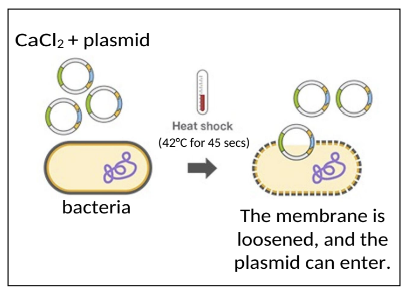
Method: Uses negatively charged salts (e.g., Calcium Chloride [CaCl2]) to assist free DNA (e.g., pGlo plasmid) adhere to the positively charged bacterial cell membrane.
Process:
Necessitates heat shock (e.g., 42°C for a brief period) to loosen the membrane, allowing the adhered free DNA to permeate into the cell.
Post-heat shock, cooling with ice helps restore membrane rigidity and seal openings.
Equation/Process Example:
Result: Membrane loosens, plasmid can enter (Temperature: 42°C for 45 seconds).
Overview of pGlo Plasmid
The pGlo plasmid contains several critical components:
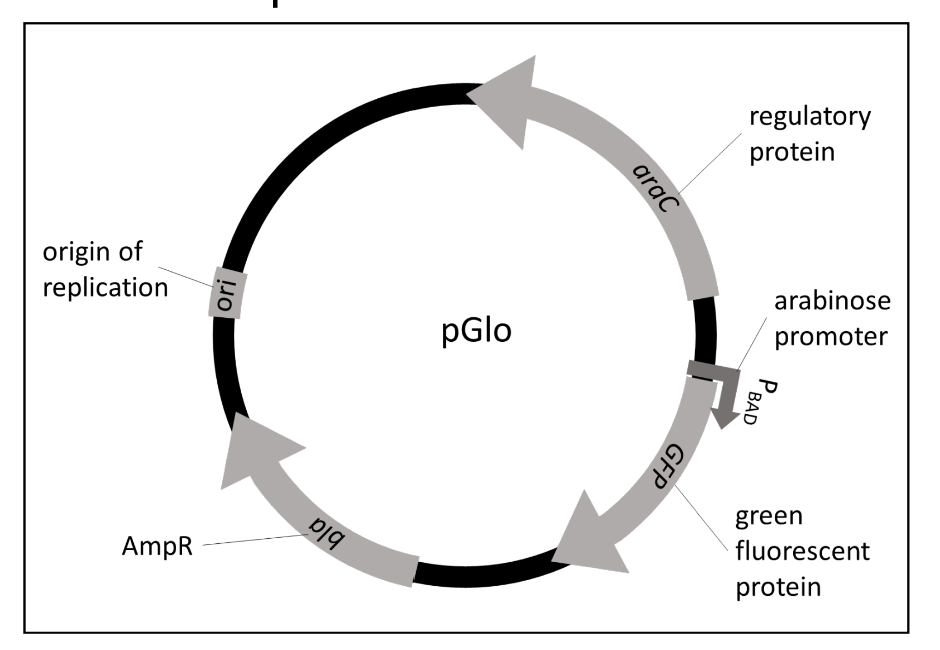
Origin of Replication (ori): Facilitates self-replication of the plasmid in host bacteria.
Ampicillin Resistance Gene (aka..AmpR, bla): Provides resistance to ampicillin.
Arabinose Operon Components:
araC: Gene encoding for regulatory protein araC.
PBAD Promoter Site: Also known as araBAD; RNA polymerase binds to this site in the presence of arabinose for transcription to RNA.
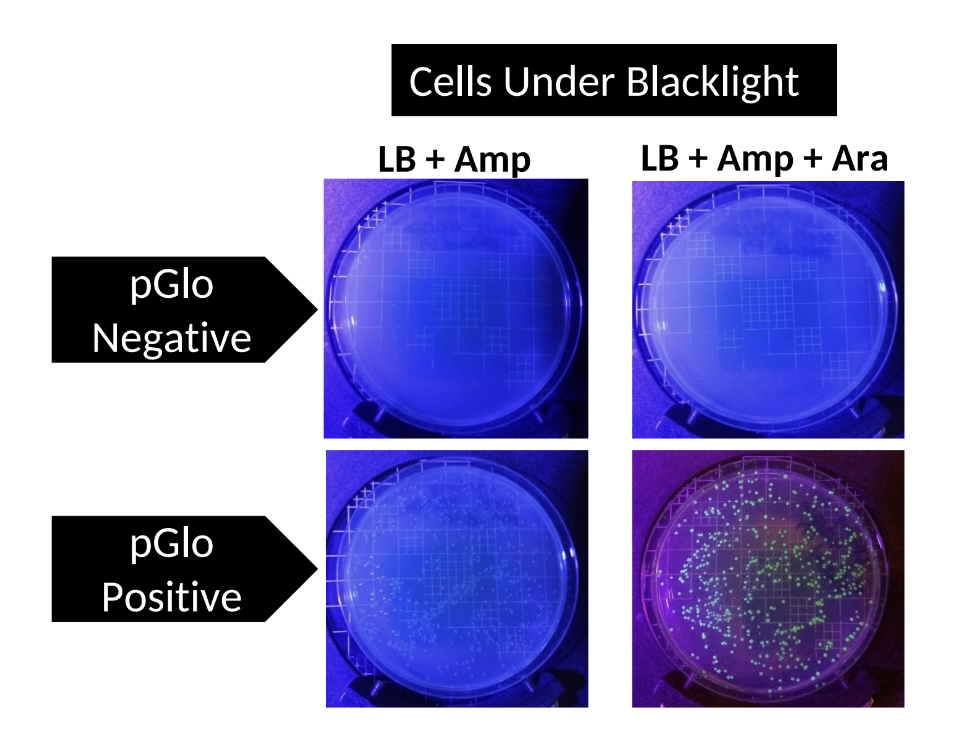
Green Fluorescent Protein (GFP): Encodes a protein that emits green fluorescence under UV light.
Transformation in Lab Context: Involves chemical transformation using pGlo plasmid.
The Arabinose Operon
Regulatory Mechanism: The operon is an example of both positive and negative gene regulation.
araC Structure:
Without Arabinose: araC remains UNCHANGED, resulting in repression of transcription by a repressor protein due to binding to the operon.
With Arabinose: The binding of arabinose CHANGES araC's conformation, leading to activation of transcription and production of PBAD enzymes.
Positive Gene Regulation Process
Activation:
Transcription of genes by an activator protein occurs when arabinose is bound to araC.
Enzymes Produced: araB, araA, and araD (aka..pBAD) enzymes for processing arabinose are generated.
Negative Gene Regulation Process
Inhibition:
Transcription of genes is suppressed by a repressor protein when araC is unbound by arabinose.
Enzyme Production: No enzymes are produced in the absence of arabinose.
Special Media
LB Agar + Amp + ARA
Nutrient Agar Specifics:
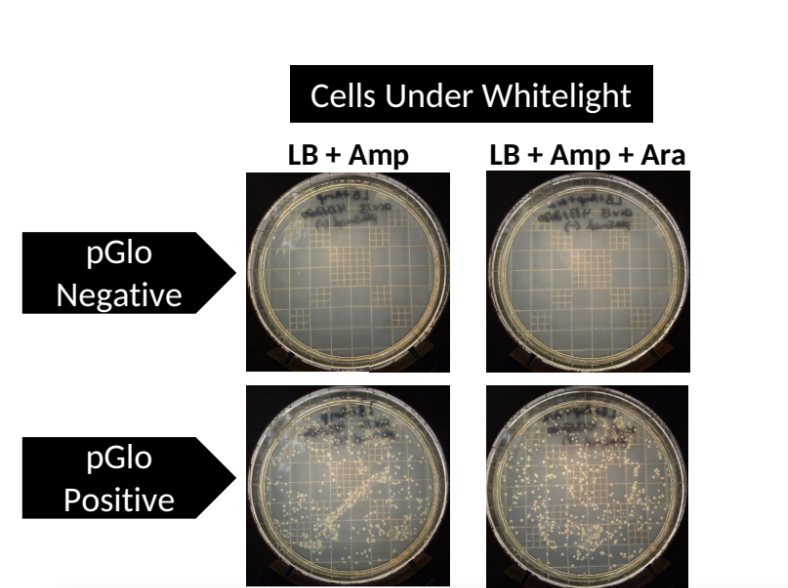
Contains ampicillin to inhibit growth of non-transformed cells.
Negative Control: Bacteria without pGlo or those that did not transfect will not grow due to lack of ampicillin resistance.
Positive Control: Bacteria transformed with pGlo are expected to grow, but without arabinose, they won't fluoresce.
LB Agar + Amp + ARA: Includes both ampicillin and arabinose; transformed bacteria grow and fluoresce under UV light.
Expected Results
Media Type: