BIOL 310 - Ch 13 Lecture Notes
transcription
making RNA from a DNA template
RNA
2’ hydroxyl group
single stranded
uracil instead of thymine
complementary to template DNA
homologous to coding DNA
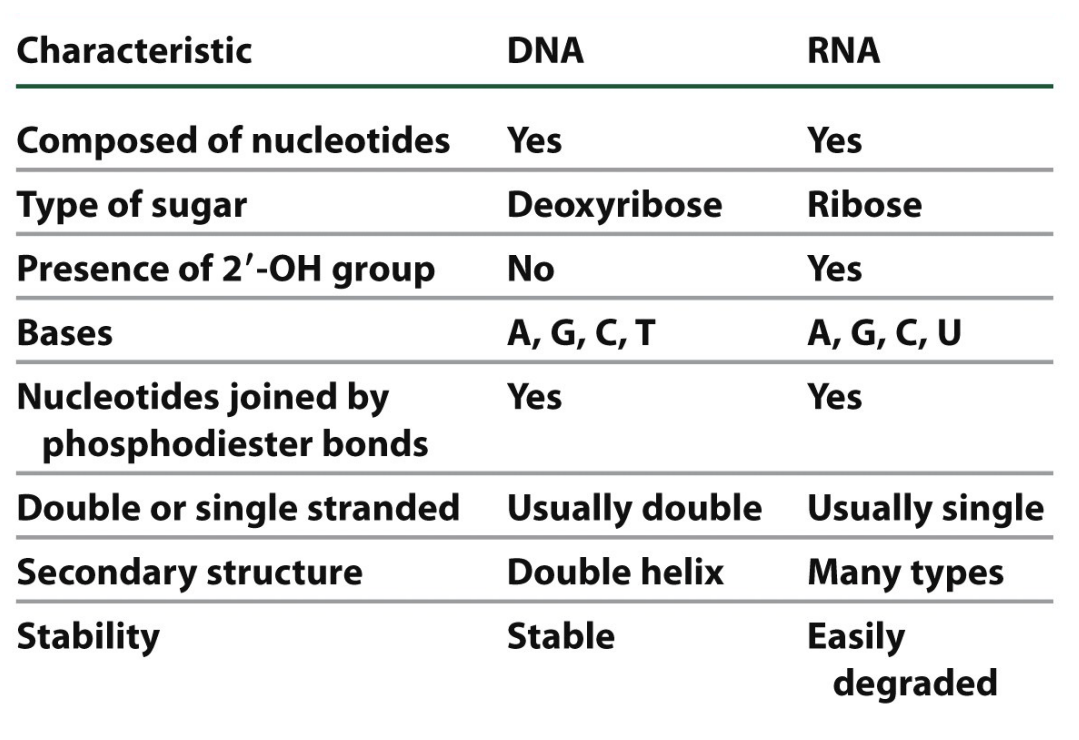
RNA structure
primary structure - linear & single stranded
secondary structure - can form stem-loop regions
types of RNA
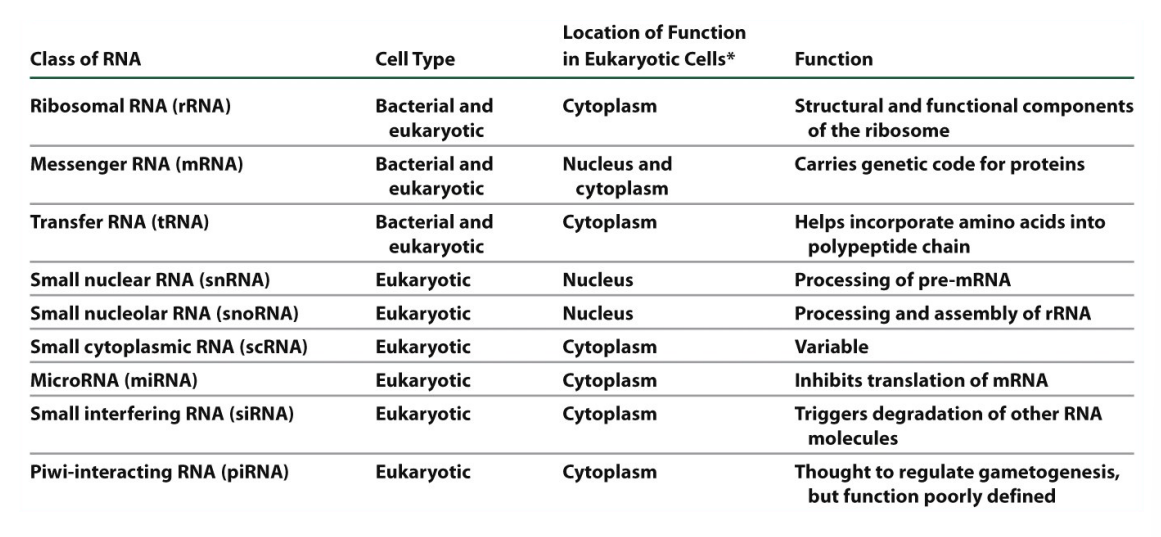
transcription
RNA is transcribed from (complementary to) the template strand
identical to the coding strand (with U not T)
transcription regulation
strands that runs 5’ → 3’ is non template strand (coding)
complementary strand is template strand (noncoding)
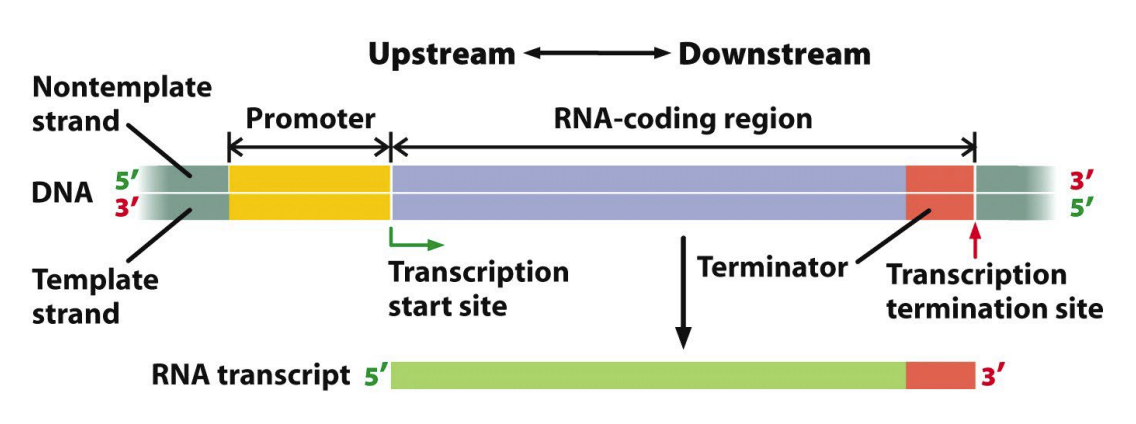
chemically attract RNA polymerase
consensus sequence at -35 and -10
severe mutations could mean that elimination of theses sequences would lead to elimination of that particular gene
G or C at +1 preferred
transcription bubble - there is no big replication fork
RNA will look like the coding except it uses uracil
transcription process
promoter- sequence that recruits polymerase
consensus seq
some species do have TATAAA (can differ among species)
there can be variety in sequences
core RNA promoter & sigma factor come together at the promoter
holoenzyme - group of enzymes working together to achieve a function; initiates transcription
adding the first base is a tenuous process since it is RNA being synthesized without a primer
the three hydrogen bonds of C & G
termination
Rho independent
inverted repeated sequence in coding strand are followed by an AT rich sequence
makes the polymerase slow down — when the uracil is being added the GC rich regions make the polymerase fall off during hairpin loop formation
Rho dependent
protein is made up of six copies of a subunit protein
protein made up of 6 copies of subunit that has a gate which rho attaches to
shuts the gate & twirls around
hairpin still forms
AT rich region present
rho catches up to polymerase & falls off by either pushing, pulling, or colliding
hairpin formations aren’t as strong compared to the independent termination
hypothesized that is it either pulled, pushes or collides to remove itself from the template
transcription in eukaryotes
has a more complex process
still has core RNA polymerase & sigma factor