Rhythm Control
Lecture Objectives
Describe the cardiac conduction system of the heart
Identify antiarrhythmic medications used to achieve and maintain normal sinus rhythm in atrial fibrillation
Provide treatment options for rhythm control given concomitant disease states and medications
Conduction System of Heart

Purkinje Fiber Action Potential

Rhythm Control
Not a goal for every patient
Indications:
Symptomatic from AF despite attempt at rate control
Adequate rate control cannot be achieved
HF with reduced ejection fraction
Young or newly diagnoses
Low chance of recurrence
First episode, precipitated by acute illness
Tachycardia-mediated cardiomyopathy
Patient preference
Antiarrhythmic Drugs
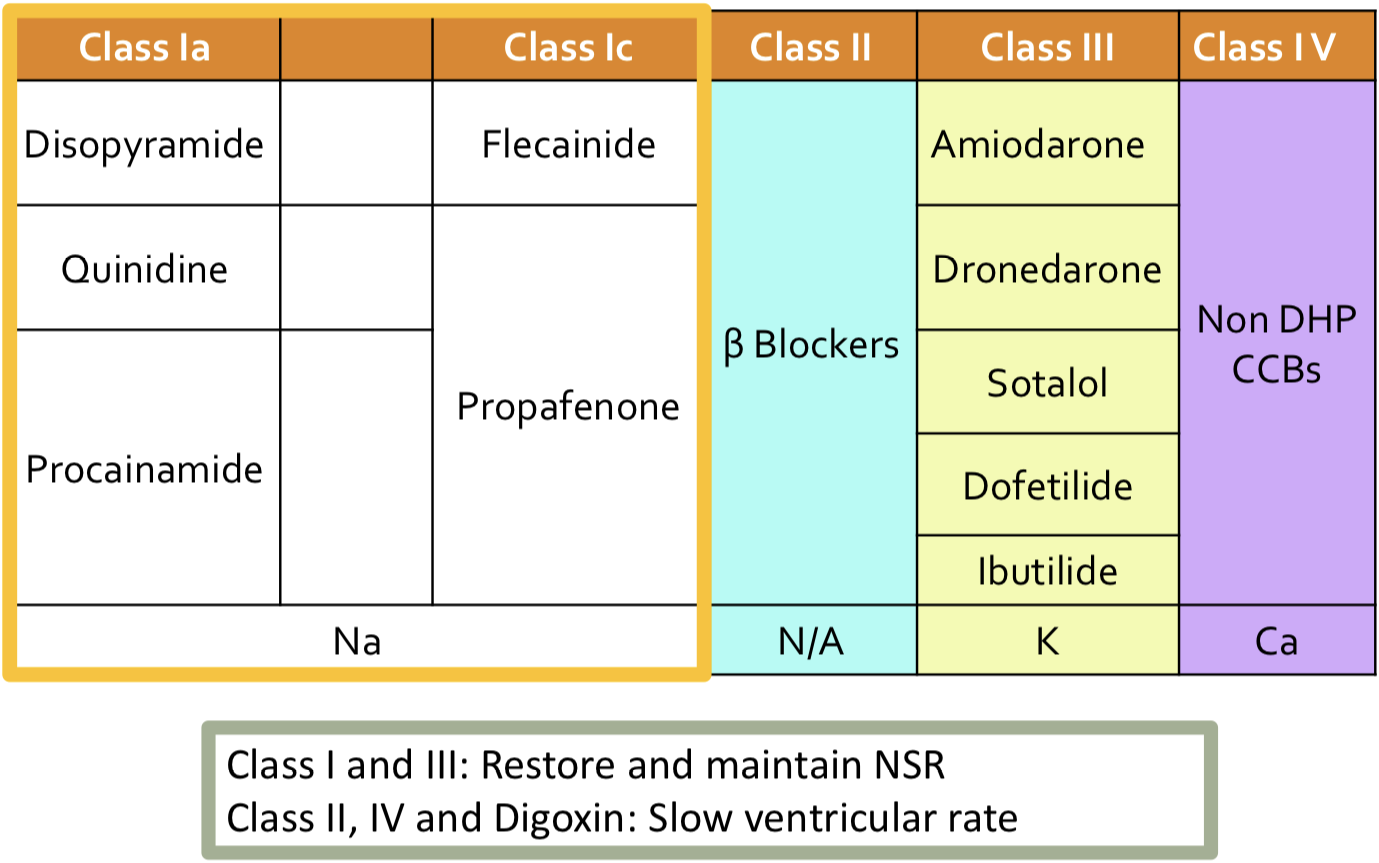
Class I Antiarrhythmic Agents
Sodium channel blockade → Impacts phase 0
Activity is heart rate dependent
More effective at terminating acute arrhythmia
Class IB not used for AF → Used for ventricular arrhythmia
All class I need concomitant use of AV nodal blocker (beta-blocker or calcium channel blocker)
Risk of converting to flutter
CAST Trial
Recent myocardial infarction patients with asymptomatic non-threatening ventricular arrhythmias did not benefit and may have been harmed by attempts to suppress arrhythmia with flecainide or encainide
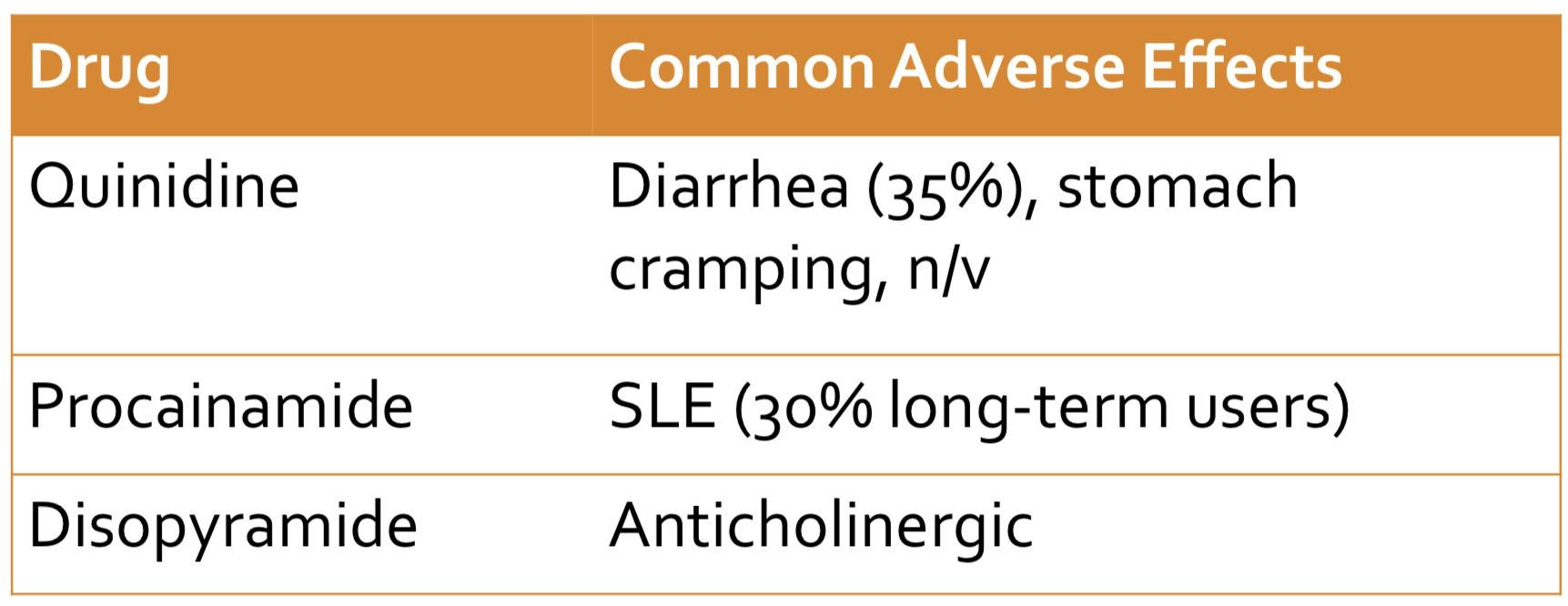
Class IA Antiarrhythmics
Significantly lower prescribing for AF
Quinidine, Procainamide, Disopyramide
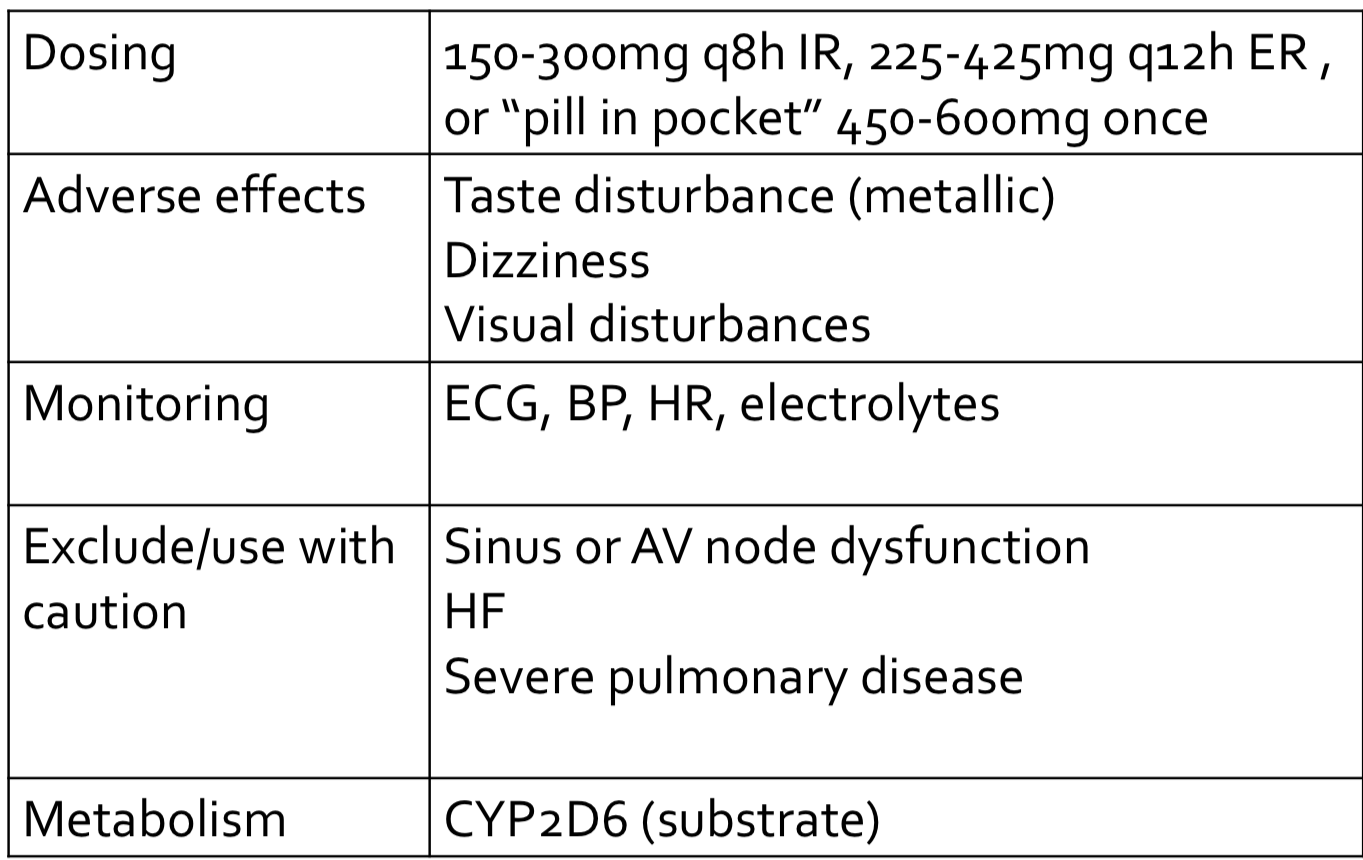
Class IC Antiarrhythmics
Flecainide
Propafenone

Class III Antiarrhythmics
Amiodarone

Exclude/use with in caution in…
Sinus or AV node dysfunction
Intranodal conduciton disease
Lung disease
Prolonged QT interval
Dose reduction by 50% if used with…
Digoxin
Warfarin
Adverse Effects
Toxic to every organ system except kidneys → NO renal dosing

Dronedarone
Displays amiodarone MOA
Lacks iodine → Less toxicity
Metabolism: CYP3A4, 2D6, Pgp
Sotalol
Doses > 160 mg
Monitor QT interval and renal function
Contraindicaiton
CrCl < 40 mL/min
QTc > 450 msec
K < 4 mEq/L
Sick sinus syndrome
Must be in hospital > 3 days on maintenance dose
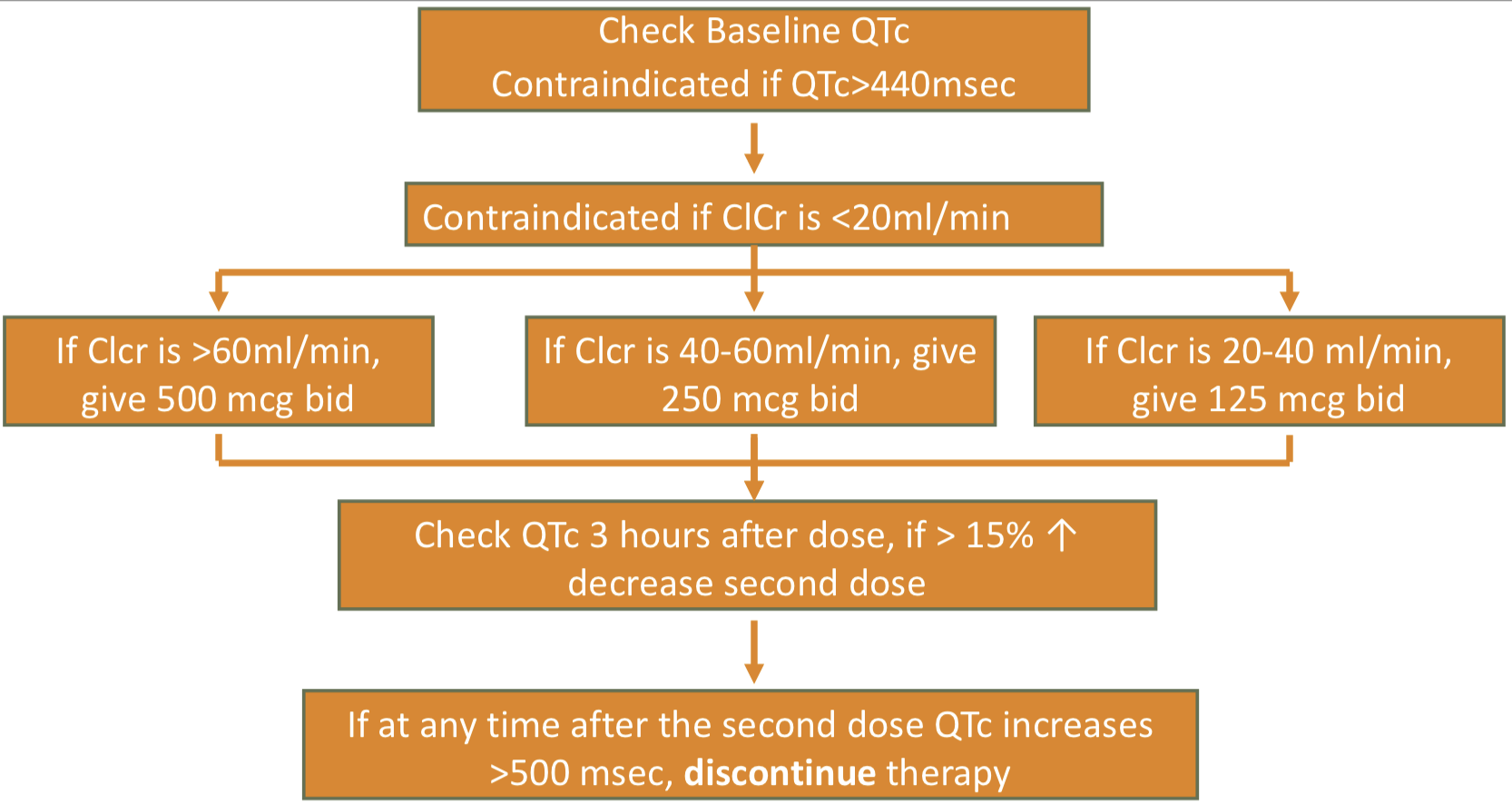
Dofetilide
Must be in hospital for minimum of 3 days with continuous ECG monitoring for initiation
Monitor
Initially: ECG, renal function, K+, Mg2+, HR, BP
3 months: QTc, CrCl
D/C if QTc > 500 msec
Contraindications
Use with HCTZ
CrCl < 20 mL/min
Baseline QTc > 440 msec
Dosing
Oral 125-500 mcg BID

Adverse Effects
QT prolongation
Torsades de Pointes
Flu-syndrome
QT Prolongation
All antiarrhythic medications can cause QT prolongation and/or trigger ventricular arrhythmias
Risk factors for torsades:
Hyperkalemia
Hypomagnesemia
Older age
Bradycardia
QT prolongation or use of QT prolonging drugs
Female sex
Heart failure
Left ventricular hypertrophy
Pharmacologic Cardioversion
< 7 days
Class III agents
Class IC agents
> 7 days
Dofetilide (Oral)
Amiodarone
Ibutilide (IV)
Choosing Rhythm Control Agents

Maintenance therapy
Any class IC or III
Safe to use with HF
Amiodarone, dofetilide
Safe to use in CAD
Amiodarone, dronedarone, sotalol, dofetilide
Direct Current Cardioverison (DCC)
Indications:
Hemodynamically unstable
Severely symptomatic
New onset in AF in patients with ACS with:
Hemodynamic instability
Ischemia
Poor rate control
Rapid ventricular response (RVR) that does not respond to pharmacological treatment, exacerbating:
Cardiac ischemia
Hypotension
CHF
Anticoagulation and Cardioversion

Catheter Ablation
Reserved for patients with recurrent symptomatic AF
Refractory or cannot tolerate Class I/III agents
Atrioventricular nodal ablation
Ablate AV node and chronically pace ventricles
Pacemaker inserted
Pulmonary vein ablation
Ablate origin of abnormal atrial foci
Often near pulmonary vein/atrial tissue intersection
Surgical Based Treatments
Open heart surgery/MAZE procedure
Create surgical incisions across atria that disrupts re-entrant circuits
Mini-MAZE/pulmonary vein isolation
Left atrial appendage removal or clipping
Watchman Procedure
Alternative to lifelong anticoagulant use
Permanent implant
Implanted into left atrial appendage
Continue anticoagulant for 45 days until closed off
ASA + clopidogrel for 6 months then ASA indefinitely
AF Treatment Summary
