Study Notes on Ethical and Legal Issues in Selling
Chapter 2: Ethical and Legal Issues in Selling
Factors Affecting Ethical Behavior of Salespeople
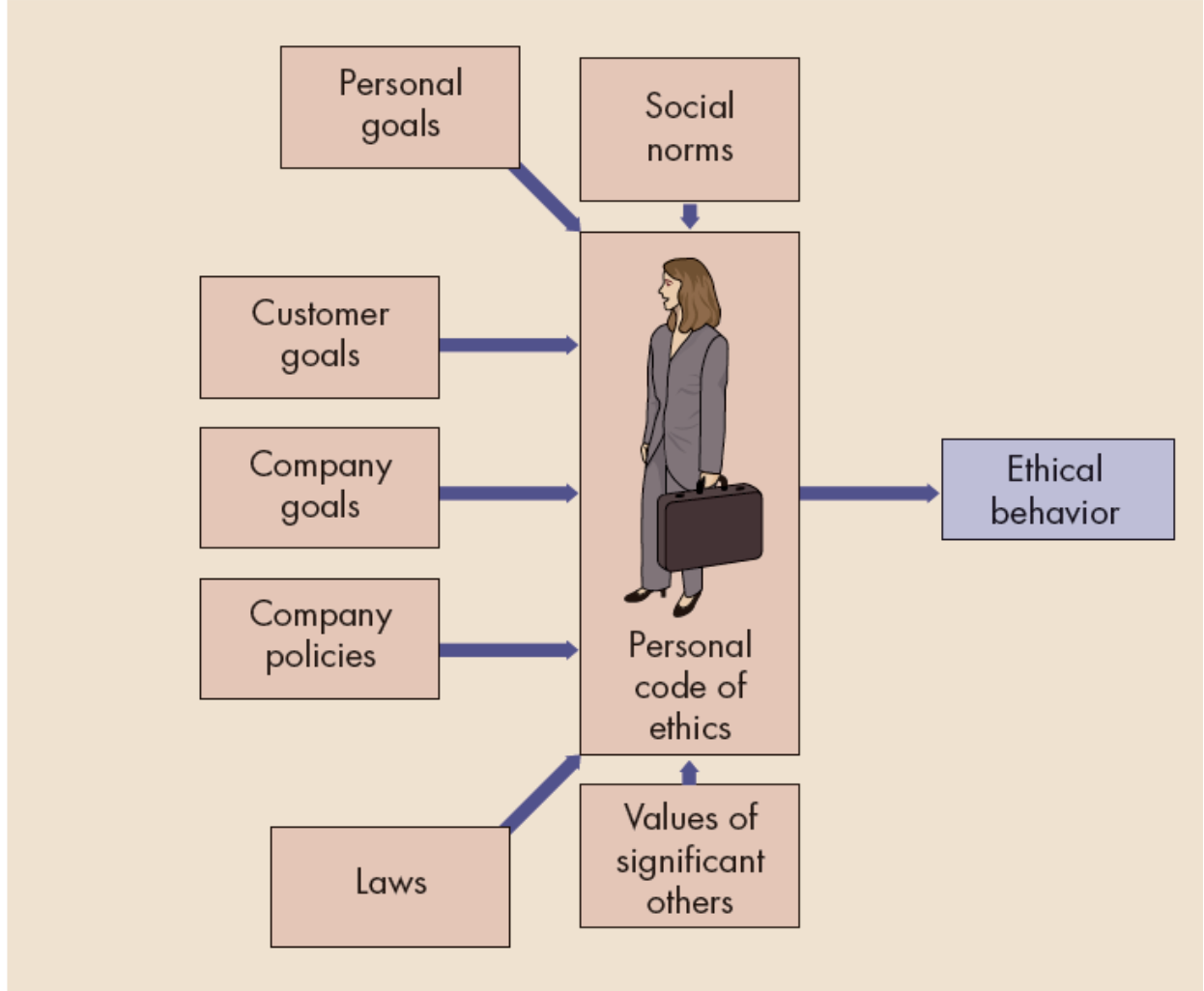
Personal Goals: Individual aspirations and objectives that a salesperson aims to achieve.
These goals can sometimes conflict with ethical standards or company policies.
Customer Goals: Objectives and expectations from the customer's perspective.
Salespeople must align their practices to meet ethical obligations toward these goals.
Company Goals: Organizational objectives that guide sales strategies and practices.
Understanding these goals is crucial for maintaining ethical standards in the sales process.
Company Policies: Established guidelines and procedures that dictate acceptable behavior within the organization.
Policies can directly influence the ethical decisions made by salespeople.
Social Norms: Accepted behaviors within society that can impact ethical decisions.
Salespeople may feel pressured to conform to these norms, which can lead to ethical dilemmas.
Personal Code of Ethics: An individual’s own belief system regarding right and wrong.
This personal framework plays a critical role in decision-making processes.
Laws: Legal regulations that dictate what is permissible in business practices.
Salespeople must be aware of and comply with relevant legal standards.
Values of Significant Others: The influence of family, friends, or mentors on an individual's ethical viewpoint.
These values can affect decision-making and ethical considerations in sales.
Common Areas of Ethical Concern
Using Deception: Misleading customers or providing false information.
This behavior undermines trust and can lead to long-term damage to relationships.
Offering Bribes, Gifts, and Entertainment: Providing incentives that may improperly influence a customer's decision.
Ethical challenges arise in determining appropriate boundaries.
Providing Special Treatment: Favoring certain clients over others which may breach ethical standards.
This can create perceptions of unfairness and inequality.
Divulging Confidential Information: Sharing sensitive customer-related information without consent.
This practice raises significant ethical and legal implications concerning privacy.
Engaging in Backdoor Selling: Bypassing established sales processes or contacts to gain advantage.
This leads to unethical behavior as it undermines relationship structures and agreements.
Relationships with the Salesperson’s Company
Problem Areas:
Ethically Handling Expense Accounts: Maintaining transparency and honesty in reporting and using company resources.
Important to cover legitimate expenses, such as for travel, accommodation, and food.
Expense Accounts: Salespeople must ensure that all claimed expenses are valid and justifiable to avoid ethical breaches.
Reporting Work Time Information and Activities: Accurate reporting practices regarding time management and activities.
Companies utilize Customer Relationship Management (CRM) software, such as Salesforce.com, to monitor and manage sales activities, reinforcing accountability and ethical behavior.