primate evolution
Primate Evolution and Diversity
fossils can show selection, old primates and how new primates came around.
divergencies, selective pressures, why?
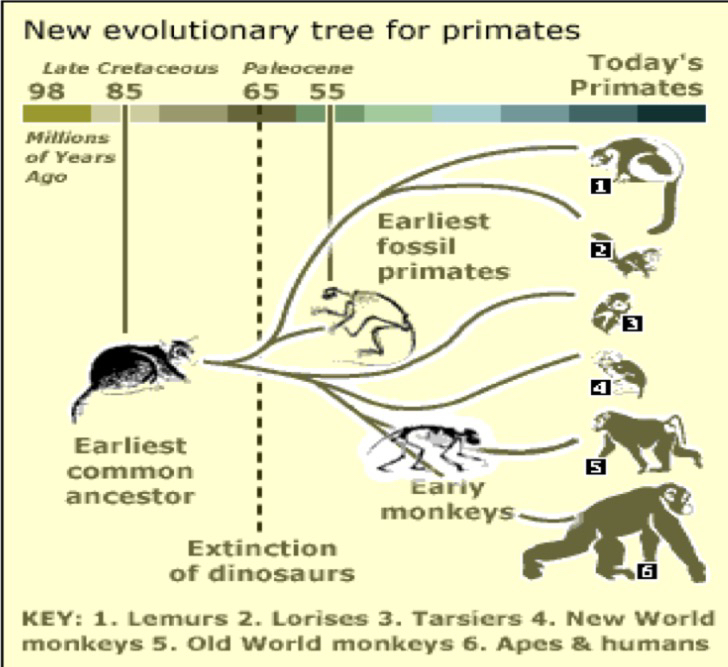
225- 65 million years ago dominated by dinosaurs
-critical ecological changes occouring
- oppotunities for small insects, and mammals which apes cane from
-fire, tidalwaves, then abrupt cooling which caused extinction, terrestrial life mostly killed off
-herbiverous dinos
Part of a larger adaptive radiation of mammals following the extinction of the dinosaurs
insect eating mammals favoured over big dino
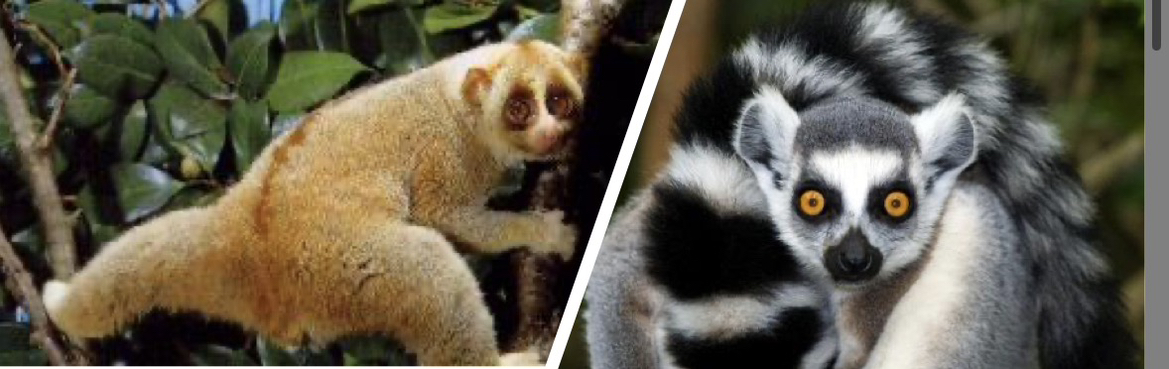
Primates
-gregarious?
-more species in the past
-live primarily tropical
-ca be fruit and leaf eaters
-30 degree north and 30 degreeth south of equator usually
-most northerly, japanese mcaque
-primates used to be in america and europe
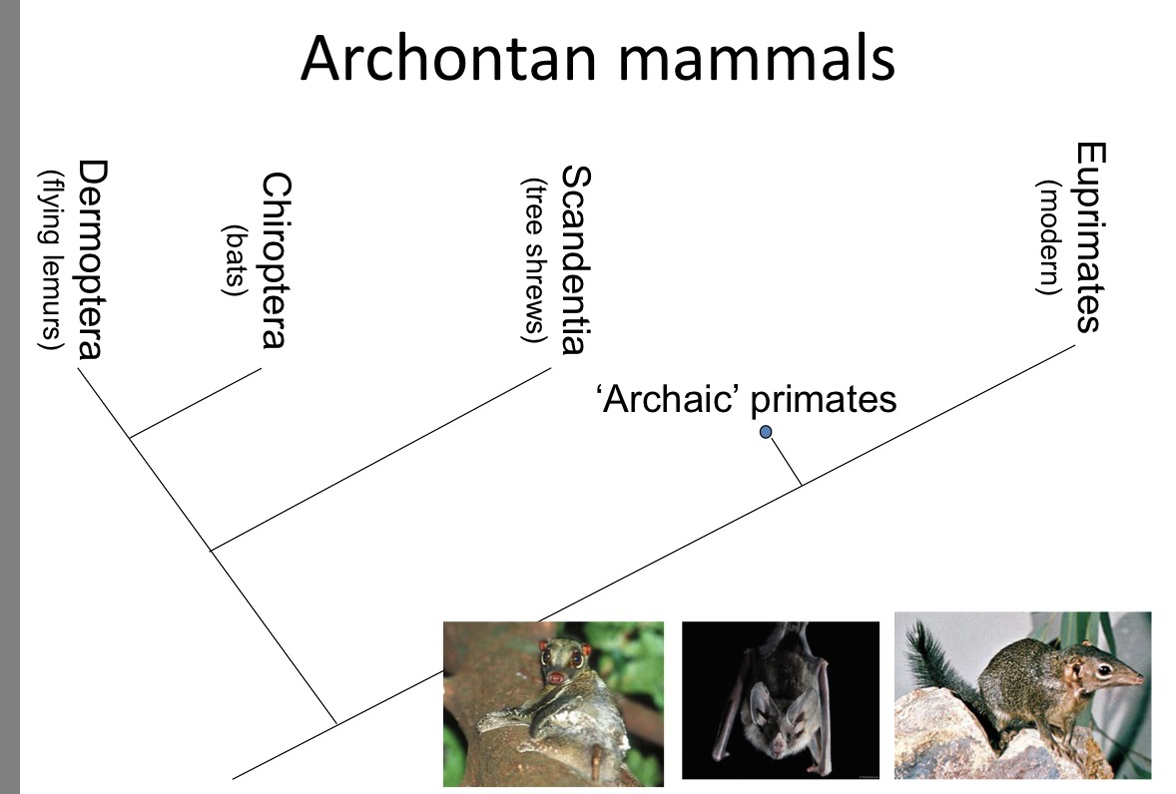
may have come from one of these small mammals, not sure? provably more likeky side branches
Primate features
• Pentydactyl (5 digits) fingers
Opposable thumb and fingers. Papillary ridges and increased tactile sensation(finger sensation)
• CNS(central nervous system)
With brain enlargement; decreased reliance
on olfaction, and increased hearing, vision,
touch. Forward facing eyes, stereoscopic
vision and reduction of the snout
• Reproduction
-Epithelio-chorial placenta in strepsirrhines
-Haemochorial placenta (menstrual cycle) in haplorhines
• Skeleton
Large, globular braincase
• Dentition
Dental formula reduced from I3 C1 P4 M3
—
prognathic face: snout sticking out, aka horse
How to recognise a primate
Martin (1990)
Big toe (hallux) well developed and divergent
Distal segment of the calcaneum is elongated – reflecting hind-limb domination.
Eye sockets (orbits) large and convergent, small inter-orbital distance. Post-orbital bar
Relatively prominent auditory bulla, formed by extension of the tympanic bone
Brain case is relatively large Max.
dental formula is I2 C1 P3 M3 with short premaxilla and snout, upp incisors arranged more transversely than longitudinally. Molar teeth low rounded cusps and lower molars have raised, enlarged talonids (tooth heel or posterior cusp)
— Living Primates
-Expected to be tropical, typically arboreal animals
-Male primates permanently precocial descent of the testes
-Gestation long relative to body size; production of small litters and precocial infants. Sexual maturity is late and life span is long relative to size
Altricial: born or hatched in a helpless state, eg bird
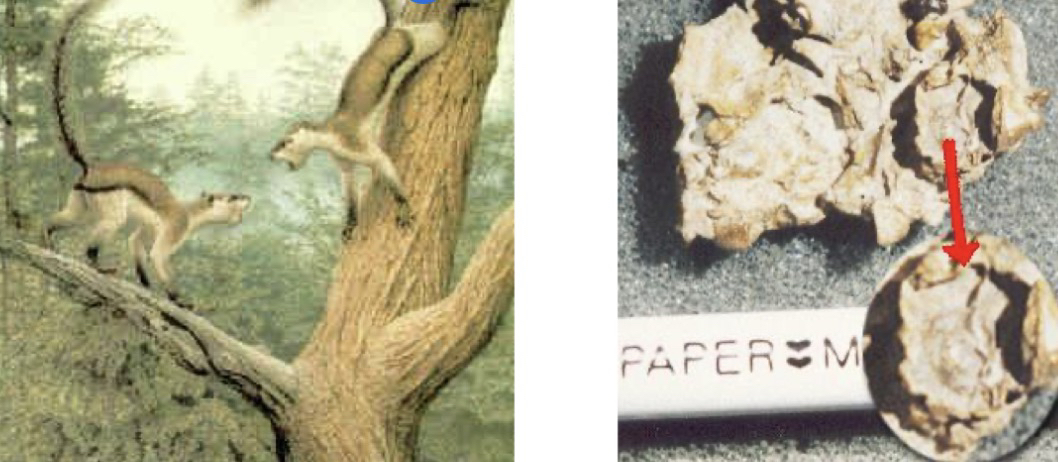
Plesiadapiforms
• Paleocene – 65-54 MYA
• North America, also found europe and china
• Over 25 species
may be related to flying lemurs, shrew or bat?
purgatorios- a species of one of these
Plesiadapis
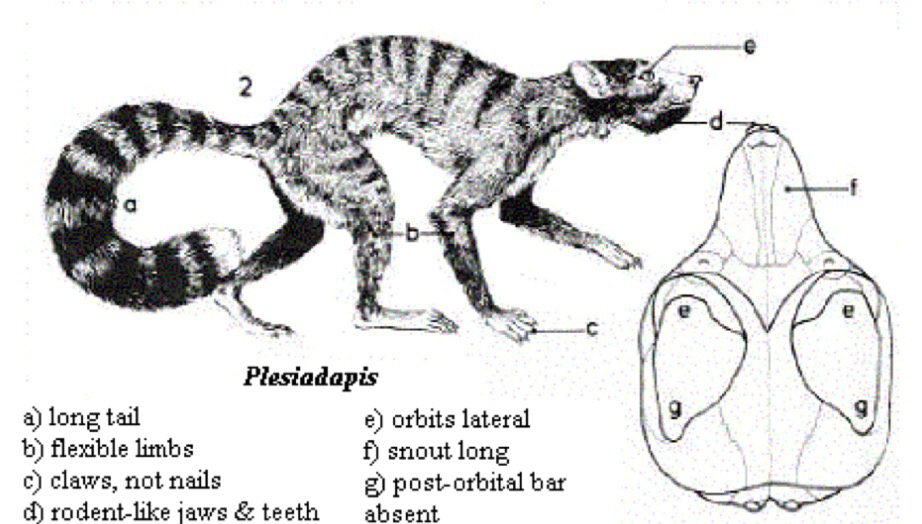
may be very early primates
would have fed on sap, fruit, insects
eyes on side
no post orbital bar
no opposabke big toe
claws not nails
teeth are less specialised
dental orbitor reduced
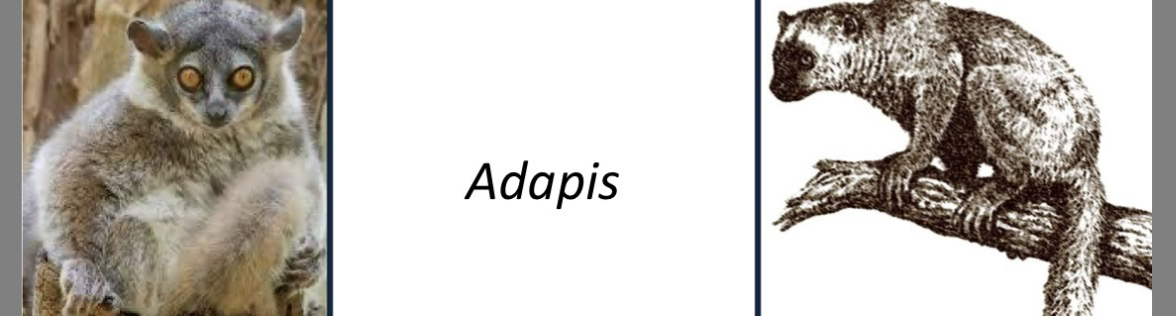
Adapids
• Eocene – 53-37 Ma
• Europe, Asia & N. America, Africa and the Middle East
• Over 20 species (110 g – 6.9 kg)
-warming climate at this time
-replacement period for species on earth
-molars are adapted for leaf eating
Omomyids
• Eocene – 53-37 Ma
• N. America & Europe
• Over 15 species
• (30 g – 2.2 kg) small
• Basal anthropoid?
-diet focus on insects, may have caused the split
-diverse groups
-tarsia-like primates
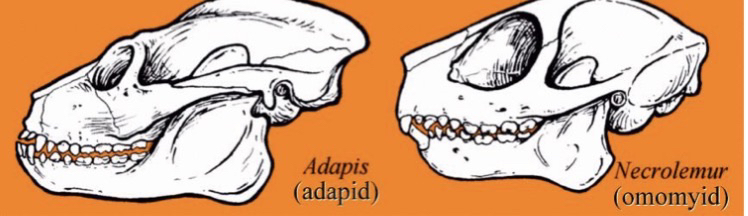
Adapids v Omomyids
• Adapids’ ear bones not extended into a tube
• Adapids usually rather larger
• Adapids relied on smell (longer snouts)
• Adapids primarily leaf-eaters
• Both specialised for leaping and jumping
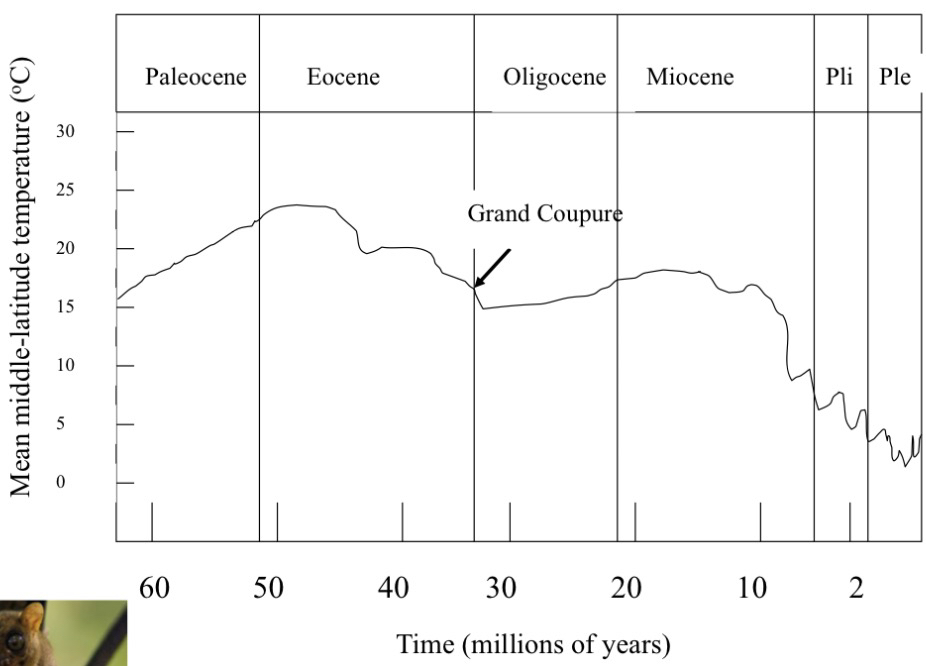
temperature ^
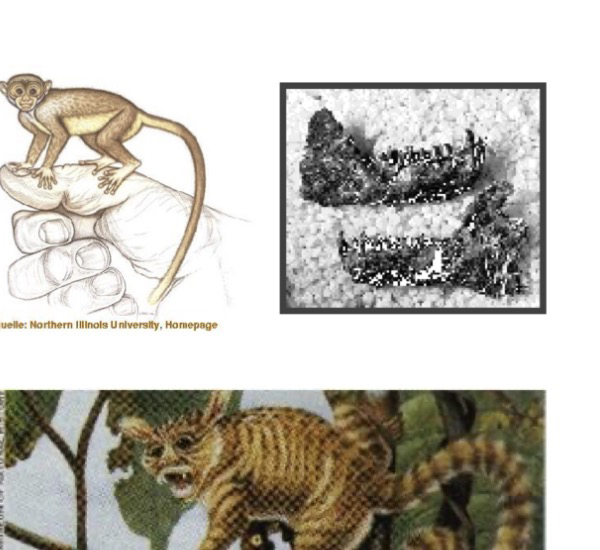
Eosimias ^^
fused mandible
greater mastication
chew harder food, diet
anthropoids : monkeys and apes
eosimas may be at the base before they became new world monkey
Apidium
The end of the Eocene
• True haplorhines
• Divergence of OWM & NWM
• colonization of Neotropics
an opidiom-like monkey gave rise to monkeys in the new world
-have three pre molars (predates split between new and old monkeys)
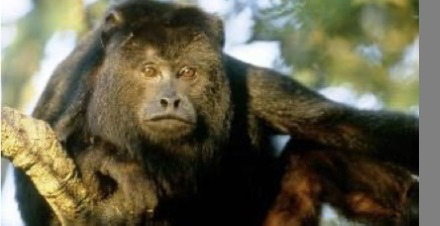
Aegyptopithecus
the root of the monkey/ape split
• Hominoid dental pattern
• Arboreal quadruped
• Size of small monkey
• Sinuses are primitive and allied with OWM
• Fruit eating
• Incisiform dentition
• DNA data: Apes and Old World monkeys diverge 25 - 30 mya
• sexually dymorphic
may have looked like howler monkey
KEY dates and events
63 MYA Purgatorius
58 MYA strepsirrhine/haplorhine split
54 MYA Eocene warmed up
54–34 MYA Europe and N. America joint
45 MYA lemurs and lorises diverged
45 MYA Eosimius (basal ‘higher’ primate?)
40 MYA NWM and catarrhines diverged
36 MYA Eocene/Oligocene boundary - Grande Coupure
34 MYA Ucayalipithecus perdita (2020)
25 MYA OWM and apes LCA
19 MYA Victoriapithecus (stem of Colobinae/Cercopithecinae?)
Two Suborders
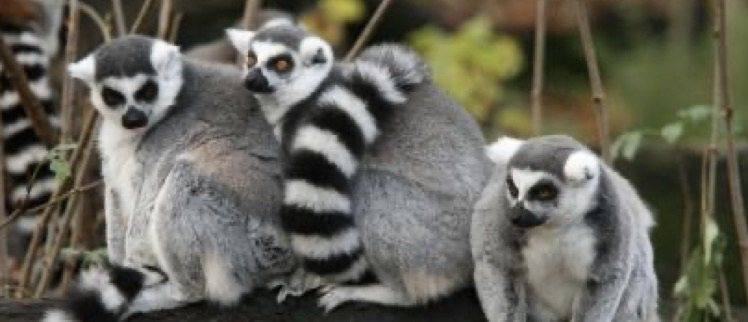
• Strepsirrhines
– Infraorder:
Lemuriformes
• Lemurs
• Lorises
—-——
• Haplorhines
– Infraorder: Tarsii
• Tarsiers
– Infraorder: Platyrrhini
• New World monkeys
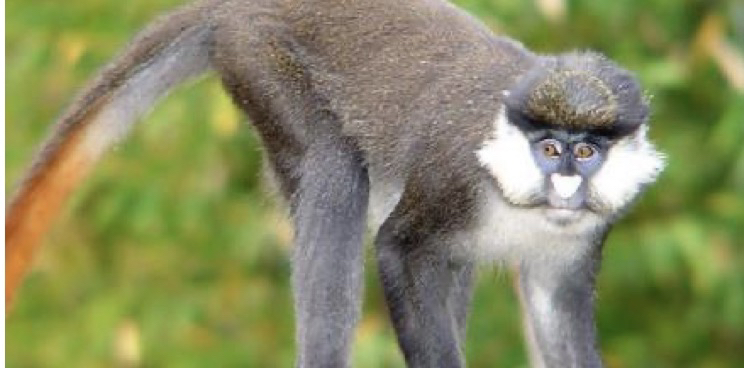
– Infraorder: Catarrhini
• Old World monkeys & apes
– Including humans
The second primate radiation
madagascar
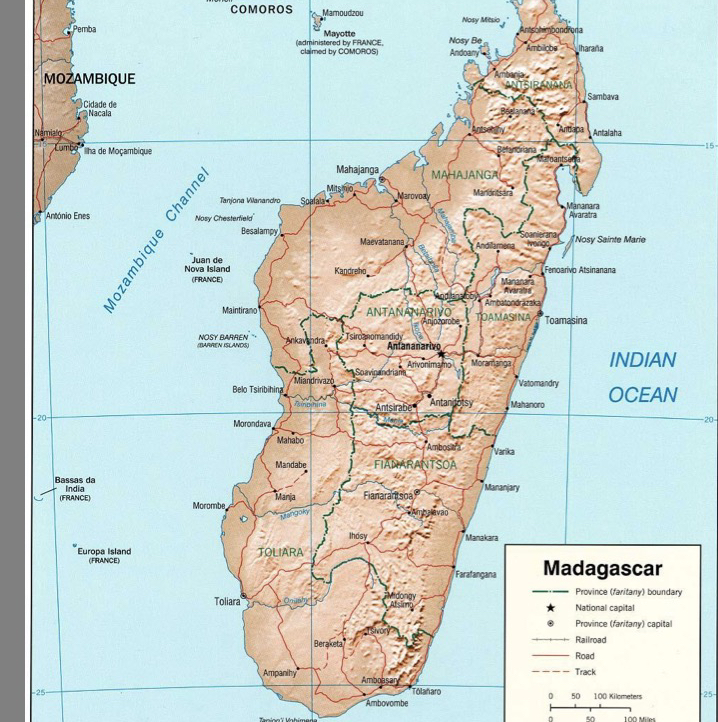
• 55 MYA divergence has occurred
• Adaptive radiation to fill all primate niches observed today
• Remaining populations are remnant
Malagasy lemurs
extinct in past 2000 years
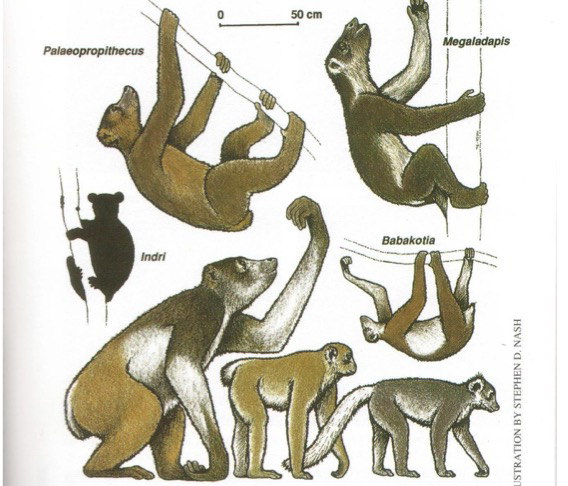
~32 extant species
16 extinct species
Relatively fast life histories
Primitive characteristics
Outcompeted by haplorhines
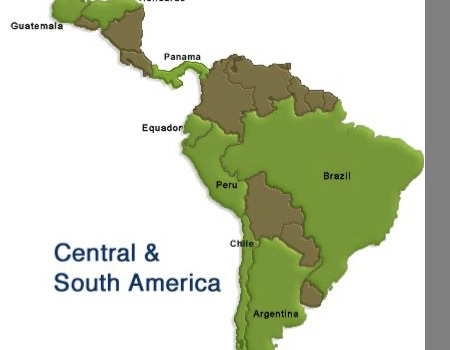
Middle Oligocene
Primates colonize Central &
South America
• How?
• Where?
• From where?
—
Two Suborders
• Strepsirhines
– Infraorder:Lemuriformes
• Lemurs
• Lorises
• Haplorhines
– Infraorder: Tarsii
• Tarsiers
– Infraorder: Platyrrhini
• New World monkeys
– Infraorder: Catarrhini
• Old World monkeys & apes
– Including humans
Evidence in support of rafting to america
• Observed in modern populations
• Indonesia, Galapagos
• Earliest fossils of NWM found in Bolivia, now Peru
• Branisella 21 + MYA
• Ucayalipithecus perdita 34 MYA
• Basal catarrhine found in Africa with NWM dental pattern
• Genetic evidence supports this hypothesis
Platyrrhines (outward facing nostrils) flat nose
• Diverged from other primates approx. 35 MYA
• Endemic to South and Central America
• All arboreal
• Variable life histories
• Callitrichids have multiple offspring
• Cebus and Ateles have slow life histories
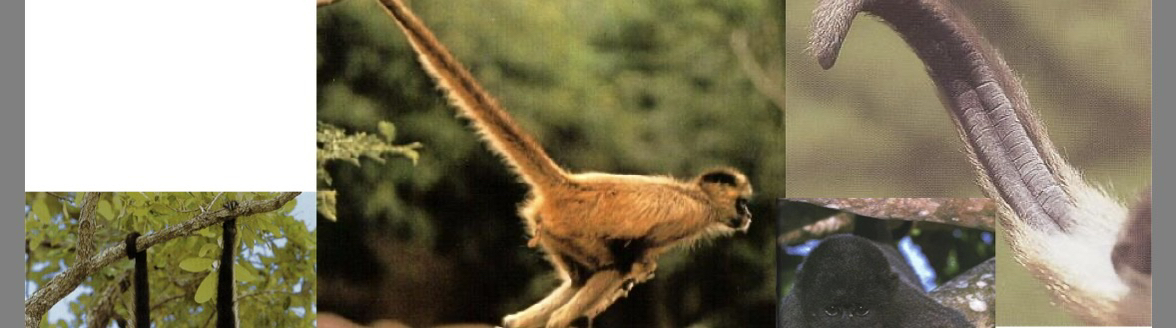
• prehensile tail (like a fith limb)
• naked pad with dermatoglyphics (‘skin writing’), or “tail print”
• used as a fifth limb
• practice suspensory locomotion
• only four genera have it; so it DOES NOT characterise all platyrrhines
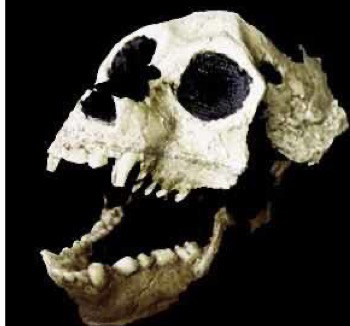
The catarrhine ancestor (downward-facing nostrils)
Features of both monkeys and apes present
– e.g. bony ear tube; 2 rather than 3 premolars
• But lacked unique characters of each group
– e.g. bilophodont molars
(OWMs); suspensory shoulders (apes)
boney ear tube
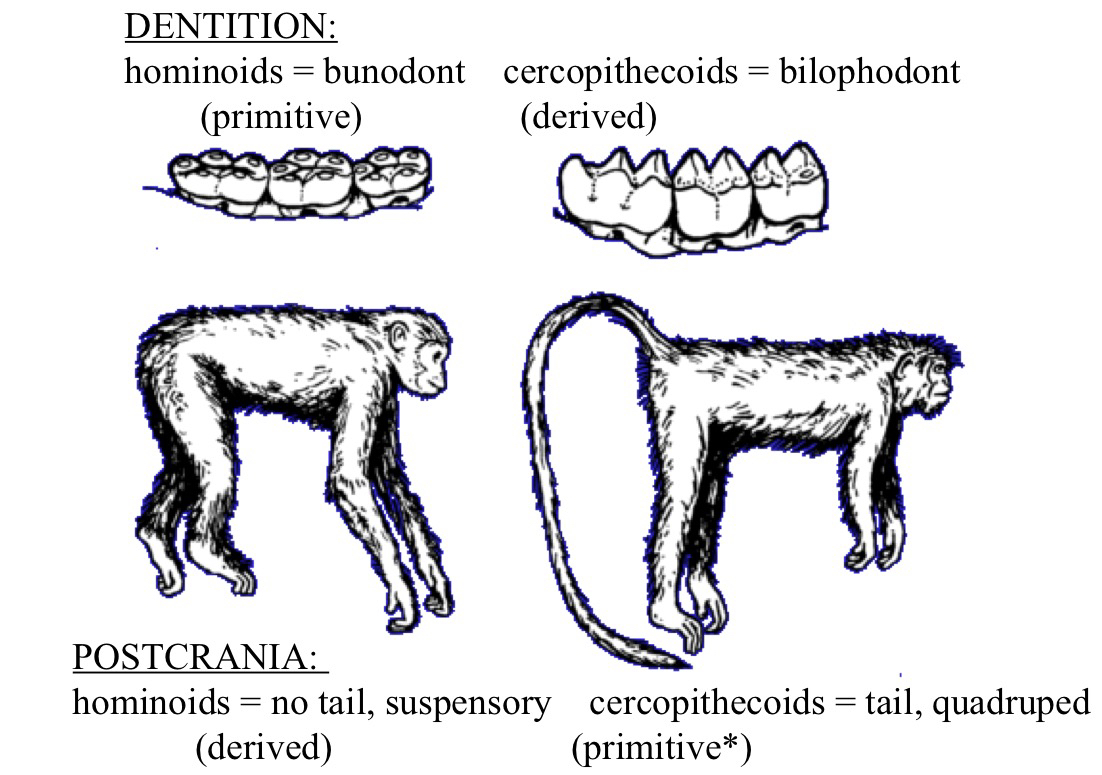
anatomically they origionally looked similiar, could only tell from tweth
ape on left y-5 molars
monkey in right
(dozens of) Early apes
• Ape-like teeth, monkey-like post-crania
• Early Miocene 23–16 MYA in Africa
• Forested, moist continent
• Apes lacked suspensory shoulders (plantigrade)
• 17 MYA land connection Africa – Eurasia
• 11–5 MYA apes in Europe and Asia (e.g. Silvapithecus and Gigantopithecus (300 kg ape!))
• Gorilla, chimpanzee, human ancestor???? Kenyapithecus? Samburupithecus?
Ape decline
• Mid-Miocene
• Changes in climate; forests shrink
• Monkeys become abundant, apes decline
• Survivors:
Asia – orangutans, gibbons
Africa – chimpanzees, gorillas, humans