1.7 Cellular level of organisation
Cells and Tissues
The Cell
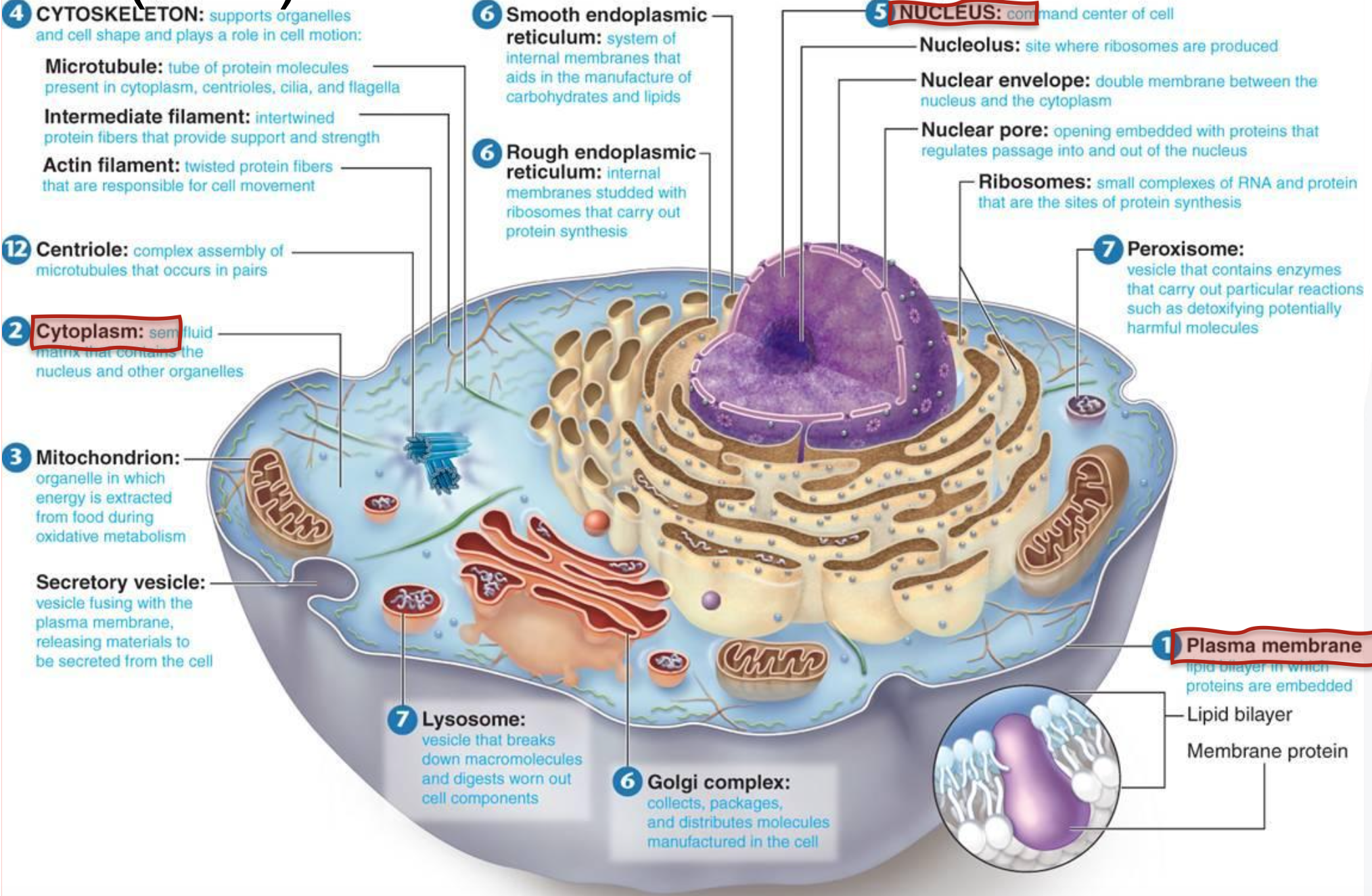
Cytoskeleton
Support Function: Provides structural support and helps maintain cell shape.
Cell Motion: Plays a vital role in cell movement.
Components of the Cytoskeleton
Microtubules: Tubular structures of protein; found in cytoplasm, centrioles, cilia, and flagella.
Intermediate Filaments: Intertwined protein fibers; provide support and strength.
Actin Filaments: Twisted protein fibers; responsible for cell movement.
Organelles
Nucleus
Command Center: Houses genetic material and regulates gene expression.
Nucleolus: Site for ribosome production.
Nuclear Envelope: Double membrane with nuclear pores for regulating substance passage.
Ribosomes: Sites for protein synthesis, can be free or attached to the rough endoplasmic reticulum.
Mitochondria: Organelles for energy extraction through oxidative metabolism.
Lysosomes: Contain enzymes for breaking down macromolecules; function optimally in acidic conditions.
Golgi Complex: Packages and distributes molecules synthesized in the cell.
Peroxisomes: Contain enzymes for detoxification of harmful substances.
Nucleus
Structure
Nuclear Envelope:
Double membrane with openings called nuclear pores
connects with rough ER.
most cells have on necleus
few cells types have multiple nuclei
E.G. skeletal muscle cells
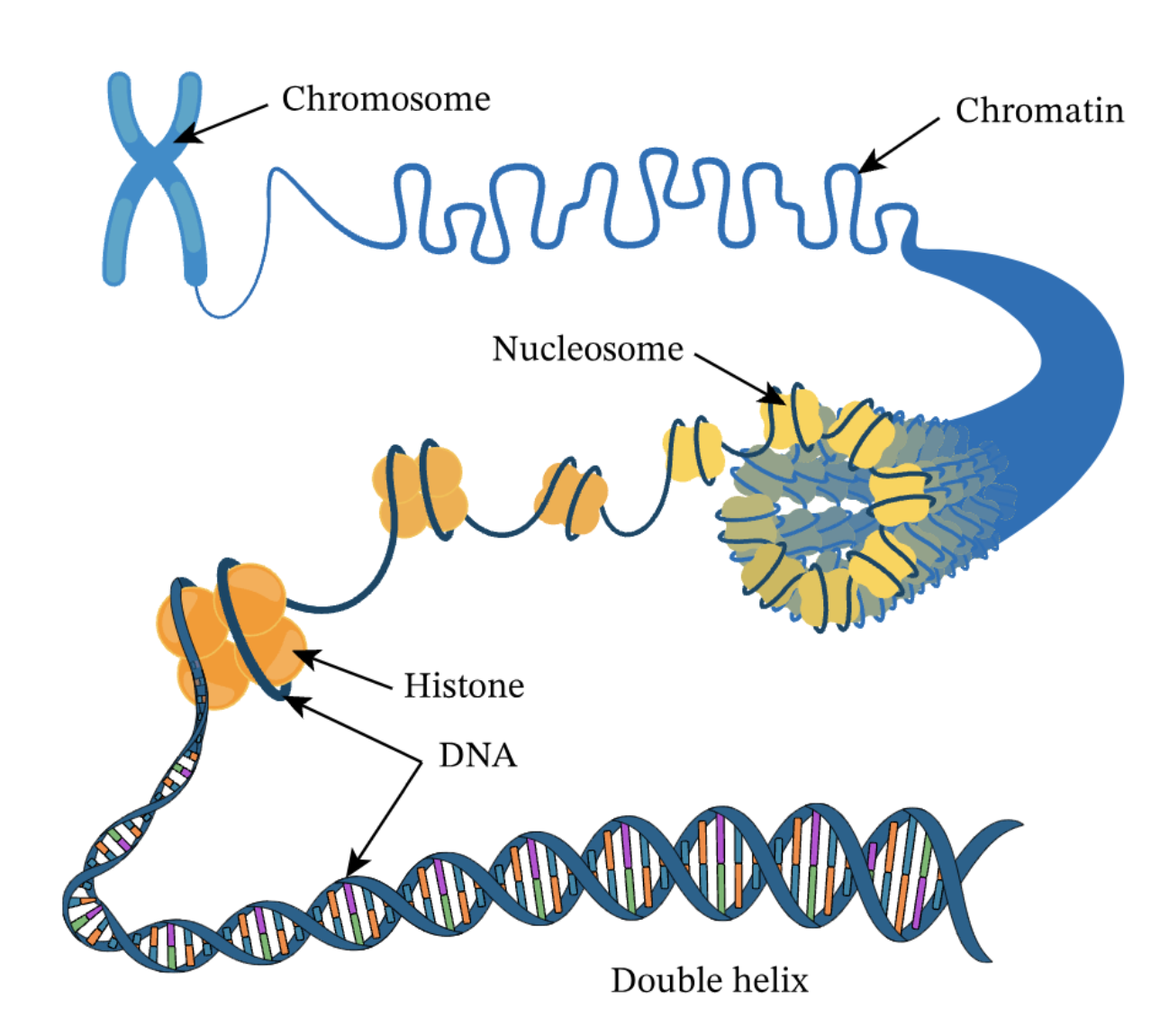
Chromatin: Complex of DNA and proteins; condenses into chromosomes during cell division.
A complex of DNA and proteins found in the nucleus of eukaryotic cells. It condenses into chromosomes during cell division and plays a key role in regulating gene expression by activating or suppressing genes.
Nucleolus
essential to make ribosomes
site of rRNA synthesis and initial ribosome assemble
Amembraneous
structures that play a critical role in cellular function, the nucleolus is not only involved in ribosome production but also in regulating cellular stress responses.
Function
Regulates gene expression by activating or suppressing genes.
Synthesises ribosomal subunits and exports them to the cytoplasm.
Houses the DNA
about 20 000 genes are present in the human genome, each playing a crucial role in the development and functioning of the organism.
Relationship to Disease
Mutations can affect gene regulation leading to diseases.
Cytosool
Intracellular liquid
surrounds organelles
55% of total cell volume
Ribosomes
formed in the nuclus
contains high RNA
consist of 2 subunits
produces protein
attached to endoplasmic reticulum
Rough ER
Synthesis of proteins that are either secreted from the cell, incorporated into the cell's plasma membrane, or sent to an organelle.
Studded with ribosomes on its cytoplasmic surface, which are responsible for translating mRNA into protein, making it rough in appearance.
Free ribsomes
make proteins that t=are required inside the cell
Endoplasmic reticulum
Smooth Endoplasmic Reticulum:
Lacks ribosomes and is involved in lipid synthesis and detoxification processes.
Rough Endoplasmic Reticulum:
continuous with nuclear envelope
studded with ribosomes
structural modifications of proteins
Golgi Complex
Function:
Modifies, sorts, and packages proteins. Like a post office , the Golgi Complex ensures that proteins are delivered to their correct destinations, whether they are secreted outside the cell, sent to the cell membrane, or directed to lysosomes.
Structure: Composed of cisternae (flattened membrane sacs); two sides (cis and trans) for entry and exit.
Golgi Dysfunction: Linked to various diseases including pulmonary hypertension, neurodegenerative diseases, and hormone related conditions.
Lysosomal Diseases
Gaucher Disease: Blood and bone-related symptoms.
Fabry Disease: Eye movement and skin issues.
Pompe Disease: Muscle weakness and loss of motor skills.
Tay-Sachs Disease: Devastating neurological disease evident in infants.
Vesicle/Vacuoles
Vesicles:
Small membrane-bound sacs within the cell, involved in transport and storage of substances.
Function:
They can transport materials to various parts of the cell or even out of the cell, engulf other materials for digestion, or store substances for later use (like hormones or enzymes).
Vacuoles:
Larger membrane-bound sacs, often found in plant cells, that store various substances and help maintain turgor pressure for structural support.
Function:
They play roles in storage, waste disposal, and maintaining the integrity of the cell structure by keeping it turgid (swollen) with fluid, which is essential for plant cell rigidity and overall health.: Larger membrane-bound sacs, often found in plant cells, that store various substances and help maintain turgor pressure for structural support.
Mitochondria
ATP Production: Main energy source for the cell; 100s to 1000s per cell.
Self Replication: Contains its own DNA.
Site of Cellular Respiration: Energetic processes occur within its inner membrane (cristae).
Cytoskeleton
Structure: Provides strength, shape, support, and flexibility.
Filament Types: Microtubules, intermediate filaments, and actin filaments.
Centrosome: Key for cell division and implicated in cancer and other diseases.
Cell Projections
Microvilli: Increase cell surface area.
Cilia: Hair-like structures to move fluid.
Flagella: Longer than cilia, used for cell movement.
Plasma Membrane
Function
Protection: Maintains structural integrity of cells and regulates substance entry and exit.
Communication: Participates in cellular signaling and maintains the chemical composition of cytoplasm and extracellular fluid.
Phospholipid Bilayer
Composed of hydrophilic heads and hydrophobic tails; crucial for membrane fluidity and integrity.
RNA Transcription
Initiation: RNA polymerase begins transcription.
Elongation: Synthesizes RNA from DNA template.
Termination: Concludes transcription at terminator sequence.
Conclusions
Understanding cell and tissue structures is essential for relating cell biology to health and disease.