Working with Nature: Ecological Systems, Ecosystem 'Services', NbS
Living Systems
Challenges of anthropocene
climate change
biodiversity loss
urbanisation
water and air quality
human wellbeing
Usual idea of human over nature where we take, make, use, discard without thinking of consequences
materials and environment are finite
Regenerative understanding think about restoration, re-use → take, make, change
design with ecological process rather thank lock them in place eg stream into a pipe
Recirpocity → mutual exchange in relationship
Ecological concepts
Ecosystems (smallest to largest)
organism
population→ same species in same area at the same time
species
community → population of different species living and interacting i nsame area
ecosystem → Interaction between community (living/biotic) and the non-living/abiotic parts of the environment
biome
biosphere
Biodiversity
Ecological Relationships
Ecological Resilience
Landscape connectivity
Eco System
Produces (plants/produce food), Consumers (biotic elements that consume materials), Decomposers (break down material)
shows exchange o fnutrients and organic molecules
Climatic conditions interact (rain, erosion)
Bio Diversity
Diversity of genetic material within a species
Diversity of multiple species with strong populations
Ecosystem diversity
Ecological Relationships
between biotic components
Competition - when 2 or more organisms compete for limited resources
Symbiosis - a close ecological relationship between 2 or more dissimilar organisms
Predation - when 1 organism eats another for energy
Parasitism - when 1 organism benefits and harms the host organism
Mutualism - when both species in the interaction benefit from it
Commensalism - when 1 species benefits while the other (host) is unaffected or unharmed
Keystone species
have huge impat on eco-system, balance and structure of eco-system
shape and influence of biodiversity
Keystone species have a disproportionately large impact
on its ecosystem relative to its abundance, playing a critical
role in maintaining the structure and balance, regulating
food chains, shaping habitats and supporting biodiversity,
to ensure the long-term health and resilience of the
environment
Succession
Pioneer Stages
Lichens are algae and fungus that live together and break down the rock
Intermediate stages
seeds
fruits
Climax Communtiy
long stand forests (kauri)
Primary and Secondary succession where primary starts an ecosystem while secondary continues/sustains it
Ecological Resilience
Ecological resilience is an ecosystem's capacity to absorb disturbances, adapt, and reorganize while maintaining its core functions and structure.
Tipping Points
Certain point where something will be underwater so its a transition point and so can’t go back to what it was (eg ocean to desert)
force applied, tipping point reached, transition happens with unkown consequences on environment
Disturbance
Natural, seasonal, human
some species need fire to heal and germinate
sometmes species require distrubances are needed to reset
adaptation to these disturbances
Adaptation and Recovery
understanding how you act can shift timelines, speed up slow down, set up ecosystems to support that process
Landscape connecivity
we build cities great for people but not as much to create ecological corridoors to maintain biodiversity and ecological resilience and so ecosystems cna adapt and thrive after development
patch dynamics → patches of ecologically diverse ecosystems depending on the type of ecosystem, corridoors that link multiple patches to create “stepping stones“ so species can move between them and maintain population diversity
patch needs a buffer zone outside the patch to protect it
Ecosystem Services
Ecosystem services are the essential, life-supporting benefits we/humans receive from healthy ecosystems.

understanding natural systems in a way that we’ve never understood into a system that we can understand eg finance
analyse potential and exisitng systems
what provisions is possible within cities for ecosystems and what would be difficult to provide
how buildings and cities contirbute to some services that others
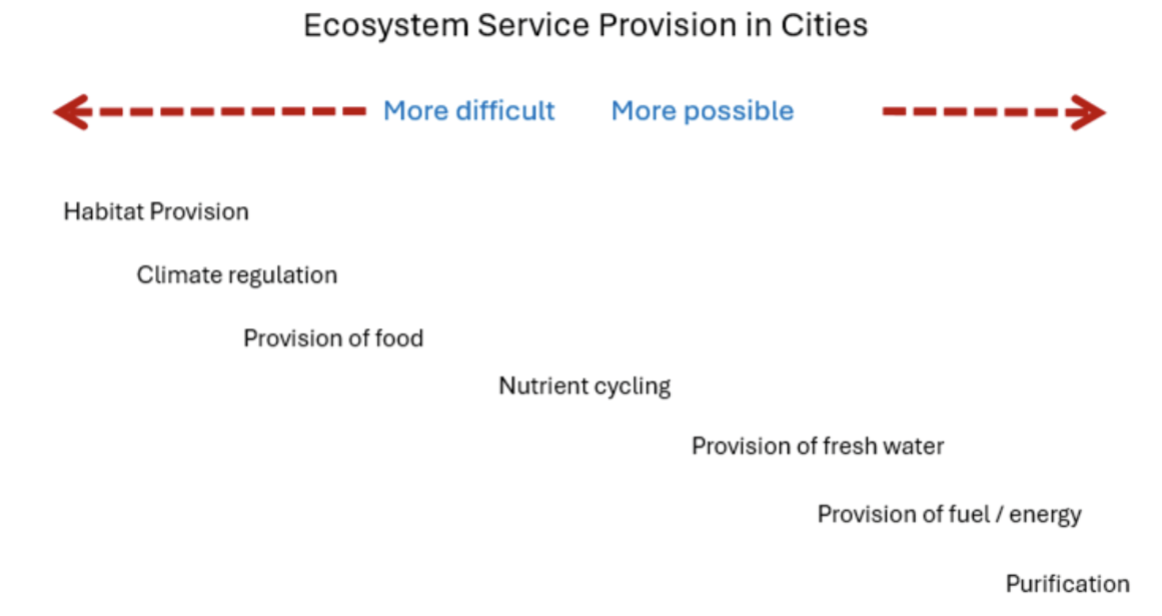
Existing design mehods to contribute to an ecosystem srrvice to provide positive environmental outcomes

Increased vegetation and ecosystem health benefits
Temperature regulation hard to regulate (eg europe and australia atm)
plants produce smog which improves air quality
real estate value increases around green areas
vegetation in ground reduces flooding risk absorbs the water and reduce water run off
understand value of a recognition of value to others (relational value)
Urban biodiversity is a built enrionment design issue?
we design for value for money
we don’t support ecosystem functionality
city usually made from original rich ecosystem that provided resources for their environment
we built ontop of them and now need to import resources from other places
biodiversity loss through → land use change, climate change, biotic exchange,
degradation of urban areas, human health, and wellbeing as a result of this
we can reduce biodiversity loss
increase connectivity between ecosystems, promote biodiversity, revegetation, remediation of eco systems, conservation of remnant ecosystems.
Nature based Solutions
“Actions to protect, sustainably manage, and restore natural or modified ecosystems that address societal challenges effectively and adaptively, simultaneously benefiting people and nature”

NbS should:
→ restore ecological function
→ support biodiversity
→ address climate adaptation
→ improve community wellbeing
→ provide multiple co-benefits
Designing for Multiple Benefits where one intervention can achieve:
→ biodiversity
→ recreation
→ stormwater management
→ cultural revitalisation
→ climate adaptation

Ecosystem based adaptation I
Ecosystem based managemnt
Urban green and blue infrastructure
Ecological restoration (human actions into ecosystems)
Ecological engineering
Biomimicry (mimicking the ecosystem in the building or a system)
Biophyllic design
They benefit people and ecosystems together whereas other solutions may help people but actively degrade natural environment.
(Pipes, sea walls)
co-benefits increasing resilient to climate change, increased provision of ecosystem services, increased human wellbeing (not nature but grounded in western hemisphere relationship with nature).
working with nature (soft decision) rather than replacing natural systems (hard decision)
Interventions in different scales (island/city, watershed ridge to reef, settlement, urban/neighbourhood, site
Healthier ecosystems → increased eco system services → more resilient communities
Forests
inner forests more in the inner city noise and pollution reduction health and wellbeing
Nearby forests transitional and human interactive services water purification reducing soil erosion providing relational contexts with forests
faraway forests where biodiversity is strongest carbon sequestration timber resourcing, contributes to wider landscape
Riparian Zones
Habitat benefits for native species
Reduces flooding
Protects soil
Water Remediation
Help process things (sewage waste,
Living sea walls (living crib walls) where trees planted in supported sea wall network to create stabilisation of banks and edges
Wetlands
Powerful ecosystems can be water based or saltwater systems
food production
Urban managed where mimicry of wetlands develop overtime and settle into a system
Coast and Shores
Shading, and freshwater
Restore mangrove habitats
Prevents houses from washing away
Houses on sand dunes they have risks of tsunami etc, dunes need to be well planted to be stable and no sand to travel through wind to houses from wind
Reefs
small electrical currents attracts corals and speed up the way they grow so coral seeding and artificial reef building good for building ecosystems in face of rising seas
Fish aggregation devices that attracts fish to it
Urban Areas
Vertical systems to create habitats above 2nd floor not likely for birds, rooftop gardens for taller building will mainly be for humans not animals
Constructed canal systems to replicate traditional stream edges and mitigate existing challenges in urban environments
Instead of pipes using rain gardens to slow that water
Green belts provide ecosystem corridors for species in urban environments
Sponge cities help mitigate flood and temperature challenges
Moving towards biodiverse regenerative ecological urbanism
Kia uta ki tai mountain to sea
Ridge to reef connected sociological systems
The systems nature based solutions might do from ridge to reef (slides paste here)
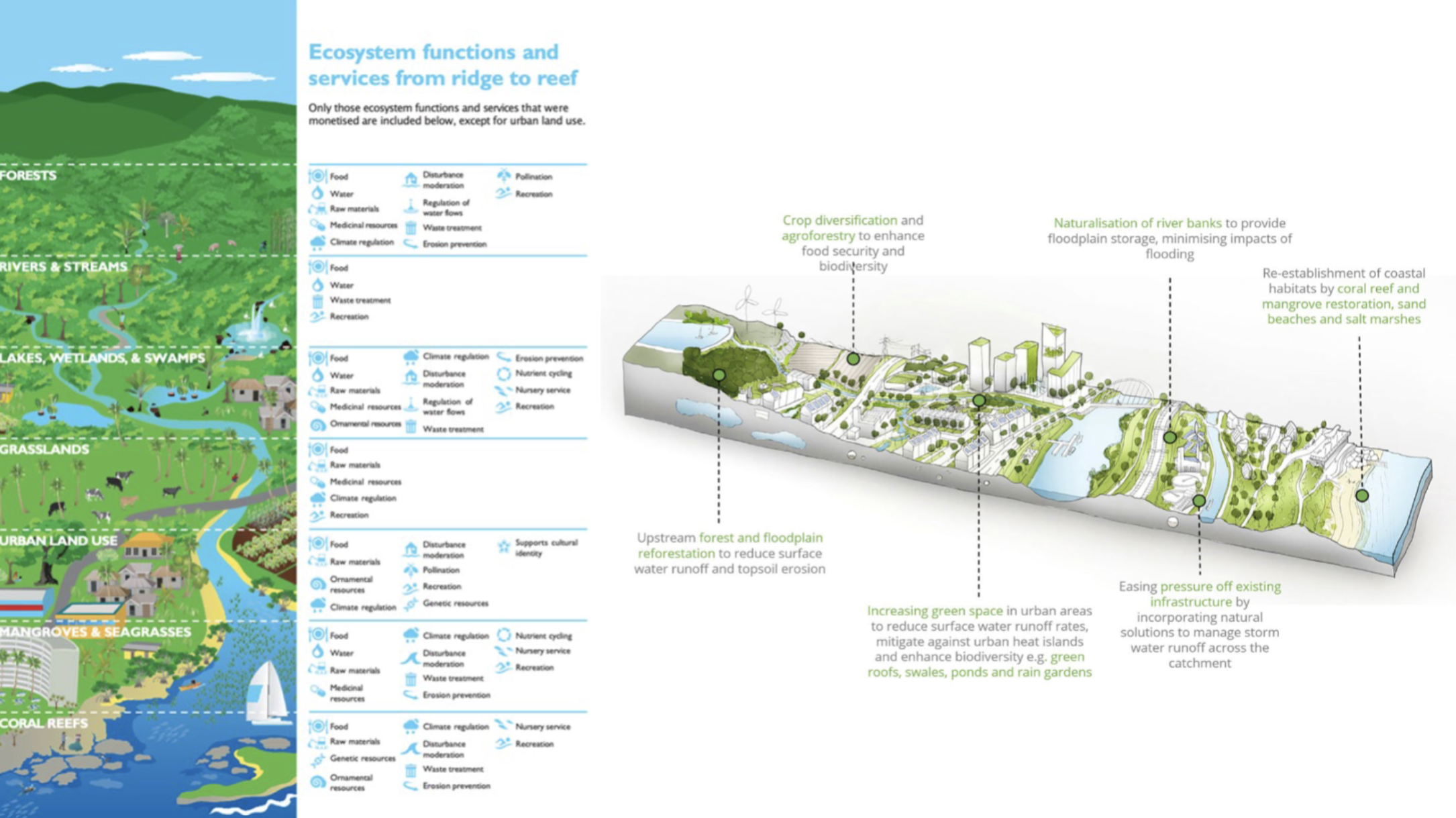
Being grounded in place having understanding of water and land and ethical responsibility for guardianship for our landscapes and environments
Solve and positively contribute environmental issues and reduce degradation caused by urbanisation
Requires best available science partnered with local communities (idea of equity)

NUWAO
NUWAO (nature based solutions in Oceanic context) pacific needs to say what it feels like here not European.
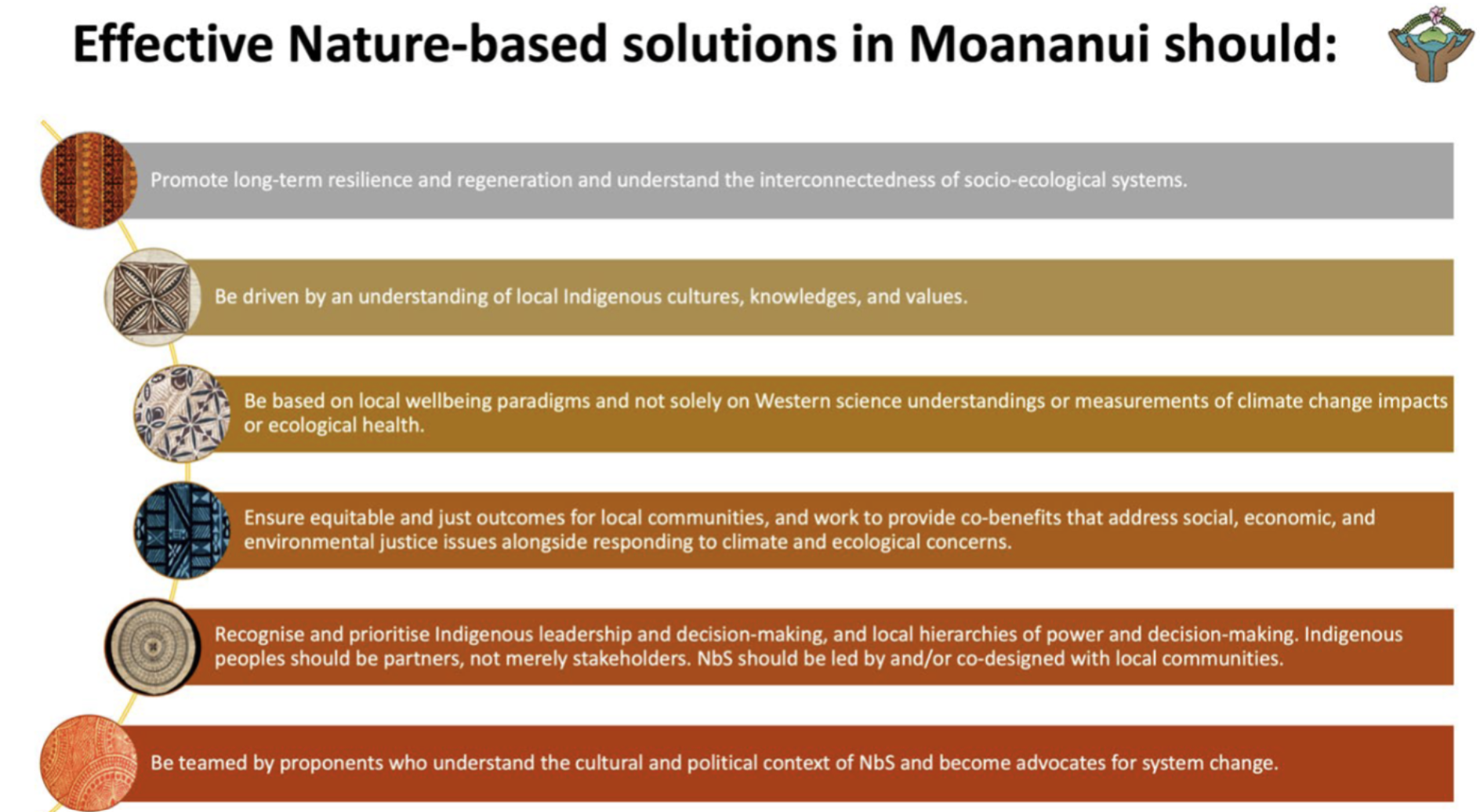
Systems
Systems are all around us and today we talked a lot about ecosystems and just thinking about the parts of a system. All of them usually have the same building blocks, elements, interconnections, and purpose. And one example could be a tree and how it has its elements, interconnections, and purpose.
A reminder to look at week ones, slides, many examples of systems, diagrams, all the ways you can represent information in your assignments. So when you look at water systems, what are the elements, what are the interconnections? What is the purpose of that? Energy systems, the same things? You might have your advices to capture your solar panels. Perhaps, you have your batteries. What are the connections between those different elements? And always think about, you know, how these are integrated into the architecture, how is this integrated into the design and the building? you do a lot of systems diagrams in assignment one and also in assignment 2.
Certifications
Overview of certifications because next week we'll have the guest lecture about living building challenge and we'll learn everything in more detail about living building challenge. And I just wanted to do a little recap for you to know, you know, where does the living building challenge such in relationship to other certifications that we talked about? last semester, we talked a lot about passive design, and a lot of that, those concepts are linked with another certification, which is passive haus, which comes from Germany. And so that's one type of certification for building. We also talked a bit about Homestar, Green Star, some of your case studies last semester might have been certified to those schemes. So those are the New Zealand Green Building Council, too, source certifications. So those are more your local kind of certifications. And all of those are things that help you go beyond the minimum, beyond the building code, so they help us guide and they help us actually check that you are doing, you know, the things, you're really going beyond and doing more, in terms of your sustainability and potentially your regenerative design. So those tools help us to verify, performance of buildings, etcetera. This semester we are talking about living building challenge, which is, another international standard, developed by Living Future Institute and they also had another 2 which is currently not in use, but it might be interesting for you to look at for your, in terms of your master planning and side planning, which is called living community challenge. So this is going beyond the building. So just out of curiosity, you might want to have a look at this. They have variety levels of you know, your performance or sustainability or, you know, to the top tourists, regenerative design.
There are also some other ones overseas that I added here, not so common in New Zealand, but just to give you a sense of where we are and why we are looking at the living building challenge. So, I would say that this goes really beyond the other ones. Some of the tools are just helping us to do a little bit better than what we are doing at the moment. helping the industry to move to more greener and kind of environments, but the living building challenge is the one that actually goes further and pushes designers to do more. And the other big difference is that for the living building challenge, the building has to be used and operated for one year to prove that you actually am getting those results. So a lot of the issues with some other certifications were that,, I would say, like, especially some of those, like Leeds, overseas, you were saying that, you know, the design was very good, but actually in practice, things were not working as expected. And, just a bit of a critical view that, we have to be, we have to do our research and be critical with certifications, and here's just one extreme example where, this IKEA store had achieved the highest bream UK sustainability rating. But it was built, and they demolished the, big supermarket. So which was the most sustainable supermarket. So what do you think about this? green, sustainable solution, like removing everything, demolishing everything. that was quite new and then replacing it with a green building. So obviously they were not thinking about materials and carbon back then now certifications keep improving, but this is just one little story to remind you to be critical about all of them,
We chose the living building challenge because usually, it is much better than the other ones and ensures the real performance and real, and it's really comprehensive and holistic as well. And a reminder about the petals and you're focussing on water and energy, plus another petal of your choice.