Predation Notes
Impacts of Predation
Predation: An exploitative interaction with a positive impact on the predator and a negative impact on the prey. Includes a range of interactions such as carnivory, herbivory, parasitism, and parasitoidism.
Predation definition: An interaction between animals that involves being consumed by the other
Effects of Predation
Direct Effects
Predator gets food, ensuring survival and reproduction.
Prey is injured or killed, reducing its chances of survival and reproduction.
Indirect Effects
Changing population densities of both predator and prey
Intraspecific competition (cannibalism):
Predation on an individual within the same species.
Common in spiders and praying mantis, driving population regulation and evolutionary adaptations.
Interspecific competition
Predation between different species, influencing community structure and species distribution.
Parasitism
While predation causes instantaneous death of the prey, in parasitism, the parasite consumes nutrients from a host, decreasing the host's fitness but not necessarily causing death.
Effects can range from minor to debilitating.
Exception: Parasitoids (e.g., parasitoid wasp) lay eggs in a host (e.g., caterpillar), and the larvae feed off the catapillar and eventually kill the host. Highly specialized interaction with significant impacts on host populations.
Types of Exploitative Interactions
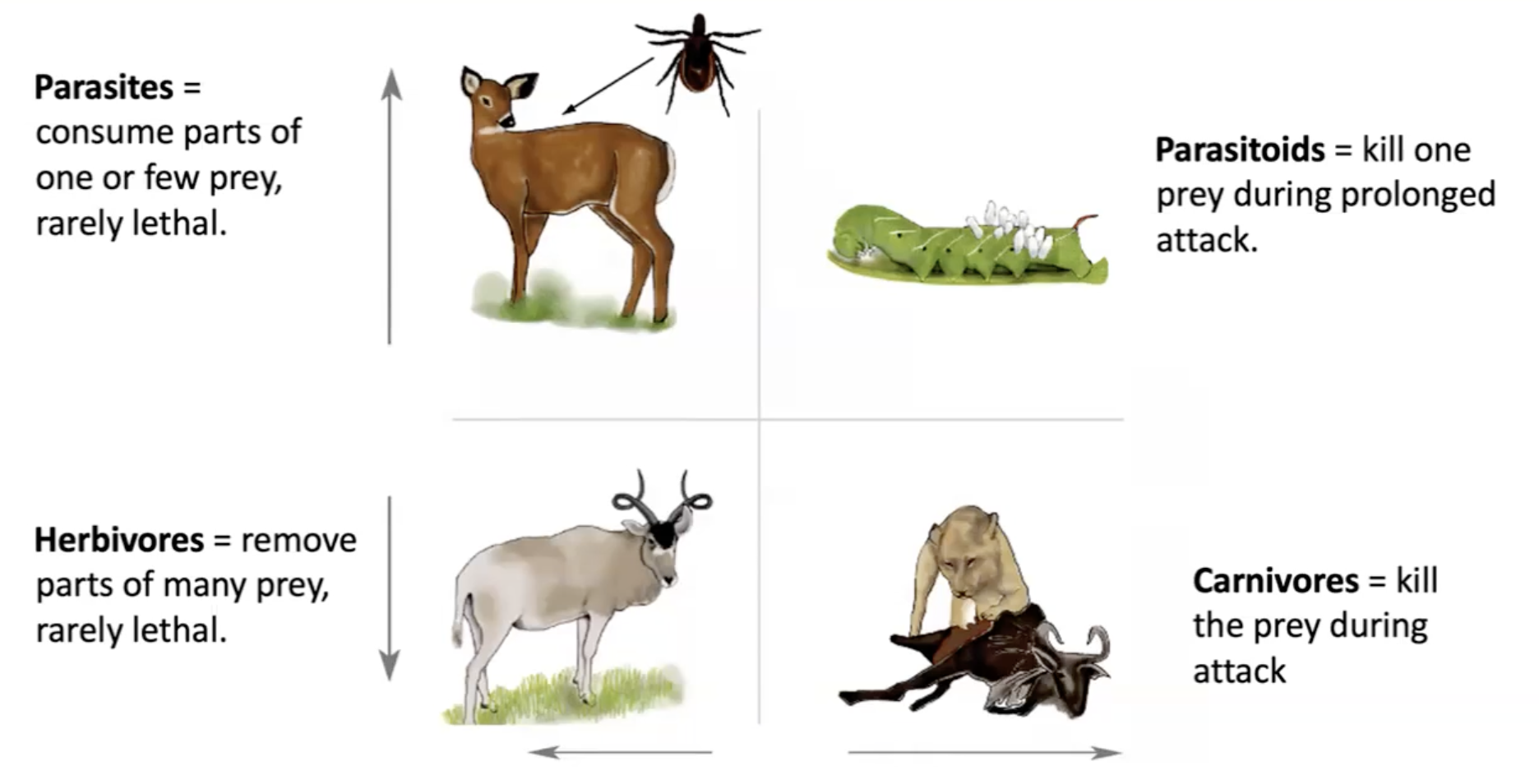
Herbivores
Remove parts of many prey (plants).
Rarely lethal but can significantly impact plant growth and reproduction.
Low lethality and general prey choice, affecting plant community structure and succession.
Parasites
Consume parts of one or a few prey (hosts).
Rarely lethal but can weaken hosts and make them more susceptible to other factors.
Can be very specific (e.g., deer tick preferentially feeding on deer), affecting host-specific population dynamics.
Carnivores
Kill their prey during attacks.
High lethality but often generalist, influencing prey population size and distribution.
Parasitoids
Kill one prey during a prolonged attack.
Highly specific interaction, often used in biological control to manage pest populations.
Predator Diet Breadth
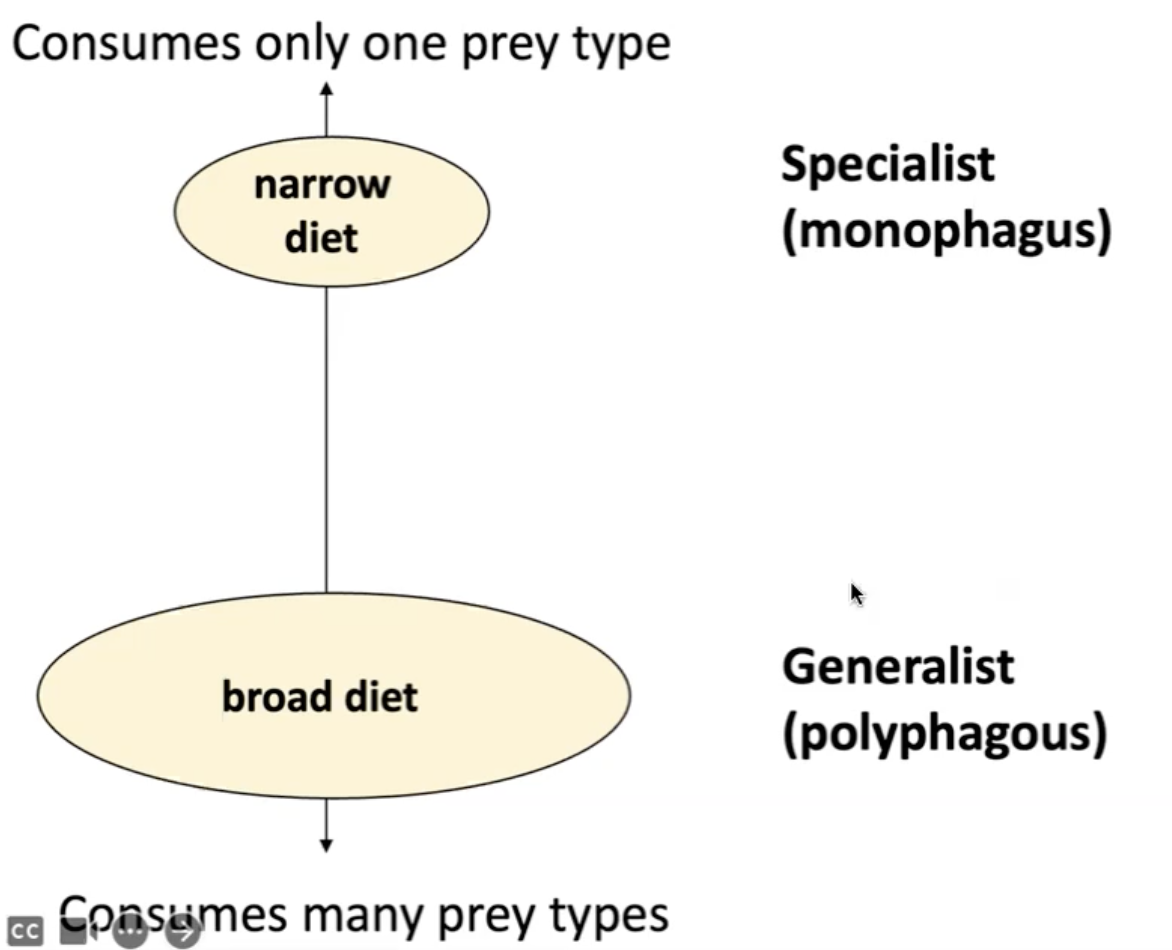
Specialists (Monophagous): Eat only a single food (e.g., anteater eating only ants).
Highly adapted to specific prey, vulnerable to prey availability.
Generalists (Polyphagous): Have a broad diet (e.g., yabby eating almost anything).
More resilient to fluctuations in prey populations, can switch prey based on availability.
Predation has an impact on:
Prey population abundance and dynamics: Controls prey population size and fluctuations.
Geographic range and local distributions of species: Limits or expands species ranges.
Population structure (age classes): Alters age distribution within prey populations.
Community structure (species present): Influences species diversity and composition.
Examples of Predation Effects
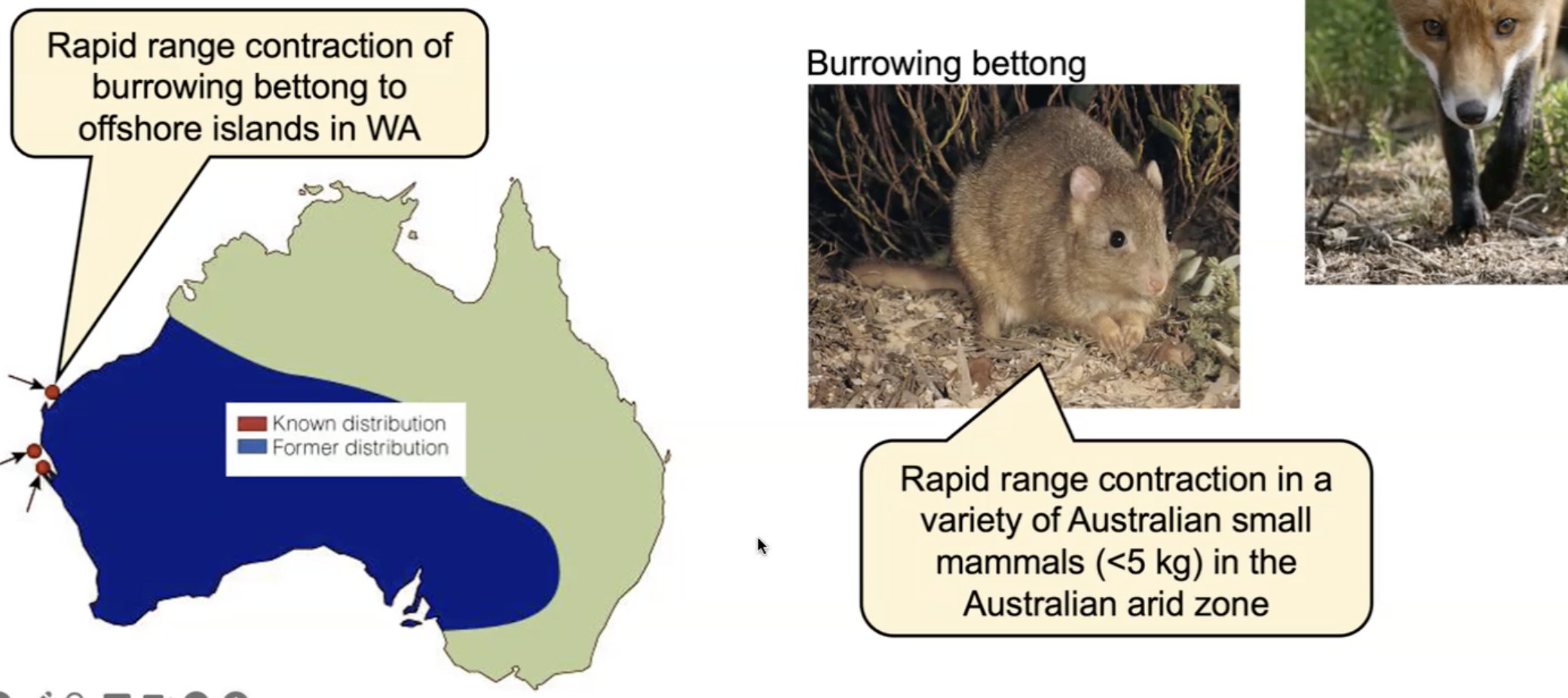
Range Contraction: Burrowing bettong in Australia disappeared from mainland due to predation by the introduced fox. Illustrates the devastating impact of introduced predators.
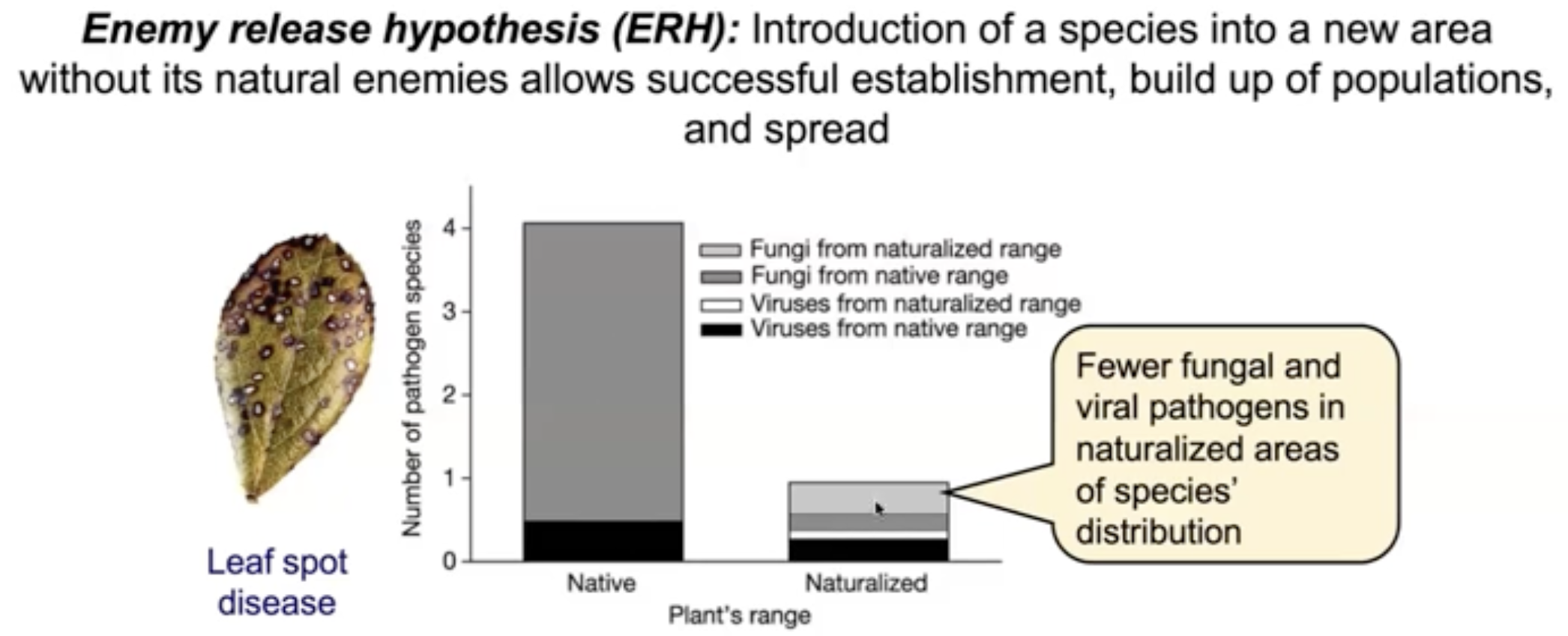
Range Expansion (Enemy Release Hypothesis): Introduction of a species into a new area without its natural enemies allows for successful establishment and population growth. —> follows escape from predation
Foxes introduced to Australia expanded rapidly due to no natural enemies, populations rapidly expanded.
Plants in their native range have many pathogens, but when moved to a new naturalised range/environment where it has not existed before, they have fewer pathogens and can spread more easily.
Free from its enemies, it can spread more easily
Changes to Biomass: Caddisfly larvae grazing on algae.
Larvae cement sand grains to form portable homes that provide protection, altering stream substrate.
Experiment: Algae grew on tiles on the riverbed. Elevated tiles had greater algal biomass because larvae couldn't access them
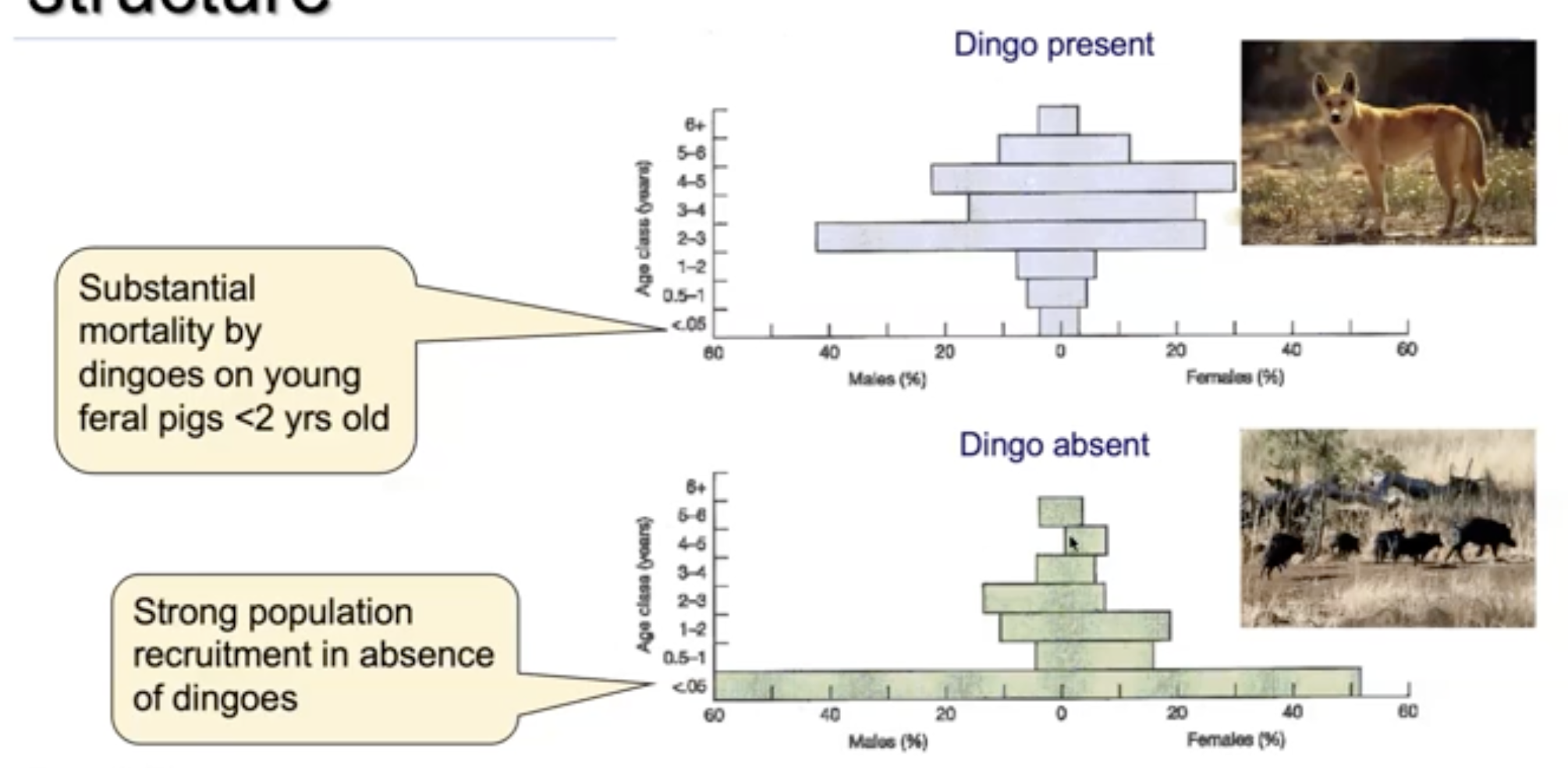
Alter Prey Population Structure: Dingo predation on feral pigs.
When dingoes are present, mostly older pigs survive because piglets are easy targets (small, easier to eat, can’t defend themselves very well) , leading to an older population structure.
When dingoes are absent, more young piglets are present, leading to a younger, faster-growing population.
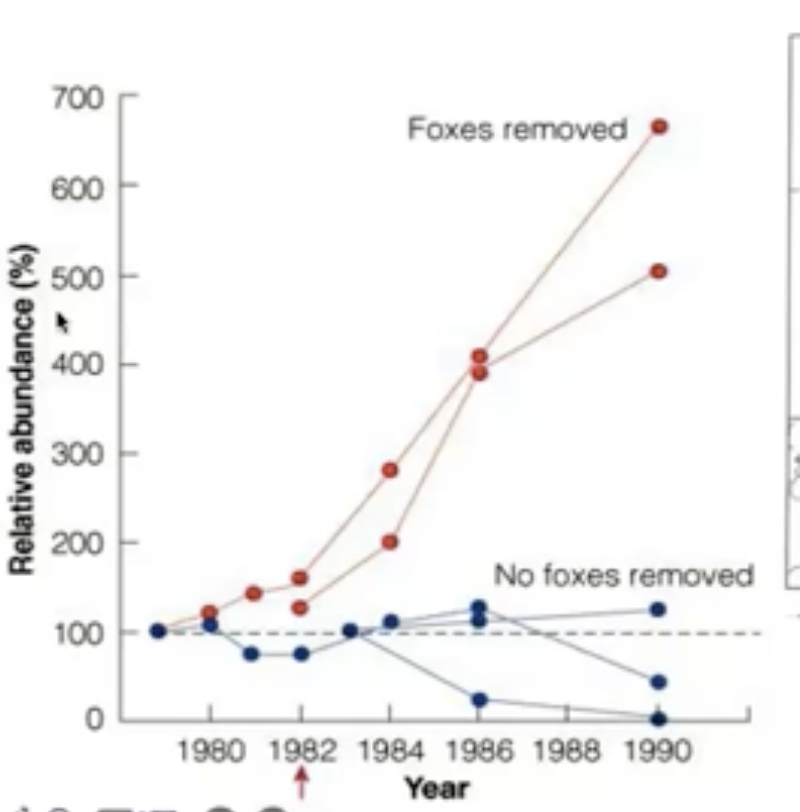
Affect Abundance: Fox predation on rock wallabies.
Foxes introduced to Victoria decreased wallaby abundance, threatening local populations.
Removing foxes led to a quick increase in wallaby abundance, highlighting the predator's impact.
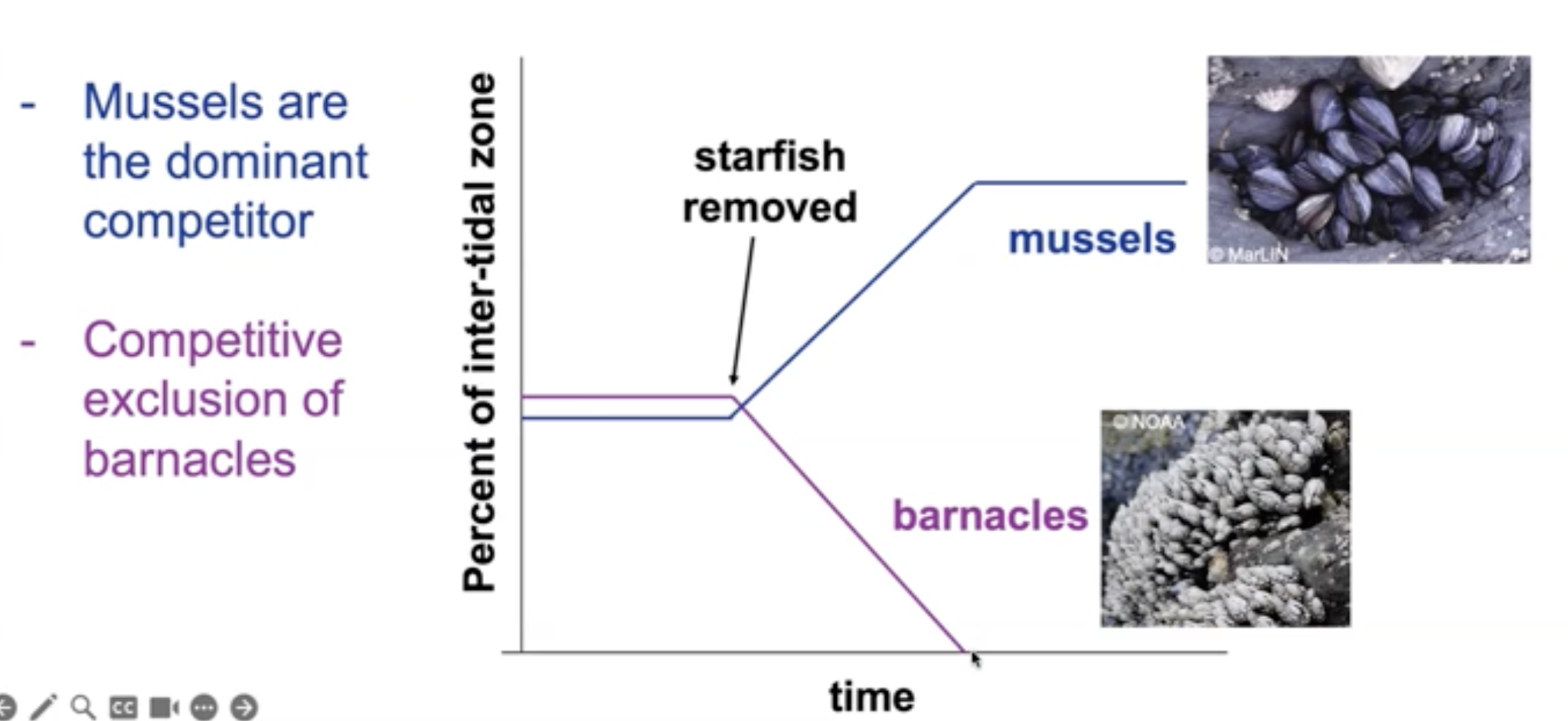
Affect Community Structure: Predator starfish and competing prey species (barnacles and mussels) in the intertidal zone competing for space.
Predators can promote biodiversity through counteracting the effects on competition
When the starfish is present, both barnacles and mussels coexist, maintaining diversity.
When the starfish is removed, mussels become the dominant competitor, leading to the competitive exclusion of barnacles, reducing diversity.
So it seems that perhaps the starfish prefers to eat the mussels when both species are present, and this meant that the mussel populations were suppressed, which allowed both the mussels and the barnacles to coexist.
So this starfish is needed in the population, in the community, to maintain this diversity.
Components of Predation
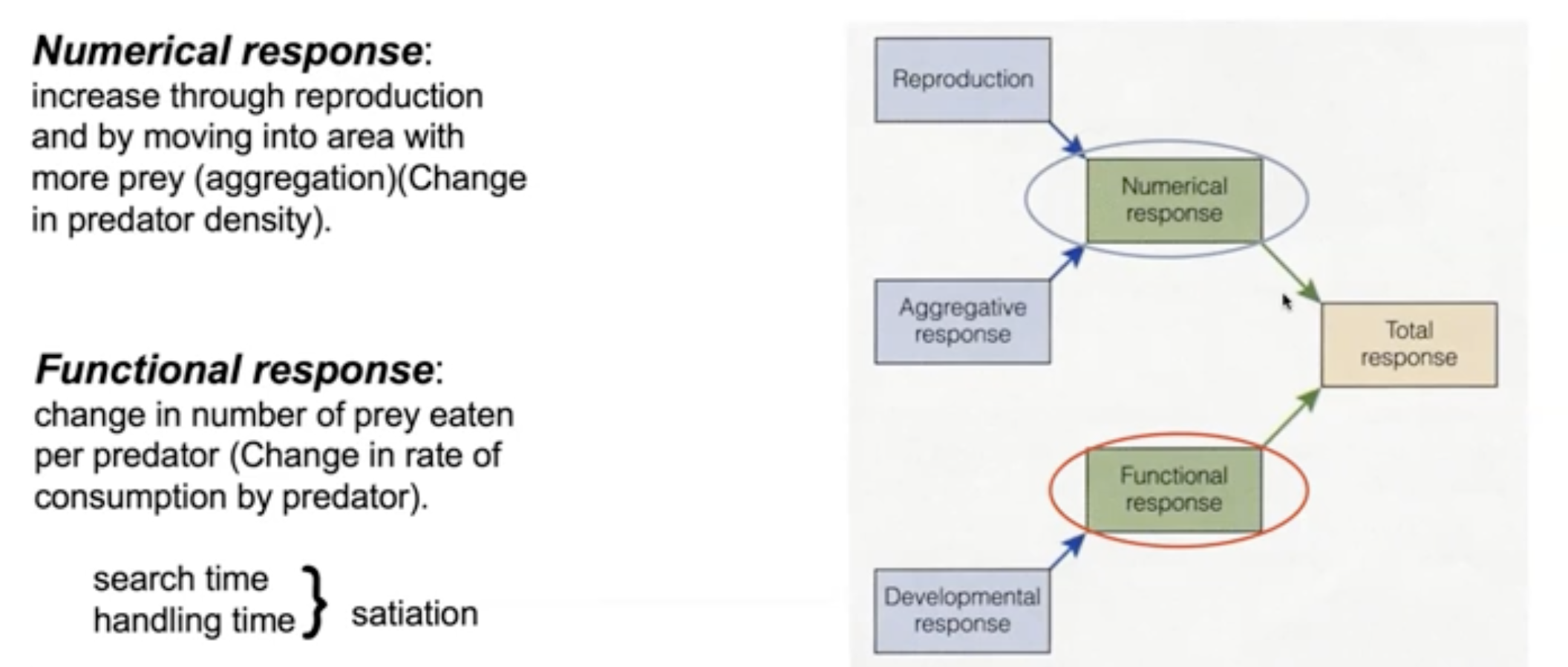
Numerical Response: How predator abundance changes relative to the number of prey available.
if there is more prey available, you would expect more predators
increase through reproduction and by moving into area with more prey (aggregation)(Change in predator density).
Functional Response: Change in behaviour regarding how many prey are eaten per predator - change in number of prey eaten per predator (Change in rate of consumption by predator).; mediated by:
Search time: Time spent locating prey.
Handling time: Time spent processing the prey (capturing, killing, and consuming prey)
Satiation: Whether the prey fills them up or if they are still hungry
Total Response: Combination of numerical and functional responses, showing overall predator impact on prey populations.
Example: Warbler Predation During Spruce Budworm Outbreak
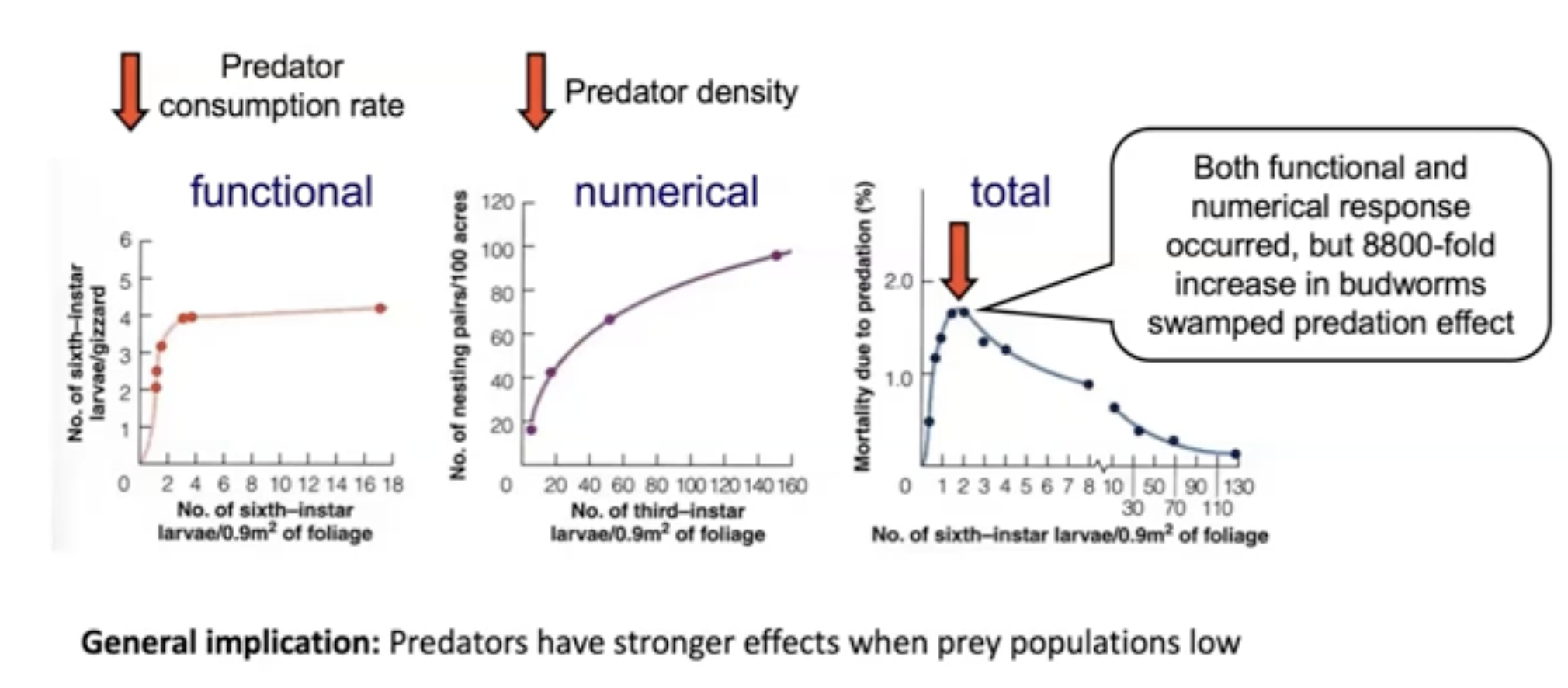
As prey density increases, the number of insects eaten increases until the birds reach satiation point (around 4 larvae) and then levels off
even if there was more larvae, the warbler couldn’t eat any more
This is a functional response, a change to the number of prey eaten per predator.
As the larvae population grows, the number of nesting pairs also increases, resulting in a high predator-prey density, demonstrating a numerical response.
Combined functional and numerical response: As the number of larvae increases, so does predation, but the predator effect may be small at high prey levels due to satiation and other factors.
There’s only so many larvae the birds can eat, even though there was increased predation, the expansion of no. of prey was so great that the
GENERAL IMPLICATION: Predators have stronger effects when prey populations low
Prey Strategies
Insects emerging at the same time to overwhelm predators, reducing individual risk.
Tree species masting (releasing seeds at the same time), ensuring seed survival by overwhelming seed predators.
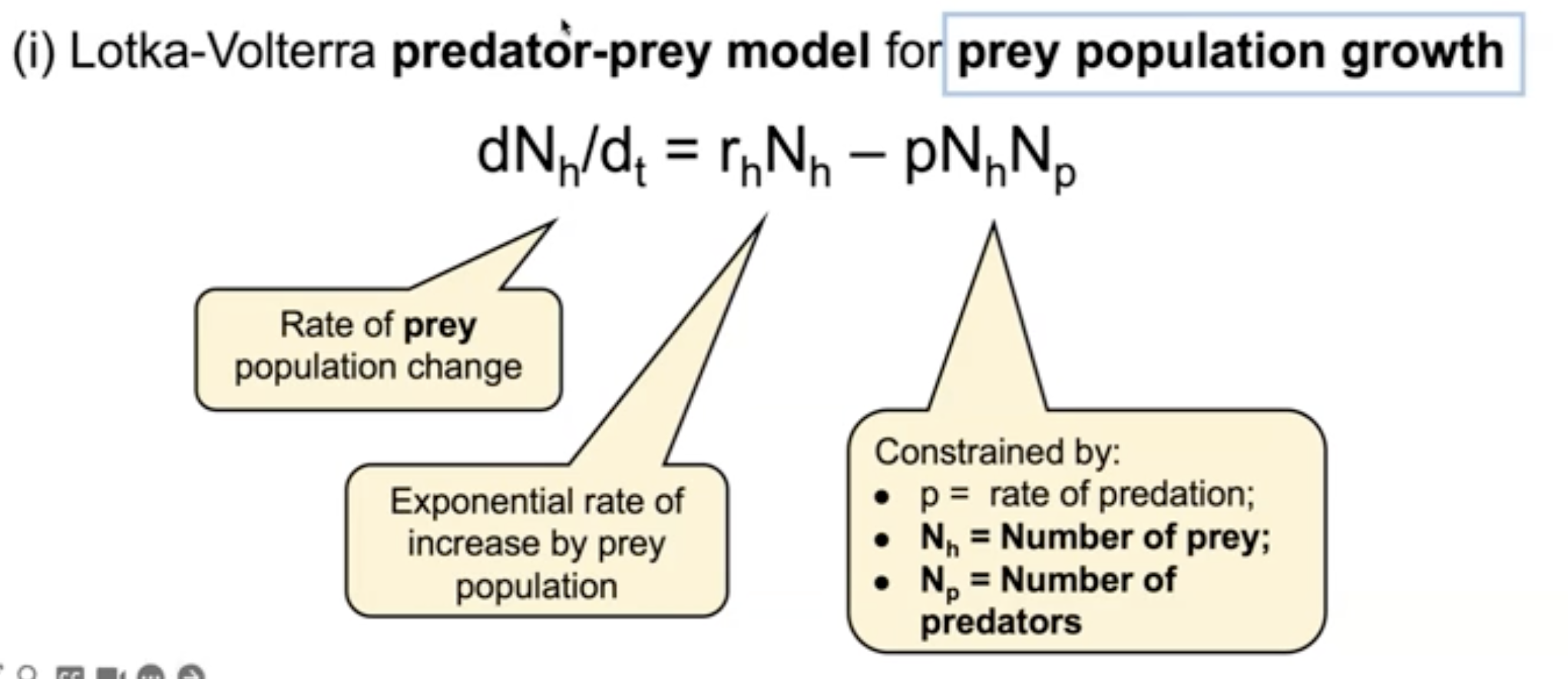
Lokta-Volteraa predator-prey model for prey population growth
Looking specifically at prey species population change hence we subtract a component which is the impact of predation
The more predators present, the higher the impact on the prey numbers
Iconic Example of prey oscillations: Hare and Lynx population oscillations.
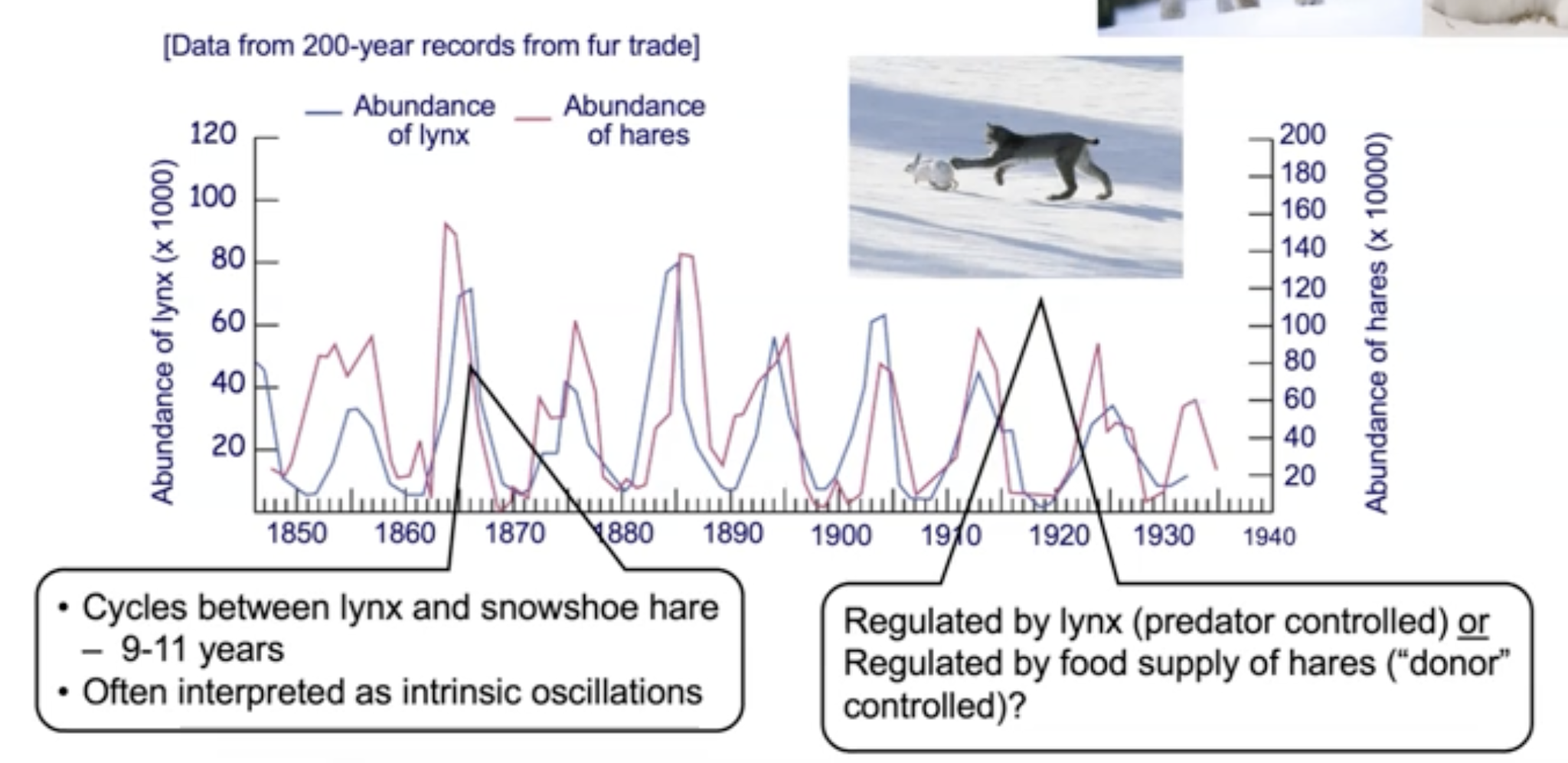
Nine to eleven year cycles, demonstrating classic predator-prey dynamics.
So initially, we see an increase in the number of hair, then there's this lag time, and then we have an increase in the lynx numbers as the hair increase.
Then as the lynx are eating more hairs, the hair numbers then decrease. And as the hairs die out, the lynx numbers also decrease.
So there's this back and forth between the abundance of the two species. As one increases, the other increases, causing the other to decrease. And as that one decreases, the other decreases.
Lokta-Volteraa predator-prey model for predator population growth
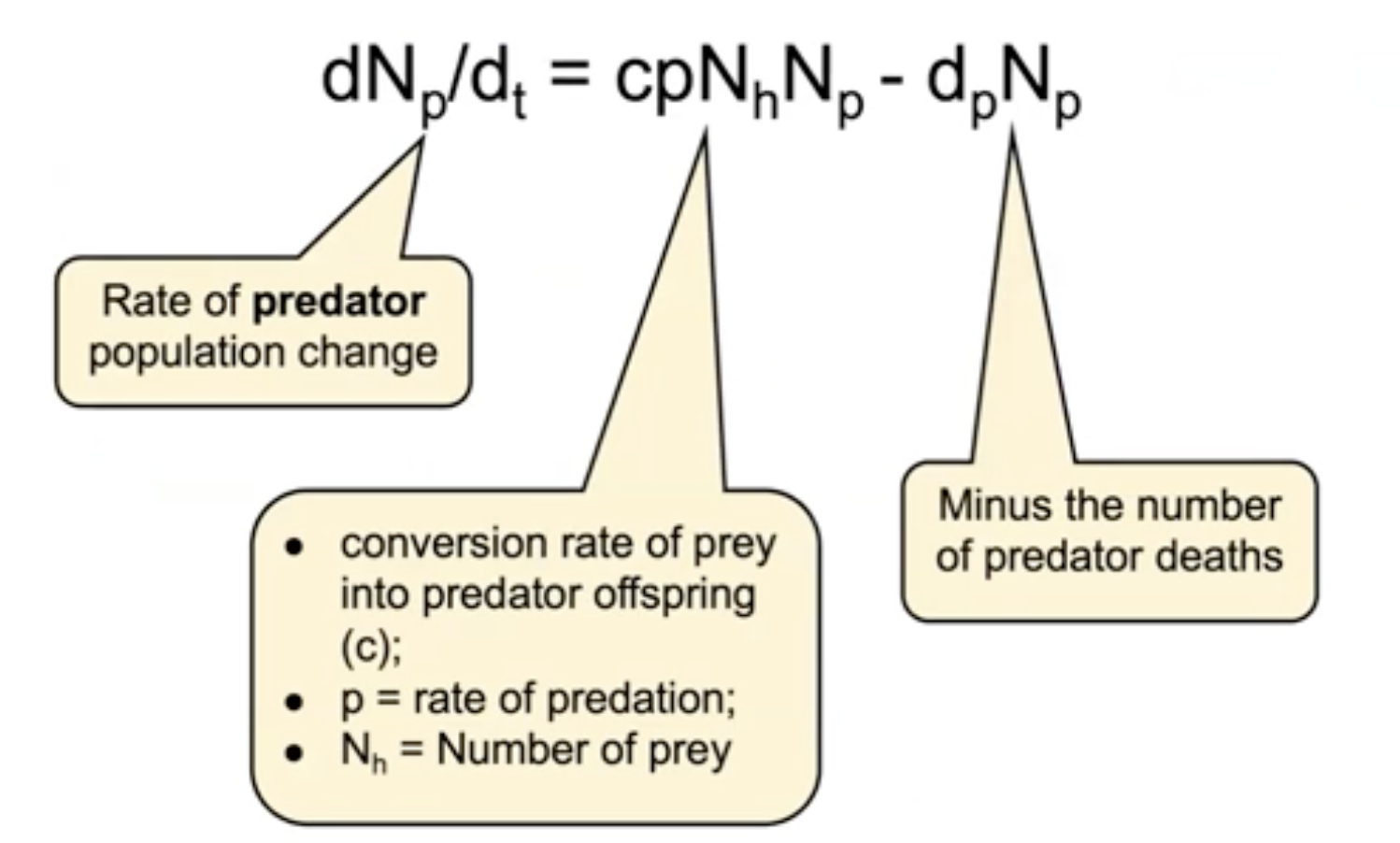
This is very similar to the prey model, but now we're looking at the rate of predator population change as a function of c
c = conversion rate of prey into predator offspring.
How many prey does a predator need to eat to produce offspring?
Summary
Prey exponential growth is often contained by predator responses to prey population growth
Prey reproduction immediately translates into destruction by predator
Increased predation = more predators,
More predators = a higher exploitation rate
A larger prey population eventually reduces prey population, in turn reducing predator population (oscillations)
Exceptions: Sometimes prey can overwhelm predator reaction (e.g., masking in plants, swarming of insects to overwhelm predation)