MOTION(Kinematics+Dynamics)
What is motion?
This is the change of position of a body or an object relative to time.
Kinematics- The study of motion without forces.
Time(t)- The interval between two otherwise occuring events.
Distance(d)- The lengh between two points
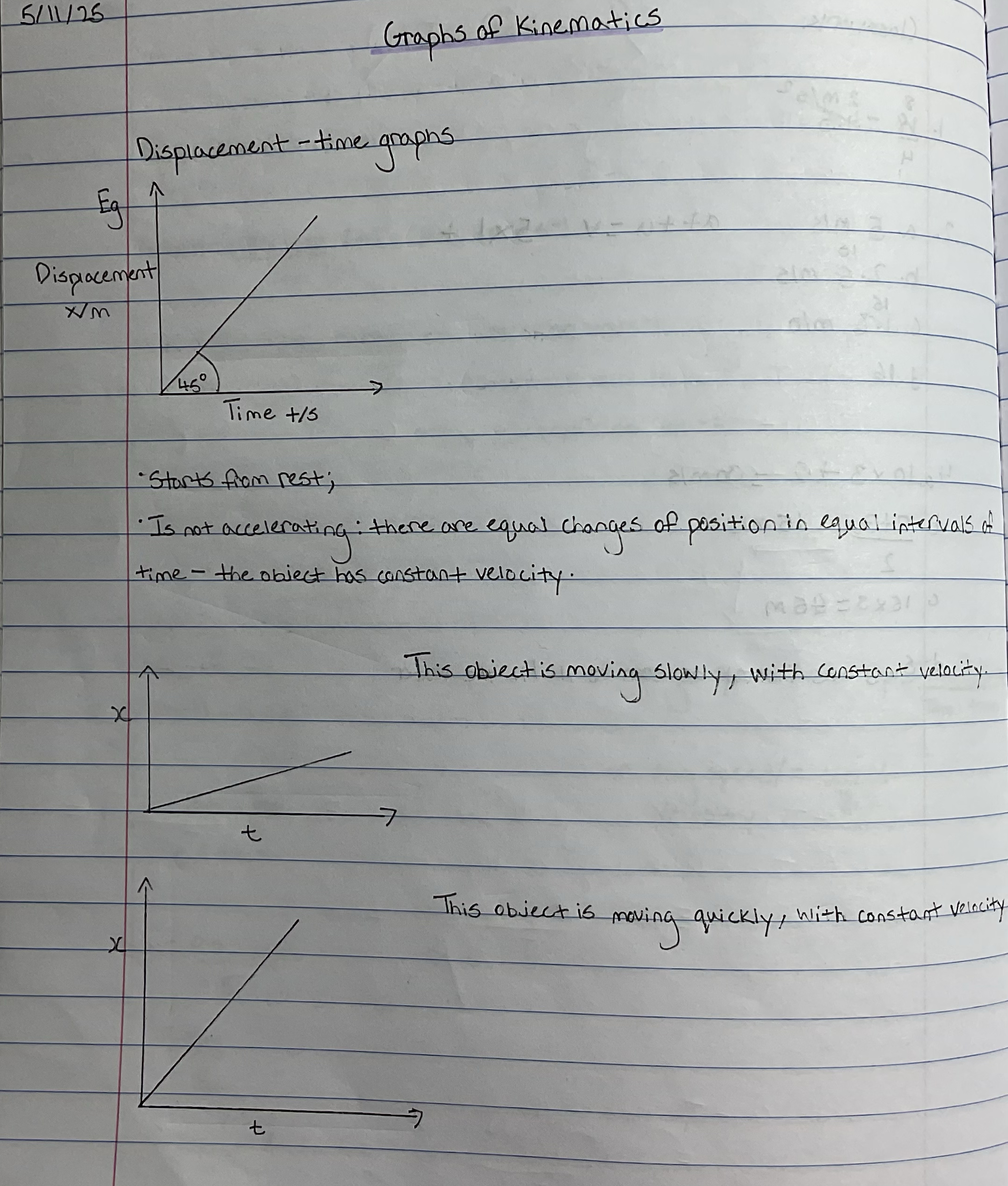
Displacement(s)- This is how far a body or object is from its original position (meters)m.
Speed(v)- The rate of change of distance. Equation: Distance÷Time= m/s
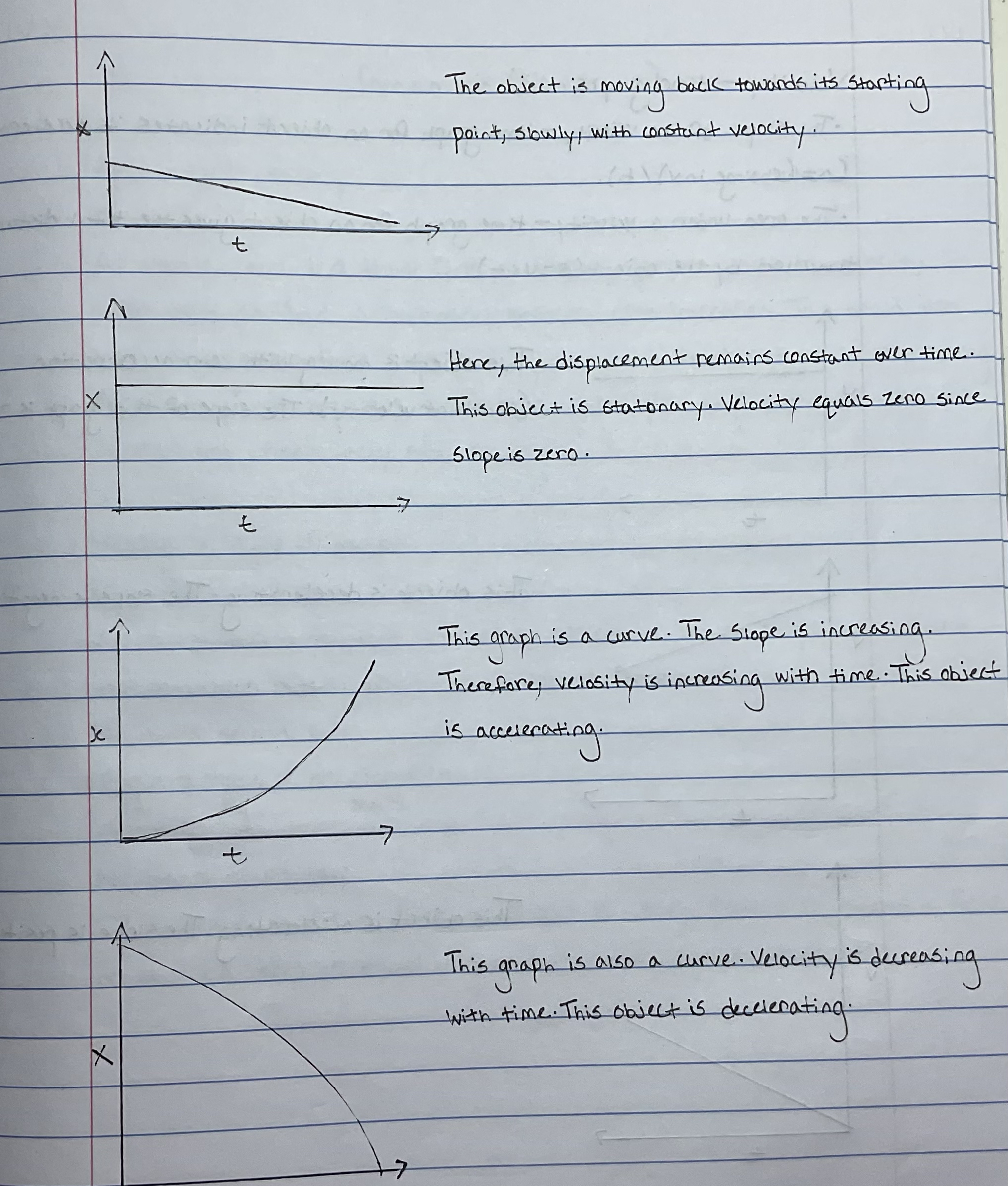
Velocity(u)- The rate of change of displacement. Equation: Displacement÷Time= m/s
Acceleration(a)- The rate of change of velocity. Formula: Velosity÷Time=m/s2
Equations of Kinematics
Speed= Distance÷Time= m/s
Velocity= Displacement÷Time= m/s
Average speed/velocity= Total distance÷Total time
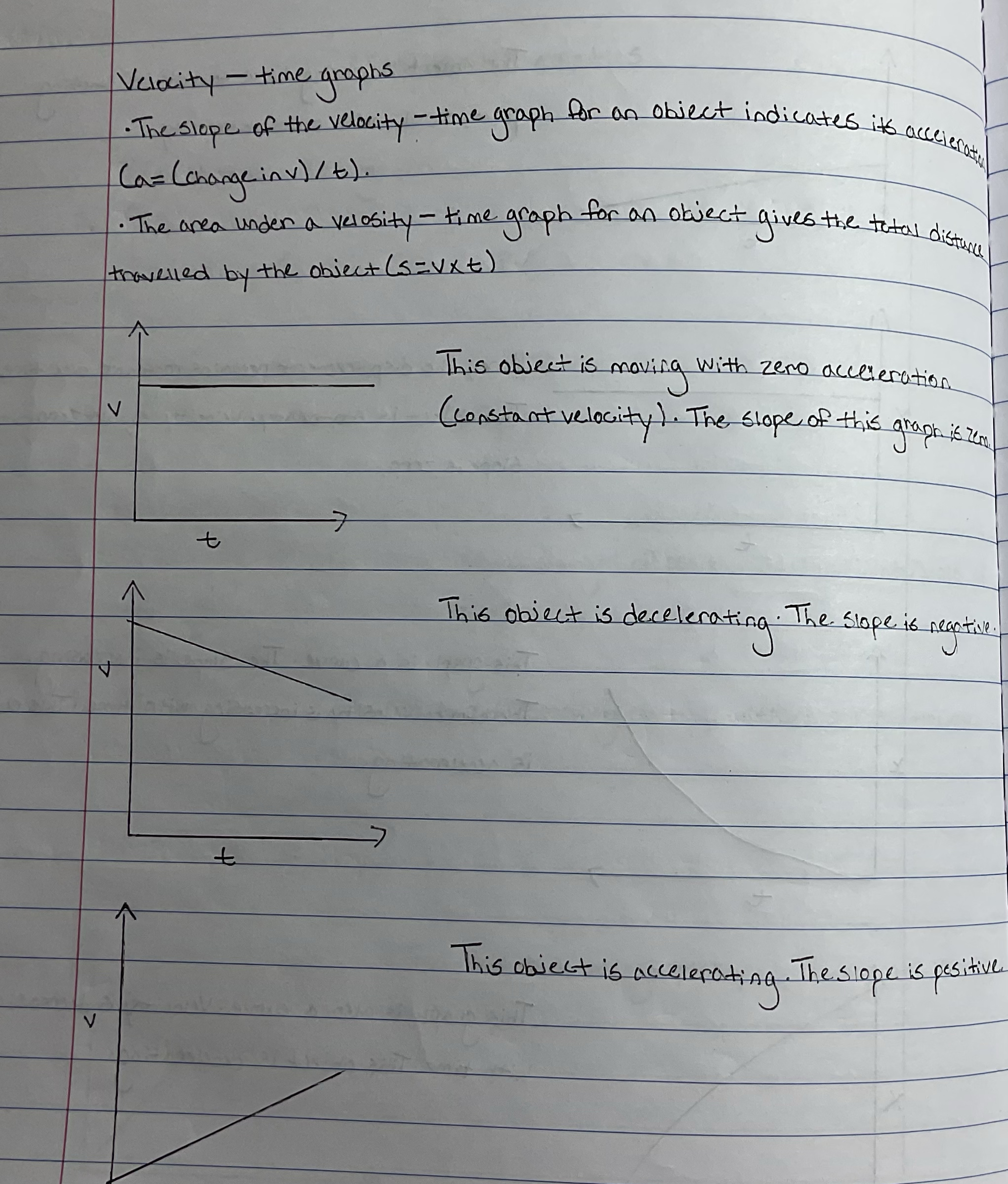
Acceleration= Change in velocity÷Time taken= m/s2
a= v-u÷t
v- final velocity
u- initial velocity
t- time
a- acceleration
Dynamics
Aristotle’s Theory
F∝V
Aristoltle concluded that force is directly proportional to velocity. In other words as force is increased velocity also increases. This would also mean that when a force stops pushing an onject, the object would stop moving (F=O V=O). However this is NOT true. When you stop pushing an object it does not immediately stop moving.
Newton’s Law of Motion
Newton’s First Law:
An object at rest stays at rest or an object in motion stays in constant motion unless acted upon by an external force.
Newton’s Second Law:
Force=ma
Newton’s Third Law:
If object A exerts a force on object B, then object B exerts a force on object A that is equal in size but in the opposite direction.
Inertia: This is the resistance of an object to change its state of motion.