P1: Motion
Measuring length and volume
Measuring volumes
Regular shaped solids: volume = cross-section x length
Liquids: measuring cylinders
Irregular shaped solids: Displacement
Partially fill a measuring cylinder with water to cover the object
Immerse object. Final volume - original volume = volume of the object
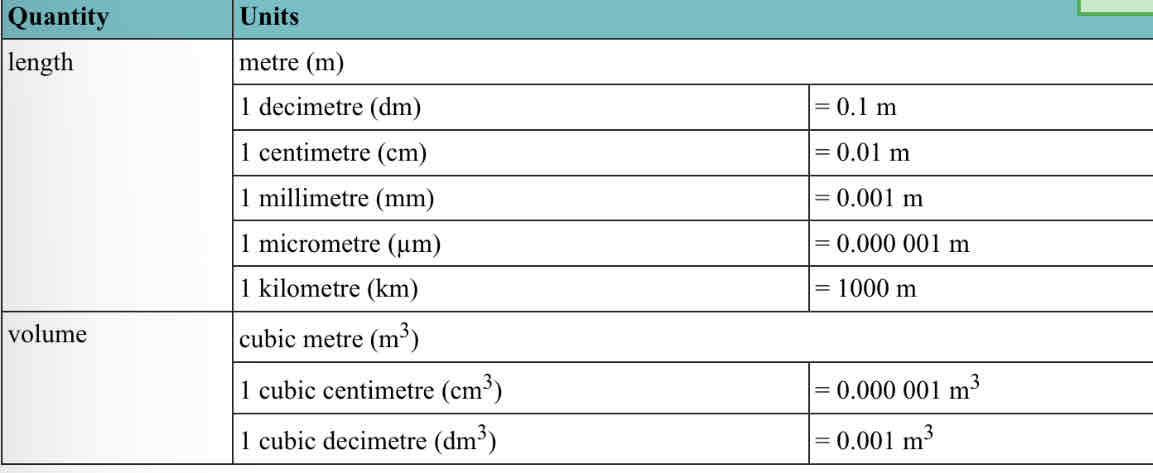
Units of length and volume:
1 litre = 1dm³
1 ml = 1 cm³
Density
Mass (kg): Quantity of matter an object is made of
Equation: density = mass/volume (P=m/v)
Unit: g/cm³ or kg/m³
Values
Objects less dense than water will float
Density of water = 1000 kg/m³
Measuring time
Longer periods: analogue clock, digital clock
Short periods: plumb bob
Scalar quantity: only magnitude (size). Eg. time, temperature…
Vector quantity: magnitude and direction Eg. velocity, acceleration..
Understanding speed
Distance, time and speed
average speed = total distance travelled/total time taken
units depend on what it is being timed/measure by. eg: m/s, km/h
Distance-time graphs
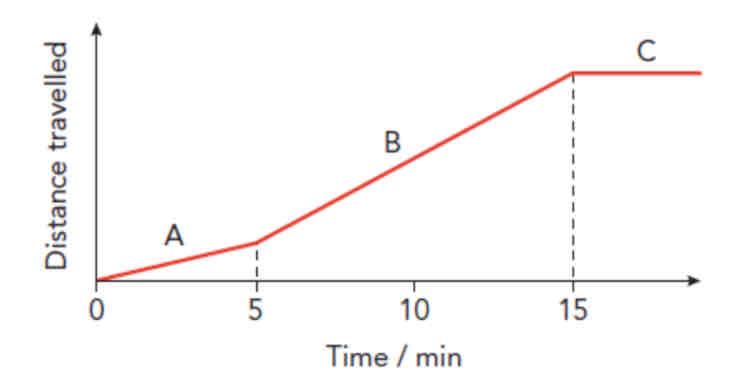
steeper line → faster speed
Finding speed from a distance-time graph:
Speed = gradient of graph

Acceleration
An increase in speed
Equation: acceleration = change in velocity/change in time

Units depends on velocity/time unit. Eg: km/h per second
Speed time graphs
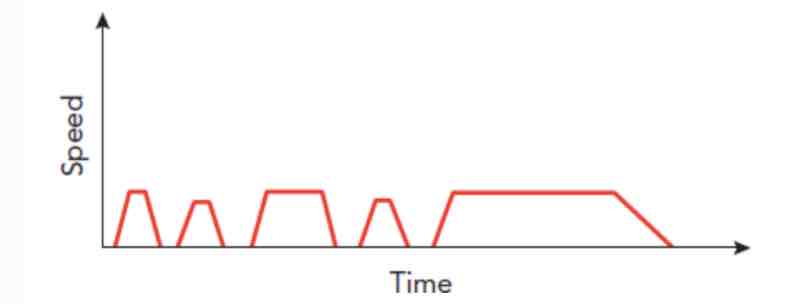
steeper slope = greater acceleration
negative slope = deceleration
slope = 0 → constant speed
Distance travelled from speed-time graph:
distance = area under the speed-time graph
Mass, weight, density
Mass vs weight:
Mass: how much matter an object has in kg
Weight: gravitational force that acts on the object in newtons (N)
Gravity and weight
Gravitational field strength: 9.81 N/kg
Weight = mass x gravitational field strength
W = mg
Free fall: acceleration due to the earth’s gravity
Free fall = gravitational field strength (9.8N/kg)
Forces
Forces can change the shape and size of an object by stretching, squashing, bending, twisting
Unbalanced forces can change the motion of an object
Friction:
force between 2 objects moving against each other
always acts in the opposite direction to movement
Effects:
Slows objects down
Heats objects up
Resultant forces: Combined effects of 2 forces on one object
resultant force = forward force - backward force
no resultant force → no acceleration, remains at rest and at a constant speed in a straight line
Force, mass and acceleration
Greater mass = less acceleration
Double mass → half the force
force = mass x acceleration
f = ma
unit: m/s²
Stretching strings
Extension of a string:
length of stretched string = original length + extension
Double N that is stretching the string → extension doubles
Limit of proportionality: the point at which the graph is no longer a straight line
spring constant = force/unit extension

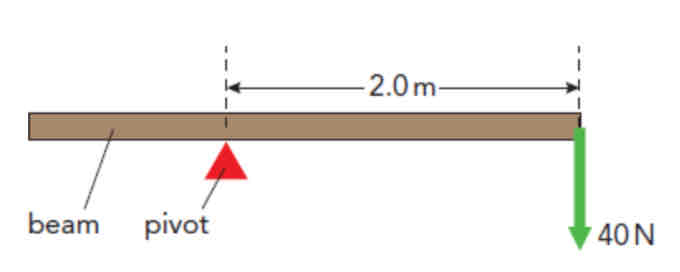
Turning forces
Moment of a force: the turning effect of a force on a pivot
Pivot: fixed point at which the object will turn
Moment is bigger if force is bigger
moment is bigger with acts further from the pivot
moment is greatest at 90 degrees to the object
moment = force x perpendicular distance from pivot
Unit depends on question: eg. N/m
Stability and centre of gravity
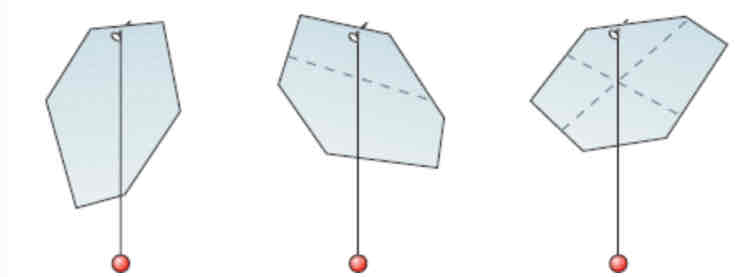
Centre of gravity: the point where all mass is centered
To be stable an object should have a low centre and a wide base
Finding the centre of gravity:
Hang the object with a plumb bob → centre of gravity lies on the line going down the plumb bob
Repeat 2 more times → centre of gravity is cross-section
Pressure
A large force pressing on an area
small area → high pressure
large area → low pressure

unit: Pa