Sleep
Circadian Rhythms and Sleep
- circaidian cycle: biologically programmed rhythms control a daily cycle of behaviors and changes, controls the sleep/wake rhythms, plays a role in appetite, activity and other behaviors
- linked to: sun rising and falling, temperature change, environmental stimuli, endogenous biological clock
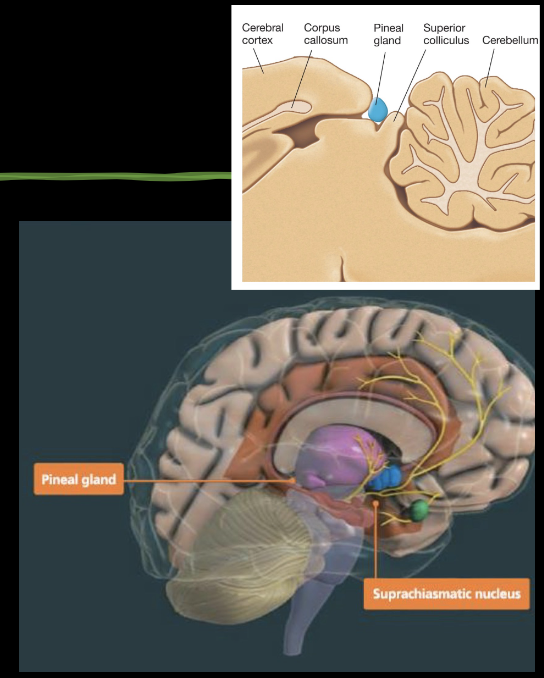
- suprachiasmic nucleus (SCN): region of the hypothalamus, regulates biological rhythms, promotes entrainment, recieves inputs from retinal cells, regulates other internal clocks throughout the body
- entrainment: synchronization with the 24hr light/datk schedule
- pineal gland: dorsal to the midbrain, rostral to the cerebellum, regulates seasonal rhythms, SCN triggers mineal gland to secrete melatonin, hibernation
- sleep: state of continuous and long lasting unconsciousness, can be reversed rapidly and easily, driven by circadian rhythms, homeostatic factoy is the bodys drive to maintain a stable physiological state
Stages of Sleep
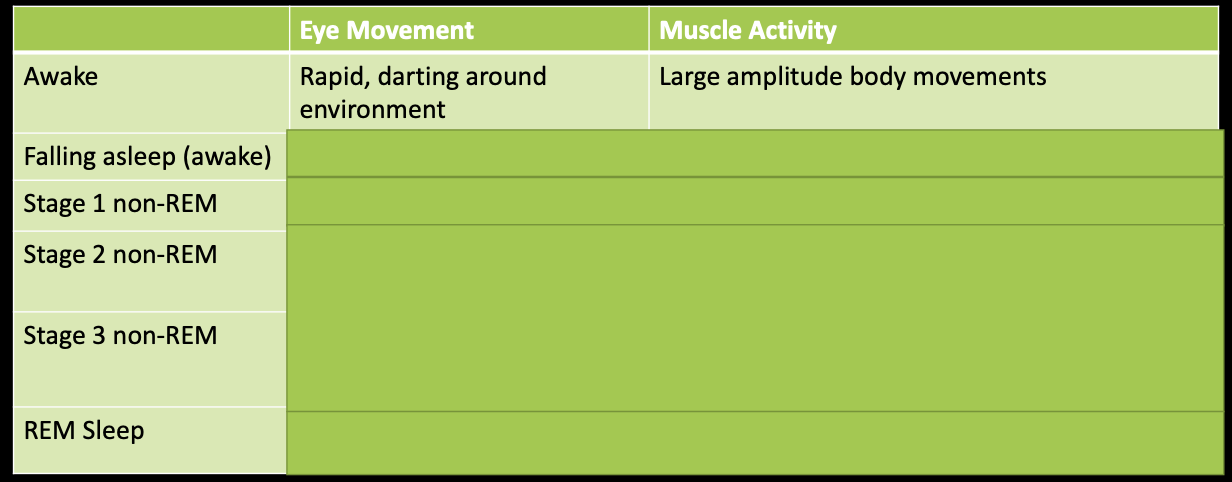
- 3 key differences throughout sleep: brain waves, muscle activity, eye movement
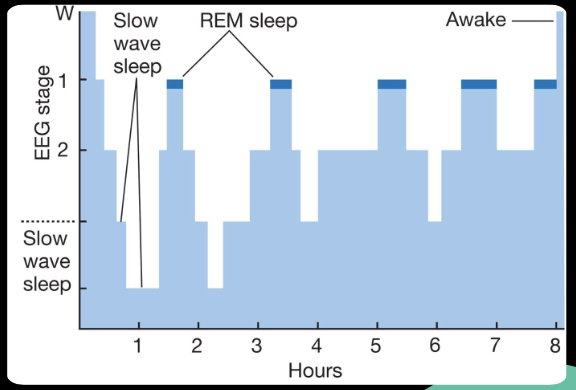
- sleep cycling: awake, 1.5 hour non-REM sleep stages 1,2,3, REM sleep consisting of rapid eye movements and dreaming, return to non-REM
- rem sleep begins every 90 minutes, time spent in rem increases throughout the night, timespent in stage 3 decreases throughout the night
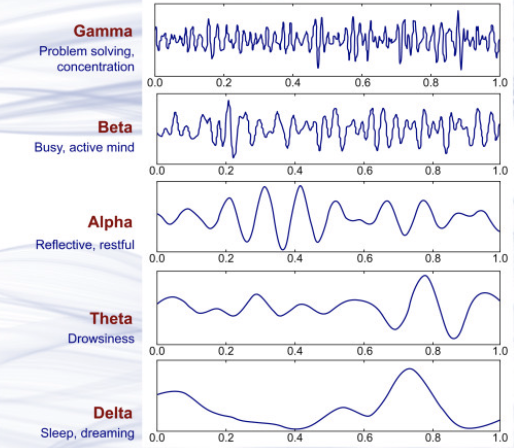
- electroencephalogram EEG: record summed electrical actiivity of the cortex
- amplitude:height of waves
- frequency
- synchronized firing: high amplitude low frequency (non-REM)
- unsynchronized firing: low amplitude hight frequency (awake and REM)
- REM Sleep: rapid eye movement, desynchronized brain waves, sympathetic nervous system dominates, increased irregular HR, BP and respiration, dreaming, muscle twitches, muscle atonia
- muscle atonia: paralysis, large muscles of body lose their tone
- muscle atonia: paralysis, large muscles of body lose their tone
Purpose of Sleep
- slow wave sleep: brain energy conservation and learning (declarative memory)
- all animals sleep
- rem sleep: neurodevelopment and learning (nondeclarative memory)
- land mammals and birds only
- rebound phenomena: individuals deprived of REM sleep when returned to normal sleep schedule spend more time in rem sleep
- delta waves: require little metabolic energy
- even when inconvenient: dolphins and whales go into slow rem sleep one hemisphere at a time
- small animals: higher daytime activity longer sleep
- sleep deprivation impairs cognitive not physical. state
- most active brain regions when awake: most delta. waves during sleep
- fetus: continuous rem sleep
- infants (2-3mos): arrhythmic sleep ~15 hr/day 50% rem
- Babies (2yr): sleep ~12hr per day 30% rem
- Adults: sleep 6-8hr/day 20% rem
- Rem is important for neural development
- both slow-wave and rem sleep facilitate long-term memory consolidation
- REM→nondeclarative memory: gained through practice
- Slow wave→ declarative memory: facts, events, spatial relationships, brain reherses newly learned information
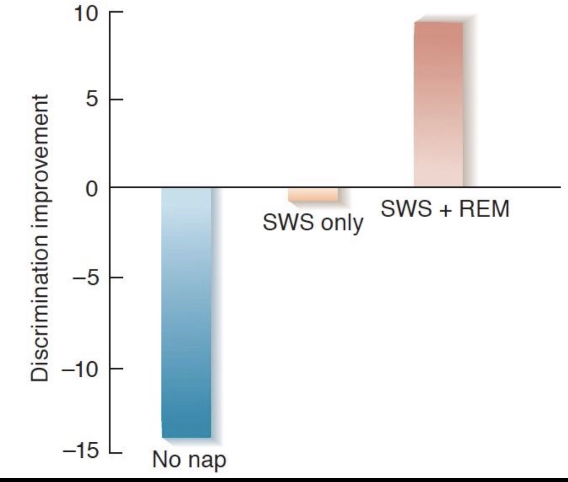
- Learning: 1. nondeclarative visual discrimination task, nap, Test→rem improved nondeclarative memory
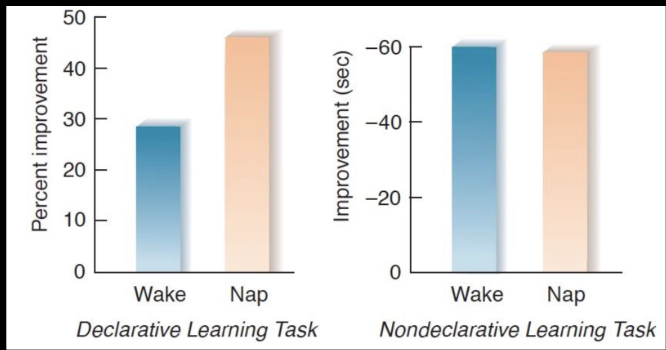
- nondeclarative: tracing in mirror; declarative: learning paired words and tasks, nap without rem, test→slow wave. sleepimproved declarative learning task
Cortical Activity during Sleep
- dreams: a sequence of thoughts sensations and images experienced during sleep, delusions and hallucinations
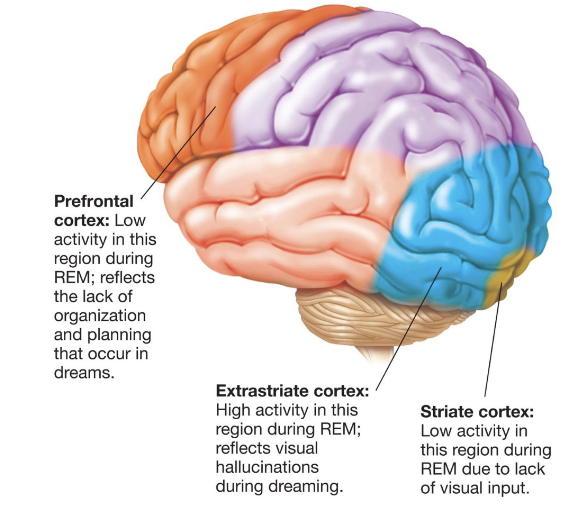
- extrastriate cortex activity increases: visual hallucinations
- prefrontal cortex activity decreases: reduced planning and organization
- lucid dreaming: awarenes andcontrol over dreams, requires frontal lobe activation
- increased acrivity in the motorcortex and subcortical motor regions during dreaming, but no movement is produced due toinhibition of motor neurons in the spinal cord
- brain stem neurons are involved in sympathetic nervous system activated
- most dreams are nightmares: 1. activity in the brain stem, interpreted by cortex,dream produced. 2. dream, cortical outputs are interpretedm fight or flight response is triggered by the brain stem
- regional cerebral blood flow decreased comparedto waking and rem
- activation of visual and auditory cortices→drea, liek imagery, most dreams occur during rem sleep
Neural Control of Sleep
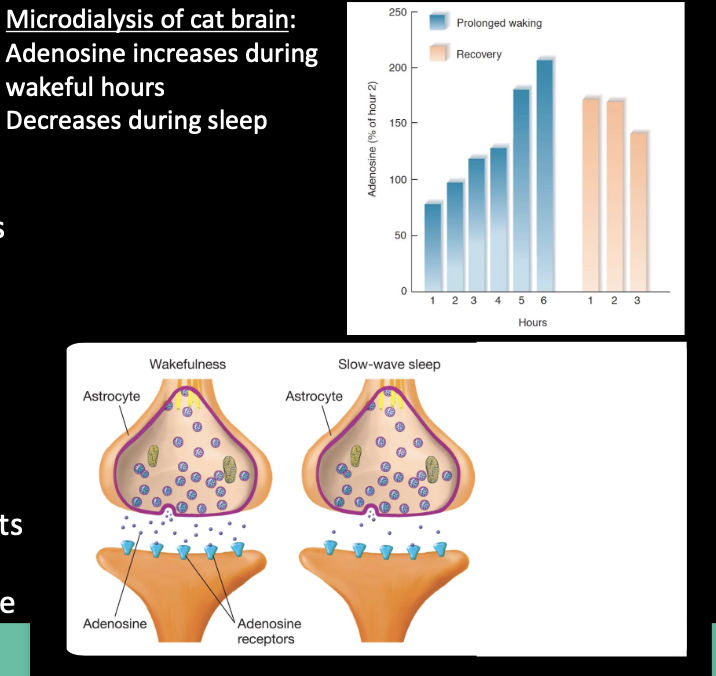
- adenosine: neuromodulator, promotes sleep
- homeostaticmechanism: 1. awake, stored sugar in astrocytes is broken down, 2. extracellular adenosine increases, 3. accumulation of adenosine inhibits neural activity, 4. sleep, astrocytes renew sugar storage
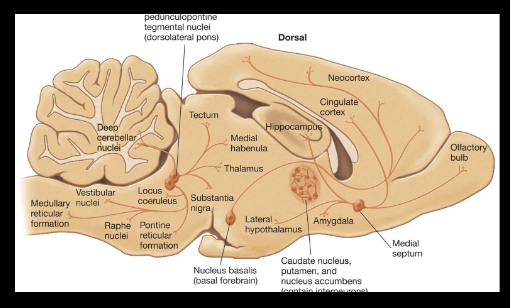
- acetylcholine: promote neural activations anc cortical desynchrony
- chollinergic neurons: in pons and basal forebrain increase cortical activity
- high levels and activity: awake or rem sleep
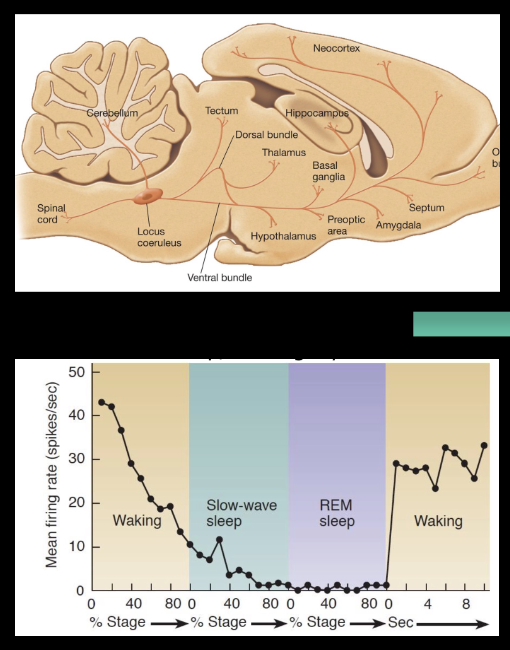
- norepinephrine: promotes arousal and vigialance
- locus coeruleus: dorsal pons region, noradrenergiv release throughout the brain
- high levels and activity→awake
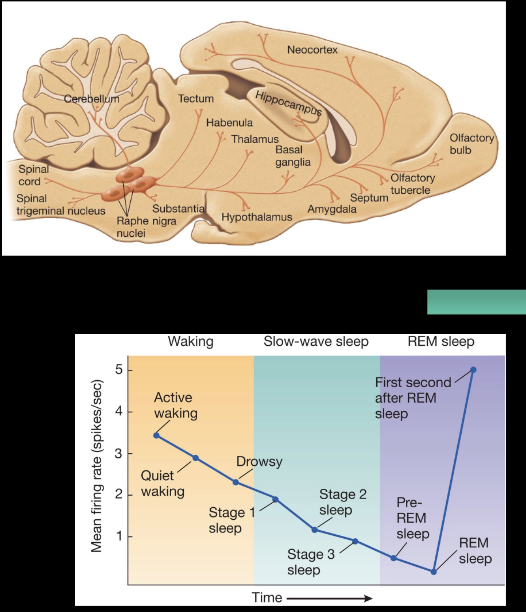
- serotonin: promotes cortical arousal and locomotion
- raphe nucleus: pons region, serotonergic release throughout the brain
- high levels and activity→ awake or exiting rem
- Histamine: promote cortical activation and arousal
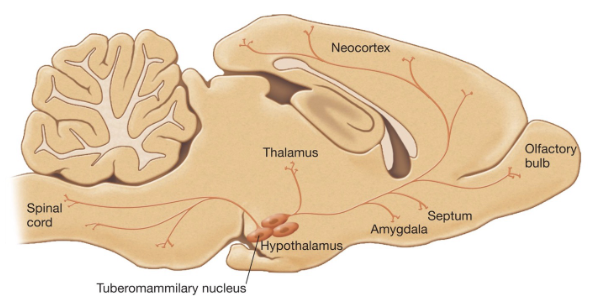
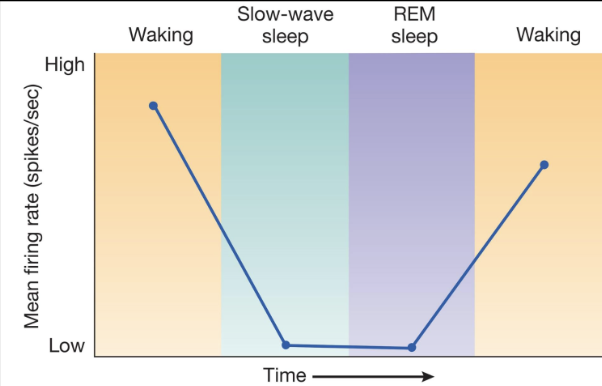
- tuberomamillary nucleus: hypothalamus, histaminergic release throughout the bein, direct activation at cerebral cortex, indirect activation at basal forebrain and pons via ACh
- high levels and activity→ awake
- orexin: hypocretin peptide neurotransmitter, regulates eating, metabolism, waking
- lateral thalamus orexinergic neurons project throughout the brain including other NT systems listed
- narcolepsy: lack of orexin→daytome drowsiness and sudden sleep attacks
- preoptic area: anterior region of the hypothalamus, comprised of sleep neurons
- sleep neurons: GABAnergic neurons, synapse at and inhibit pons and basal forebrain, locus coeruleus, raphe nuclei, ttuberomamillary nucleusm lateral hypothalamus
- arousal promoting regions and sleep regions regulate to transitions: awake→ sleep:adenosine@sleep neurons, deep sleep→rem, rem→deep sleep, sleep→awake
Sleep Disorders
- insomnia: difficulty falling asleep
- sleep apnea: difficulty breathing and sleeping at the same time→wake ip
- treatment: cognitive behavioral therapy, progressive relaxation and changes to sleep hygiene, hypnotics:GABAa agonists. and antihistamines (could lead to tolerance, rebound insomnia)
- narcolepsy: neurological disorder, daytime drowsiness and sleep attacks
- sleep attack: sudden overwhelming urge to sleep (2-5min) triggered by boredom and monotony
- cataplexy: sudden loss of muscle tone (while conscious), inhibition of motor neurons in the spinal cord, triggered. by emotional reaction and physical effort
- cause: immune disorder→loss of orexinergic neurons or mutation in orexin B receptor
- treatment: simulation of catecholamine agonists and antidepressants serotonin and NE agonists
- sleep paralysis: loss of muscle tone while falling asleep or waking,
- hypnagogic hallucinations: sleep paralysis and dreaming while awake
- rem sleep behavior disorder: fail to exhibit paralysis during rem sleep
- causes: neurodegeneration, brain injury
- treatment: benzodiazepines