FW 404: Managing Songbird Habitat, 11/4
Managing Songbird Habitat
Habitat Requirements
Seasonal change (obligate migration)
Food (insects, fruits, seeds)
insectivores
competition is intense in the tropics which is why birds don’t stay there year-round
Water
Cover
nesting
escape
roosting
Plant Richness = Food diversity
Different fruits
Different caterpillars
Different seeds
Influenced by management
Vertical Structure and Birds
Different birds use different forest layers
Ground/shrub cover is critical for many species
can predict the vegetation structure by just listening to birds in the area
Midstory is the least important layer
All are influenced by management
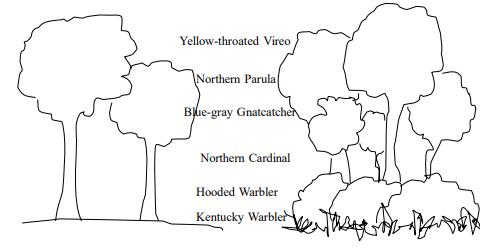
Moist, fertile soil conditions increase understory when there are closed canopy conditions
Horizontal Structure
Where two vegetation types or ages meet is an edge
Edges are often selected
access to 2 vegetation types (less common for birds)
increased vertical structure
when rest of structure is poor
Cowbirds and Corvids
Edges may attract these guys
Especially in agriculture and urban landscapes, not in landscapes dominated by forests
Birds Specialize—Community Types
Upland hardwood
Bottomland hardwood
Gum/Cypress swamp
Upland pine/mixed p-h
Pine woodland
Elevation (3000’)
Birds Specialize by Seral Stage

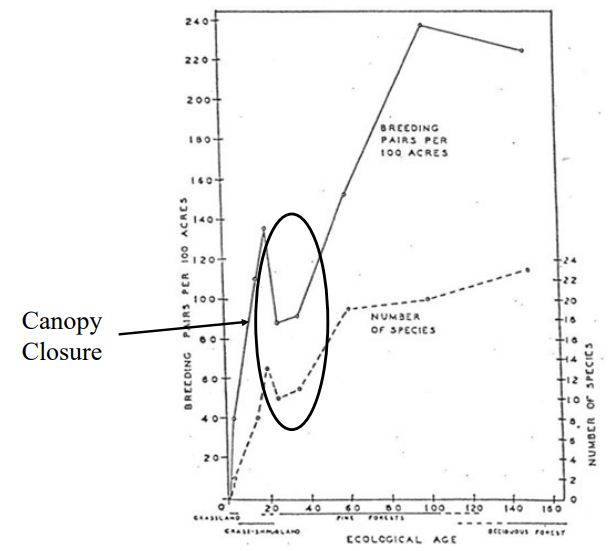
Grassland/Shrubland Birds
Community maybe maintained by climate
But typically depend on disturbances
timber harvest and prescribed fire
natural disturbance
Small window of suitability
Prairie warbler is area-sensitive and may require shrubland patches >5 ha.
Late-successional
Require mature forest
Often area-sensitive (forest-interior)
May depend on internal disturbance
treefall gaps, beetle kills, etc
complex structure
Treefall Gap Specialists
Kentucky warbler
Swainson’s warbler
American redstart
Non-breeding Phenomenon
Late succession birds move to disturbed
more food
better microclimate?
protection from predators?
naive fledglings and migrants, molting adults
What are Focal Species?
species you manage for
ovenbirds = closed canopy forests
prairie warbler = forests just cut down
can’t manage for all species
Other Threats to Songbirds
urban land conversion
closed canopy forest
intensive agriculture
loss of grassland/shrubland
feral and outdoor house cats
loss of migration stopover area
collisions with human structures
loss of habitat during non-breeding in tropics
Forest Management
Timber harvest changes the seral stage
Prescribed fire alters structure (composition?)
No stand provides habitat for all species
Even-aged Harvests
Clearcut
Young forest today is mature tomorrow
Brief shrubland condition
High fruit and seed production
Fewer large (>50 acre) harvests
2-aged stands retain canopy structure
Reserves can become snags
Forest Stand Improvement
Thin to prevent crown closure
Basal area/ canopy retention depends
Retain snags
Use prescribed fire when appropriate
Snags
Woodpeckers
Secondary users
Roosting
Feeding on insects
Snag Numbers
Estimated #/acre for average population
More is better, but don’t kill all the trees!
5-10” dbh
0.91 in pines
0.77 in hardwoods
10-20” dbh — 0.41
>20” dbh — 0.06
Fire and Nesting Birds
Concern about growing season fires
Most species re-nest
Patchy burns better
Shrub-nesters
3- to 5-year intervals
Grass/forb nesters
2- to 3-year intervals
Cookbook Recommendations
Conserve contiguous forest in agr/urban
Leave >75 ft buffers on each side
Consider shelterwood or group selection
Encourage vertical structure
Leave ≥ 2, >10-in dbh snags/acre
Promote seral stage diversity
Leave non-crop vegetation in agriculture