1.4 Environmental Effects
Recovery
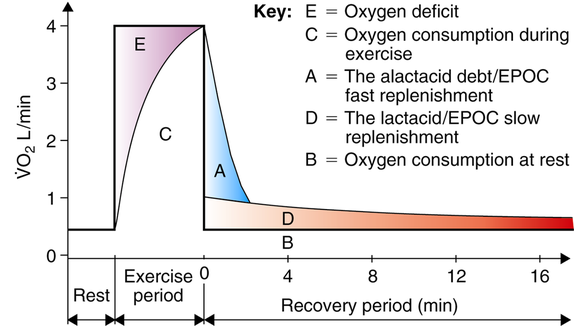
EPOC
EPOC - Excess Post Exercise Oxygen Consumption
the volume of oxygen consumed post-exercise to return the body to a pre-exercise state
After exercise:
Myoglobin has lost its stores of oxygen
ATP, PC, and glycogen stores are depleted
Lactic acid levels are high
Primary aim is to return the body to a pre-exercise state where all stores of fuels are complete, and blood and muscle tissue are free from bi-products
Energy is required to do this, and so aerobic energy production continued - EPOC - also known as oxygen debt
EPOC has 2 components:
Fast Alactacid
PC stores replenished
3 minutes to fully recover
30 seconds for 50%
60 seconds for 75%
Blood and muscle oxygen is replenished
Within 1 minute, oxygen resaturates the bloodstream - associates with haemoglobin
Within 3 minutes, the oxygen link to muscle cells is restored
Slow Lactacid
- needs 5-8 litres of O2
- takes hours to complete
Elevated ventilation and circulation
Respiratory rate, depth, and HR remain elevated - gradually decrease to maximise O2 delivery, and bi-product removal
Elevated body temperature
Increases metabolic rate - 60-70% of the slow lactacid component
Removal of lactic acid
50-75% is converted back into pyruvic acid and used in the Kreb’s Cycle
10-25% is converted back to glucose
Can be converted to proteins by the Cori Cycle
Can be removed via sweating and in urine
Implications of Recovery
Warm Up = minimise time spent using anaerobic aerobic system - reduces oxygen deficit
Active Recovery = maintains respiratory rate, and HR - speeds up the removal of lactic acid
Cooling Aids = used post-event to speed up the removal of lactic acid and to reduce muscle soreness and DOMS - ice baths
Intensity of Training = high intensity training will increase ATP/PC storage - boosts efficiency of the fast component, increases tolerance of lactic acid and buffering capacity, and delays OBLA - reduces demand on the slow component. Low intensity exercise will increase aerobic capacity - delays OBLA - maximises oxygen delivery to working muscles - higher intenisty takes longer to recover, and low intensity allows for a faster recovery
Work:Relief Ratios = can maximise recovery - 1:1 /1:2 / 1:3
Strategies and Tactics = using time-outs and substitutions - delays OBLA and fatigue
Nutrition = maximise fuel stores - delays fatigue - reduces lactic acid - speeds up recovery - creatine supplements
Exercise at Altitude
Altitude - the height or elevation above sea level - effects of altitude occur after 1500m
Barometric Pressure - the pressure exerted by the Earth’s atmosphere at any given point - mmHg
Increase in altitude = decrease in barometric pressure:
Air gets thinner
Less oxygen in the air
Less oxygen gets diffused into blood - smaller diffusion gradient
Diffusion Gradients:
sea level = 159mmHg - diffusion gradient = 119 to capillary blood
3600m = 105mmHg - diffusion gradient = 65 to capillary blood
8800m (Everest) = 43mmHg - diffusion gradient = 3 to capillary blood
Effects on the body
Blood volume decreases - plasma reduces by 25% - increases RBC density - allows easier diffusion
Stroke volume decrease - heart rate increased - compensates for stroke volume decrease
CO, SV, and HR decrease during maximal intensity exercise
Overall intensity and performance decreases - less oxygen gets to the muscles
Acclimatisation
Acclimatisation = a process of gradual adaptation to a change in environment - e.g a lower partial pressure of oxygen
Acclimatisation periods:
1000-2000m = 3-5 days
2000-3000m = 1-2 weeks
3000m+ = 2+ weeks - should gradually increase altitude to decrease altitude sickness
extreme altitudes (5000m+) = 4+ weeks - e.g Everest
Benefits:
increase in RBC production - body produces more EPO
breathing rate stabilises - does remain higher than at sea level
SV and CO reduce - oxygen diffusion becomes more efficient
reduced headaches, sickness, breathlessness, and better sleep
Exercise in the Heat
Thermoregulation - process of maintaining internal core temperature
Thermoreceptors - sensory receptors which detect a change in temperature and relay information to the brain
Thermoreceptors sense a change in body temperature
If body temperature rises, metabolic heat is transported by the circulating blood to the surface of the body, and released mostly by convection and evaporation
An athlete exercising in the heat can lose 2-3 litres of water per hour
Loss of water causes decreased blood volume and dehydration
The rate of heat loss through sweating is impacted by the humidity
Hyperthermia - significantly raised core body temperature
high and prolonged exercise intensities
high air temperature
high relative humidity
Cardiovascular drift - a rise in core body temperature can cause cardiovascular drift
upwards drift in heart rate associated with a rise in body temperature - 1° C increases heart rate by 10 bpm
The Effect of Heat and Humidity
Cardiovascular System
Dilatation of arterioles
increased blood flow and blood pooling in the limbs
Decreased blood volume, venous return, and blood pressure
increased HR
increased strain on cardiovascular system
reduced O2 transport to working muscles
Respiratory System
Dehydration can dry airways and make breathing difficult
increased mucus production
constriction of the airways
decreased volume of air for gaseous exchange
Increased breathing frequency to maintain oxygen consumption
increased oxygen cost of exercise
High levels of sunlight can increase pollutants in the air
increased irritation of airways
coughing, wheezing, and asthma symptoms
Strategies to Maximise Performance
Pre-Competition |
|
During Competition |
|
Post-Competition |
|