Chapter 2: The Market System and the Circular Flow
Microeconomics Overview
Chapter 2: The Market System and the Circular Flow
Economic Systems
Definition: Economic systems are sets of institutionalized arrangements that serve as mechanisms to coordinate economic activity.
Differences in Systems:
Vary based on the degree of decentralized market and price usage in decision-making.
Vary based on the degree of centralized government control.
Types of Economic Systems
Laissez-Faire Capitalism
Definition: An economic system that minimizes government interference.
Government's Role:
Protecting private property from theft.
Providing a legal environment for contract enforcement.
Market Interaction: People engage in markets to buy and sell goods/services.
This would not work well for society since there is no government intervention
Command System (Socialism/Communism)
Definition: An economic system where the government owns resources.
Decision-Making: Made by a central planning board.
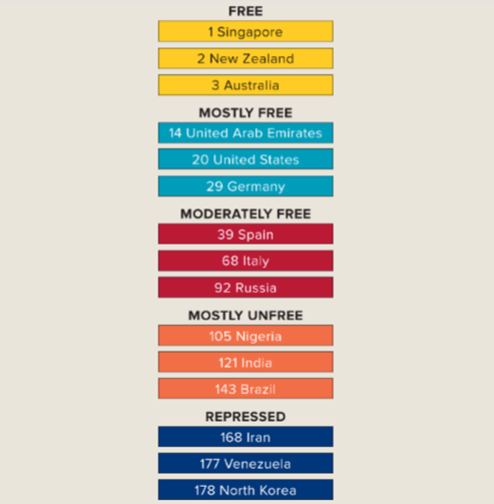
Examples: North Korea, Cuba, Myanmar.
Market System
Definition: A blend of decentralized decision-making and some government control.
Characteristics:
Predominantly private markets operate.
Private ownership of resources.
Encouraged self-interested behavior.
Characteristics of the Market System
Private Property
Freedom of Enterprise: ensures that entrepreneurs and private businesses are free to obtain and use economic resources to produce their choice of goods and services
Freedom of Choice
Self-Interest
Competition
Markets and Prices
Technology and Capital Goods
Specialization
Use of Money
Active, but Limited, Government
Global Perspective
Technology and Capital Goods
Importance: Advanced technology and capital goods improve productivity.
Specialization:
Division of labor enhances efficiency.
Geographic specialization allows regions to focus on their strengths.
Use of Money
Definition: Money is a medium of exchange that facilitates trade.
Bartering Issues: Without money, trade would rely on a barter system, where goods are exchanged directly.
Active, but Limited, Government
Role: Government intervention is necessary to:
Alleviate market failures (inefficiencies in resource allocation).
Improve market system effectiveness.
Concept of Government Failure: Instances when government intervention leads to worse outcomes.
The Five Fundamental Questions
What goods and services will be produced?
Based on what generates profits and consumer sovereignty.
“Dollar Votes”: Consumer choices signal which goods/services should be produced.
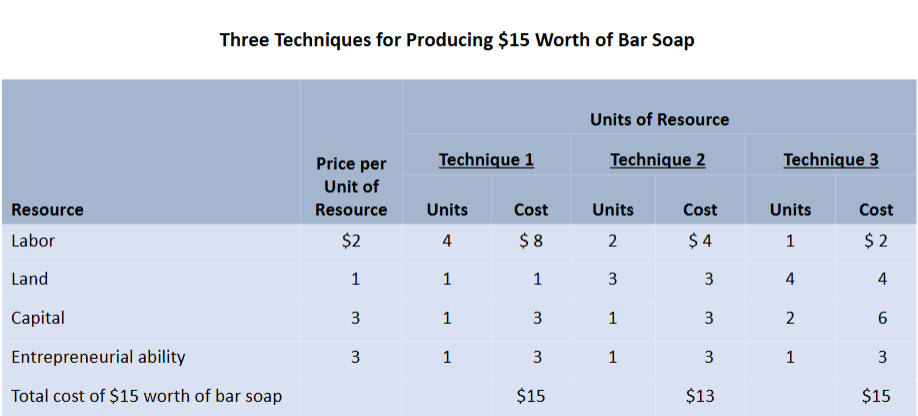
How will the goods and services be produced?
Minimized cost per unit through efficient techniques:
Technological advancements.
Evaluating prices of necessary resources.
Who will get the goods and services?
Distributed based on consumers' ability and willingness to pay, which correlates to their income.
How will the system accommodate change?
Adaptation processes driven by:
Changes in consumer preferences.
Changes in technology.
Variability in resource prices/availability.
Guided by price mechanisms and profit incentives.
How will the system promote technological progress?
Through capital accumulation and technological advancements known as Creative Destruction:
Definition: The creation of new products and production methods undermines existing monopolies.
The Invisible Hand
Definition: A concept by Adam Smith referring to the self-regulatory nature of the marketplace.
Essence: Competition prompts individuals and firms to unintentionally promote societal interests while pursuing personal goals.
Key Text: "1776 Wealth of Nations" by Adam Smith outlining the unity of private interests with social good.
The Demise of Command Systems
Challenges Faced:
Failed to provide sufficient goods/services.
Example Economies: Soviet Union, North Korea, pre-reform China.
Coordination Problems: Necessity for accurate setting of output targets for all goods/services.
Incentive Problems: Absence of adjustments for market surplus or shortages.
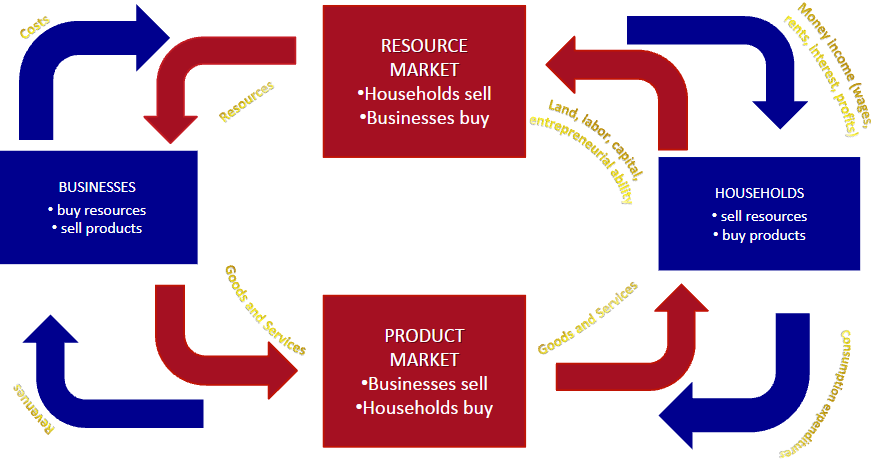
The Circular Flow Model
Components:
Private Closed Economy:
Households: Provide labor and purchase goods.
Businesses: Produce goods/services.
Markets:
Product Market: Businesses sell to households.
Resource Market: Households provide resources to businesses.
Flows:
Real Flow: Flow of goods/services and inputs.
Money Flow: Flow of payments for goods/services.
Household spend in product market
Risks in the Market System
Business Risks:
Losses from input shortages
Changes in consumer tastes
Natural disasters impact supply chain.
Security for Employees/Suppliers: They receive payments regardless of profit.
Risk Ownership: Business risks are generally held by owners; effective risk management is essential for prosperity.
Owners are personally responsible for the outcome.
Will encourage prudent decisions.
Last Word: The Case of Venezuela
Condition: Venezuela's economy faces severe challenges like hyperinflation and resource scarcity, affecting basic staples like food and gasoline;
Policies: Influenced by Bolivarian Socialism.
Impacts: Consequences include a mass exodus of the population due to unmanageable living conditions.