Diseases and Immunity (2.30-2.35)
- Pathogen: a disease causing organism
- Each pathogen has a uniquely shaped ‘marker’ on the surface of their membranes- antigens
- Transmissible disease: disease in which the pathogen can be passed from one host to another
- Can be transmitted through direct contact (eg. blood/body fluids) or indirect contact (eg. contaminated food/air)
Mechanical Barriers:
- Skin- When you cut or graze your skin it immediately begins to heal itself
- Nose hairs- Stop pathogens from getting past them further up the nose preventing them from entering the lungs.
Chemical Barriers:
- Mucus- produced throughout the body and traps pathogens and can be released (through coughing, blowing your nose, swallowing)
- Hydrochloric Acid- Kills pathogens that have been caught in mucus in the airways and then swallowed or have been consumed in food or water
Cells:
- Phagocytosis- Englufes and digests pathogen
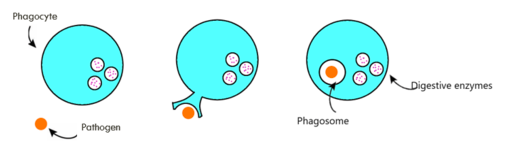
- Sensitive cell membrane detecs chemicals produced by pathogen
- Engulfes pathogen
- Releases digestive enzymes on pathogen
- Digested and excreted
- Antibodies- Clumps pathogens together and releases chemicals to destroy pathogens
All cells have antigens on their surface
Antigens and Antibodies
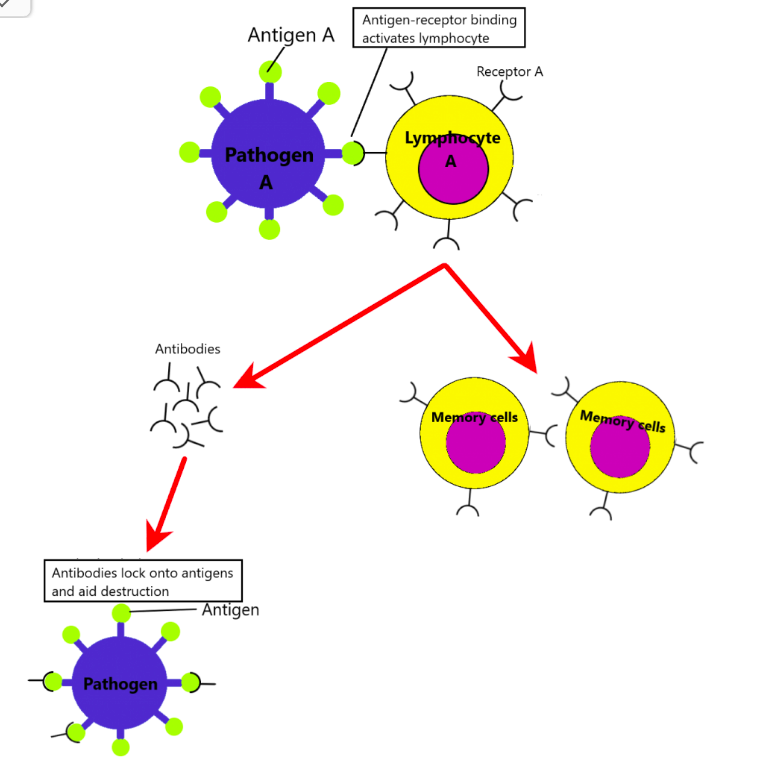
- Lymphocytes detect the antigens on the surfaces of cells and recognise any that are foreign
- Antibodies are then made in a complementary shape to pathogen antigens which then attach to antigens and cause aggulitination
- Chemicals are released to signal to phagocytes to destroy the pathogen
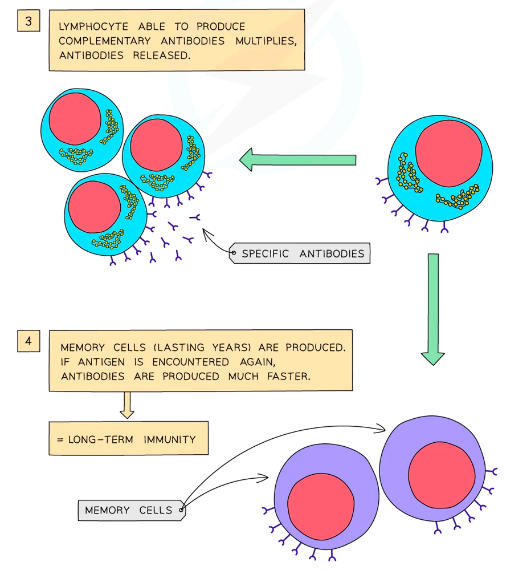
- Lymphocytes that have made antibodies for a specific pathogen will make ‘memory cells’ that retain the instructions for making those specific antibodies for that type of pathogen
- If a pathogen reinfects the body antibodies can be made very quickly and the pathogens can be destroyed before they can multiply and cause illness (immunity)
Passive immunity:
- Short-term defense against a pathogen by antibodies transferred from one individual to another (rather than making their own)
- Mother to infant through breast milk
- Injected antibodies
Active immunity:
- Making antibodies and developing memory cells for future response to infection
- The body is infected with a pathogen and the lymphocytes go through the process of making antibodies specific to that pathogen (and producing memory cells)
- Vaccination
Protection against specific diseases and boost the body’s defence against infection from pathogens
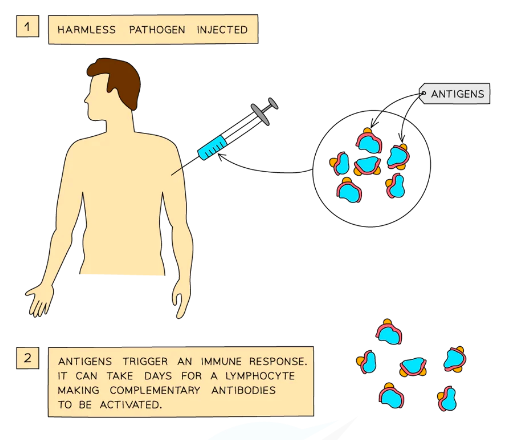
- A harmless variant on a certain antigen is introduced to the body (injected)
- Immune response is triggered and activate lymphocytes produce antibodies and memory cells to fight against the antigen variant
- When real pathogen makes its way inside the body, there are antibodies/memory cells which can rapidly fight against it
Methods to control the spread of disease:
- Personal hygiene
- Food hygiene
- Waste disposal
- Sewage treatment
Autoimmune disease
- Body attacks own body cells; recognises own body cells as foreign
- A lymphocyte targets specific body cells and makes antibodies against them, destroying them
- Example Type 1 Diabetes- Causes people to be unable to regulate their blood glucose levels since they are unable to make their own insulin
- Due to the immune system targeting and destroying the pancreatic cells, leading to dangerously high blood glucose levels