CSC583 - Artificial Intelligence Algorithms - Topic 1: Introduction to Artificial Intelligence
Definition of AI
The capability of a machine to imitate intelligent human behavior.
Artificial Intelligence (AI) refers to the simulation of human intelligence in machines that are programmed to think and act like humans.
Examples
Siri and Alexa use AI to interpret and respond to user prompts.
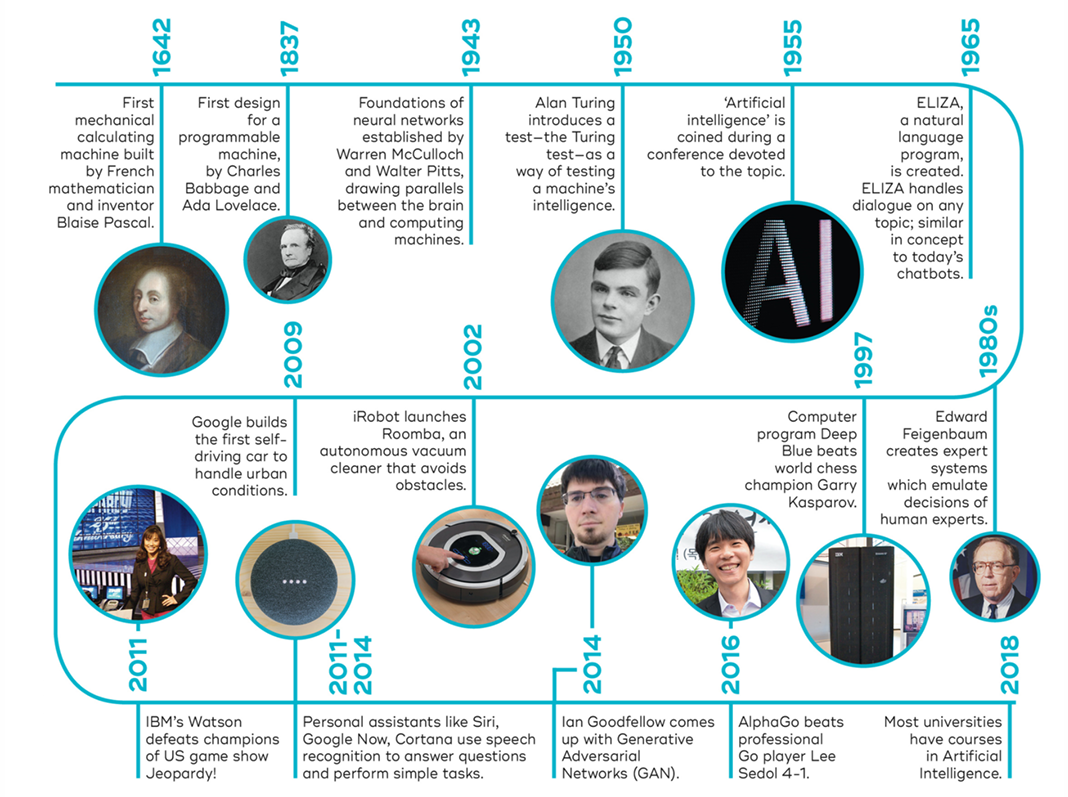
Brief History
1950s |
|
1960s |
|
1970s |
|
1980s |
|
1990s |
|
2010s |
|
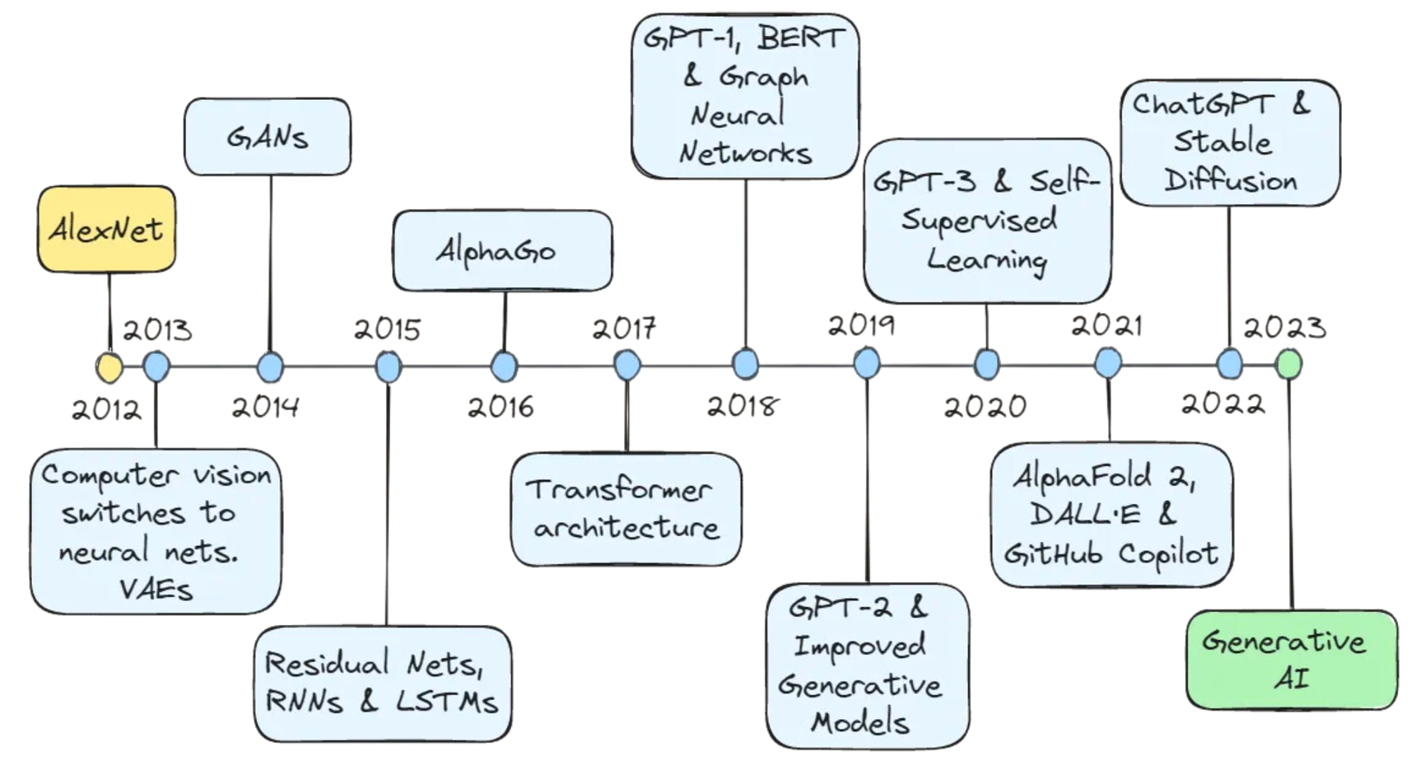
Alan Turing “The Father of Modern Computing”
Major Contributions:
Turing Machine: Laid the groundwork for the theory of computation and the concept of algorithms.
Breaking the Enigma: Played a pivotal role during WWII by devising techniques to decrypt Nazi Enigma-coded messages, significantly aiding the Allies.
Turing Test: Proposed a criterion for a machine to be considered ”intelligent” – if it could imitate a human to the point of being indistinguishable.
Legacy: Widely considered the father of theoretical computer science and artificial intelligence. His life and work have inspired numerous films, plays, and books, including the movie ”The Imitation Game.”
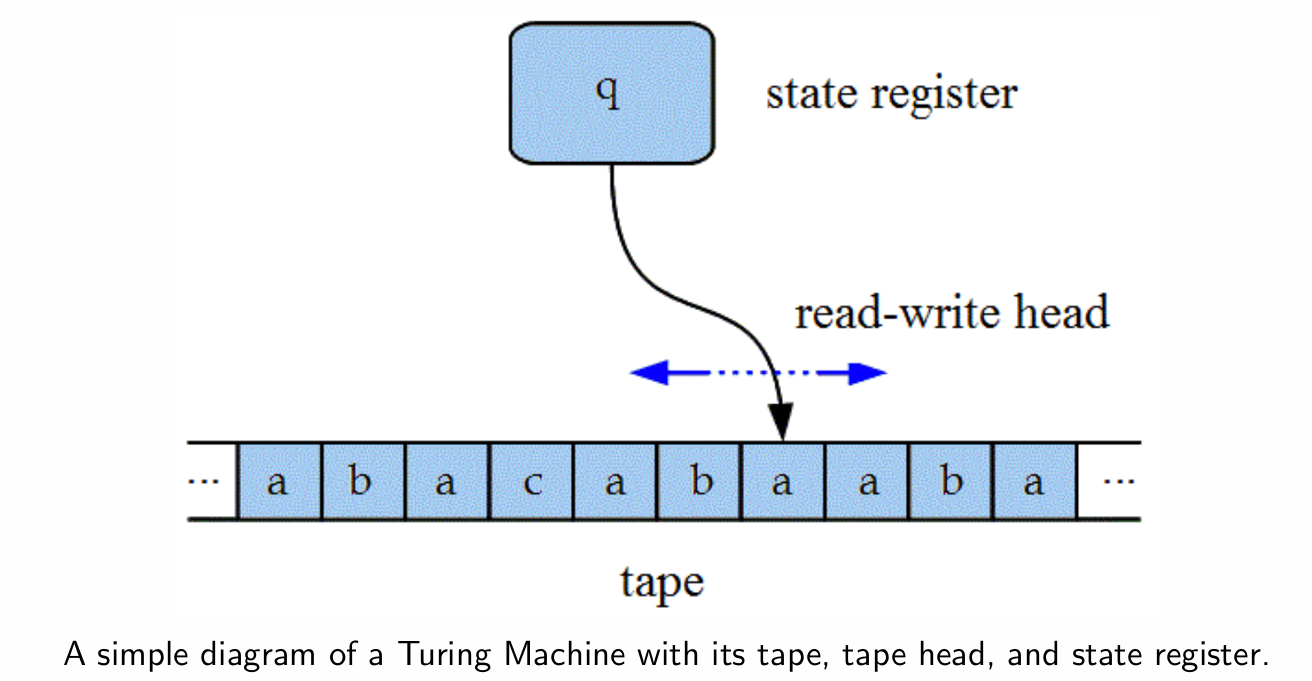
Turing Machine “The Foundation of Computability”
Definition: ”A mathematical model of computation that defines an abstract machine, which manipulates symbols on a strip of tape according to a table of rules.”
Components:
Tape: Infinite in length, divided into cells. Each cell contains a symbol from a finite alphabet.
Tape Head: Moves left or right one cell at a time, reads the symbol on the tape, and writes a new symbol based on the transition rules.
State Register: Stores the current state of the machine. The machine starts in the initial state and can transition to other states or halt.
Significance:
Universality: Turing Machines can simulate any algorithm’s logic, given enough time and tape.
Undecidability: There are certain problems that a Turing Machine cannot solve, leading to the concept of undecidability.
Foundation of Modern Computing: The concept of the Turing Machine is foundational to computer science, especially theories of computation and the limits of what computers can and cannot do.
Turing Test - Measuring Machine Intelligence
Definition: ”A test of a machine’s ability to exhibit intelligent behavior indistinguishable from that of a human.”
Concept:
If a human evaluator cannot reliably distinguish between the responses from a machine and a human during an interaction, the machine is said to have passed the test.
Types of AI Techniques and Methodologies
Definition | Characteristics | Use Cases | |
Expert Systems | Computer systems that emulate the decision-making ability of a human expert |
|
|
Fuzzy Logic | A computing approach based on ’degrees of truth’ rather than the usual ’true or false’ (1 or 0) Boolean logic |
|
|
Artificial Neural Network (ANN) | Computing systems inspired by the structure of the human brain, consisting of interconnected nodes (neurons) |
|
|
Genetic Algorithm | Optimization algorithms based on the process of natural selection |
|
|
Particle Swarm Optimization (PSO) | A computational method that optimizes a problem by iteratively trying to improve candidate solutions |
|
|
Ant Colony Optimization (ACO) | An optimization algorithm inspired by the behavior of ants in finding paths from the colony to food |
|
|
Machine Learning - An Overview
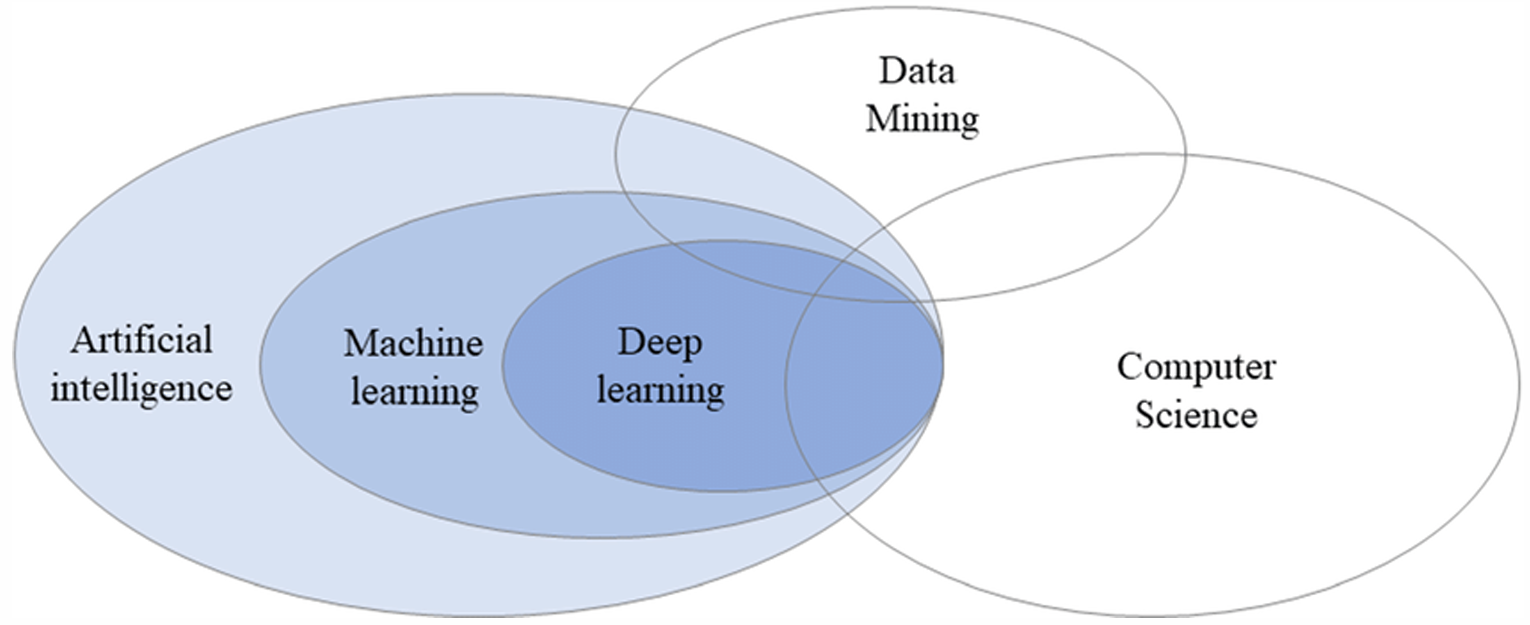
Definition: ”Machine Learning is a subset of AI where algorithms improve automatically through experience and by using data.”
Types of Machine Learning:
Supervised Learning: Algorithm is trained on labeled data.
Unsupervised Learning: Algorithm explores data without specific guidance.
Reinforcement Learning: Algorithm learns by interacting with an environment.
Use Cases: Routing in telecommunication networks, vehicle routing.
Definition | Key Concepts | Examples | |
Supervised Learning | Algorithms are trained using labeled examples, where the desired output is known |
|
|
Unsupervised Learning | Algorithms explore data without specific guidance on what to look for |
|
|
Reinforcement Learning | Algorithms learn by interacting with an environment and receiving feedback in the form of rewards or penalties |
|
|
Deep Learning | A subfield of machine learning that uses neural networks with three or more layers to process data in complex ways |
|
|
Generative AI - Creating New Content
Definition: ”Generative AI refers to algorithms designed to produce or generate content, often by leveraging models like Generative Adversarial Networks (GANs).”
Key Concepts:
Training: Generative models are trained on vast amounts of data, learning patterns, structures, and features.
Generation: Once trained, these models can produce new, original content that mirrors the training data’s characteristics.
Popular Techniques:
Generative Adversarial Networks (GANs): Consist of two neural networks, the Generator and the Discriminator, working against each other.
Variational Autoencoders (VAEs): Generate new instances that can be similar to your input data.
Applications:
Art and Design: Creating artworks, music, or design elements.
Data Augmentation: Generating additional data for training models.
Narrow AI Specialized Intelligence
Definition: ”Narrow AI, also known as Weak AI, refers to artificial intelligence systems designed and trained for a specific task. Unlike General AI, which would have broad cognitive abilities, Narrow AI operates under a pre-defined set or context.”
Characteristics:
Task-Specific: Designed for a single, narrow task.
No Consciousness: Operates based on data and algorithms, without feelings, desires, or consciousness.
Prevalent Today: Most current AI applications are forms of Narrow AI.
Examples:
Voice Assistants: Siri, Alexa, and Google Assistant.
Recommendation Systems: Netflix movie suggestions, Spotify music playlists.
Image Recognition: Software that identifies objects in photos.
General AI Broad Cognitive Abilities
Definition: ”General AI, also known as Strong AI, refers to a form of artificial intelligence that has the ability to understand, learn, and perform any intellectual task that a human being can.”
Characteristics:
Versatile Learning: Can learn and perform multiple tasks, not restricted to one domain.
Human-like Cognition: Processes information and makes decisions in a manner similar to human reasoning.
Theoretical: Currently, General AI remains a concept and has not been realized.
Examples:
Complexity: Replicating the vast range of human cognitive abilities.
Ethical Concerns: Implications of creating machines with human-like consciousness.
Narrow Al vs General Al - Understanding the differences
Aspect | Narrow Al (Weak AI) | General Al (Strong AI) |
Definition | Specialized for a specific task. | Capable of any intellectual task that humans can do. |
Examples | Chatbots, image recognition software, voice assistants | Theoretical robots or systems that can learn and adapt to any environment or task |
Current State | Prevalent in today's technology | Remains a concept; not yet realized |
Scope | Task-specific | Broad capabilities |
Learning | Operates within its training | Can learn and adapt outside its initial programming |
Existence | Widespread in current applications | Still theoretical |
Ethics in AI Navigating the Moral Landscape
Key Ethical Concerns:
Bias and Fairness: AI models can inherit and amplify biases present in training data, leading to unfair decisions.
Transparency and Accountability: Understanding how AI makes decisions (explainability) and who is responsible when AI goes wrong.
Privacy: Ensuring user data is protected and not misused.
Safety and Security: Ensuring AI systems operate safely and are resistant to malicious attacks.
Challenges:
Balancing innovation with ethical considerations.
Establishing global standards and regulations.
Social Impact of AI - Changing the Fabric of Society
Positive Impacts:
Efficiency and Productivity: Automating tasks can lead to increased productivity in various sectors.
Innovation: New AI-driven technologies and solutions can address complex societal challenges.
Personalization: Tailored experiences in areas like education, healthcare, and entertainment.
Concerns:
Job Displacement: Automation might replace certain jobs, leading to unemployment in specific sectors.
Surveillance and Privacy: Potential misuse of AI in surveillance and erosion of personal privacy.
Social Manipulation: AI-driven fake news, deepfakes, and targeted advertising can influence public opinion.