Introduction to Weather and Climate
The Atmosphere
A blanket of air that surrounds Earth.
Humans would die within minutes if it didn’t exist.
Protection from harmful sun rays.
Radiation from the sun is what drives everyday wind patterns and weather.
Relatively thin.
Gradually gets thinner as you get higher.
History of the Atmosphere
4.6 billion years ago, mostly hydrogen and helium.
Hydrogen compounds like methane (CH4) and ammonia (NH3)
The earliest atmosphere, it escaped to space due to Earth’s hot surface.
Volcanoes and steam vents release water vapor and CO2.
Most likely created Earth’s second atmosphere.
This process is also called outgassing.
Water vapor causes rain to fall, creating streams.
Lots of CO2 gets dissolved in oceans.
Makes the atmosphere dominated by nitrogen (N2).
Oxygen became abundant through photodissociation of water.
The process of the sun splitting water molecules.
The Great Oxidation Event
Cyanobacteria filled the ocean, producing oxygen through photosynthesis.
Oxygen causes Earth to become cold and mostly ice-covered.
Composition of the Atmosphere
78% Nitrogen, 21% Oxygen, 1% other gases.
Argon, water vapor, carbon dioxide, etc.
Steady balance of input and output of these elements.
Biogeochemical cycles.
Water cycle recap:
Condensation: Gas - Liquid
Creates latent heat which is just a large amount of heat that gets released.
Important sources of atmospheric energy for storms.
Evaporation: Liquid - Gas
Precipitation: Falling water
Rain, snow.
The Greenhouse Effect is what keeps temperatures near the surface warm.
Water vapor and carbon dioxide are the two most abundant greenhouse gases.
Significant role in Earth’s heat-energy balance.
They both trap outgoing Earth energy.
Other greenhouse gases include methane, nitrous oxide (N2O) and Chlorofluorocarbons (CFC’s).
CFC’s destroy ozone in the stratosphere (Chlorine exposure).
The Montreal Protocol replaced CFC’s with hydrofluorocarbons (HFC’s) to reduce ozone damage.
Ozone is good in the stratosphere as it protects us from the Sun’s harmful rays, but is harmful in the troposphere because it can create photochemical smog.
Suspended Particles
Aerosols: Tiny solid or liquid particles suspended in the air.
Particulate matter: obscures visibility and can cause respiratory problems.
Sources: wind erosion of soil, ocean spray, forest fires, volcanic eruptions, agricultural and industrial activities.
More aerosols = more small droplets in clouds.
Clouds are whiter and very dense.
Pollutants: Human-made impurities that are a health hazard.
Nitrogen dioxide (NO2), carbon monoxide (CO).
Air Pressure and Density
Air molecules are held near Earth by gravity.
Causes compression.
The more air above a level, the greater the compression.

The density of air is determined by the masses of the molecules and the space between them.
1.2 kg/m³ at sea level.
Greatest at the surface but decreases as altitude increases.
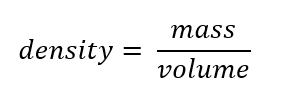
Pressure represents the tiny force of air molecules hitting each other over a given area.
14.7 lb/in² at sea level.
More molecules = greater weight, air density, and air pressure.
Pressure at sea level = 1013.25 mb = 1013.25 hPa = 29.92 in. Hg.
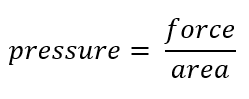
Air pressure thus represents the amount of force exerted over a given area of surface.
The weight of all air around us is 5600 trillion tons.
Decreases with increasing altitude.
Examples of air pressure change:
Ears popping.
Air collisions outside eardrum lessen, and pressure tries to equalize both inside and outside the ear.
Both air pressure and density increases as altitude decreases.
Layers of the Atmosphere
Lapse rate: The rate at which temperature decreases with height.
6.5℃ / 1000m in lower atmosphere.
Temperature inversion: A phenomena where temperature increases with height.
Lapse rate fluctuates.
Troposphere:
Lowest layer, where weather occurs.
Temperature decreases as heigh increases.
At the tropopause, the lapse rate is zero where the temperature stays constant.
Isothermal zone
Tropopause varies in size.
Higher in the summer, lower in the winter.
Marks the location of jet streams.
Stratosphere:
A temperature inversion occurs here.
Ozone heats the air because of ultraviolent radiation absorption.
The less dense the air, the greater the absorption as fewer molecules heat at a greater degree.
A sudden stratospheric warming
Energy propagates from the lower altitudes, disturbing the cold air usually present in autumn and spring.
Affects weather patterns for weeks over large areas.
Mesosphere:
Extremely thin air.
Pressure averages about 1 mb.
99% of all air mass is below.
We would not survive in this layer.
Hypoxia.
Massive exposure to UV radiation.
Blood would begin to boil.
Temperature decreases as height increases.
Molecules lose more energy than they absorb.
Thermosphere:
Temperature inversion occurs.
Low number of molecules means greater heating.
Aurora Borealis
Charged particles from the sun interacts with the air molecules.
Temperature can be determined by satellite behavior.
Air molecules strike, slowing the satellite down and dropping it to a smaller orbit.
Amount of drag relates to density, thus relating to temperature.
Exosphere:
The region where atoms and molecules shoot off into space.
Upper limit of Earth’s atmosphere.
Ionosphere: A region where a large concentration of ions and free electrons exist.
Layers of the atmosphere by composition:
Homosphere: Surface to the top of the mesosphere.
Generally well-mixed air.
Heterosphere: Bottom of the thermosphere to space.
Heavier atoms stay near the bottom, lighter ones near the top.
Unevenly mixed air.

Weather and Climate
Weather is the condition of the atmosphere at any particular time and place.
Quantitative variables: temperature, humidity, cloud cover, precipitation, wind speed and direction.
Climate is the “average” weather of a place.
Obtaining weather elements over years and decades.
Dynamic: Has changed in the past and will change again.
Climate slightly alters like Earth, but the state of our atmosphere changes very frequently.
Climatology: Study of climate, its controls, and spatial and temporal variability.
State of Earth’s climate system as a whole.
Meteorology is the study of the atmosphere and its phenomena.
Aristotle is the father of meteorology.
Meteorologica: The sum of knowledge on weather in 340 B.C.E.
All substances that fell from the sky were considered meteors.
Didn’t become popular until the inventions of weather instruments.
Hygrometer, thermometer, barometer, etc.
Wind flow and storm movement became clearer in 1869 when crude weather maps with isobars were created,
Numerical models (1950s)
Doppler radars (mid 1990s)
Unveiled thunderstorm winds and precipitation intensity.
Tiros I, the first weather satellite (1960)
Weather Types
Middle-latitude cyclonic storm system
Outside tropics in Northern Hemisphere.
Winds spin counterclockwise.
Hurricanes
The eye has clear skies, low pressure, and light winds.
Thunderstorms
Tall churning clouds accompanied by lightning, thunder, strong gusty winds, and heavy rain.
Tornadoes
Intense rotating columns of air that extend downward from the base of a thunderstorm.
Weather Maps
North to South, meridians, lines of longitude.
East to West, parallels of latitude.
Low Pressure Systems (Cyclones)
L (red)
Stormy weather
Spins counterclockwise in the Northern Hemisphere
Clockwise in the Southern Hemisphere.
Inwards flow of air.
Air gets driven up, forming clouds.
Generally tracks towards east and northeast.
Weather to West and North: cold.
Weather to East and South: warm.
High Pressure Systems (Anticyclones)
H (blue)
Calm weather
Spins clockwise in the Northern Hemisphere
Counterclockwise in the Southern Hemisphere.
Outwards flow of air.
Air gets drive down.
Generally tracks towards the east and southeast.
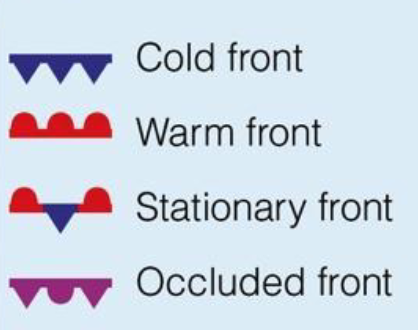
Fronts: Boundaries that separate warm and cool air.
Sharp change in temperature, humidity, and wind direction.
Associated with a trough in sea-level pressure pattern, corresponding wind shifts, and converging winds.
Warm air always rises, producing clouds and precipitation.
Cold fronts: Blue with triangles.
Where cold surface air is replacing the warm surface air.
Occurs over a narrow band.
Usually brings short bursts of heavy precipitation.
Warm fronts: Red with half circles.
Where warm surface air is replacing the cold surface air.
Occurs over a wide band.
Brings long but light precipitation.
Stationary fronts: Both symbols but alternating sides.
Forms when warm and cold air meet and neither air mass has the force to move the other.
Broad region of clouds and precipitation.
Brings many days of clouds and precipitation.
Occluded fronts: Purple with alternating triangles and half circles.
Cold-type occlusion: Air behind cold front colder than cool air ahead of warm front.
Like a cold front at the surface but with less air mass contrast.
Warm-type occlusion: Air behind cold front is warmer than the air ahead of the warm front.
Like a warm front at the surface.
Air masses: Huge volumes of air covering hundreds of thousands of square kilometers.
Relatively uniform characteristics horizontally. (Temperature and humidity)
Continental = dry.
Maritime = humid.
Weather and Climate in Our Lives
Weather dictates what clothes we wear on a given day.
Climate dictates the range of clothing one must own.
Cold days: wind chills
Frostbite and hypothermia.
Hot days: humidity
Heat exhaustion and heat stroke.
Temperature can cause increased heating costs or AC costs.
Snow: Increased traffic and road accidents.
Closing of schools.
Downing of power lines.
Drought: Shortage of food.
Heat waves: death.
Tornadoes: Increased damage and property costs.
Death.
Downbursts: Turbulent winds from thunderstorms.
Causes crop damage.
Wind shears (rapid change)
Flash Flooding
Fog: Reduced visibility.
Increased road accidents.
Flight delays.
Surface Weather Observations (Lab)
Weather observations at the surface of the Earth are made each hour by meteorologists around the world.
Typically taken at airports to support aviation operations.
Includes temperature, humidity, cloud cover, visibility, wind speed and direction, air pressure, and present weather conditions.
Station model: Model used to describe weather conditions in an area.
Top left: Temperature.
Middle left: Current weather conditions.
See appendix b in textbook for symbols.
Bottom left: Dew point temperature.
Middle: Cloud cover
CLR: Clear
FEW: ¼
SCT: ½
BKN: ¾
OVC: Overcast
3 digits represents cloud base height (in 100s of feet).
063 means 6300 feet.
Lines from middle: Wind direction and speed.
Wind direction: Points in the direction the wind is coming from.
Wind speed: Lines attached to direction.
1 knot = 1.15 mph
Smaller line: 5 knots.
Larger line: 10 knots.
Triangle: 50 knots.
Top right: Sea level pressure (PMSL)
Greater than 500: add 9, decimal in front of last number.
995 = 999.5 hPa
Less than 500: add 10, decimal in front of last number.
085 = 1008.5 hPa
Middle right: Pressure change.
First symbol: Is the pressure higher or lower than it was 3 hours ago?
Second symbol: Amount of pressure change in past 3 hours.
Third symbol: Pressure tendency during past 3 hours.
See appendix b for symbols.
The Parcel Theory
A parcel is a bubble of air of no definite size that we generally assume it retains its shape and general characteristics as it rises or sinks in the atmosphere.
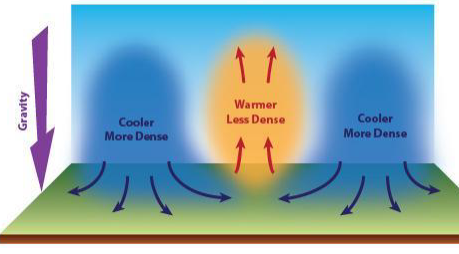
Types of atmospheric stability:
Unstable: T parcel > T air
Displaced parcel will continue in the direction it was pushed.
Stable: T parcel < T air
Air parcel tends to return to its original altitude.
Neutral: T parcel = T air
No tendency for the parcel to continue or return to its original altitude.
Accessing Weather Information
Smartphones
Online
Television
Radio
Weather Apps
Satellite’s View:
Geostationary satellite travels at the same rate as Earth spins and continuously monitors what is taking place beneath it.
Radar: Radio detection and ranging
Emits microwave signals and receives reflected signals from targets.
Continually scans a large volume of the lower atmosphere.
Monitors rainfall rates and cumulative rainfall totals.
Reflectivity mode: detects areas of precipitation.
Velocity mode: detects air motions directly toward or away from the radar.
Sky watching
Cirrus clouds: ice crystals.
Low cumulus clouds: tiny water droplets, more sharply defined edges.